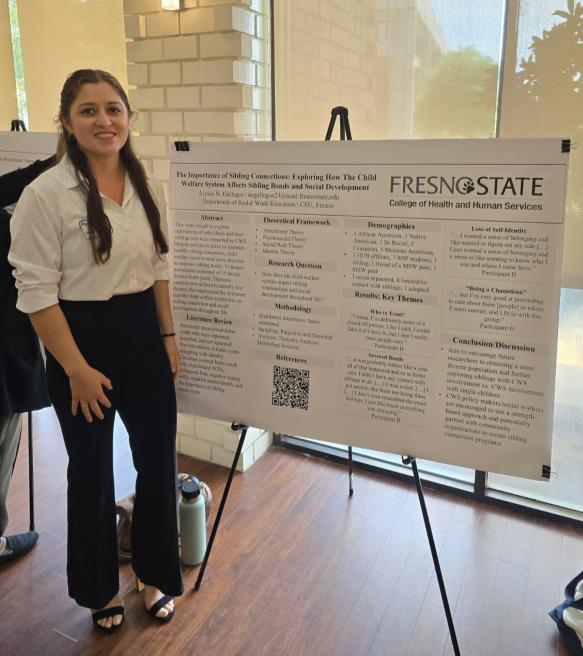
The Importance of Sibling Connections: Exploring How the Child Welfare System Affects Sibling Bond & Social Development
Alyssa Gallegos | California State University, Fresno
Abstract
This study sought to explore experiences of individuals and their siblings who were impacted by Child Welfare Services. Despite policies in place to maintain healthy sibling connection, child welfare systems need more structure to maintain sibling bonds. Volunteer participants consisted of 10 female individuals who identified as former foster youth. Thematic analysis was utilized to identify four themes that emphasized the detriment that the child welfare system has on sibling connection and social development throughout life.
About Me
Experience:
- Social Worker IV
- Madera County Department of Social Services
- Master’s Student Intern
- Fresno County Department of Social Services
- Extra Help/Student Intern
- Santa Clara County Department of Family & Child Services
Education:
- Master’s in Social Work
- Fresno State
- BA in Human Development
- CSUEB
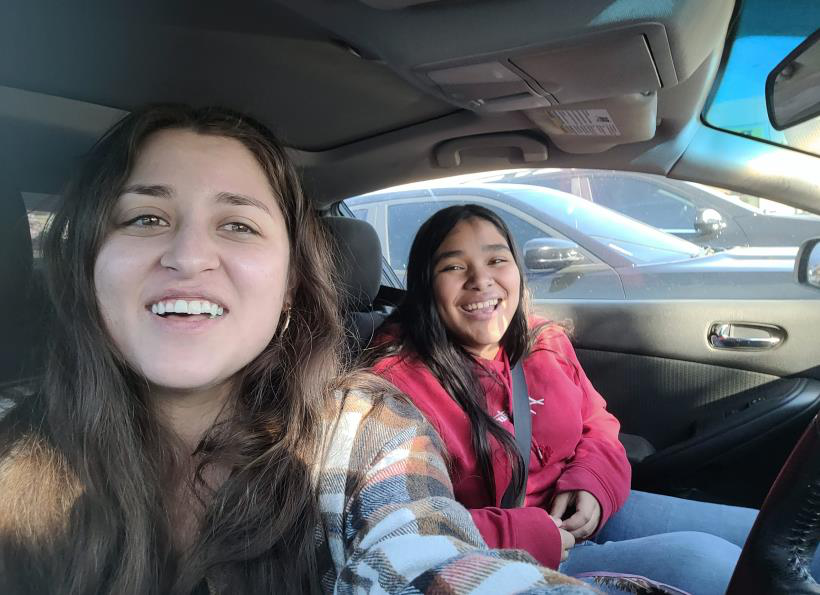
Fun Facts:
- Support System
- Interests
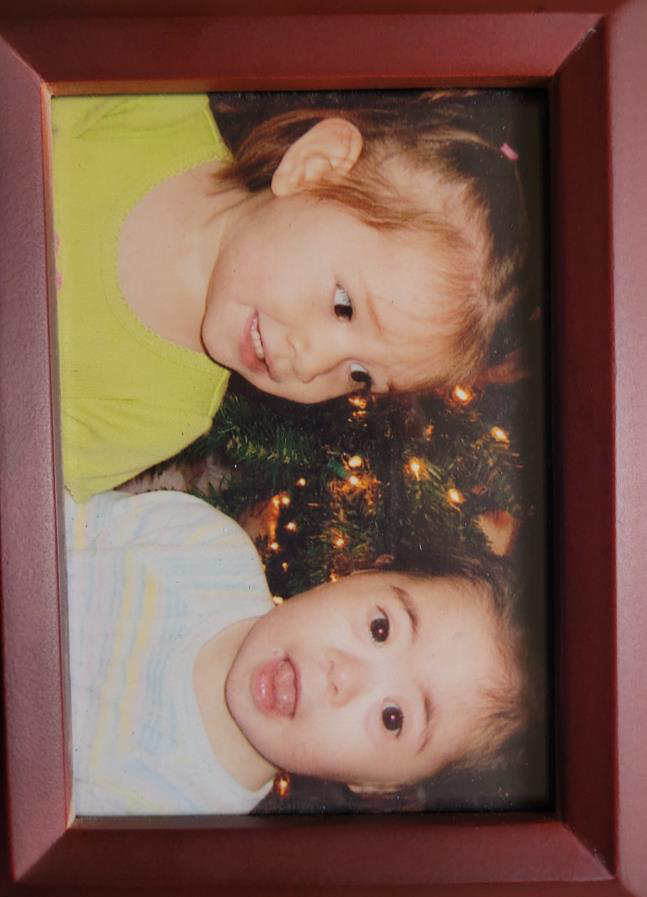
Inspiration
Child Welfare Involvement
- Separation from family
- Adopted
- The search
Methodology
- Semi structured qualitative interviews
- 13 questions
- Sampling
- Purposive
- Snowball
- 13 questions
- Thematic Analysis
Participants
Resourced Volunteer Participants from:
- California State University, Fresno State’s – Renaissance Scholar’s Program
- Santa Clara County - The HUB
- MSW Program
Diverse population of volunteers:
- African American
- Native American
- Mexican American
- Bi-Racial
- Caucasian
Other:
- Sibling set
- MSW Peer and more
- Never separated vs limited to no sibling contact
- Adopted
Purpose and Significance
The goal:
- To explore the impact of the loss of relationships
- Study the importance of sibling impacts
- Social Development
- Maintained vs. Separated
The reason:
- Understand the need for further development to California WIC §16002
- Explore social work mandates, practices, and knowledge for adjustment
- Explore the importance of defining active efforts to maintain sibling relationships
Research Question
How does the child welfare system impact sibling relationships and social development throughout life?
Between siblings:
- Separated without contact
- Siblings with maintained contact
- Reunified
Evidenced by:
- Impact on Self-Identity
- Impact on social development
- Impact on future relationships as an adult
Conceptual Theoretical Framework
- Erikson’s Psychosocial Theory
- 8 stages of personality development throughout the course of life
- Social Role Theory
- Behaviors dictated by societal expectations
- Identity Theory
- Sense of self comprised of components such as role, self-esteem, age, ethnicity, etc.
- Attachment Theory
- John Bowlby’s theory about adaptable connection styles in important relationships
Findings
Themes derived from thorough analysis lead to finding four overarching themes:
- Severed bonds
- Youth’s development impacted by loss of important bonds
- Loss of self-identity
- Removed and forced into different roles that were not present at birth
- Who to trust?
- With social worker’s setting the tone, siblings being pinning blame on each other, who can youth trust?
- Adapting to new setting
- Adjustment to forced expectations; survival instinct
Who to Trust?
Key questions:
- Who to trust?
- How to form trustful bonds when relocated numerous times?
Key points made:
- 5/10 participants reported that social workers avoided the discussion of siblings
- Social workers & foster parents did not provide easy communication with siblings
- Parentified individuals advocating and being shutdown
“...with her, I’m not that close. We have periods of being close. So … I don’t want to get too close to other people because then it’s like - I don’t want to deal with other people...”
Severed Bonds
Key points:
- Guilt, jealousy, uncertainty, loneliness and distrust
- Filling in the void
- Uncertainty in current relationships
“there is this element … ’what is it about me that you didn’t want me to be around?’… and think it goes back to, maybe even being separated from my sister. And what was it about the family that wanted her and didn’t want me...? I think there’s some insecurities around relationships sometimes, right?”
The Loss of Self-Identity
Key findings:
- Sense of purpose
- Self-isolation
- Abandonment
- Loneliness
- Depression
- Overwhelmed
- Roles:
- Parentification, caretaker, outsider, etc.
- Teenagers
- Adoption
“...I wanted a sense of belonging, and a sense of like - wanting to know who I was and where I came from.”
“… it made me miss him when we got separated, I missed him, and it made me feel more lost...”
“The separation from my siblings, and the strain from my siblings and other family members as well, allowed me to let the world tell me who I was, rather than knowing who I was.”
Adaptation
Key findings:
- Avoidant of social interactions
- Multiple roles
- Different locations
- Group homes
- School
“… but I’m very good at pretending enough to care about them to where I seem normal, and so I fit in with that group.”
“I think it’s being a chameleon, moving around so much. Learning how to adapt, right?”
Recommendations
Key findings:
- Empathetic and genuine social workers
- “higher minimum”
- Sibling days
- Education on parentification
- Social worker
- Care provider
- Court system
“They make us feel insignificant when we’ve had to grow up at a very young age. So, it’s like, why are you treating me like a child?”
Recommendations (cont.)
Partnerships with community resources:
- Foster Love
- The HUB
- Third party visitation centers
My Social Work Practice
- Transparency
- Conversations
- Youth
- Siblings
- Care Providers
- Ongoing
- CFT
- Youth’s Counsel
2/18/2026
References
A QR code is provided on the presentation slide for references.
Thank you CCASSC!
And also...
- To my professional and educational supports
- Support from loved ones
Questions?
email: angallegos01@gmail.com | number: (559) 718-1231 | LinkedIn: Alyssa Gallegos
2/18/2026
This HTML version was generated with AI assistance and may contain errors or omissions. The original approved PDF remains the official document of record. An alternative accessible format is available upon request from the document creator in accordance with Title II of the ADA.