Participating in Family Reunification Amid Housing Instability: The Experiences of Parents in Child Welfare
ABSTRACT
This study explored the lived experience of parents facing housing instability as they participate in family reunification services. It examined the connection between individual, relational, and systemic factors that may influence a parent's ability to achieve stability and reunification with their children through Bronfenbrenner’s ecological systems theory as a guiding framework. A qualitative, phenomenological approach is used to further understand participants’ experiences. Data were collected through a demographic questionnaire and semi-structured interviews with six participants receiving family reunification services in Tulare County Health & Human Services Agency. Participants were selected through purposive sampling. The demographic questionnaire revealed an even distribution of age and employment status among the participants. Many were female, received government assistance, and did not have their children living with them. Half of the participants were currently unhoused, and the majority had experienced homelessness in the past 5 years. The analysis revealed parents navigating reunification while experiencing housing instability faced layered challenges across all levels of Bronfenbrenner’s ecological systems: microsystem, mesosystem, exosystem, and macrosystem. By focusing on the experience of parents struggling with housing instability, this study informs child welfare practices and housing policies to create more effective and compassionate interventions for families and children.
Alejandra Avila
August 2025
PARTICIPATING IN FAMILY REUNIFICATION AMID HOUSING INSTABILITY: THE EXPERIENCES OF PARENTS IN CHILD WELFARE
by
Alejandra Avila
A thesis
submitted in partial
fulfillment of the requirements for the degree of
Master of Social Work
in the College of Health and Human Services
California State University, Fresno
August 2025
APPROVED
For the Department of Social Work Education:
We, the undersigned, certify that the thesis of the following student meets the required standards of scholarship, format, and style of the university and the student's graduate degree program for the awarding of the master's degree.
Alejandra Avila
Thesis Author
Candy Madrigal (Chair) — Social Work Education:
Reuben Addo — Social Work Education:
Randy Coombs — Tulare County Health & Human Services Agency
For the University Graduate Committee:
Dean, Division of Graduate Studies
AUTHORIZATION FOR REPRODUCTION OF MASTER’S THESIS
X I grant permission for the reproduction of this thesis in part or in its entirety without further authorization from me, on the condition that the person or agency requesting reproduction absorbs the cost and provides proper acknowledgment of authorship.
Permission to reproduce this thesis in part or in its entirety must be obtained from me.
Signature of thesis author:
ACKNOWLEDGMENTS
Thank you to my family and friends for their constant support throughout this journey. I am also grateful to MSW Program, Title IV-E staff, and faculty for all the guidance and encouragement over the past two years. A heartfelt thank you to my thesis committee, your feedback and support during the writing process meant so much. I also appreciate Tulare County for providing me with meaningful hands-on learning experiences and granting me the opportunity to interview clients for this study. Lastly, thank you to the participants who shared their personal experiences with me for this research.
TABLE OF CONTENTS
LIST OF TABLES — x
CHAPTER 1: INTRODUCTION — 1
- Problem Statement — 1
- Purpose — 1
- Theoretical Framework — 1
- Methodology — 2
- Relevance to Social Work — 2
- Summary — 3
CHAPTER 2: LITERATURE REVIEW — 4
- Theoretical Framework — 4
- Phenomenological Approach — 4
- Ecological Systems Theory — 4
- Empirical Literature Review — 5
- Housing Instability — 5
- Income and Poverty — 6
- Trauma Histories — 8
- Housing and Policy Intervention — 8
- Gaps in Literature — 9
- Rationale for Thesis — 10
- Summary — 10
CHAPTER 3: METHODOLOGY — 11
- Research Question — 11
- Research Design — 11
- Definitions — 12
- Human Subjects — 12
- Participants — 13
- Data Collection — 13
- Data Analysis, Coding, and Generation of Themes — 14
- Ethics and Values — 15
- Reflexivity — 16
- Summary — 16
CHAPTER 4: RESULTS — 17
- Demographics — 17
- Theme 1: Negative Impact on Parent-Child Relationship — 18
- Theme 2: Need for More Guidance — 19
- Theme 3: Financial Barriers — 20
- Theme 4: Systemic Delays in Reunification — 21
- Summary — 22
CHAPTER 5: DISCUSSION — 23
- Theme 1: Negative Impact on Parent-Child Relationship — 23
- Theme 2: Need for More Guidance — 24
- Theme 3: Financial Barriers — 25
- Theme 4: Systemic Delays in Reunification — 26
- Implications for Social Work Practice — 28
- Limitations — 29
- Recommendation — 29
- Summary — 30
REFERENCES — 31
APPENDICES — 35
APPENDIX A: APPROVAL LETTER FROM TULARE COUNTY HEALTH AND HUMAN SERVICE — 36
APPENDIX B: CONSENT FORM — 38
APPENDIX C: DEMOGRAPHIC QUESTIONNAIRE — 41
APPENDIX D: SEMI-STRUCTURED INTERVIEW GUIDE — 44
APPENDIX E: HUMAN SUBJECTS APPROVAL — 46
APPENDIX F: DEMOGRAPHIC CHARACTERISTICS OF PARTICIPANTS (N = 6) — 48
LIST OF TABLES
Table 1 Coding Process — 15
CHAPTER 1: INTRODUCTION
Problem Statement
Housing instability continues to be a prevalent issue that impacts families nationwide. In 2023, roughly 653,100 people—or about 20 out of every 10,000 individuals—experienced homelessness on a single night in the United States according to the Annual Homeless Assessment Report to Congress (AHAR) from U.S. Department of Housing and Urban Development (HUD). In examining the data more closely, it revealed that approximately 186,100 individuals, or nearly 28% were part of a family with children. In 2020, 9% of removals or 20,534 child removal cases were associated with housing problems according to the Adoption and Foster Care Analysis and Reporting System (AFCARS). Additionally, studies have shown that housing instability impacts families engaged in child welfare systems at higher rates, as homelessness can be a cause and consequence of child removal (Bai et al., 2019; Rodriguez et al., 2020). These details underscore the widespread prevalence of housing instability among families involved in family reunification efforts.
Purpose
The purpose of this study was to explore the lived experiences of parents navigating housing instability while participating in family reunification services in child welfare. The goal of this work is to bring awareness to the challenges families face and identify strategies to better support them.
Theoretical Framework
Ecological systems theory is the theoretical framework guiding this study as it explores the systems that influence parents’ ability to navigate the reunification process while experiencing housing instability. The theory developed by Bronfenbrenner (1979) identifies four key levels of influence: microsystem, mesosystem, exosystem, and macrosystem. By keeping housing instability at the forefront, this study explores the factors that impact parents in each system during the reunification process. At the microsystem level, ecological systems theory reveals the impacts on an individual's immediate relationships, such as with family members or supportive individuals. The mesosystem provides details of the effects on two or more microsystems, such as child welfare and home environment. At the exosystem level, ecological systems theory provides insight into the larger social structures that may indirectly influence individuals, such as community resource policies. Lastly, examining the impacts on the macrosystem provides an understanding of the broader cultural factors that shape parents' experiences with housing instability and their efforts toward family reunification.
Methodology
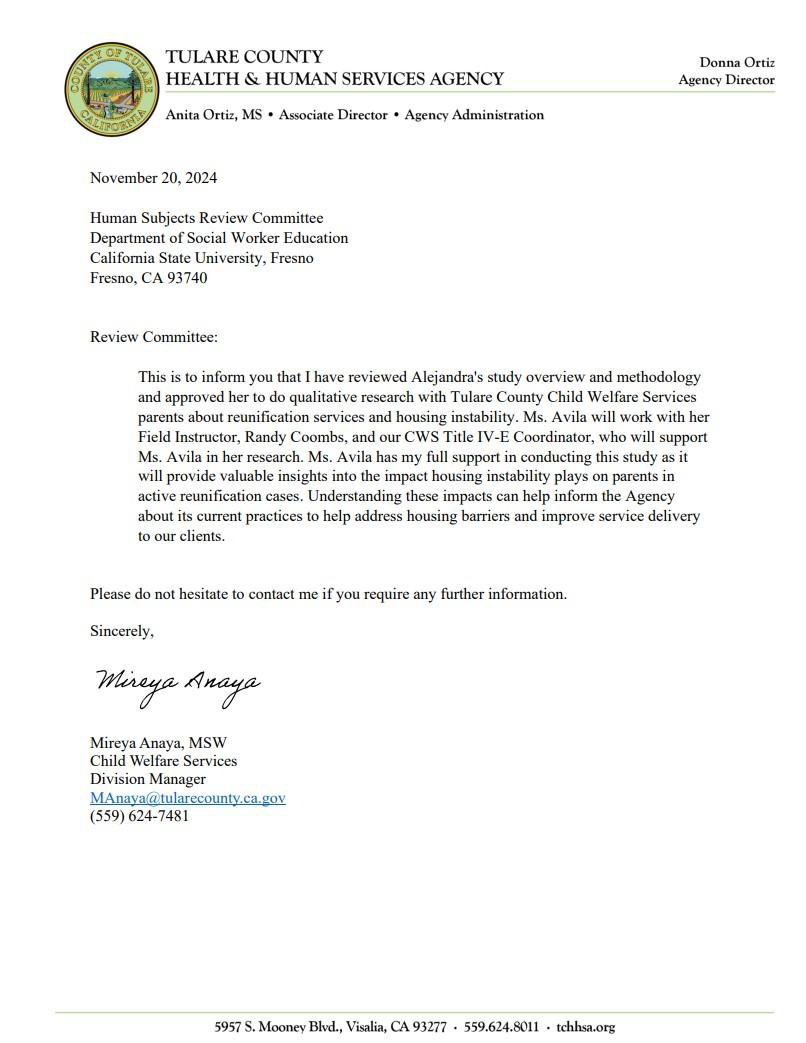
This was a qualitative study that used a phenomenological approach to understand the experiences of parents facing housing instability while participating in family reunification services within the child welfare system. All participants were clients of Tulare County Human Health and Services Agency and selected through purposive sampling. To collect data for this analysis, participants completed a demographic questionnaire and a semi structured interview. The overall goal of this study was to understand the intersection of housing instability and family reunification efforts to better support families and children in Tulare County. Appendix A contains a copy of the approval letter from Tulare County Human and Health Service Agency.
Relevance to Social Work
This study aimed to address the gaps in research by exploring the lived experiences of parents navigating housing instability while participating in family reunification services. Using a phenomenological approach and ecological systems theory this study aimed to provide a deeper insight into the challenges parents face to obtain housing stability and successful reunification outcomes. Despite the current research, there is still a need for understanding the lived experiences of families navigating housing instability while participating in child welfare reunification services.
Summary
Housing instability is a prevalent issue that affects families, particularly those involved in the child welfare system. This study sought to understand the lived experience of parents undergoing family reunification in child welfare while struggling with housing instability. To achieve this, this qualitative study used a phenomenological approach as it interviewed clients from Tulare County Health and Human Services. Participants completed a demographic questionnaire as well as participated in a qualitative interview. The guiding framework for the analysis of this study was ecological systems theory. This study raises awareness of the challenges families experience and identifies ways to better support them.
CHAPTER 2: LITERATURE REVIEW
Theoretical Framework
This study utilized ecological systems theory as the framework to examine housing instability and family reunification within the child welfare system. As a qualitative study, a phenomenological approach is used to understand parents' lived experiences. Ecological systems theory helps explore the environmental systems across different levels that influence parents' ability to navigate the reunification process while experiencing housing instability.
Phenomenological Approach
A phenomenological approach was used in this research to further understand the lived experience of an individual's unique circumstances in life. More specifically, this approach seeks to not only understand what phenomenon participants experienced but also how they experienced it (Neubauer et al., 2019). By utilizing this approach, participants were given the opportunity to describe personal experiences and share their stories related to their journey of navigating housing instability and family reunification services in child welfare.
Ecological Systems Theory
Bronfenbrenner's (1979) ecological systems theory explains human development by describing the interactions between individuals and their environmental systems. These systems include the microsystem, mesosystem, exosystem, and macrosystem (Bronfenbrenner, 1979). This framework provided this study with the foundation to understand the interactions between parents navigating housing instability and family reunification to overcome challenges. Although Bronfenbrenner's ecological systems theory originated in developmental psychology, it has been adapted to social work research to further understand complex social issues. In social work, ecological systems theory has been applied to analyze systemic influences on family well-being.
Empirical Literature Review
The goal of this literature review is to understand the current research on the intersection of housing instability and family reunification services within the child welfare system. This analysis will provide the foundation for understanding the lived experiences of parents undergoing housing instability while participating in family reunification services. Current literature explores housing instability, income and poverty, trauma histories, and housing and poverty interventions.
Housing Instability
Housing instability and homelessness remain a significant problem in the United States that disproportionately impacts families with children. The Annual Homeless Assessment Reports to Congress (AHAR) from HUD found that in 2023, roughly 653,100 people—or about 20 out of every 10,000 individuals—experienced homelessness on a single night in the United States (U.S. Department of Housing and Urban Development, 2023). The report revealed that approximately 186,100 individuals, or nearly 28%, were part of a family with children. In 2020, the AFCARS found that 20,534 child removal cases—or 9% of removals—were associated with housing problems. The AFCARS data system defines housing problems as homelessness and housing deemed “substandard, overcrowded, unsafe, or otherwise inadequate, resulting in their not being appropriate for the parents and child to reside together” (National Data Archive on Child Abuse and Neglect, 2021, p.61). Additional research indicates that housing instability impacts families in the child welfare system at higher rates, as homelessness can be a cause and consequence of child removal (Bai et al., 2019; Rodriguez et al., 2020). These data further emphasize the widespread prevalence of housing instability among families involved in family reunification services. As a result of housing instability, families that face homelessness experience vulnerabilities such as disruption of parent-child relationships and challenges accessing resources. Research has linked housing instability and homelessness with an increased likelihood of involvement in the child welfare system and is cited as a reason for child removal (Farmer et al., 2021; Rodriguez et al., 2020). Research also indicates that housing instability disrupts family stability (Paquette & Bassuk, 2009).
Studies have also identified the disproportionate impact of housing instability on specific populations. Single-parent households, families of color, and families living in urban poverty experience higher rates of housing instability (Courtney et al., 2004). Youth transitioning out of foster care are also among the populations most vulnerable to experiencing housing instability (Farmer et al., 2021). Given the challenges these groups already face, housing instability further perpetuates the cycle of insecurity they experience.
Furthermore, Rhea et al. (2023) associate housing as a key factor linked to mental health, family cohesion, and access to supportive services. This link is especially evident in families involved in the child welfare system. For these families, homelessness not only serves as a contributing factor to child removal but also interferes with reunification efforts (Courtney et al., 2004).
Income and Poverty
Societal factors such as income, inequality, lack of affordable housing, and systemic discrimination make obtaining housing stability more challenging (Rhea et al., 2023). These factors highlight the need for policies that address the root causes of housing instability rather than their symptoms.
Housing instability has a profound effect on parents and children in the child welfare system. Bassuk et al. (1997) found that families experiencing homelessness often face compounding adversities, such as food insecurity, unemployment, and exposure to violence, which impair their ability to meet child welfare goals. Additional studies have also found that homelessness is a result of systemic inequities, such as lack of access to affordable housing, insufficient income, and discrimination (Mabhala et al., (2017). This research further reveals how families experiencing homelessness remain in a cycle of instability.
Research by Haight et al.(2017a) explored the moral and psychological injury parents experience as they navigate housing instability and reunification in child welfare. Their findings revealed that parents reported feeling judged and stigmatized which exacerbates helplessness and alienation creating additional barriers to accessing services. Multiple studies have revealed that unstable living conditions impact the parent-child relationship and reduce meaningful engagement as it affects daily family routines (Anthony et al., 2018; Barrow et al., 2008). These studies highlight the negative impact housing instability has on family dynamics and interactions which can further complicate reunification efforts. Research also underscores the impact stress associated with housing instability can have on the development of children. Children’s educational performance, emotional well-being, and social development are impacted by the effects of instability (Kilmer et al., 2012) These additional consequences of housing instability create additional pressure on parents. They must navigate meeting their reunification goals while also managing the effects of their children’s trauma.
Income insecurity is a driving factor for housing instability. The link between financial stability and family cohesion is shown in research by Wood et al. (2022). They identify that a slight increase in earnings can greatly reduce the likelihood of child removal. Additional research has shown that poverty further complicates parents' ability to maintain stable housing, meet child welfare requirements, and provide consistent care (Bassuk et al., 1997).
The impact of poverty on shaping the experience of families struggling with housing and child welfare systems has also been explored. Paquette and Bassuk (2009) identified that families living in poverty are more likely to experience systemic biases and punitive responses from child welfare agencies, which often prioritize compliance over holistic support.
Trauma Histories
Research has shown that there is a correlation between families involved in child welfare, housing instability, and the history of trauma. Many homeless mothers have experienced domestic violence, sexual abuse, and substance use disorders which further complicate their ability to secure stable housing and meet child welfare expectations (Browne, 1993). Given the trauma histories of these families, trauma-informed practice must be utilized to support families effectively (Perlman et al., 2012).
Additional studies have revealed that trauma is not only a consequence of homelessness. But also, a contributing factor (Mabhala et al., 2017). The researchers analyzed the life stories of homeless individuals. The analysis revealed that adverse experiences, including childhood neglect and systematic marginalization, often lead to homelessness. This highlights the importance of interventions needed to address trauma to break the cycle of instability.
Housing and Policy Intervention
To address the needs of families experiencing housing instability, interventions targeted towards housing are essential. Programs that provide families with stable housing and wraparound support are effective. Research indicates that families participating in supportive housing programs are less likely to experience repeated child welfare involvement (Lenz-Rashid, 2017). Supportive housing programs have been shown to improve housing stability and family well-being among families involved in child welfare (Glendening et al., 2020).
Another model is Family Critical Time Intervention (FCTI), as studied by Bai et al.(2020). FCTI combines supportive housing with intensive case management. This supports families as they navigate through transitions and builds sustainable support systems. Unfortunately, there are limitations to these interventions. It has been identified that there is an insufficient number of supportive housing units available to meet the need (Farrell et al., 2010). As a result, many families are left without access to these resources.
There is a need for more policies that address the root causes of housing instability. In their study, Rodriguez et al. (2020) emphasized that expanding affordable housing options and increasing access to rental assistance could greatly reduce child welfare involvement. Service delivery models that address housing, employment, and mental health needs at the same time are also essential (D’Andrade, 2021).
Gaps in Literature
Programs such as FCTI and supportive housing models are effective in promoting housing stability for families (Bai et al., 2020; Farrell et al., 2010). Unfortunately, these interventions are not universally available, and systemic barriers continue to exist.
The implementation of these interventions provides hope for families struggling with housing insecurity while participating in child welfare reunification services. However, there continues to be limited research on the lived experience of parents navigating housing instability and child welfare involvement. In a recent study, Vaccaro (2023) noted the need for participatory research that centers on the voices of families experiencing housing instability. The experience of homeless fathers participating in reunification services is also an under-researched area, which leaves an incomplete understanding of how housing instability impacts fathers. Based on the literature reviewed, studies often focus on the overall outcomes rather than the lived experiences of families. However, there is a need to qualitatively explore the lived experiences of parents to understand the challenges they face while participating in child welfare reunification services amid housing instability.
Rationale for Thesis
This study aimed to address the gaps in research by exploring the lived experiences of parents navigating housing instability while participating in family reunification services. Using ecological systems theory and a phenomenological approach, this study aimed to provide a deeper insight into the challenges parents face in enhancing housing stability and successful reunification outcomes. Despite the current research, there is still a need for understanding the lived experiences of families navigating housing instability while participating in child welfare reunification services.
Summary
Ecological systems theory is the guiding theoretical framework in this qualitative study. A phenomenological approach was used to understand the lived experiences of participants and understanding of the intersection of housing instability and family reunification across multiple systems. The literature reviewed highlights that families experiencing housing instability have a higher likelihood of facing additional challenges due to systemic and situational factors that impact their reunification goals. Further exploration of the lived experiences of these families is needed to improve housing stability and successful reunification outcomes.
CHAPTER 3: METHODOLOGY
This study aimed to understand the experiences of parents facing housing instability while participating in family reunification services within the child welfare system. To further understand the challenges parents face, this qualitative study used a phenomenological approach and ecological systems theory. Additionally, key concepts such as housing instability and family reunification are defined. A demographic questionnaire and semi-structured interviews were utilized in collecting data for this analysis. The overall goal of this study was to understand the intersection of housing instability and family reunification efforts to better support families and children in Tulare County Child Health and Human Services Agency.
Research Question
The guiding research question for this study was: What are the experiences of parents facing housing instability as they participate in family reunification services?
Research Design
This was a qualitative study that utilized a phenomenological approach to gain a deeper understanding of parents' lived experiences related to housing instability and family reunification in the child welfare system. A phenomenological approach allowed participants to describe their personal experiences from their own perspectives, shedding light on the challenges they faced in navigating housing instability and the reunification process.
The theoretical framework that guided this study was ecological systems theory. This theory explains human development through the interactions between individuals and their environment at four levels: the microsystem, mesosystem, exosystem, and macrosystem. Using this framework allowed for in-depth exploration of the environmental systems influencing parents' ability to navigate the reunification process while struggling with housing instability.
Definitions
Housing Instability
In this research, the definition of housing instability is based on the U.S. Department of Housing and Urban Development (HUD) and the AFCARS. HUD defines housing instability as the absence of stable, safe, and affordable housing (U.S. Department of Housing and Urban Development, 2022.) AFCARS, on the other hand, defines housing problems as homelessness and housing deemed “substandard, overcrowded, unsafe or otherwise inadequate, resulting in their not being appropriate for the parents and child to reside together” (National Data Archive on Child Abuse and Neglect, 2021).
Family Reunification
For this study, the term Family Reunification Services is defined as outlined in the California Welfare and Institutions Code 361.5 (n.d.). According to the Code, Family Reunification Services are provided to parents to help a child return safely to the care of their family after being placed in foster care. The primary goal of family reunification services is to ameliorate the issues that lead to the child’s removal from their family. These services can include counseling along with other treatment services.
Human Subjects
The risks associated with participation in this study were minimal. However, some survey questions addressed sensitive topics that could have caused participants to feel anxious or overwhelmed. Before initiating interviews, participants were reminded that their participation in this study was voluntary, and they could withdraw at any time. Additionally, a community housing resource guide with local resources in Tulare County was provided to offer further support to participants.
All data were kept in a confidential password-protected computer, accessible to only the researcher. The data, along with any other material pertaining to this study, will be destroyed on August 30, 2026, after the expiration of the Co-Principal Investigator’s CITI Certificate.
Participants
Participants were selected by purposive sampling. This method allowed for targeted insights from individuals with direct experience of housing instability while engaged in reunification services. All participants were current clients of Tulare County Health and Human Services Agency. To be eligible, participants had to be parents experiencing or at risk of housing instability. Participants were contacted by telephone, informed of the study’s purpose, and asked if they would like to participate. If agreed, an appointment was scheduled to complete consent forms and begin the data collection process. The goal was to recruit ten participants for this study. Unfortunately, due to several individuals declining to participate, no responses to inquiries, and time constraints, only six individuals were successfully surveyed. Appendix B contains a copy of the consent form.
Data Collection
Data collection began with the completion of a demographic questionnaire. This 10-question, multiple-choice questionnaire provided key characteristics of the six participants surveyed. The first set of questions inquired about basic information such as age, gender, and race/ethnicity. Additional questions assessed employment status and receipt of government assistance. To obtain information about their housing circumstances, the questionnaire asked participants about their current living situations and whether they had experienced homelessness within the last 5 years. Lastly, the participants were asked how many children they had, whether those children were currently in their care, and the stage of the reunification process of their family. The demographic questionnaire took participants about 5 minutes to complete. Appendix C contains a copy of the Demographic Questionnaire.
Once the demographic information was collected, semi-structured interviews were conducted to further understand participants' experiences with family reunification services while navigating housing instability. Participants were asked 10 open-ended questions. The interview began by asking parents to describe their current housing situation and allowing them to elaborate on how long they had been in that situation if they chose to do so. The next question focused on past experiences with housing instability. The following questions of the interview inquired about the impact on their families, interactions with the child welfare system, and the specific challenges they face through the reunification process. As participants shared their stories, some responses addressed multiple questions or emerged as the conversation unfolded.
Each interview lasted approximately 30 minutes and was conducted over the phone. With participants' consent, their responses were recorded for analysis; however, participants were given the option to decline the recording if they preferred. After the data collection was complete, the recordings were reviewed for analysis. Appendix D provides a copy of the Semi-Structured Interview Guide.
Data Analysis, Coding, and Generation of Themes
The analysis began with a careful review of the interviews to complete word-for-word transcription. Interviews were listened to multiple times to ensure accuracy. To assist with identifying themes, the researcher reviewed the data several times. Initial codes were developed from each interview. After initial coding, the researcher reevaluated the codes across all participants into broader categories for themes. These data identified participants by numbers rather than pseudonyms. This approach allows for continued anonymity of participants. To ensure clarity and readability, excerpts have been lightly edited for conciseness. Table 1 shows a sample of the analysis.
| Participant | Statements | Codes |
|---|---|---|
| Participant 2 | “Can’t visit at the old house… we must go to parks or visit in other places which cost money. I'll pay if it means spending time with my kids, but it takes away from saving to get us a home.” | Visit in public spaces; Unexpected financial costs; Emotional toll |
| Participant 3 | “No housing meant no place for visits… cancelled visit due to child meltdown…” | Lack of housing limited parenting; Incident at library during visit |
| Participant 4 | “Visit at parks… hard not having own home” | Visit in public spaces; Emotional challenges of not having a home |
| Participant 5 | “Visits used to be at Family Builders… it was overwhelming and at times my son got bored.” | Visit setting was difficult due to child’s age |
Ethics and Values
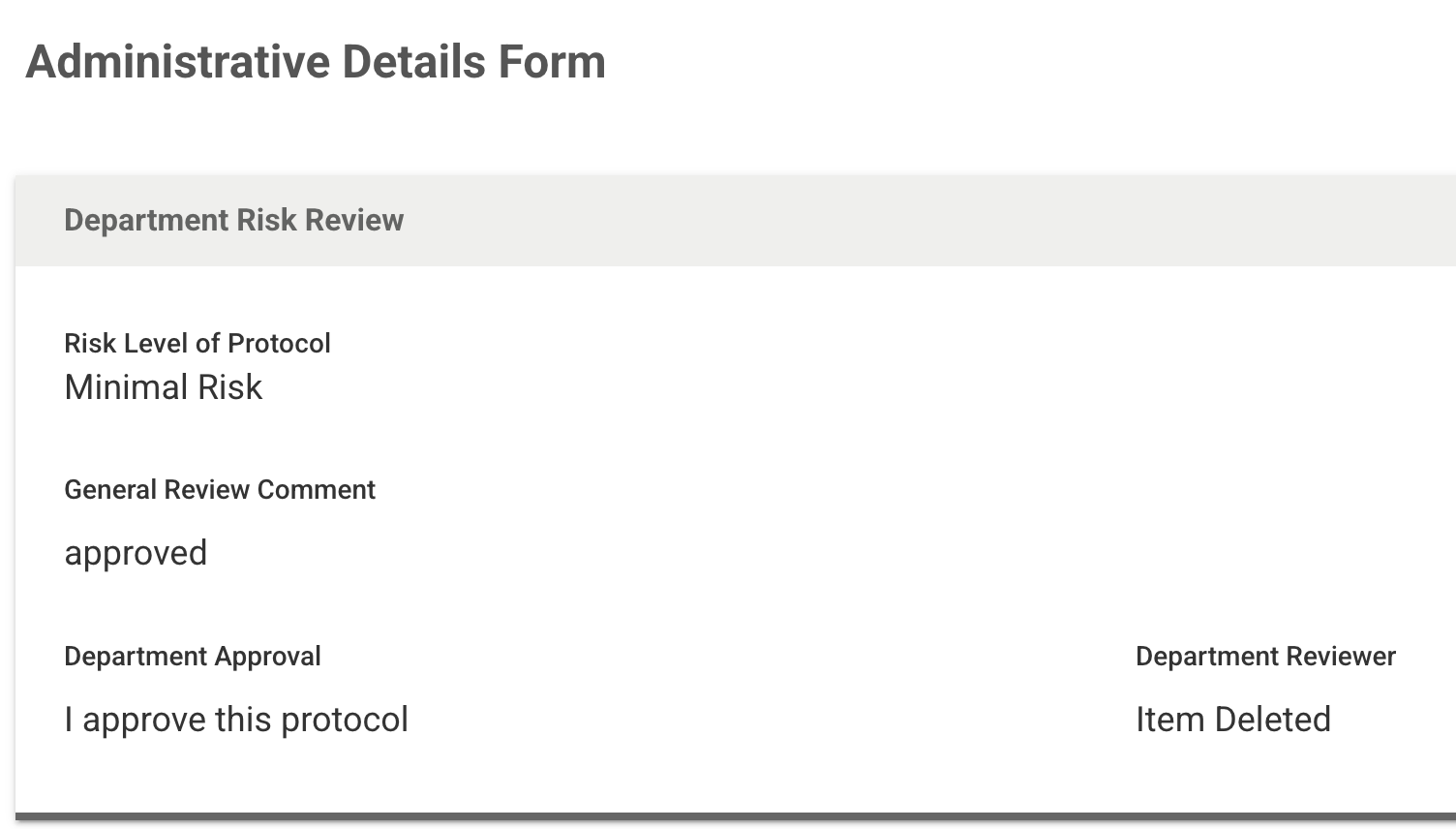
The research protocol was approved by California State University, Fresno Institutional Review Board. In addition, Tulare County Health and Human Services Agency reviewed the protocol and granted the researcher permission to interview clients participating in family reunification services. Prior to each interview, informed consent was obtained from all participants. Due to the sensitive nature of this study, participants were provided with a resource guide with local community resources that could offer additional assistance or support. Appendix E contains a copy of the Human Subjects Approval certificate.
Reflexivity
The researcher is a current graduate student in the Master of Social Work program at California State University, Fresno. In preparation for this study, the researcher completed graduate-level coursework during the 2023-2024 academic school year. Before beginning the MSW program, the researcher worked for six and a half years as a case-carrying social worker for Fresno County Child Welfare Services. Her case management experience is primarily in Planned Permanent Living Arrangement (PPLA) but also includes Family Finding and, most recently, Resource Family Approval (RFA). As a resident of the Central Valley, the researcher’s personal background, professional experience, and academic training have fostered a learning for how to effectively support families and children involved in the local child welfare system. Throughout this study, the researcher continuously reflected on her assumptions and biases to remain objective.
Summary
The primary goal of this study was to better understand the ways in which housing instability intersects with family reunification efforts for families in child welfare within Tulare County. A phenomenological approach was used for this qualitative study to understand participants' lived experiences. Ecological systems theory is the framework used to understand the impact of housing instability across all systems while engaging in family reunification services. Participants were clients of Tulare County Health and Human Services Agency who were participating in Family Reunification Services. Participants completed a demographic questionnaire prior to interviews. After interviews, the data collected was carefully transcribed, coded, and analyzed for themes.
CHAPTER 4: RESULTS
This chapter presents the results of the demographic questionnaire and the themes identified from the semi-structured interviews of the six participants. The demographic data provides characteristics of participants, which aid in understanding the population of this study. A phenomenological approach combined with ecological systems theory allowed this study to explore the lived experiences of parents as they navigate housing instability and family reunification services within child welfare. These results provide insight into the correlation of their surrounding systems and the impact on their journey towards having their children in their care.
Demographics
Appendix F displays the results of the demographic questionnaire completed by the participants of this study. The sample included six participants, with an even distribution in age categories: 25–34 (33.3%), 35–44 (33.3%), and 45 or older (33.3%). Most participants were female (83.3%). The racial/ethnic representation of participants was evenly split between Hispanic or Latino (50.0%) and White or Caucasian (50.0%). Half of the participants (50.0%) were experiencing homelessness, while the other was renting (33.3%) or temporarily staying with friends or family (16.7%). All participants (100%) reported receiving government assistance.
In regard to parental status, most participants (83.3%) did not have their children currently living with them. Employment status was evenly divided among all categories, with 33.3% employed full-time, 33.3% unemployed but seeking work, and 33.3% unemployed and not seeking work. Most participants (83.3%) experienced homelessness in the past 5 years. The distribution of participants among the stages of the reunification process varied. The number of participants that had a CWS case open for 6 months or more, and participants anticipating reunification within the next 6 months, was the same at 33.3%. The total number of participants that had their CWS cases open for less than six months and participants in a voluntary case were the same at 16.7%.
Theme 1: Negative Impact on Parent-Child Relationship
The first theme identified across multiple interviews with participants was the impact on the parent-child relationship. During the interview, Participant 2 expressed the emotional toll she faced when describing the impact of housing instability on the relationship with her children:
I can’t take them to that house because CWS believes the abuse happened there, but that’s not true. It’s really hard, you know? We have to go to the park or find other places to visit. Some places cost money, and it’s expensive. I would do anything for my kids, and I’ll pay if it means spending time with my kids. But that takes away from saving to get us a home.
Participant 3 also experienced an emotional toll as she attempted to visit with her children amid housing instability:
Not having housing made things really difficult. Like I mentioned before, with supervised versus unsupervised visits, if I had my own place, I could have taken my kids there. Instead, I had to meet them at public places like the library for hours. When visits are supervised, you can’t change locations. One time, my son had a meltdown at the library, and I had to cancel the visit because I wasn’t allowed to take him anywhere else, not even outside. It’s also hard when they get tired or hungry, and you’re somewhere without what they need. Having stable housing would make visits so much easier.
Participant 4 stated the following in relation to the impact of housing instability on her relationship with her child:
Sometimes, it’s difficult because we don’t have our own place to go home to. We visit at my daughter's house or go to the park, but it’s hard not having a place to call home. My daughter is holding on really strong. She loves me to death. It’s so hard for her to leave me, you know? Every time the day ends, it’s tough for her.
Participant 5 shared her parenting experience of visiting without stable housing:
We used to visit at Family Builders, but we don’t go there anymore. It was really overwhelming. Everyone there was so nice, but my son is two, and he just wants to go, go, go. At Family Builders, you have to stay in the room with toys, and he got bored of them really quickly.
Theme 2: Need for More Guidance
The second theme revealed across half of the interviews was the need for more guidance. Participant 2 described this by:
To be honest, they don’t really help. They just give you resources and expect you to call when you already have a lot going on after they’ve removed your children. Most of the time, the resources are dead ends because they’re either out of grants, don’t have the right information, or there’s a waiting list. It’s hard. When they give me these resources, I call, but there's a waiting list, or the grants are no longer available. Then I’m left thinking, “What else am I supposed to do?” And they just keep sending me more resources.
Participant 3 described her need for more guidance when she shared:
Yeah, it’s just the feeling of not being supported by them. It would help to meet more than once a month, you know? What would really help is having an advocate who can work with you, whether that’s the CWS worker or someone else. It’s not just about reunification. It's about meeting your goals for reunification, like housing, transportation, car insurance, and jobs. These are the things that are important for getting your kids back.
Participant 4 expressed the following related to needing more support during her interview:
As far as that goes, all they did was sign me up for a program, and that was it. I had to go on my own. Since then, nothing else has happened. I thought that because you’re with CPS and you need help, they would push the issue to others who can provide the support, you know, for the person who actually wants the help. But it feels like it’s all for nothing.
Theme 3: Financial Barriers
Financial barriers were the next theme identified among the majority of the participants interviewed. Participant 1 expressed the financial difficulties faced with securing housing, “I’ve been homeless, but I’ve already gotten an apartment for me and my son. It’s been hard, though, trying to find another place to live. Everything is so expensive, and rents are really high, especially here in Porterville.”
Participant 2 shared the financial barriers experienced when trying to apply for housing: “It was challenging to find a place to live. Our credit wasn’t approved, and we made too much money or not enough. Participant 2 also experienced financial difficulties as a result of visits with her children occurring in public spaces:
We have to go to the park or find other places to visit. Some places cost money, and it’s expensive. I would do anything for my kids, and I’ll pay if it means spending time with my kids. But that takes away from saving to get us a home.
Participant 3 also experienced financial hardships that have continued after the removal of her children from her care:
Homelessness has been tough. I lost my kids, and then my boyfriend had a brain aneurysm while they were in CWS. He survived after two months in the ICU. So, it’s been a mix of family issues, medical challenges, and financial struggles. I was on cash aid, but that got taken away, and I didn’t have the money to support myself.
Participant 3 expressed having to be creative with the little money she had and the EBT she received during visits with her children:
I had to pay for meals out of pocket sometimes during visits. For example, I’d go to Burger King because they accept EBT. But the one I went to didn't have a playground, so I’d use my EBT card at one Burger King, and then I’d go to a different one with a playground for my kids.
When thinking about the most challenging part of dealing with housing instability while trying to reunify, Participant 4 expressed:
I just need the money to be stable, you know? They give me bus passes to get to where I need to go, but it’s the money and the long process of getting into a place that’s taking me a lot of time.
Theme 4: Systemic Delays in Reunification
The last theme identified across half of the interviews with participants was systemic delays in the reunification process. Participant 2 has not been able to continue progressing with visitation with her children due to not having an appropriate space:
Right now, I’m getting support from both my parents to help me reunify with my children. I didn’t have transportation, so my mom has been driving me back and forth to my appointments so I can work on getting my children back as soon as possible. I’ve also moved back in with them and am staying in the spare bedroom. The room that I’m staying in is just one room. My children need their own place to sleep, their own rooms and beds.
Participants 3 experienced delays in the progression of her visits with her children:
If I had stable housing earlier, I probably would’ve already had overnight visits. I’ve completed everything they asked months ago about my reunification. But because I don’t have a home where I can bring my kids, I haven’t progressed to the ‘exceptional’ level in my case plan. That’s the only thing holding me back. Right now, I’m doing unsupervised visits, but I have to drive around town—even in the rain—to places like Burger King or Chuck E. Cheese. If I had a place to take them, our visits could be longer and more meaningful.
Participant 4 has experienced delays in the reunification with her daughter; she indicated:
It’s been hard for me because since I don’t have a job, I can’t quickly get a home for us. There’s some help, but not enough. I need some kind of income to get us a home, but they won’t help me unless I have that. I’m doing my best to find a job, but it takes time, and it’s really frustrating.
Summary
This chapter presents the themes that emerged from the six participant interviews. The themes that emerged were negative impact on the parent child relationship, need for more guidance, financial barriers, and systemic delays in reunification. Through the interview process, all participants were able to share their experiences of participating in family reunification amid housing instability.
CHAPTER 5: DISCUSSION
This chapter discusses the findings of this research as it aimed to understand the experiences of parents facing housing instability as they participate in family reunification services. There was an even distribution of age and employment status among the participants in this study. Most were female, received government assistance, and did not have their children living with them. Half of the participants were currently unhoused, and the majority had experienced homelessness in the past 5 years. The analysis interprets each theme as they relate to the literature and theory used in this research. Parents navigating reunification while experiencing housing instability faced layered challenges across personal, relational, financial, and systemic levels. Their experiences reveal a pressing need for more comprehensive and coordinated support that addresses not just compliance with court orders but also aids in the broader context of their lives:
Theme 1: Negative Impact on Parent-Child Relationship
The first theme identified from this study is the negative impact on the parent-child relationship. This theme describes the microsystem. The microsystem refers to an individual's immediate environment, which includes family, friends, and other close relationships (Bronfenbrenner, 1979). Many of the parents in this study were participating in visitation with their children. While a case is open in child welfare, the Court establishes a visitation order to support the ongoing relationship between parents and children while they are not living together. The child welfare agency is responsible for facilitating these visits.
Due to where they were in the reunification process and unstable housing, participants expressed having to visit in public spaces, such as restaurants, parks, or libraries. Visiting in public spaces was the case for four participants. These settings impacted the amount of time families could spend together as it was sometimes reduced but also introduced emotional distress. Participant 3 expressed feelings that highlight the feelings of helplessness parents feel due to the limits of the visit location. Like other participants in similar circumstances, she was unable to engage with her child naturally as they attempted to spend quality time together. The absence of adequate housing turned a parenting moment into an overwhelming challenge for both parent and child. In addition to expressing feelings of helplessness, Participant 3 experienced feelings of guilt and inadequacy after making the difficult decision to end the visit with her child. This disruption hindered her ability to build trust and provide emotional support to her child during a difficult moment. Without a space that supports privacy, comfort, and flexibility, parents’ efforts to bond with their children are limited. This often reinforces feelings of inadequacy and powerlessness during the reunification process.
Theme 2: Need for More Guidance
In half of the interviews, participants expressed the need for more guidance. They expressed feelings of insecurity and lack of confidence, more specifically as it related to the next steps after receiving referrals from their social worker. This describes the mesosystem. The mesosystem refers to the connections between different parts of an individual's microsystems (Bronfenbrenner, 1979). This includes the relationship between parents and their child welfare social worker. Even when resources were provided, the way information was delivered sometimes left parents feeling unsupported or unsure of how to proceed. Participant 2 emphasized the importance of having more support after referrals are given that are not useful. With more guidance, parents can continue navigating the reunification process while their children remain in care rather than being overwhelmed by more referrals. Participant 3 described the importance of support being consistent, individualized, and more frequent. She explained that even small actions could make a meaningful difference, not just in the reunification but to the family's continued success, as the additional guidance can help support other areas of need that are often overlooked. She expressed that, beyond meeting the basic requirements, significant progress depended on access to resources and having an advocate who could provide guidance through the complex process. Participant 4 experienced having to go to programs alone after she was enrolled. She expressed feeling like more support would have been provided, given she was engaging in CPS services, but instead felt like there was no progress or support due to the lack of guidance. Participants acknowledged that high caseloads limited their social workers’ ability to provide this type of support. Continuing without this, families may struggle to move forward with referrals, which can delay their progress towards reunification.
Theme 3: Financial Barriers
In many of the interviews, financial barriers were a prominent theme. This time relates to the exosystem. The exosystem involves larger social structures that indirectly impact individuals (Bronfenbrenner, 1979). Participants discuss how eligibility requirements for housing, such as credit checks and income thresholds, created significant obstacles in their reunification. Contradictory statements regarding credit and income added to the ongoing instability families faced while reinforcing a sense of helplessness. For some participants, the financial barrier extended beyond securing stable housing. It also bled into the coordination of their visits as they covered the costs of meeting at an alternative visiting location. The tradeoff between visitation costs and saving for stable housing highlights how these barriers can slow progress toward reunification. Families are forced to decide between saving or accommodating temporary visitation orders. Participants also shared the impact of losing public assistance benefits after their children were removed. All the participants indicated receiving some form of public assistance, but these benefits were reduced or terminated once their children were no longer living with them. As a result, families faced the difficult decision about how to allocate the limited funds, which meant at times having to choose between paying for food during visitation or saving for housing.
Theme 4: Systemic Delays in Reunification
The final theme that emerged from participants' interviews was systemic delays in reunification. This theme relates to the macrosystem. The macrosystem refers to the broader cultural and societal context that includes guidelines for increasing family visitation and child welfare case progress, which shape a family’s experience in the reunification process (Bronfenbrenner, 1979). The progression of family visitation and child welfare cases often means families are closer to reunification. However, when housing is a criterion, families face prolonged separation. Half of the participants discussed how progress in advancing visitation with their children was delayed due to inadequate housing. Participant 2 explained she was temporarily staying in the spare bedroom of a family member. Due to the short-term agreement and the limited size of the room, she was not able to accommodate sleeping arrangements for her children. This meant that their visits could not progress to overnight. A similar experience was shared by Participant 3. At the time of the interview, Participant 3 was in the process of preparing an apartment she secured, after a long waiting period. The apartment needed to be inspected by the Housing Authority. Once the Housing Authority approved the apartment, Participant 3 explained her child welfare worker could not progress her family's visitation to overnight. These experiences reveal how the requirements for reunification at the policy level can delay progression even after parents have demonstrated their commitment to completing court orders and demonstrating behavioral changes.
These findings offer insight into the lived experiences of parents navigating housing instability while participating in family reunification. As in prior research, participants in this study described housing instability as a cause and consequence of their involvement with the child welfare system (Bai et al., 2019; Rodriguez et al., 2020). The experiences shared by participants were similar to those found in research by Farmer et al. (2021) and Paquette & Bassuk (2009), indicating how the lack of stable housing disrupted family functioning, increased stress, and complicated efforts to reunify with their children. The emotional and psychological strain experienced by parents of this study also aligns with the work of Haight et al. (2017b), which documented the stigma, judgment, and moral injury felt by parents navigating child welfare and housing insecurity. These experiences further reinforced feelings of hopelessness, creating barriers to fully engaging in reunification services. This study also supports findings by Anthony et al. (2018) and Barrow et al. (2008), which emphasize how unstable housing environments interrupt daily routines, strain parent-child relationships, and reduce meaningful engagement. The participants faced the challenges of maintaining visitation or lacking privacy and comforting spaces to visit. The findings of this study support the findings of Wood et al. (2022) in that there is a strong connection between housing stability and child welfare involvement. Parents shared that a lack of resources, compounded by limited access to affordable housing, was a significant barrier to meeting child welfare expectations. As previous research has shown, even modest increases in income or rental support can greatly reduce the risk of child removal and facilitate family preservation (Rodriguez et al., 2020; Wood et al., 2022). This study sought to add to the research by shedding light on the multiple layers of parents' lived experience as they navigate family reunification amid housing instability.
Implications for Social Work Practice
In understanding the findings of this study as it relates to the implications of social work practice, it is essential the experiences of participants remain at the forefront. It is important for housing to be integrated as a core component of reunification planning. It is vital that housing is recognized not just as a need but as an essential part of child safety and family stability. Social workers should continue to assess a family’s housing as part of the reunification process and have the assessments remain throughout the life of the case. Given the challenges parents face in relation to housing instability, social workers should continue to approach families with empathy and understanding. Continuing to use a strengths-based approach will aid in recognizing the family’s resilience and reducing feelings of shame. Lastly, social workers should continue to promote change at the macro level for policies and reform surrounding housing instability. At the macro level, social workers can advocate for affordable housing policies and investments in long-term family support services.
It is important to note that as of January 1, 2025, in accordance with Assembly Bill 135, families receiving CalWORKs assistance will no longer have their household size adjusted to reflect that their children are no longer residing in the home after removal. This allows families to continue receiving the same financial assistance for up to 6 months if they are actively participating in family reunification services. The implementation of this bill serves as a recognition that financial barriers exist for families with children in foster care. It further recognizes that the previous practice of reducing their financial assistance increased the financial hardships families faced as they attempted to comply with reunification services to have their children returned to their care.
Limitations
This study faced limitations in its execution. The original goal was to engage a minimum of 10 participants in this study. However, only six individuals were successfully surveyed and interviewed. This shortfall was due to a combination of individuals declining to participate, no responses to inquiries, and time constraints. During recruitment, many potential participants expressed skepticism about this study. When explaining the purpose of this study further, participants were hesitant to discuss their housing situation and child welfare case. Given the sensitive nature of these topics, it is understandable that potential participants declined. Efforts to connect with potential participants were ongoing. Tulare County Human Health and Services Agency provided a list of twenty-seven potential participants. Unfortunately, several of the contact numbers were outdated or not in service. Although the agency obtained updated phone numbers, the primary challenge remained as individuals declined to participate. Lastly, time constraints posed a significant limitation. The time frame allotted for this research to be complete was 1 year. Due to delays in Human Subjects Approval, recruitment challenges, and personal life events, this research was completed within less than a 1-year timeframe.
Recommendation
To effectively continue supporting the reunification efforts of families that face housing instability, it is recommended that child welfare agencies include access to stable housing in their services, continue trauma-informed case management, and continue collaboration across systems. The approach would help shift the focus from housing as a need to a central component of family preservation and reunification planning. Child welfare agencies can continue to partner with housing authorities or community-based organizations to create dedicated housing pathways for families involved in reunification. Social workers should continue to be trained in trauma-informed care, so they are better equipped to support parents navigating systemic barriers. Child welfare agencies should also continue advocating for policy change to expand affordable housing and improve child welfare responses to homelessness.
Areas of future research should include the lived experience of fathers. Much of the research focuses on mothers, leaving the voices of fathers unheard. This study only consisted of two fathers. Understanding the lived experiences of fathers can help uncover details about gender-specific barriers faced and inform more inclusive family support practices. An additional area of future research can be exploring culturally specific barriers and support. The racial/ethnic representation of participants in this study was evenly split between Hispanic or Latino and White or Caucasian, which left the voices of individuals in other racial/ethnic groups unheard. Adding a cultural lens will help explore its intersections with housing instability and family reunification. This would support the development of more culturally responsive interventions.
Summary
This study examined the lived experience of six parents navigating housing instability while involved in the child welfare system in Tulare County. The study utilized Bronfenbrenner’s Ecological Systems Theory to explore how different system levels impacted the parents’ reunification efforts. This study found that parents faced layered challenges across personal, relational, financial, and systemic levels. Housing instability was identified as a cause and consequence of child welfare involvement. The research also suggested that it caused disruption to family functioning and disrupted reunification efforts. The findings of this study aligned with prior research on housing instability and child welfare. However, there continues to be a need for more research on this topic as this remains a prevalent issue for many families involved in the child welfare system.
REFERENCES
Anthony, E. R., Vincent, A., & Shin, Y. (2018). Parenting and child experiences in
shelter: A qualitative study exploring the effect of homelessness on the parent–child
relationship. Child & Family Social Work, 23(1), 8–15.
https://doi.org/10.1111/cfs.12376
Bai, R., Collins, C., Fischer, R., & Crampton, D. (2019). Pursuing collaboration to
improve services for child welfare-involved housing unstable families. Children and
Youth Services Review, 104, 104405.
https://doi.org/10.1016/j.childyouth.2019.104405
Bai, R., Collins, C., Fischer, R., & Crampton, D. (2020). Family critical time intervention with housing unstable, child welfare-involved families: Service providers’ and families’ experiences with the phases. Children and Youth Services Review, 119, 105592. https://doi.org/10.1016/j.childyouth.2020.105592
Barrow, S. M., & Laborde, N. D. (2008). Invisible mothers: Parenting by homeless women
separated from their children. Gender Issues, 25(3), 157–172.
https://doi.org/10.1007/s12147-008-9058-4
Bassuk, E. L., Buckner, J. C., Weinreb, L. F., Browne, A., Bassuk, S. S., Dawson,
R., & Perloff, J. N. (1997). Homelessness in female-headed families: Childhood and
adult risk and protective factors. American Journal of Public Health, 87(2), 241–248.
https://doi.org/10.2105/AJPH.87.2.241
Bronfenbrenner, U. (1979). The ecology of human development : experiments by nature and design. Harvard University Press.
Browne, A. (1993). Family violence and homelessness: The relevance of trauma histories in the lives of homeless women. American Journal of Orthopsychiatry, 63(3), 370–384. https://doi.org/10.1037/h0079444
California Welfare and Institutions Code, § 361.5. (n.d.). Family reunification services. Retrieved from https://leginfo.legislature.ca.gov/faces/codes_displaySection.xhtml?lawCode=WIC§ionNum=361.5
Courtney, M. E., McMurtry, S. L., & Zinn, A. (2004). Housing problems experienced by recipients of child welfare services. Child Welfare, 83(5), 393–422.
D’Andrade, A. (2021). Poverty’s pathways: How poverty hinders parents’ efforts to reunify with their children placed in foster care. Child Welfare, 99(4), 51–76.
Farmer, G. L., Heyman, J. C., Kelly, P. L., & Leaman, T. L. (2021). Prevalence of risk and protective factors for homelessness among youth in foster care. Child Welfare, 99(1), 1–24.
Farrell, A. F., Britner, P. A., Guzzardo, M., & Goodrich, S. (2010). Supportive housing
for families in child welfare: Client characteristics and their outcomes at discharge.
Children and Youth Services Review, 32(2), 145–154.
https://doi.org/10.1016/j.childyouth.2009.06.012
Glendening, Z. S., Shinn, M., Brown, S. R., Cleveland, K. C., Cunningham, M. K., & Pergamit, M. R. (2020). Supportive housing for precariously housed families in the child welfare system: Who benefits most? Children and Youth Services Review, 116, 105206. https://doi.org/10.1016/j.childyouth.2020.105206
Haight, W., Sugrue, E., Calhoun, M., & Black, J. (2017a). “Basically, I look at it
like combat”: Reflections on moral injury by parents involved with child protection
services. Children and Youth Services Review, 82, 477–489.
https://doi.org/10.1016/j.childyouth.2017.10.009
Haight, W., Sugrue, E., Calhoun, M., & Black, J. (2017b). Everyday coping with moral
injury: The perspectives of professionals and parents involved with child protection
services. Children and Youth Services Review, 82, 108–121.
https://doi.org/10.1016/j.childyouth.2017.09.025
Kilmer, R. P., Cook, J. R., Crusto, C., Strater, K. P., & Haber, M. G. (2012). Understanding the ecology and development of children and families experiencing homelessness: Implications for practice, supportive services, and policy. American Journal of Orthopsychiatry, 82(3), 389–401. https://doi.org/10.1111/j.1939-0025.2012.01160.x
Lenz-Rashid, S. (2017). Supportive housing program for homeless families: Foster care
outcomes and best practices. Children and Youth Services Review, 79, 558–563.
https://doi.org/10.1016/j.childyouth.2017.07.012
Mabhala, M. A., Yohannes, A., & Griffith, M. (2017). Social conditions of becoming homelessness: Qualitative analysis of life stories of homeless peoples. International Journal for Equity in Health, 16(1), 150. https://doi.org/10.1186/s12939-017-0646-3
National Data Archive on Child Abuse and Neglect. (2021). AFCARS foster care file codebook https://www.ndacan.acf.hhs.gov/datasets/pdfs_user_guides/afcars-foster-care-file-codebook.pdf
Neubauer, B. E., Witkop, C. T., & Varpio, L. (2019). How phenomenology can help us
learn from the experiences of others. Perspectives on Medical Education, 8(2), 90–97.
https://doi.org/10.1007/s40037-019-0509-2
Paquette, K., & Bassuk, E. L. (2009). Parenting and homelessness: Overview and introduction to the special section. American Journal of Orthopsychiatry, 79(3), 292–298.
Perlman, S., Cowan, B., Gewirtz, A., Haskett, M., & Stokes, L. (2012). Promoting positive parenting in the context of homelessness. American Journal of Orthopsychiatry, 82(3), 402–412. https://doi.org/10.1111/j.1939-0025.2012.01158.x
Rhea, L. L., Stetzel, A., Johnson, A., Bartos, K., & Alexander, F. (2023). Identifying family housing stability: Exploring the intersection of social determinants of health, housing, and child welfare involvement. Child Welfare, 100(6), 111–138.
Rodriguez, J. M., Shinn, M., Lery, B., Haight, J., Cunningham, M., & Pergamit, M. (2020). Family homelessness, subsequent CWS involvement, and implications for targeting housing interventions to CWS-involved families. Child Abuse & Neglect, 107, 104625. https://doi.org/10.1016/j.chiabu.2020.104625
U.S. Department of Housing and Urban Development. (2022). Measuring housing insecurity:
Index development using AHS data.
https://www.huduser.gov/portal/publications/Measuring-Housing-Insecurity-Index-Development-Using-AHS-Data.html
U.S. Department of Housing and Urban Development. (2023). The 2023 annual homeless assessment report (AHAR) to Congress: Part 1 – Point-in-time estimates of homelessness [PDF]. https://www.huduser.gov/portal/sites/default/files/pdf/2023-ahar-part-1.Pdf
Vaccaro, M.-E. (2023). Reflections on ‘doing’ participatory data analysis with women
experiencing long-term homelessness. Action Research, 21(3), 332–350.
https://doi.org/10.1177/1476750320974429
Wood, S., Scourfield, J., Stabler, L., Addis, S., Wilkins, D., Forrester, D., & Brand,
S. L. (2022). How might changes to family income affect the likelihood of children
being in out-of-home care? Evidence from a realist and qualitative rapid evidence
assessment of interventions. Children and Youth Services Review, 143, 106685.
https://doi.org/10.1016/j.childyouth.2022.106685
APPENDICES
APPENDIX A: APPROVAL LETTER FROM TULARE COUNTY HEALTH AND HUMAN SERVICE
APPENDIX B: CONSENT FORM
Purpose: You are invited to participate in a study conducted by Dr. Candy Madrigal and Alejandra Avila. We hope to learn more about the experiences of parents facing housing insecurity as they participate in family reunification services in child welfare. You were identified as a possible participant in this study because you are struggling with housing instability while participating in family reunification services.
Procedures: If you decide to participate, we will ask you to complete a demographic information questionnaire followed by an interview with ten semi-structured interview questions. It is projected that the interviews will take approximately 30 minutes to 1 hour to complete. The interviews will be recorded to ensure details are accurately captured. Interview recordings will also facilitate data analysis. If you would like to not be recorded, please notify the researcher. Research participants will only participate in this study one time.
Risks: As with any study involving collection of data, there is a possibility of breach of confidentiality of data. Every precaution will be taken to secure participants; information to ensure confidentiality. Data collected through this study will be kept in a confidential password-protected computer that only the researcher can access. Data along with any other information pertaining to this study will be destroyed on August 30, 2026 upon the expiration of the Co-Principal Investigator’s CITI Certificate.
The risks associated with participating in this study are minimal. However, some of the interview questions may ask about sensitive topics that could cause participants to feel anxious or overwhelmed. Before initiating interviews, you will be reminded that participation in this study is voluntary. You can choose to withdraw at any time. Additionally, you will be provided a community housing resource guide with local resources in Tulare County to offer further support.
Benefits: Although as a participant in this study, you receive no direct benefits, your contribution provides valuable insight into the experience of navigating family reunification while facing housing instability. These insights can help inform future initiatives and policies that seek to reduce housing instability and support families in similar situations.
Confidentiality: Any information obtained in connection with this study that can be identified with you will remain confidential and be disclosed only with your permission or as required by law. We will keep your data private by storing it in a confidential password-protected computer that only the researcher can access. Data along with any other information pertaining to this study will be destroyed on August 30, 2026 upon the expiration of the Co-Principal Investigator’s CITI Certificate.
Compensation: Participants will not be compensated for their participation in this study.
Your decision whether or not to participate will not affect your relationship with California State University, Fresno and Tulare County Child Welfare. If you decide to participate, you are free to withdraw your consent and to discontinue participation at any time without penalty. The Committee for the Protection of Human Subjects at California State University, Fresno has reviewed and approved this research.
If you have any questions now or at a later time, please contact Dr. Candy Madrigal at cmadrigal@mail.fresnostate.edu and she will be happy to answer them. Questions regarding the rights of research participants may be directed to Dr. Jennifer Randles, Chair, California State University, Fresno, Committee for the Protection of Human Subjects, (559) 278-4468, jrandles@csufresno.edu.
You will be given a copy of this form to keep for your records. You are making a decision whether or not to participate. Your signature indicates that you have read the information provided above and decided to participate.
Do you agree?
- Yes
- No
Date: ________________
APPENDIX C: DEMOGRAPHIC QUESTIONNAIRE
- Age:
- 18-24
- 25-34
- 35-44
- 45 or older
- Gender:
- Male
- Female
- Non-binary
- Other: ______________
- Race/Ethnicity (Select all that apply):
- Black or African American
- White or Caucasian
- Hispanic or Latino
- Native American or Alaska Native
- Asian or Pacific Islander
- Other: ______________
- Current Living Situation:
- Homeless (shelter, street, etc.)
- Temporarily staying with friends or family
- Transitional housing
- Renting
- Other: ______________
- Do you currently receive government assistance?
- Yes
- No
- How many children do you have?
- 1
- 2-3
- 4 or more
- Are your children currently living with you?
- Yes
- No (partially or entirely)
- What is your employment status?
- Employed full-time
- Employed part-time
- Unemployed (looking for work)
- Unemployed (not looking for work)
- Other: ______________
- Have you experienced homelessness in the past 5 years?
- Yes
- No
- What stage of the reunification process are you currently in?
- CWS case recently opened for less than 6 months
- CWS case opened for 6 months or more
- Anticipate reunifying within next 6 months
APPENDIX D: SEMI-STRUCTURED INTERVIEW GUIDE
- Can you tell me about your current housing situation?
- Probe: How long have you been in this situation?
- Probe: What do you feel led to your current circumstances?
- Have you experienced housing instability in the past? If so, can you describe how
those experiences have impacted you and your family?
- Probes: How often have you had to move? What challenges did you face each time?
- How has your housing instability impacted your efforts to reunify with your children?
- Probe: Were there any housing related barriers that impacted reunification? Did housing instability cause delays?
- What has been your experience with child welfare agencies regarding your housing needs?
- Probe: Did child welfare workers discuss housing with you? Were there services or referrals provided?
- Can you share some of the challenges you’ve faced in maintaining contact or visitation
with your children due to your housing situation?
- Probe: How has this affected your relationship with your children? Did housing instability make it difficult to visit your children?
- Are you receiving any support services (housing, legal, or social services) to help
with housing or reunification?
- Probe: How helpful have these support services been?
- Who has been your greatest source of support during this time?
- Probe: Have friends, family, community organizations, or case workers helped you along the way? How?
- What has been the most difficult part of dealing with housing instability while trying
to reunify with your children?
- Probe: Are there specific moments that were particularly challenging for you? How did you cope?
- What specific types of support do you think would make the biggest difference for
you?
- Probes: Is there any additional support or assistance you feel would help you in both securing stable housing and achieving reunification with your children?
- What are your hopes for the future in terms of housing and your family?
- Probe: How do you see your living situation and family dynamics changing after reunification?
APPENDIX E: HUMAN SUBJECTS APPROVAL
APPENDIX F: DEMOGRAPHIC CHARACTERISTICS OF PARTICIPANTS (N = 6)
| Variable | n | % |
|---|---|---|
| Age | ||
| 25–34 | 2 | 33.3 |
| 35–44 | 2 | 33.3 |
| 45 or older | 2 | 33.3 |
| Gender | ||
| Male | 1 | 16.7 |
| Female | 5 | 83.3 |
| Race/Ethnicity | ||
| Hispanic or Latino | 3 | 50.0 |
| White or Caucasian | 3 | 50.0 |
| Current Living Situation | ||
| Renting | 2 | 33.3 |
| Temporarily staying with friends/family | 1 | 16.7 |
| Homeless | 3 | 50.0 |
| Receiving Government Assistance | ||
| Yes | 6 | 100 |
| No | 0 | 0 |
| Number of Children | ||
| 2 | 2 | 33.3 |
| 3 | 1 | 16.7 |
| 4 or more | 3 | 50.0 |
| Children Currently Residing With Parent | ||
| Yes | 1 | 16.7 |
| No | 5 | 83.3 |
| Current Employment Status | ||
| Employed full-time | 2 | 33.3 |
| Unemployed (looking for work) | 2 | 33.3 |
| Unemployed (not looking for work) | 2 | 33.3 |
| Has Experienced Homelessness (Past 5 Years) | ||
| Yes | 5 | 83.3 |
| No | 1 | 16.7 |
| Stage of Reunification Process | ||
| Voluntary case | 1 | 16.7 |
| CWS case < 6 months | 1 | 16.7 |
| CWS case ≥ 6 months | 2 | 33.3 |
| Anticipate reunifying in < 6 months | 2 | 33.3 |
This HTML version was generated with AI assistance and may contain errors or omissions. The original approved PDF remains the official document of record. An alternative accessible format is available upon request from the document creator in accordance with Title II of the ADA.