LGBTQ Foster Youth, Curriculum
John Jennings, MSW
California State University, Fresno MSW project
Email: JJMSW89@gmail.com
Phone: (559)639-0336
Thank you
CCASSC members and partners for this
CCASSC stipend
About Me:
- Born Hayward, CA and Raised in Hanford, CA
- Lived in Hanford, Visalia, and Fresno
- Bachelor’s Degree in Social Work from Fresno Pacific University
- Master’s Degree in Social Work from California State University Fresno
- My lived Experience
What prompted interest in this project?
- Lack of education for Child Welfare Workers
- Risk factors that foster youth face
- Insufficient resources, particularly in Rural areas for LGBTQ foster youth
Problem Statement
LGBTQ Foster Youth-Disproportionately overrepresented tied to:
- Parental abandonment
- Runaway activity
- Truancy
- Parent conflict
- (McCormick et al., 2016)
Problem Statement Cont’d
- LGBTQ Youth have increased risk for poor health (CDC, 2019)
- Rural LGBTQ Youth suffer from:
- Increased risk of substance abuse
- Homelessness
- Suicide
- School Drop out
- Trauma that led to the child welfare engagement
- Lack of resources
Purpose of the curriculum
Purpose of the curriculum is to provide CPS workers, and service providers working with LGBT foster youth knowledge of increased risk factors this for this vulnerable population . Understanding the increased risk factors for LGBTQ Foster youth primarily in rural communities will highlight the importance of identifying sexual orientation and gender identity within the foster care system and providing diverse services that meet their unique needs
Lasting Implications LGBTQ Foster youth
- The early reactions to LGBTQ youth have lasting psychological effects that carry on into adulthood. The reactions and interactions of CPS workers and all other stakeholders can drastically change the youth’s trajectory
- “Equality means more than passing laws. The struggle is really won in the hearts and minds of the community, where it really counts” – Barbara Gittings (activist)

Definitions
Child Protective Services (CPS)
- Conceptual. CPS is a major system of intervention of child abuse and neglect(Child Protective Services, 2020).
- Operational. For the purpose of this research, CPS will also refer to permanent placement practices of the child welfare system. When discussing CPS workers, the author will be speaking stakeholders involved with the investigation, reunification, and permanent placement of all children involved in the child welfare system. The author utilizes the above definition in this work
Lesbian, Gay, Bisexual, and Queer (LGBTQ)
- Conceptual. According to UCSF the acronym LGBTQ stands Lesbian, Gay, Bisexual, and Transgender. This is an umbrella term used for the entire LGBTQ community (Lesbian, Gay, Bisexual, and Transgender Resource Center, n.d.).
- Operational. For this study, the acronym LGBTQ will be utilized when discussing all sexual minorities. As time and education has progressed more letters have been added to incorporate inclusivity to all sexual minorities. For this study we will utilize the acronym LGBTQ to blanket the entire sexual minority community including those who identify as anything other than heterosexual, and all those who identify as any sex other than that assigned at birth.
Rural
- Conceptual. According to Merriam-Webster Dictionary (2020), the term rural refers to the country, country people or life, or agriculture.
- Operational. For this study, rural areas will be referring to conservative areas primarily focused on religious and conservative values. Rural will also be referring to areas where there is a low population.
At-Risk
- Conceptual. Cambridge Dictionary, (2020) states that the definition of at-risk pertains to being in danger of being harmed or damaged, or of dying.
- Operational. For this Curriculum, the term at-risk when speaking about foster youth will pertain to any youth that is in danger of negative outcomes. The goal for children in foster care is to find permanency for them and their abstinence from dangerous or self-injurious behavior. Any foster youth considered at risk for the sake of the curriculum is in danger of not meeting these goals.
Victimization
- Conceptual. Merriam-Webster Dictionary, (2020) states that the term victimization is used to describe a verb meaning to make a victim, or to subject a person to deception or fraud.
- Operational. For the sake of this curriculum the term victimization will refer to the abuse that is suffered by the LGBTQ community. When speaking about the risk for victimization the curriculum will refer to sexual victimization, where LGBTQ youth are forced into sexual acts either for financial or physical gratification. Victimization will refer to physical and emotional abuse that the LGBTQ population is at risk for.
Social Climate
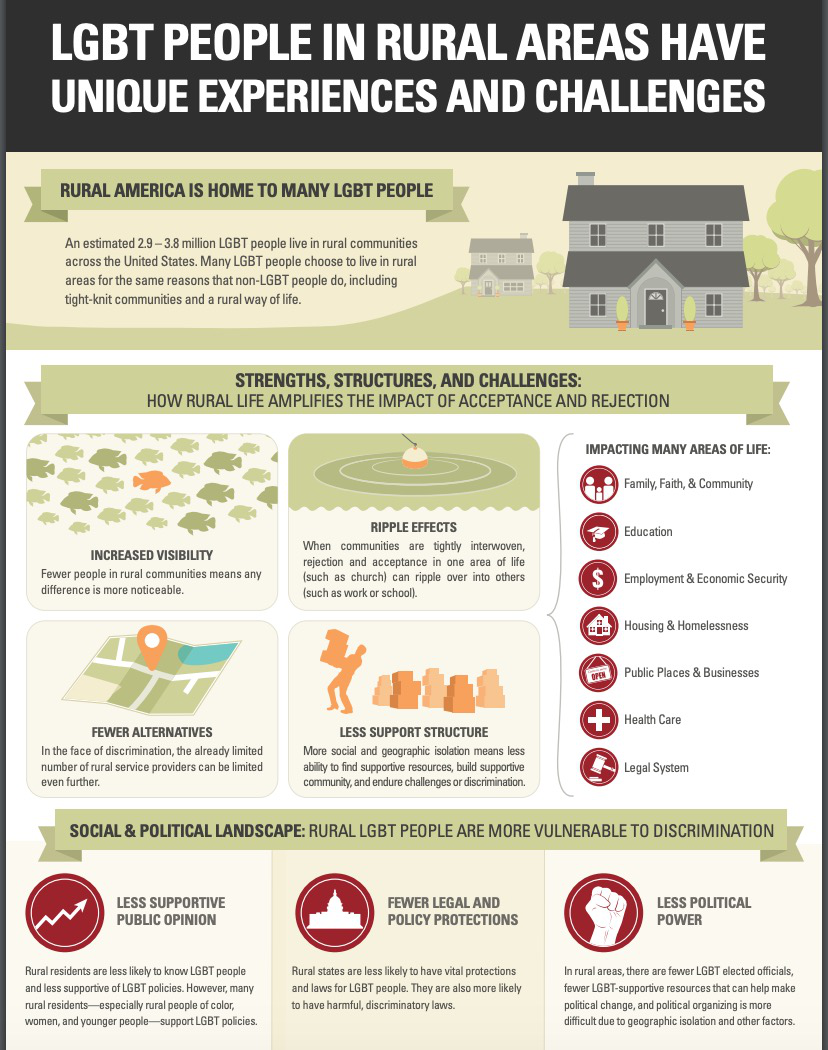
LGTB People in rural areas have unique experiences and challenges
Is there more support for LGBT Americans in Cities, Suburbs, or Rural Areas?
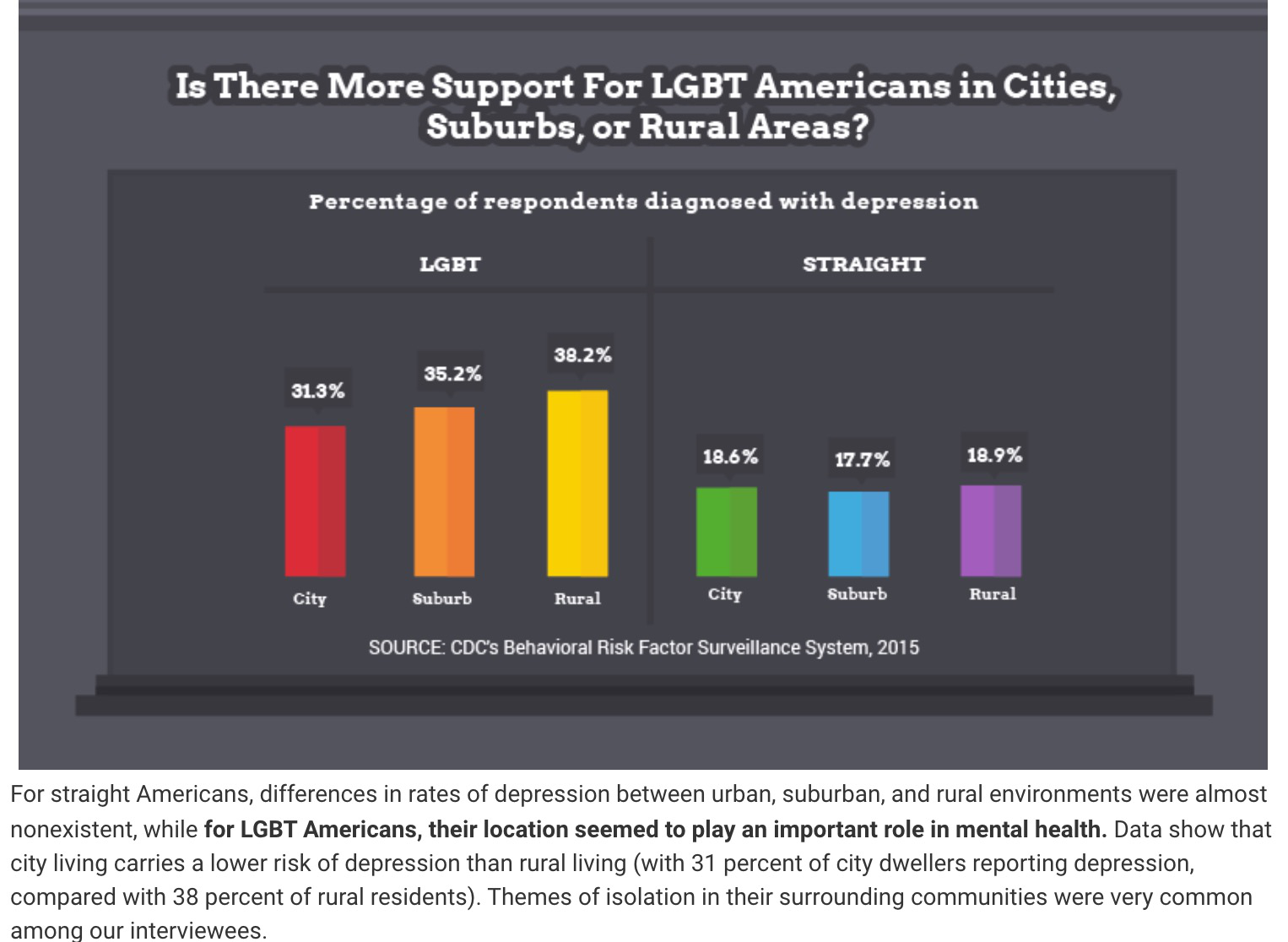
For straight Americans, differences in rates of depression between urban, suburban, and rural environments were almost nonexistent, while for LGBT Americans, their location seemed to play an important role in mental health. Data show that city living carries a lower risk of depression than rural living (with 31 percent of city dwellers reporting depression, compared with 38 percent of rural residents). Themes of isolation in their surrounding communities were very common among our interviewees.
Closer Look at Increased Risks
- LGBTQ youth are considered at-risk for health disparities, along with increased risk for bullying, dating violence, and suicide.
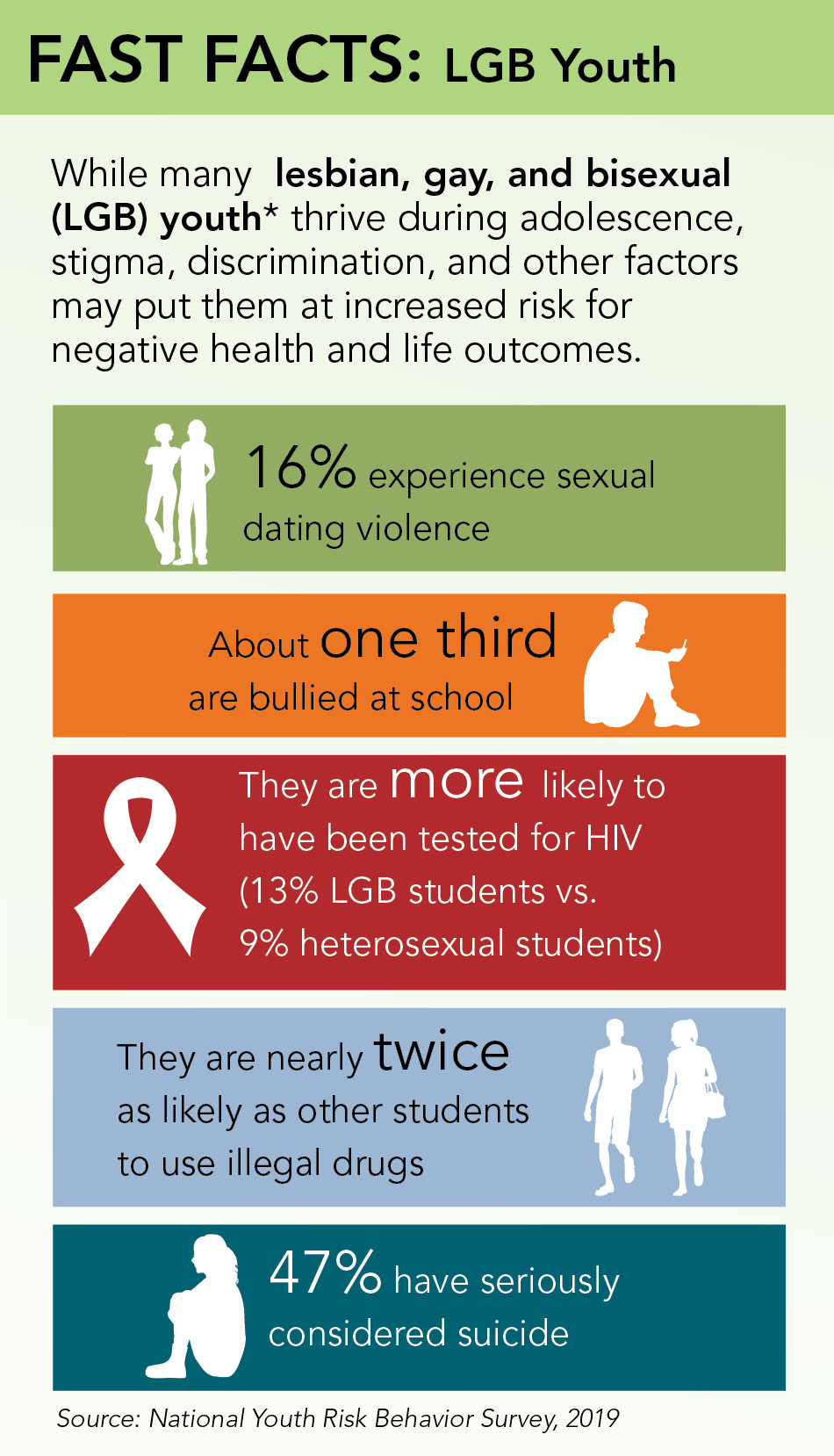
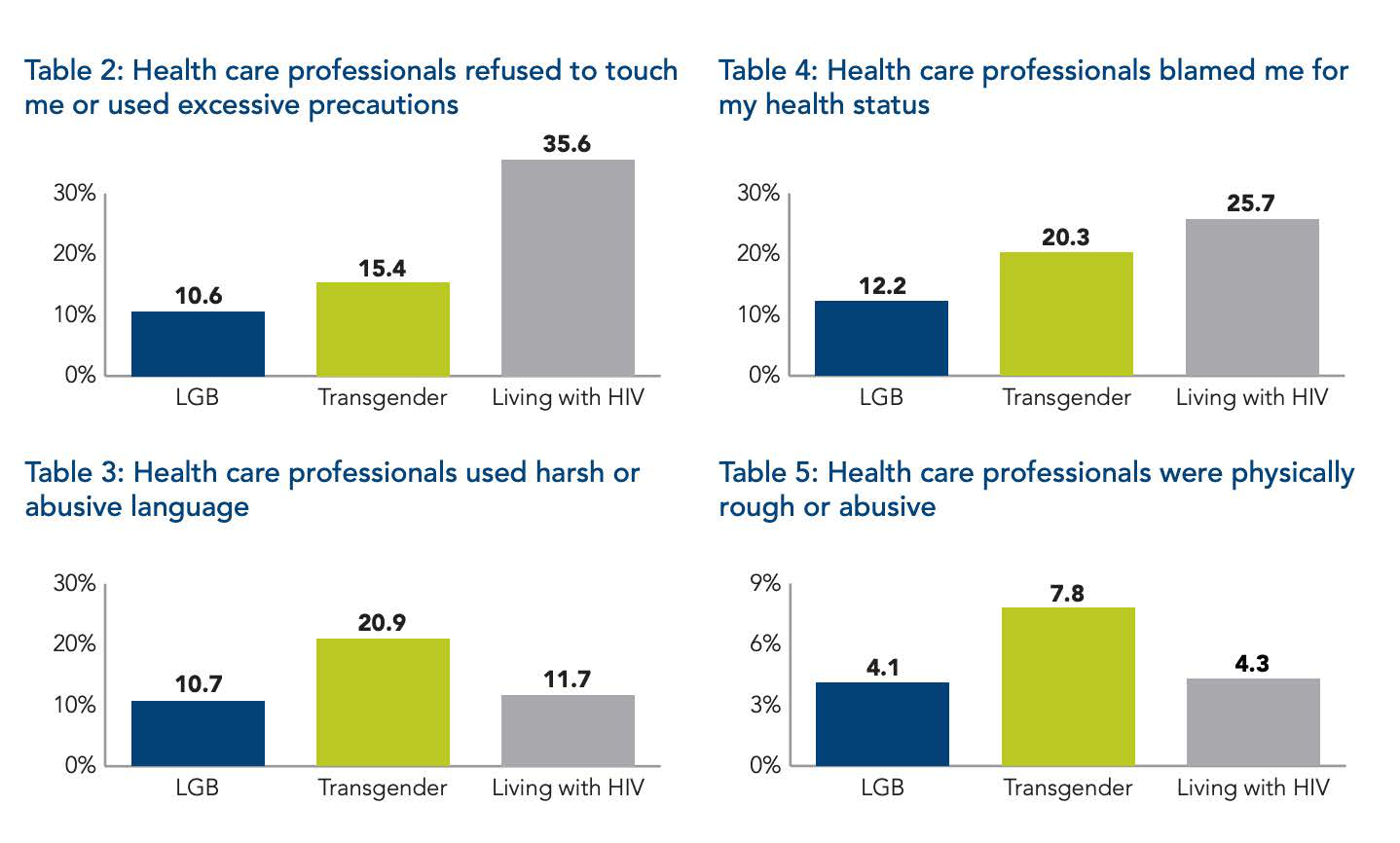
Health Discrimination
- LGBTQ populations are at greater risk of healthcare discrimination and are at greater risk of not seeking medical treatment.
- https://www.lambdalegal.rg/sites/default/files/publications/downloads/whcic-report_when-health-care-isnt-caring.pdf
School Bullying
- School bullying can cause many issues for LGBTQ youth. A lot of students feel uncomfortable reporting the bullying, and a lot of school staff are uncomfortable taking to students about the gender or sexual orientation.
This HTML version was generated with AI assistance and may contain errors or omissions. The original approved PDF remains the official document of record. An alternative accessible format is available upon request from the document creator in accordance with Title II of the ADA.