Center for Digital and Technological Innovation in Healthcare
Faculty Fellows
Faculty fellows from across campus will lead research, education and innovation initiatives for the center. They include:
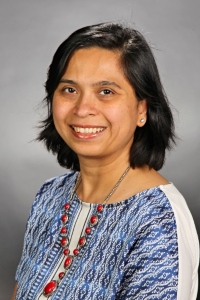
Dr. Nupur Hajela
Founding Director, CDTIH
Associate Professor
Department of Physical Therapy
College of Health and Human Services
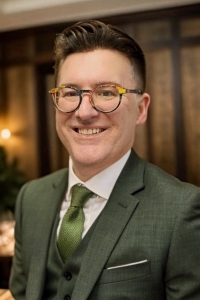
Dr. Marcus Crawford
Associate Director, CDTIH
Associate Professor
Department of Social Work Education
College of Health and Human Services
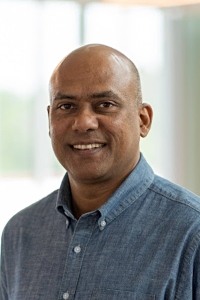
Dr. Akhil Kanodia
Clinical Professor
Department of Management
Craig School of Business
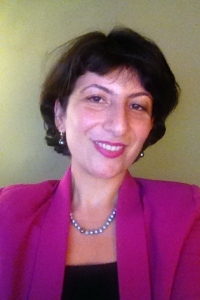
Dr. Vartuhi Tonoyan
Associate Professor
Department of Management
Craig School of Business
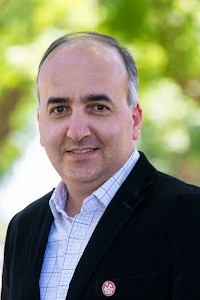
Dr. Hovannes Kulhandjian
Professor
Department of Electrical and Computer Engineering
Lyles College of Engineering
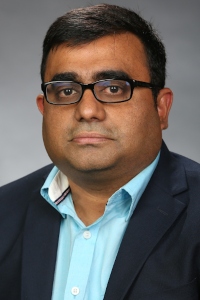
Dr. Soumyasanta Laha
Associate Professor
Department of Electrical and Computer Engineering
Lyles College of Engineering
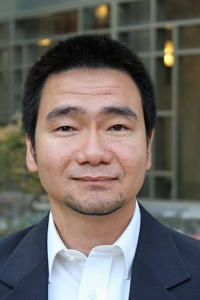
Dr. The Leo Nguyen
Associate Professor
Department of Mechanical Engineering
Lyles College of Engineering
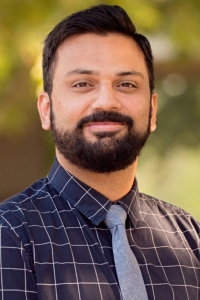
Dr. Rohit Mehta
Associate Professor
Department of Curriculum and Instruction
Kremen School of Education and Human Development
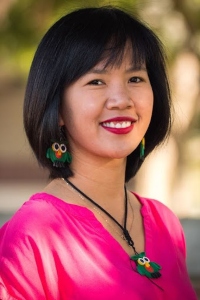
Dr. Trang Phan
Associate Professor
Department of Curriculum and Instruction
Kremen School of Education and Human Development
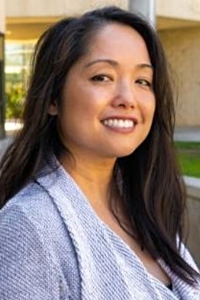
Dr. Ellen Woo
Associate Professor
Department of Psychology
College of Science and Mathematics
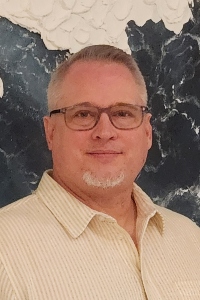
Dr. Matthew Wright
Assistant Professor
Department of Psychology
College of Science and Mathematics
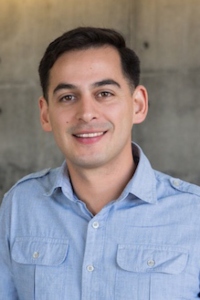
Dr. Emanuel Alcala
Assistant Director
Central Valley Health Policy Institute
College of Health and Human Services
1.Technology-Enabled Rehabilitation: Dr. Nupur Hajela research focuses on integrating virtual reality (VR), artificial intelligence (AI), and telehealth to enhance gait, balance, and functional recovery in individuals with neurological and chronic conditions such as Parkinson’s disease and others.
2.Expanding Access to Care: Her work aims to improve access to technology-driven physical therapy by developing and testing innovative, digital patient-centered assessment and interventions for individuals with diabetes and pre-diabetes, promoting continuity of care beyond traditional clinic settings.
3.Digital Assessment and Innovation: She leads studies on gamified digital and cutting edge technology based rehabilitation platforms, advancing evidence-based strategies to enhance mobility, gait, balance, and independence in older adults, veterans, and individuals with neurodegenerative disorder such as Alzheimer’s disease, Parkinson's disease
1. Dr. Marcus Crawford’s research focuses on underserved and marginalized groups
with an emphasis on immigrant and migrant communities and the PGBTQ+ population. Current
projects explore the personal narratives of immigrants during the Trump era and seek
to understand the role of religion and faith in the coming out process for LGBTQ+
individuals.
2. Dr. Crawford employs a mixed methods approach to research, relying on quantitative
analysis to describe populations and examine relationships among connected variables.
Using in depth personal narratives, Dr. Crawford seeks to create a richer, deeper
understanding of the lived experience.
3. Dr. Crawford also engages in macro level policy analysis and formulation and with program evaluation for agencies serving vulnerable populations.
1. Akhil Kanodia serves as the Clinical Professor of Practice in Entrepreneurship at California State University, Fresno. In this role, he teaches entrepreneurship courses and leads programs of the Lyles Center for Innovation and Entrepreneurship.
2. Akhil is the recipient of the 2024-2025 Provost’s Award for Outstanding Lecturer.
3. Akhil is a serial entrepreneur and has founded three startups in financial technology, education technology, and fashion. Earlier, he served as the Assistant Director of the Gilliam Center for Entrepreneurship at James Madison University. He has an MBA from the University of Nebraska at Omaha and Master of Science in Electrical Engineering from the University of Southern California.
2. Her scholarship extends to entrepreneurship and innovation in emerging markets, focusing on how institutional contexts influence entrepreneurial decision-making, opportunity recognition, firm innovation and growth.
3. A dedicated academic leader, Dr. Tonoyan has received numerous research honors. She serves on the Editorial Board of the Journal of Business Venturing and has published in leading academic journals in management and entrepreneurship.
She earned her Ph.D. in Management (with distinction) from the University of Mannheim, Germany, and a Diploma in Economics (with distinction) from Yerevan State University of National Economy, Armenia. Her academic career includes a postdoctoral fellowship at Stanford University’s Graduate School of Business, a faculty appointment at Stevens Institute of Technology, and visiting scholar positions at the University of Alberta. She is fluent in Armenian, Russian, German, and English.
1. Brain–Computer Interfaces & Assistive Neurotechnology:
My research develops noninvasive BCI systems that translate EEG and physiological
signals into real-time control for assistive devices—including direct control of a
prosthetic arm—supporting communication, mobility, and environmental interaction for
individuals with neurological and sensory impairments.
2. AI + Integrated Sensing for Rehabilitation:
I design AI models that fuse wearable/IMU, audio, and balance/posturography data
to assess gait, posture, and fall risk, delivering adaptive biofeedback (haptic, audio,
or AR/VR) to improve motor control and functional recovery in conditions such as Parkinson’s
disease and post-stroke.
3. Accessible Digital Health & Remote Monitoring:
I create patient-centered, low-cost tools (mobile apps, edge AI, home sensors) for
continuous monitoring and tele-rehab, enabling personalized interventions outside
the clinic and advancing equitable access to neurorehabilitation and aging-in-place
care.
1. Non-Invasive Continuous Glucose Monitoring: Dr. Laha has been working to develop
pain-free, real-time non-invasive alternatives to conventional finger-prick and minimally
invasive sensor-based methods. His work explores advanced sensing techniques: such
as optical, electromagnetic, or photoacoustic measurements, combined with signal processing
and machine learning algorithms to estimate blood glucose levels accurately without
invading the skin. A key aspect of the research involves designing low-power hardware
prototypes and integrating data-driven calibration models to compensate for physiological
variability, motion artifacts, and environmental noise. Ultimately, his work aims
to contribute toward safer, more accessible diabetes management solutions through
the convergence of biomedical engineering, embedded systems, and intelligent data
analytics. He has published several high-end peer reviewed conference and journal
articles, specific to this project.
2. Medical Imaging and Computer Vision: Dr. Laha has been recently working on improving
tumor boundary prediction through learning-based models, investigating how convolutional
neural networks (CNNs) can outperform classical edge detection techniques while maintaining
robustness and generalization. By conducting leak-free evaluations across multiple
random seeds and systematically comparing fully learnable, lightweight, and Sobel-conditioned
CNN architectures, his research highlights the value of integrating classical gradient
priors within modern deep learning frameworks. The goal is not only to enhance boundary
continuity and localization accuracy but also to reduce spurious interior activations
that can affect clinical interpretation. Through this integration of medical imaging
and advanced computer vision methods, his research contributes toward more reliable
diagnosis, precise treatment planning, and improved monitoring of disease progression.
3. Undergraduate Degree in Biomedical Engineering: Besides above research-based projects, Dr. Laha has been leading an initiative to develop a new undergraduate degree program in biomedical engineering. The initiative includes designing a multidisciplinary curriculum that integrates core subjects such as electronics, signal processing, biomechanics, biomaterials, along with hands-on laboratory training, project-based learning and relevant elective disciplines. Emphasis is placed on experiential education through research opportunities, industry partnerships, and clinical exposure to ensure students gain both theoretical depth and practical competence. There are three elective disciplines to choose from the program. Through this initiative, he aims to cultivate innovation-driven engineers capable of addressing real-world healthcare challenges while fostering collaborative research and translational impact.
2. Director of the Lyles College of Engineering Honors Program: Dr. Nguyen has recently been appointed to lead this program since January 2026.
3. Founder and CEO of Five Microns, Inc.: Based on his research project, Dr. Nguyen founded the company to produce the anti-tremor device, Tremolo, that helps action tremor patients regain their ability to do activities of daily living.
4. Healthcare and Assistive Device: Since the start of his professional career, Dr. Nguyen has been focusing on applying engineering principles on innovative healthcare and assistive products. He has worked on using smart materials in prosthetic legs, hands, ankle foot orthoses, assistive gloves, etc. Dr. Nguyen has also been developing devices to assist the rehabilitation process.
Dr. Mehta teaches a range of topics such as adolescent learning & development, advance educational research and measurement, cross-cultural theory, practitioner research, academic writing.
His research interests are on the intersections of pedagogy, creativity, technology, and coloniality. As an educator, Dr. Mehta wants to help teachers foster creativity through teaching and learning practices that are liberatory of multiple ways of being, knowing, and doing.
His collaborations have been published in academic journals like Review of Research in Education, Qualitative Inquiry, Thinking Skills and Creativity, Tech Trends, Journal of Technology and Teacher Education (JTATE), Journal of Digital Learning in Teacher Education (JDLTE), and Journal of Media Literacy Education (JMLE).
Dr. Trang Phan's research focuses on technology-enhanced learning, teacher education, and literacy development, with an emphasis on supporting diverse learners through innovative instructional strategies.
Dr. Phan’s current work involves exploring the intersection of artificial intelligence, digital tools, and inclusive education, aiming to enhance student engagement, digital literacy and learning outcomes. She has published and presented extensively on these topics, contributing to the advancement of educational technology and equitable learning practices.
Dr. Ellen Woo is a board-certified clinical neuropsychologist. She was recruited to the faculty at the UCLA Alzheimer’s Disease Center. Her roles included being the Co-Associate Director of the Center and the Founding Director of the Cognitive Neuropsychology Program.
She was also the Director of the Neuropsychology Program in the UCLA Department of Neurology, which included overseeing the Neuropsychology Clinic, the pre-doctoral and postdoctoral training programs, and neuropsychological research. She is currently the Director of the Cognitive Neuropsychology Laboratory at CSU, Fresno and an Adjunct Professor at UCSF in the School of Medicine.
Her research identifies people at risk for Alzheimer’s disease, with the goal that treatment can be applied as early as possible.
Dr. Matthew Wright is a clinical neuropsychologist. He was a faculty member at UCLA, where his roles included being the Director of Neuropsychology at Harbor-UCLA Medical Center, which included overseeing the neuropsychology clinic, the neuropsychology pre-doctoral and postdoctoral training programs, and neuropsychological research.
Faculty Member in the Team to Win Sports Medicine Fellowship at Harbor-UCLA Medical Center; Director of the Neurocognitive Equipotentiality, Recovery and Development (NERD) Laboratory at the Lundquist Institute; and Co-Director of the Neurotherapeutics Institute at the Lundquist Institute.
Dr. Wright is currently the Director of the NERD Laboratory at CSU, Fresno. Dr. Wright has developed evidence-based assessment procedures to identify cognitive deterioration that impacts everyday life in Traumatic Brain Injury and HIV/AIDS.
1. Environmental health disparities and asthma in vulnerable populations: Conducted multilevel spatial analyses examining how environmental pollution, concentrated poverty, and housing quality contribute to asthma-related emergency department visits and hospitalizations among predominantly Hispanic/Latinx communities in California's Central Valley, including analysis of CalEnviroScreen data to identify cumulative environmental impacts on pediatric health outcomes.
2. Structural determinants of health equity: Investigated how social and structural
factors—including healthcare access, neighborhood characteristics, housing conditions,
immigration policies (DACA), and economic marginalization—shape health outcomes and
disparities among Hispanic/Latinx and other underserved populations in the San Joaquin
Valley through community-based participatory research approaches.
3. Air pollution and chronic disease: Examined associations between particulate matter
exposure (PM2.5), traffic-related air pollution, and health outcomes including asthma
exacerbations, breast cancer mortality, cardiovascular disease, and COVID-19 risks,
with particular emphasis on disproportionate impacts in low-income and minority communities
lacking adequate environmental protections.