DOULA TOOLKITS BRIDGING THE GAP BETWEEN BIPOC PATIENTS, CLINICIANS, AND DOULAS: A QUALITY IMPROVEMENT PROJECT
Tasha Chatman-Perry
DNPc, FNP-C, MSN
California State University, Fresno
Doctor of Nursing Practice Program
ACKNOWLEDGMENTS
- Project Chair
Dr. Jimenez - Committee Member
Dr. Nair - Mentor & Committee Member
Dr. Francois - Family & Friends

INTRODUCTION
MATERNAL MORTALITY & MORBIDITY
-
Maternal Mortality & Morbidity rates in USA…
BIPOC Maternal Deaths…
BIPOC Maternal Deaths… Population Figure shown Black Women 49.5 USA Women 22.3 US White Women 19.0 US Hispanic Women 16.9 US Asian Women 13.2 Canadian Women 8.4 UK Women 5.5 -
Black Women die 3x more than White Women…
- Slavery…
- Historical Racism…
- SDOH…
- Implicit Bias
-
Doula derived from a Greek word meaning Female Slave…
Provide support during pregnancy, labor, and postpartum…
Popular 1970’s-1980’s: Natural Birth…
DONA 1992…
Cost $800-$2500
-
EBP of Doula Care…
- Decreased c-section rate
- Decreased low birth weight
- Decreased analgesia usage
- ^ Increase breastfeeding
- Shorten the duration labor
-
CA SB 65…
Doula Reimbursement for Medi-Cal patients
WHAT IS A DOULA
A trained professional who provides continuous physical, emotional, and informational support to their client before, during, and shortly after childbirth to help them achieve the healthiest, most satisfying experience

PROBLEM QUESTION
In BIPOC patients receiving prenatal care, does the implementation of a doula toolkit for clinicians, compared to current practices, impact patient requests for doula services during childbirth?
Collaboration

Knowledge of Doula care

PURPOSE OF THE PROJECT
- Assess and improve clinician collaborative barriers with CBD.
- Assess BIPOC patient utilization of doula services.
PHILOSOPHICAL FRAMEWORK
Critical Race Feminism
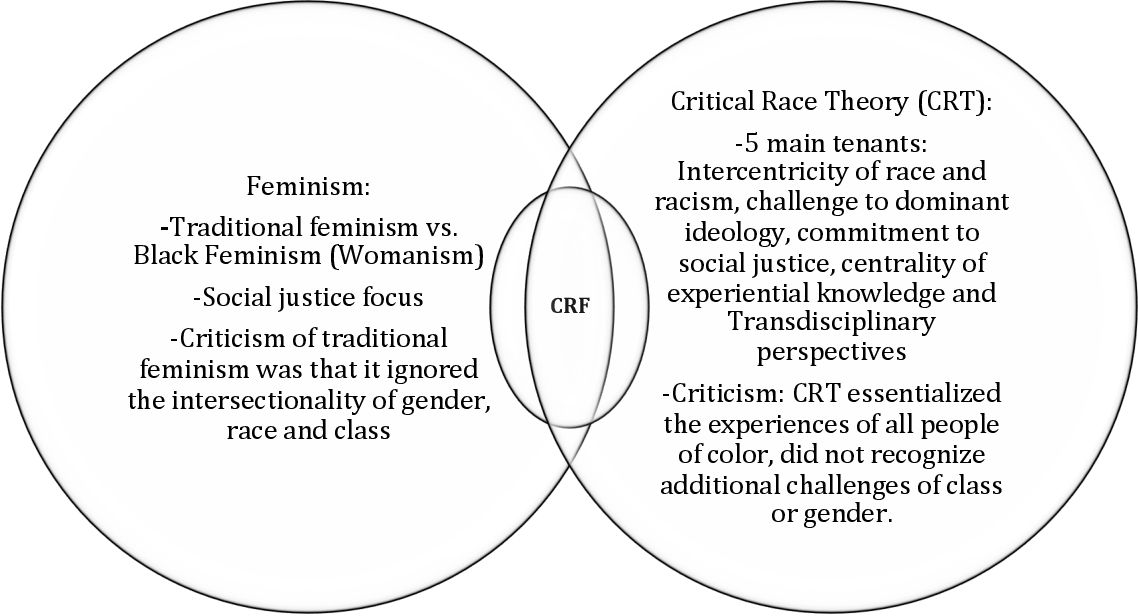
Feminism:
- Traditional feminism vs. Black Feminism (Womanism)
- Social justice focus
- Criticism of traditional feminism was that it ignored the intersectionality of gender, race and class
Critical Race Theory (CRT):
- 5 main tenants: Intercentricity of race and racism, challenge to dominant ideology, commitment to social justice, centrality of experiential knowledge and Transdisciplinary perspectives
- Criticism: CRT essentialized the experiences of all people of color, did not recognize additional challenges of class or gender.
CRF appears in the overlap between Feminism and Critical Race Theory (CRT).
PHILOSOPHICAL FRAMEWORK
Intersectionality

The diagram places POWER at the center and identifies MARGINALIZED positions toward the outer edge, showing intersecting dimensions of privilege and marginalization.
| Dimension | Inner ring | Middle ring | Outer ring |
|---|---|---|---|
| Citizenship | Citizen | Documented | Undocumented |
| Skin Color | White | Different Shades | Dark |
| Formal Education | Post Secondary Education | High School Education | Elementary Education |
| Ability | Able-bodied | Some Disability | Significant Disability |
| Attractiveness | Heterosexual | Gay Man | Lesbian, Bisexual, Pansexual, Asexual |
| Neurodiversity | Neurotypical | Neurodivergent | Significant Neurodivergence |
| Mental Health | Robust | Mostly Stable | Vulnerable |
| Body Size | Slim | Average | Large |
| Housing | Property Owner | Sheltered or Renting | Homeless |
| Wealth | Rich | Middle Class | Poor |
| Language | English | Learned English | Non-English Monolingual |
| Gender | Cisgender Man | Cisgender Woman | Trans, Intersex, Nonbinary |
Adapted from James R Vanderwoerd (“Web of Oppression”), and Sylvia Duckworth (“Wheel of Power/Privilege”).
THEORETICAL FRAMEWORK
Knowledge To Action Framework (KTA)
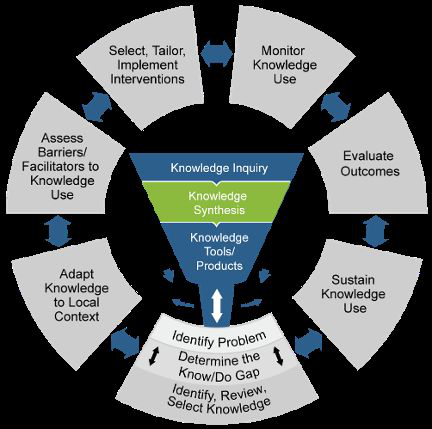
Knowledge creation
- Knowledge Inquiry
- Knowledge Synthesis
- Knowledge Tools/Products
Knowledge to action cycle
- Identify Problem; Determine the Know/Do Gap; Identify, Review, Select Knowledge
- Adapt Knowledge to Local Context
- Assess Barriers/Facilitators to Knowledge Use
- Select, Tailor, Implement Interventions
- Monitor Knowledge Use
- Evaluate Outcomes
- Sustain Knowledge Use
The diagram uses arrows to show an iterative cycle around the knowledge-creation center.
REVIEW OF THE LITERATURE
-
Cooper Owens & Felt, 2019 state how the “legacies of slavery today are seen in structural racism that has resulted in disproportionate maternal and infant death among African Americans ( p. 1341).
Mallick et al., 2022 states, “mistreatment was more common among women of color including Black, Hispanic, Indigenous and Asian women and especially low-income women of color” ( p. 824).
-
BIPOC birthing persons with a doula can have low rates of cesarean section, decreased rates of low-birth infants, and increased initiation of breastfeeding (Ogunwole et al., 2022).
According to Arteaga et al., 2023, the “participants expressed satisfaction with the doula care they received and generally described the care as beneficial to their birth experience” ( p. 261).
-
Knocke et al., 2022 stated, “The high cost associated with cesarean versus vaginal deliveries can make coverage reimbursement for doula services cost-effective for state Medicaid programs” ( p. 5).
The article reports 71,090 fewer cesarean surgeries, 35 fewer uterine ruptures, nine fewer hysterectomy surgeries, 16 fewer maternal deaths, 2,673 quality-adjusted life years (QALYS (meaning years of optimal health)), and a saving of $364 million (Greiner et al., 2019).
-
Lucas & Wright, 2019 mention that “more education is needed for members of the maternity care team to fully understand each other’s roles and the importance of collaboration” (Lucas & Wright, 2019, p. 37).
Capacity barriers include limitations in understanding roles and an inability to establish rapport related to brief interactions and meetings at birth (Khaw et al., 2023).
METHODS
| Maternal Mortality & Morbidity Questionnaire | Doula Toolkit |
|---|---|
|
Clinicians: MD, NP, RN, MA
|
Clinicians: MD, NP, RN, MA
|
DOULA FLYER
Inclusion Criteria
- prenatal 18-40
- BIPOC
- English speaking
- Medi-Cal recipient
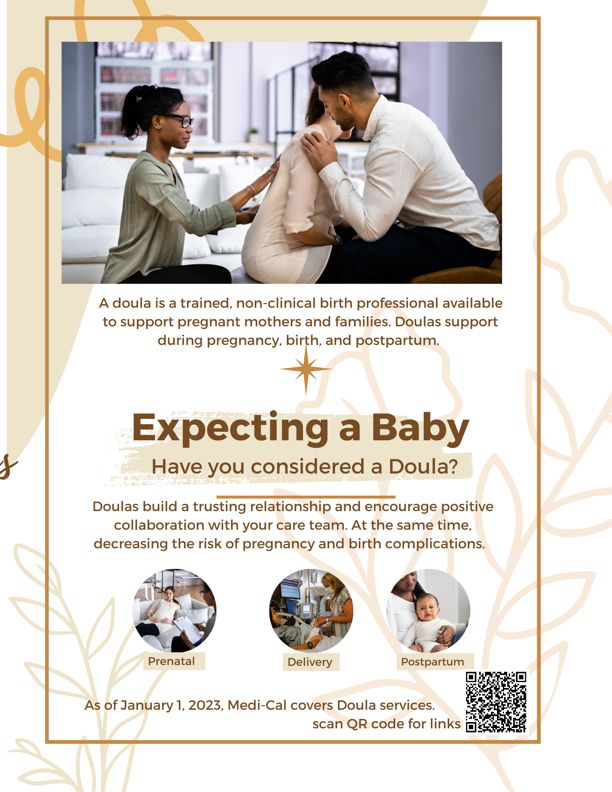
Expecting a Baby
Have you considered a Doula?
A doula is a trained, non-clinical birth professional available to support pregnant mothers and families. Doulas support during pregnancy, birth, and postpartum.
Doulas build a trusting relationship and encourage positive collaboration with your care team. At the same time, decreasing the risk of pregnancy and birth complications.
- Prenatal
- Delivery
- Postpartum
As of January 1, 2023, Medi-Cal covers Doula services.
scan QR code for links
DISCUSSION
Maternal Mortality & Morbidity Questionnaire
pre-implementation: 68 questionnaires given
24 returned: 20 utilized
post-implementation: 68 questionnaires given
18 returned: 16 utilized
Implementation Doula Flyer
baseline chart review: 2 charts
implementation: approx. 1200 visits: 97 charts : 8 charts
Doula flyer given by RN 88%, NP 7%
SPEARMAN’S RANK ORDER
Pre-Implementation Questionnaire
| Variable | Statistic | Riskfactors_MMM | Role_doulapregnancy (2) | CLS_birth | Educate_ptdoula | Refer_ptdoula |
|---|---|---|---|---|---|---|
| Riskfactors_MMM | Spearman's rho | — | ||||
| df | — | |||||
| p-value | — | |||||
| Role_doulapregnancy (2) | Spearman's rho | 0.305 | — | |||
| df | 18 | — | ||||
| p-value | 0.191 | — | ||||
| CLS_birth | Spearman's rho | 0.345 | 0.859*** | — | ||
| df | 18 | 18 | — | |||
| p-value | 0.136 | <.001 | — | |||
| Educate_ptdoula | Spearman's rho | 0.120 | 0.137 | 0.010 | — | |
| df | 18 | 18 | 18 | — | ||
| p-value | 0.614 | 0.565 | 0.968 | — | ||
| Refer_ptdoula | Spearman's rho | 0.030 | -0.062 | -0.123 | 0.552* | — |
| df | 18 | 18 | 18 | 18 | — | |
| p-value | 0.899 | 0.796 | 0.605 | 0.012 | — |
Note. * p < .05, ** p < .01, *** p < .001
Post-Implementation Questionnaire
| Variable | Statistic | Riskfactors_MMM | Role_doulapregnancy | CLS_birth | Educate_ptondoula | Refer_pttodoula |
|---|---|---|---|---|---|---|
| Riskfactors_MMM | Spearman's rho | — | ||||
| df | — | |||||
| p-value | — | |||||
| Role_doulapregnancy | Spearman's rho | 0.471 | — | |||
| df | 14 | — | ||||
| p-value | 0.066 | — | ||||
| CLS_birth | Spearman's rho | 0.382 | 0.736** | — | ||
| df | 14 | 14 | — | |||
| p-value | 0.145 | 0.001 | — | |||
| Educate_ptondoula | Spearman's rho | 0.130 | 0.588* | 0.408 | — | |
| df | 14 | 14 | 14 | — | ||
| p-value | 0.632 | 0.017 | 0.117 | — | ||
| Refer_pttodoula | Spearman's rho | 0.148 | 0.503* | 0.319 | 0.964*** | — |
| df | 14 | 14 | 14 | 14 | — | |
| p-value | 0.585 | 0.047 | 0.229 | <.001 | — |
Note. * p < .05, ** p < .01, *** p < .001
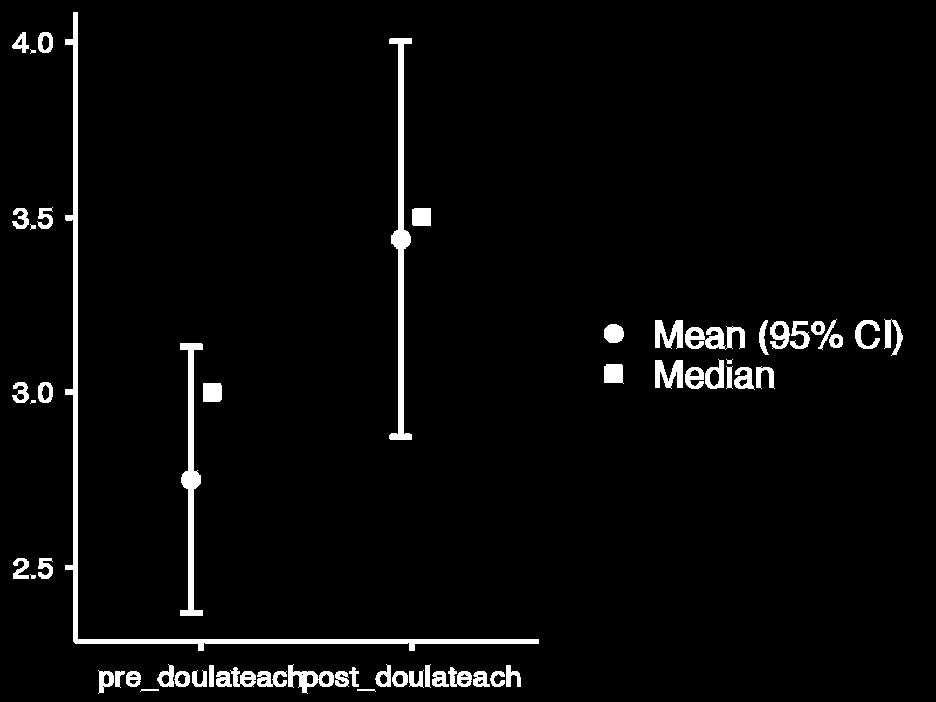
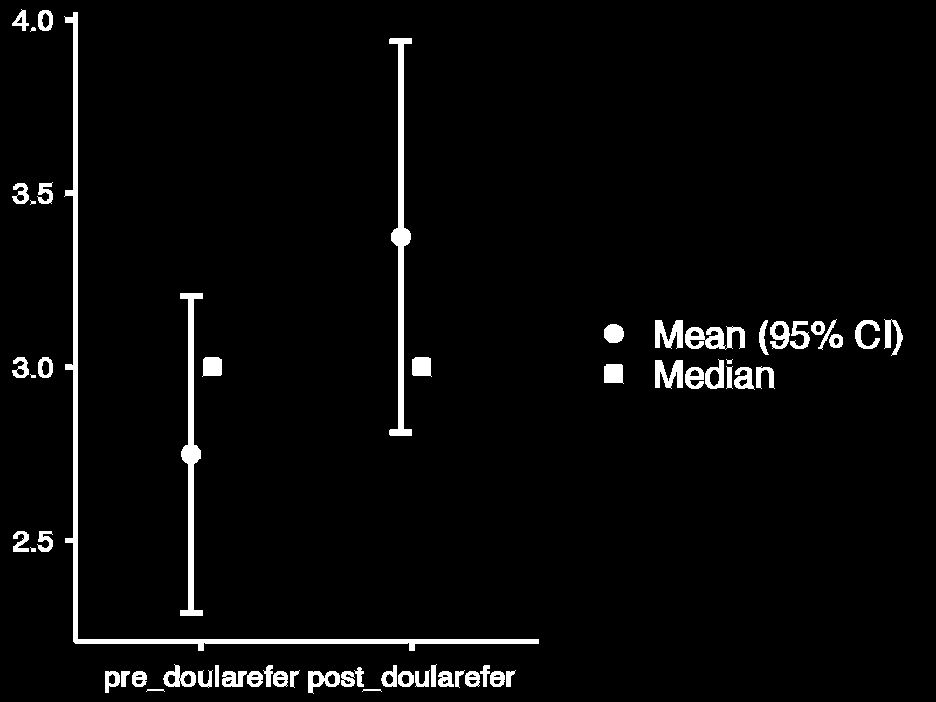
PAIRED T-TEST
Referring
T(15)-1.74,p=.102
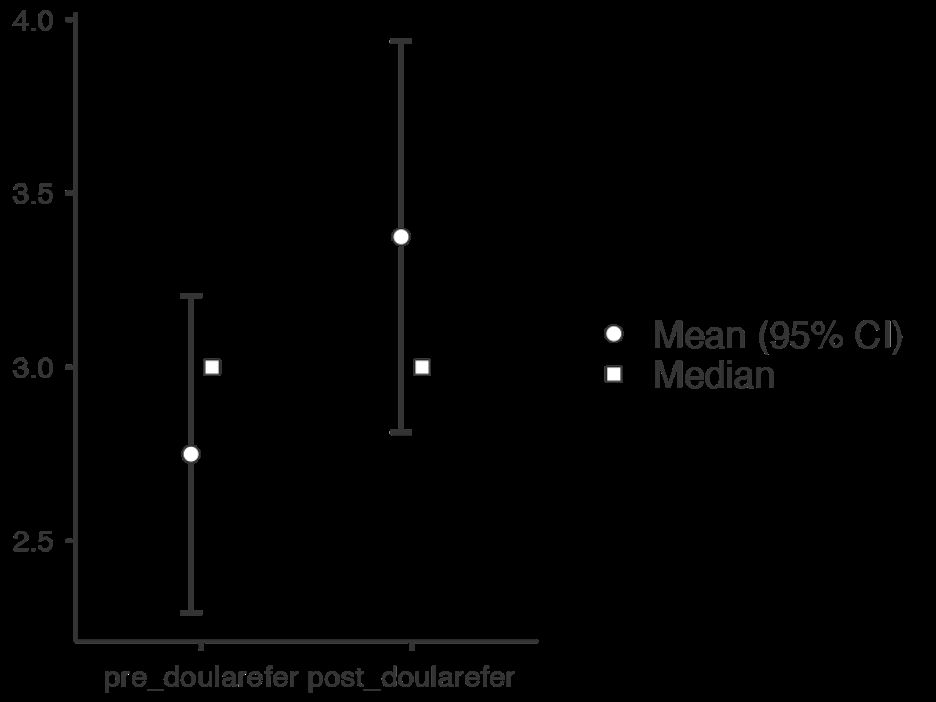
Educating
T(15)-1.62,p=.126
CHI-SQUARED TEST OF INDEPENDENCE
Contingency Tables Chi-Square Test of Independence
| BIPOC prenatal patients | Result | no | yes | Total |
|---|---|---|---|---|
| doula education given | Observed | 8 | 0 | 8 |
| Expected | 7.20 | 0.800 | 8.00 | |
| % within row | 100.0% | 0.0% | 100.0% | |
| no doula education given | Observed | 1 | 1 | 2 |
| Expected | 1.80 | 0.200 | 2.00 | |
| % within row | 50.0% | 50.0% | 100.0% | |
| Total | Observed | 9 | 1 | 10 |
| Expected | 9 | 1 | 10 | |
| % within row | 90.0% | 10.0% | 100.0% |
| Test | Value | df | p |
|---|---|---|---|
| χ² | 4.44 | 1 | 0.035 |
| Fisher's exact test | 0.200 | ||
| N | 10 |
OUTCOMES
- DOULA TOOLKIT IMPROVED CLINICIAN LIKELIHOOD TO REFER PTS TO DOULA
- NO CHANGE IN UTILIZATION OF DOULA CARE
CONCLUSION
- Clinician barriers to doula collaboration improved with/ kta framework.
- With continued (kta ) usage of the doula toolkit for clinicians, there will be open communication with patients… patients will know about doula services and be able to make decisions to have doula care and coverage.
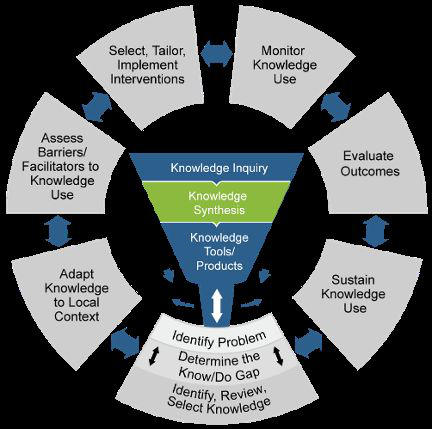
Read the full text of the Knowledge to Action Framework diagram.
LIMITATIONS
- Sample size BIPOC Medi-Cal patients
- Sample size power analysis
- Timeframe of project
- Clinician buy-in
- Documentation
WHAT IS NEXT…
Doula Flyer
OBGYN office continues to give out doula flyers for 27-34-week classes.
California AB 904
Doula coverage: address racial health disparities in maternal and infant health equity program
REFERENCES (optional)
-
Arteaga, S., Hubbard, E., Arcara, J., Cuentes, A., Armstead, M., Jackson, A., Gomez, A., & Marshall, C. (2023). “They're gonna be there to advocate for me so I'm not by myself”: A qualitative analysis of Black women's motivations for seeking and experiences with community doula care. Women & Birth, 36(3), 257–263. https://doi.org/10.1016/j.wombi.2022.08.007
-
Crear-Perry, J., Correa-de-Arauja, R., Johnson, T., McLemore, M., Neilson, E., & Wallace, M. (2021). Social and structural determinants of health inequities in maternal health. Journal of Women's Health, 30(2). https://doi.org/10.1089/jwh.2020.8882
-
Cooper Owens, D., & Fett, S. (2019). Black maternal and infant health: Historical legacies of slavery. American Journal of Public Health, 109(10). https://doi.org/10.2105/AJPH.2019.305243
-
Graham, I. (2006). Knowledge to action framework. https://medium.com/knowledgenudge/kt-101-the-knowledge-to-action-framework-7fbe399723e8
-
Greiner, K., Hersh, A., Hersh, S., Gallagher, A., Caughey, A., & Tilden, E. (2019). Cost-effectiveness of continuous support from a layperson during a woman's first 2 births. Journal of obstetric, gynecologic, and neonatal nursing, 48, 538–551. https://doi.org/10.1016/j.jogn.2019.06.002
-
Harris, K. (2022). White House brief for addressing the maternal health crisis. White House. Retrieved February 2, 2024, from https://www.whitehouse.gov/wp-content/uploads/2022/06/Maternal-Health-Blueprint.pdf
-
Henry, M. (2021). On the necessity of critical race feminism for women, peace and security. Critical Studies on Security, 9(1), 22–26. https://doi.org/10.1080/21624887.2021.1904191
-
Khaw, S., Homer, C., Dearnley, R., O’Rourke, K., Akter, S., & Bohren, M. (2023). Collaborative relationships between doulas and maternity care providers when supporting migrant women during labor and birth. Midwifery, 125. https://doi.org/10.1016/j.midw.2023.103791
-
Knocke, K., Chappel, A., Sugar, S., De Lew, N., & Sommers, B. (2022). Doula care and maternal health: An evidence review. Assistant Secretary for Planning and Evaluation: Issue Brief, 1–14.
-
Lucas, L., & Wright, E. (2019). Attitudes of physicians, midwives, and nurses about doulas: A scoping review. The American Journal of Maternal Child Nursing, 44(1). https://doi.org/10.1097/NMC.0000000000000488
-
Mallick, L., Thoma, M., & Shenassa, E. (2022). The role of doulas in respectful care for communities of color and Medicaid recipients. Birth: Issues in Perinatal Care, 49(2), 823–832. https://doi.org/10.1111/birt.12655
-
Ogunwole, S., Bennett, W., Williams, A., & Bower, K. (2022). Community-based Doulas and covid-19: Addressing structural and institutional barriers to maternal health equity. Perspective on Sexual and Reproductive Health, 52(4), 199–204.