Job Satisfaction Among Central California Nurse Practitioners
ABSTRACT
Job satisfaction among nurse practitioners is essential in ensuring that patients receive the best attention while in primary care settings. There are potential benefits that job satisfaction can yield to the healthcare setting and the patient, such as an enhanced image among prospective job seekers. In addition, there are cost savings benefits associated with retaining the current workforce of nurse practitioners. The current research examines the factors that influence and those that deter nurse practitioners’ job satisfaction in Central California by using the MNPJSS scale. The findings show that nurse practitioners are satisfied with their supervisors, the challenging nature of their work, and the flexibility to take part in professional committee aspects. On the other hand, the nurse practitioners showed least satisfaction with their compensation, the freedom to take part in other gainful healthcare facility endeavors, and the time they are given for leave.
Keywords: Job Satisfaction, Nurse Practitioners, Patients, Primary Care
Theo O. Ikele
May 2021
JOB SATISFACTION AMONG CENTRAL CALIFORNIA NURSE PRACTITIONERS
by
Theo O. Ikele
A project
submitted in partial
fulfillment of the requirements for the degree of
Doctor of Nursing Practice
California State University, Fresno
Doctor of Nursing Practice
May 2021
APPROVED
For the California State University, Fresno
Doctor of Nursing Practice:
We, the undersigned, certify that the project of the following student meets the required standards of scholarship, format, and style of the university and the student's graduate degree program for the awarding of the master's degree.
Theo O. Ikele
Project Author
Gail Burmeister (Chair) — Nursing

Tirath Gill — Psychiatry
Deva Stevens — Nursing

AUTHORIZATION FOR REPRODUCTION OF DOCTORAL PROJECT
I grant permission for the reproduction of this project in part or in its entirety without further authorization from me, on the condition that the person or agency requesting reproduction absorbs the cost and provides proper acknowledgment of authorship.
X Permission to reproduce this project in part or in its entirety must be obtained from me.
Signature of project author:


ACKNOWLEDGMENTS
I thank the Almighty God who made it possible for this project to possible; He gave me the knowledge, motivation and strength to work on this project. I would also like to express my profound gratitude to my dear wife, Esther Ikele, my twin children: Joan Ikele and Joseph Ikele; and all the members of my extended family who, in one way or the other, supported me throughout the period of the DNP program.
I am unreservedly grateful to my project chair Dr. Gail Burmeister for the guidance, support, patience in helping to make this project successful. In the same vein, I thank other committee members: Dr. Tirath Gill, and Ms. Deva Stevens whose contributions helped me greatly to complete this project.
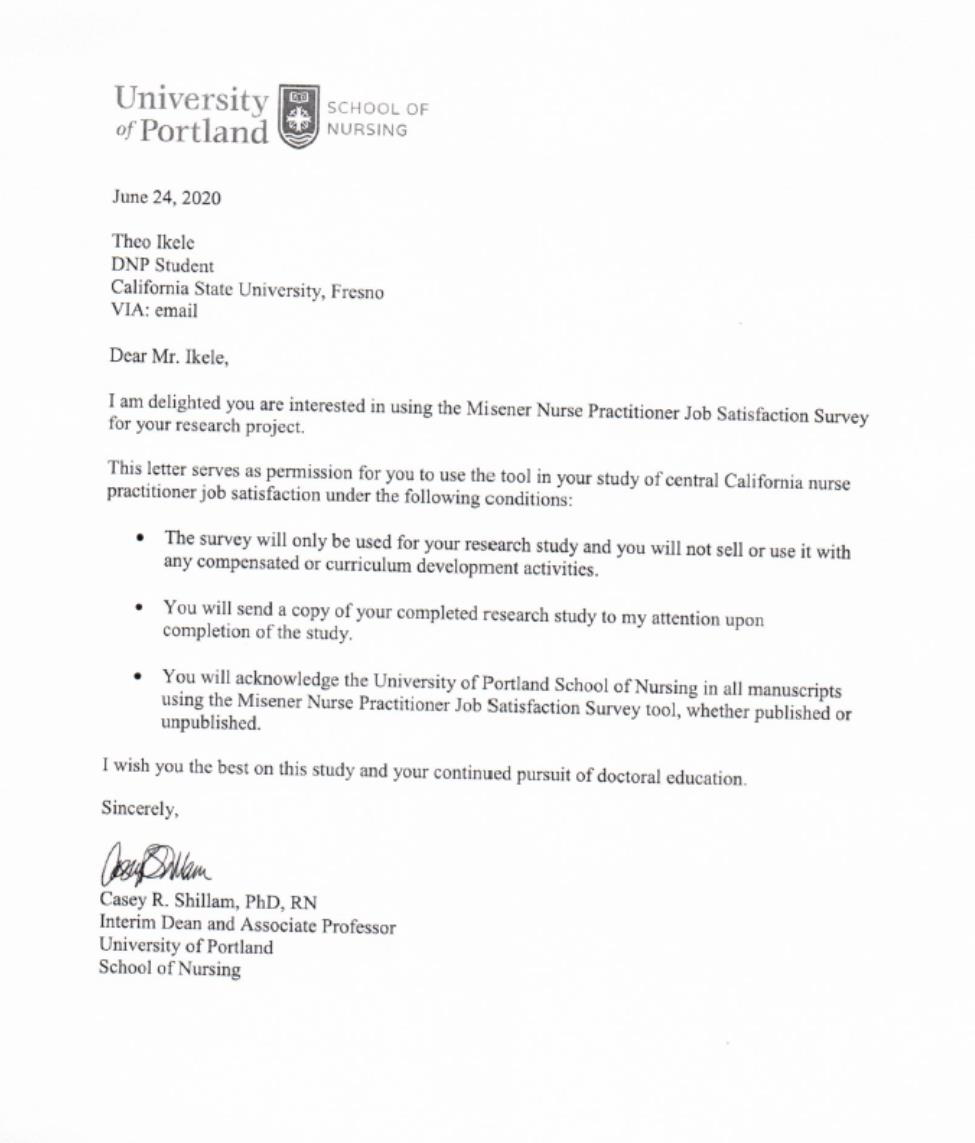
Lastly but not the least, I would also like to thank the University of Portland School of Nursing for providing me the needed support by allowing me to use the MNPJSS instrument used for this study.
TABLE OF CONTENTS
- LIST OF TABLES
- LIST OF FIGURES
- CHAPTER 1: INTRODUCTION
- Purpose and Background
- Problem Statement
- Significance of the Study
- CHAPTER 2: LITERATURE REVIEW
- Theoretical Framework
- CHAPTER 3: METHODOLOGY
- Research Design
- CHAPTER 4: DISCUSSION
- Research Question
- CHAPTER 5: CONCLUSION
- Implications for Nursing
- REFERENCES
- APPENDICES
- APPENDIX A: THE MISENER NURSE PRACTITIONER JOB SATISFACTION SCALE
- APPENDIX B: IRB APPROVAL
- APPENDIX C: PERMSSION TO USE THE MNPJSS INSTRUMENT
- APPENDIX D: LETTER INTRODUCING THE STUDY
- APPENDIX E: MNPJSS SURVEY RESPONSE BAR CHART
- APPENDIX F: MNPJSS SURVEY RESPONSE BAR CHART CONT’D
LIST OF TABLES
- Table 1 Demography of Participants
- Table 2 Age Ranges of Participants
- Table 3 Ethnicity/Racial Background of Survey Participants
- Table 4 Nurse Practitioners’ Specialties of Participants
- Table 5 Years Worked as a Nurse Practitioner
- Table 6 Factor 1: Intrapractice Partnership/Collegiality: Extrinsic
- Table 7 Factor 2: Challenge/Autonomy: Intrinsic
- Table 8 Factor 3: Professional, Social, and Community Interaction: Extrinsic
- Table 9 Factor 4: Professional Growth: Intrinsic
- Table 10 Time: Extrinsic
- Table 11 Factor 6: Benefits: Extrinsic
- Table 12 MNPJSS Satisfiers
- Table 13 MNPJSS “Dissatisfiers”
- Table 14 Independent Samples Tests: Job Satisfaction and Participants’ Demographics
- Table 15 Correlation between total job satisfaction and each MNPJSS item
LIST OF FIGURES
- Figure 1 Gender of Participants
- Figure 2 Bar Chart of Age Ranges of Participants
- Figure 3 Bar Chart of the Ethnic/Racial Background of Participants
- Figure 4 Nurse Practitioner Specialties of Participants
CHAPTER 1: INTRODUCTION
Purpose and Background
In California, the issue of clinician shortage is not new; this gets worse in the rural areas of the state that have less clinicians available to provide the much needed health care services to the population living in those areas. The Central California/Central Valley region is made up of Fresno, Kern, Kings, Madera, Merced, San Joaquin, Stanislaus, and Tulare counties (centralcalifornia.org, 2018). Several areas in those counties are designated as medically underserved areas (MUAs) by the Health Resources and Services Administration (n.d.). The medically underserved areas/populations are designated by HRSA as having too few primary care providers, high infant mortality, high poverty, or a high elderly population. Health Professional Shortage Areas (HPSAs) are designated by HRSA as having shortages of primary medical care, dental, or mental health providers and may be geographic (a county or service area), population (e.g. low income or Medicaid eligible) or facilities (e.g. federally qualified health center or other state or federal prisons) (Health Resources and Services Administration (n.d.).
The Central California/Central Valley region remains one of those parts of the state that unfortunately has been affected by clinician shortage. A report from the University of California San Francisco (Maier, 2017) shows that the California Central Valley region is among the regions in the state that have been projected to have the worst shortages of primary health care providers. According to that report, the region is projected to have an 18% shortage of primary care providers by 2030. This forecast suggests that the Central Valley region will have an estimated 71 primary care providers per 100,000 residents (Maier, 2017).
Similarly, it is projected that the gap between patients and effective care delivery will widen because there is an increasing number of the aging population, highly increasing chronic disease rates, and the expansion of insurance coverage under the Affordable Care Act, which supports the projected growth in demand for primary care practitioners (Spetz & Muench, 2018). In a region that is already struggling to have adequate number of primary care clinicians to care for those living in the area, if the projected scenario is not adequately taken care of, it will make an already difficult situation more complicated. Such a scenario will make it much more difficult for individuals to get the health care services they need and deserve. The purpose of this project was to identify those factors that affect the job satisfaction of nurse practitioners in the region to help provide insight about what measures can be taken to help increase the number of nurse practitioners in the region and help avert the looming health care crisis.
In California, a nurse practitioner is a registered nurse who possesses additional preparation and skills in physical diagnosis, psychosocial assessment, and management of health and illness needs in primary health care (California Board of Registered Nursing, 2021). Nurse practitioners in California work in different clinical settings. Nurse practitioner job satisfaction is affected by different factors as examined under the Misener Nurse Practitioner Job Satisfaction assessment tool; these factors can change at any particular point in time. Since the factors under which nurse practitioner job satisfaction is measured (using the MNPJSS tool) can affect nurse practitioners differently, the level of job satisfaction that those individuals achieve from their job may be different. This same situation holds true even if nurse practitioners work on the same clinical setting or are in the same nurse practitioner specialty.
Problem Statement
Although nurse practitioners remain a very important part of the health care workforce in the Central California/Central Valley region, little is known about their level of job satisfaction. The importance of job satisfaction to nurse practitioners is very important to health care consumers as well as the general public. Spetz and Muench (2018) reported that California nurse practitioners are positioned to fill the primary care gap; however, they face challenges in their practice. The report shows that California nurse practitioners are more likely to concentrate in counties that have high physician-to-population ration (Spetz & Muench, 2018). The Central California/Central Valley region with many areas designated as medically underserved areas (MUAs) and health professional shortage areas (HPSAs) by the Health Resources and Services Administration (n.d.) will stand to gain more when there are more nurse practitioners working in the area. However, the willingness of nurse practitioners to work in the region will depend to a great extent on the level of satisfaction they derive from their jobs. As a result of the need to explore such factors, this study became necessary. It is hoped that when such factors that affect nurse practitioners’ job satisfaction in the region are identified and the necessary actions taken to address them adequately, that can lead to more nurse practitioners willing to work in the region, and will make it possible for Central California to get the health care services they need on time. It is also hoped that the availability of more nurse practitioners can help drive down the cost of health care services for the people living in the region.
Significance of the Study
Job satisfaction can play a huge role in the morale of nurse practitioners, and this can have impact on the quality of care that nurse practitioners provide to patients. Pasarón (2013) found that nurse practitioners expressed dissatisfaction with professional and monetary recognition, assertive influence, administrative support, and collegial relationships. These findings are very important because they indicate problems that need to be addressed. It is particularly important in the case of the Central California/Central Valley region that these issues be adequately addressed in order to positively affect nurse practitioner job satisfaction in the area so as to decrease nurse practitioner turnover and attract more nurse practitioners to the region. When necessary interventions are taken to adequately address the areas of nurse practitioner job dissatisfaction, this can help prevent the looming dearth of primary care providers in the region. Conversely, if necessary steps are not adequately taken, the problem of health care access in the region and the shortage of primary health care providers in the area can worsen.
The purpose of this project is to evaluate the job satisfaction that nurse practitioners in the Central California/Central Valley region derive from their jobs. This project explored both the intrinsic and the extrinsic factors that affect job satisfaction of nurse practitioners working in the Central California/Central Valley region. The results obtained can help highlight factors that impact nurse practitioner job satisfaction with the goal of addressing factors that have negative implication for job satisfaction. Additionally, the goal is to reinforce those factors found to have positive impacts on the job satisfaction of nurse practitioners in the Central California/Central Valley region. The results can also be beneficial in the recruitment and retention of nurse practitioners at various health care facilities by helping employers know those factors important for the job satisfaction of nurse practitioners. Such information may be important in making strategies on how to have more primary care providers in the region to help alleviate the shortage.
As a result of the fact that clinical practice environment can have huge impacts on the job of nurse practitioners, it is important to find out how nurse practitioners working in the Central California/Central Valley region are impacted by different factors in the area. Such findings can be used to compare job satisfaction of nurse practitioners in the Central California region to that of nurse practitioners in other regions in California or other parts of the United States. Moreover, the results might help to identify areas that hinder nurse practitioner job satisfaction, with the hope of addressing such areas at the facility, local, or state level in order to increase nurse practitioner retention and attract new nurse practitioners to the region.
CHAPTER 2: LITERATURE REVIEW
Theoretical Framework
Motivation-Hygiene Theory
The Herzberg’s motivation-hygiene theory, which is often referred to as a two-factor theory, was developed through the works of Herzberg, Mausner, and Snyderman in 1959 regarding people’s attitude towards work; this theory was influenced by Maslow’s hierarchy of needs (Alshmemri et al., 2017). In the book Work and the Nature of Man (1966) by Herzberg, it was determined that factors determining job satisfaction are different from factors that cause job dissatisfaction (Parker, 1969). According to Parker (1969), the first sets of factors are called motivators and they include achievement and motivation. The second sets of factors are called “hygiene factors” and include company policy and supervision (Parker, 1969).
Herzberg’s book involved the study of factors that affected the job satisfaction of the study sample, which included accountants and engineers. The study involved more than 203 accountants and engineers working in nine factories in the Pittsburgh, PA area of the United States (Alshmemri et al., 2017). The sample was studied to know which factors in their work environment influenced them and caused job satisfaction as well as which factors caused dissatisfaction. From this research study, a two-factor theory of job satisfaction was developed (Alshmemri et al., 2017). According Alshmemri et al. (2017), there are two sets of factors that affect job satisfaction, the aforementioned motivation factors and “hygiene” factors. The motivation or satisfiers create motivation for work and lead to job satisfaction because of the workers’ need for self-growth and self-actualization (Alshmemri et al., 2017). Such motivation factors lead to positive work attitude and are intrinsic to the job (Alshmemri et al., 2017). Some of the motivation factors are achievement, recognition, the work itself, and responsibility (Alshmemri et al., 2017).
The other set of factors have negative impacts on job satisfaction and are called “hygiene” factors or dissatisfiers. The term “hygiene” is used in reference to medical hygiene that operates to remove environmental hazards (Alshmemri et al., 2017). Hygiene factors reduce job satisfaction and include interpersonal relations, salary, company policies and administration, relationship with supervisors and working conditions (Alshmemri et al., 2017).
Application of Herzberg’s Theory in Nursing
Herzberg’s theory continues to be relevant today in identifying the level of job satisfaction of employees. In the nursing profession, the theory is very useful as it can be used to explore work settings in order to know what motivates nurse practitioners in the performance of their jobs. In the development of the Misener Nurse Practitioner Job Satisfaction Scale (MNPJSS), Herzberg’s theory was used to identify those factors that provided job satisfaction to nurse practitioners as well as those that did not (Misener & Cox, 2001).
Literature on Nurse Practitioner Job Satisfaction
Over the past years, there have been studies done to examine the level of nurse practitioners job satisfaction across different places in the United States. The California Board of Registered Nursing conducted a research study in 2017 to evaluate, among other things, job satisfaction among nurse practitioners (NPs) and certified nurse midwives (CNMs) in California (Spetz et al., 2018). That study is the most elaborate recent research on job satisfaction of nurse practitioners in California. During the study, 2,500 surveys were mailed out to nurse practitioners and certified nurse midwives in California; of this number, 1,588 (64%) eligible questionnaires were returned (Spetz et al., 2018). The California Board of Registered Nursing worked in collaboration with University of California, San Francisco to develop the survey used in the study. The sample was divided into three groups: NP only, CNM only, and those with dual (NP and CNM) certifications (Spetz et al., 2018). The study sample was grouped according to certification type and rural/urban category: large urban area, urban commuter area, large rural area, small rural area, isolated small rural area. The sample was also grouped by age: under 35 years, 35-44 years, 45-54 years, 55-64 years, and 65 years and older (Spetz et al., 2018). Surveys were emailed to participants who had valid email addresses; paper versions of the survey were also mailed to participants with valid mailing addresses. This study is very important because it examined the factors that affect nurse practitioners as well as certified midwives in California. The study also identified financial factors as common problems in providing high quality care to patients especially in places where the insurance companies denied coverage (Spetz et al., 2018).
Another research study on nurse practitioner job satisfaction was carried out in Massachusetts and involved nurse practitioners practicing in 163 primary care organizations to determine the extent to which their practice environments affected nurse practitioner job retention (Poghosyan et al., 2017). The study used the Nurse Practitioner Primary Care Organizational Climate Questionnaire to gather responses. The questionnaires had four scales: Professional Visibility, Nurse Practitioner-Administration Relations, Nurse Practitioner-Physician Relations, and Independent Practice and Support (Poghosyan et al., 2017). The study used multilevel logistic regression models to analyze the results. It was found that nurse practitioners rated the relationship between them and physicians favorably, whereas the nurse practitioner-administrator relationship was not rated favorably (Poghosyan et al., 2017). Moreover, all the subscales that measured nurse practitioner practice environment had similar influence on the outcome variables, and nurse practitioners who were from organizations that have higher mean scores on the nurse practitioner-administrator subscale had higher job satisfaction scores (Poghosyan et al., 2017).
This study is important because it studied one of the main factors that can affect nurse practitioner job satisfaction: work environment and how it affects nurse practitioner job satisfaction. A good and comfortable practice environment can have positive impact on the job satisfaction that nurse practitioners derive from their job; on the contrary, an uncomfortable practice environment can negatively affect the job satisfaction of nurse practitioners as well as their productivity and patient care. The study surveyed the impact that practice environment can have on nurse practitioner job satisfaction from the perspectives of Professional Visibility, NP-Administration Relations, NP-Physician Relations, and Independent Practice and Support. The study again underscores the need to address those factors that affect the job satisfaction of nurse practitioners.
CHAPTER 3: METHODOLOGY
This chapter describes the research methods used to conduct this study. This chapter also discusses the methods used in analyzing the data obtained from survey participants.
Research Design
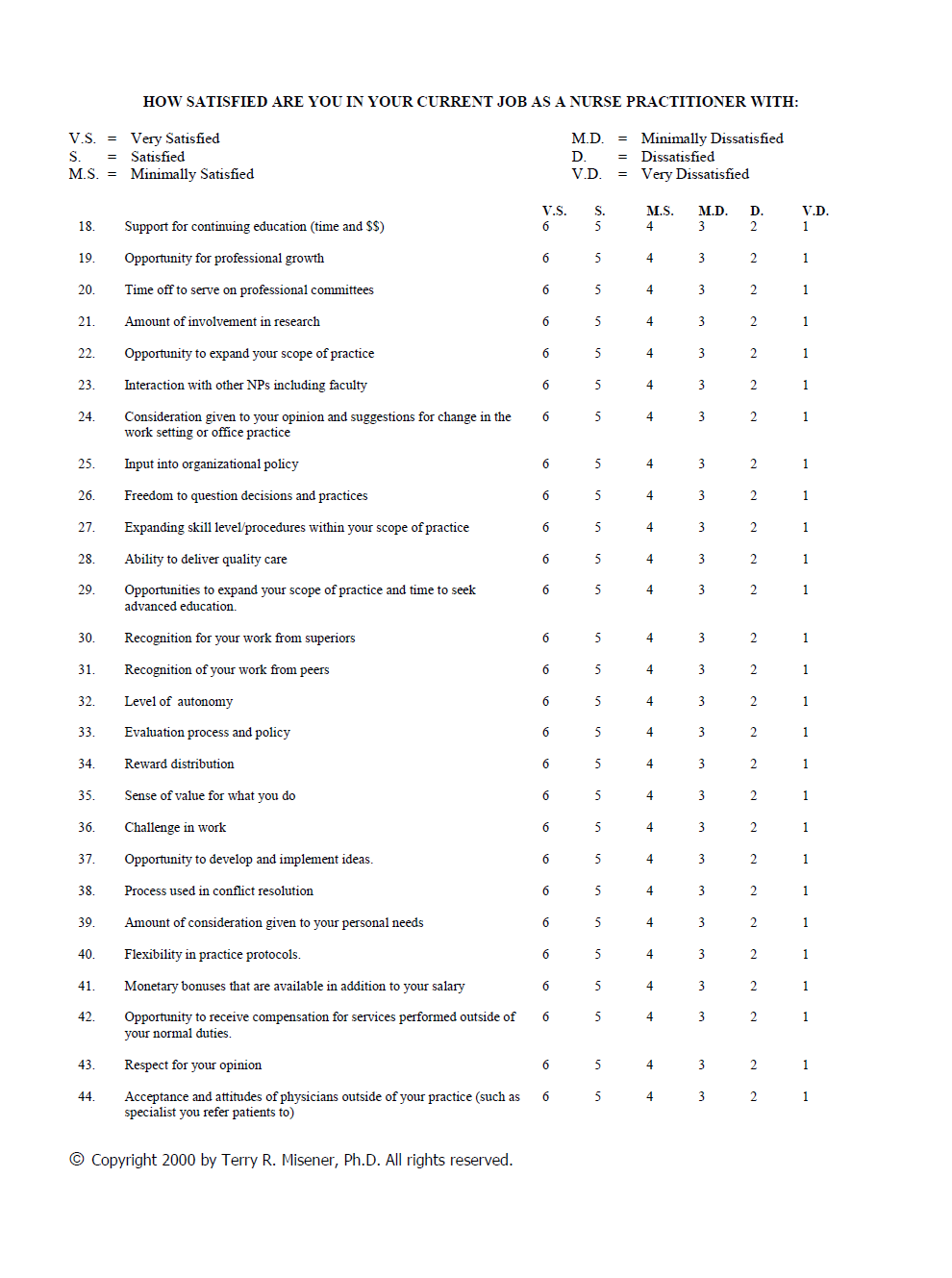
In this study, the descriptive non-experimental survey methodology was used to examine factors that affect the job satisfaction of nurse practitioners in the Central California/Central Valley region. The descriptive non-experimental survey method was used because of its advantage that independent variables cannot be manipulated; rather, they occur naturally (Price et al., n.d.). The variables involved in this study were measured as they occurred naturally without any form of manipulation by the researcher. In order to do this, the Misener Nurse Practitioner Job Satisfaction Scale (MNPJSS) was used to examine the satisfaction imperatives of nurse practitioners in the Central California/Central Valley region. The MNPJSS is a valid tool used to evaluate nurse practitioners’ job satisfaction level (Misener & Cox, 2001). According to Steinke et al. (2017), MNPJSS has been used as a reliable as well as a valid instrument in measuring nurse practitioners’ job satisfaction both at the national and international levels. The instrument contains 44 items grouped into six subscales. The items are measured on a Likert scale of 1 to 6, where 1 denotes the lowest level of dissatisfaction (very dissatisfied) and 6 denotes the highest satisfaction (very satisfied). As mentioned earlier, the MNPJSS items are divided into six subscales: intra-practice partnership/collegiality, challenge/autonomy, professional/social, and community interaction, professional growth, time, and benefits (Steinke et al., 2017). This study identified factors that affect the job satisfaction of nurse practitioners in the Central California/Central Valley region as independent variables.
Recruitment
According to Newington and Metcalfe (2014), the success of any research relies on an effective recruitment strategy upon which participants are obtained. The process is often impeded by ethical considerations that make it fundamental for research to portray voluntariness in the sense that research subjects are not coerced or manipulated into participation in the inquiry. In order to ensure voluntary participation in this research, the researcher ensured various considerations were implemented. First, as Vanclay et al. (2015) suggested, the no-coercion implies that any financial incentives used to lure people to participate in research should not be considered as a bribe. Instead, the researcher’s incentives were only commensurate to the amount of time they spent while giving their responses to the questions posed. In addition, voluntariness was also ensured by the researcher informing the participants the details of the study so that they were adequately informed of what the study entailed, risks and the benefits of participating in the study. Further, Vanclay et al. (2015) insisted that the participants must be informed of their right to withdraw from the study at any time that they deemed it necessary to do so in order to show voluntariness among those who opt to participate in data collection. Accordingly, the researcher informed the participants that they could opt out of the research at any time they felt it necessary. However, the right to withdraw was limited to the end of data collection process because after the results had begun to be analyzed, this provision ceased to work. Furthermore, the participants’ voluntariness was marked by each of the participants signing a consent form.
Sample
The sample of this study is made up practicing nurse practitioners in Central California/Central Valley region. The sample was obtained by sending mass emails by the California State University, Fresno to the institution’s alumni who are nurse practitioners and work in the region under study. Sigma Theta Tau also sent out mass emails to its members who are practicing as nurse practitioners in the Central California/Central Valley region. The sample inclusion criteria included certification as nurse practitioner working as a nurse practitioner in the Central California/Central Valley region; the nurse practitioners must have at least 6 months of nurse practitioner clinical experience. The study included nurse practitioners irrespective of gender, ethnicity/racial background, nurse practitioner specialty, or age of participants. The exclusion criteria include nurse practitioners that are not working in the Central California/Central Valley region and nurse practitioners that do not have at least 6 months of clinical work experience as nurse practitioners.
Procedure
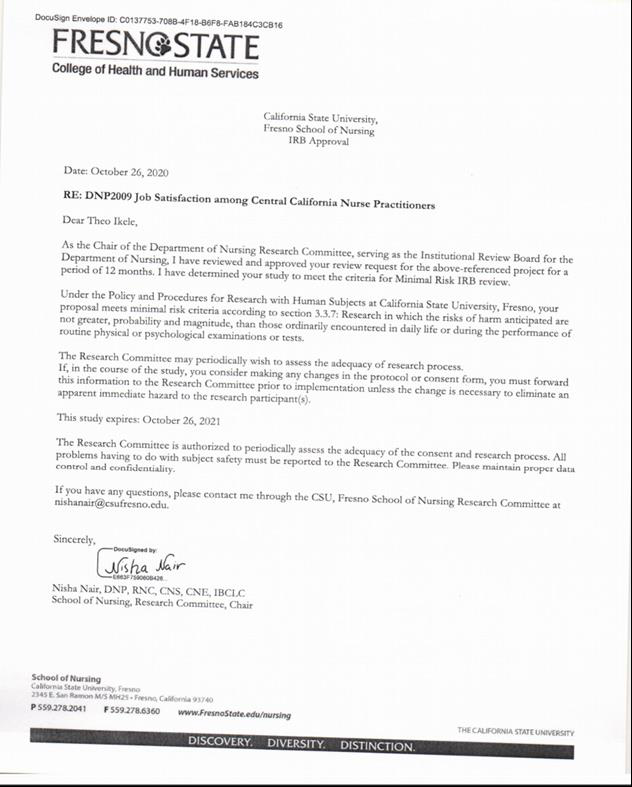
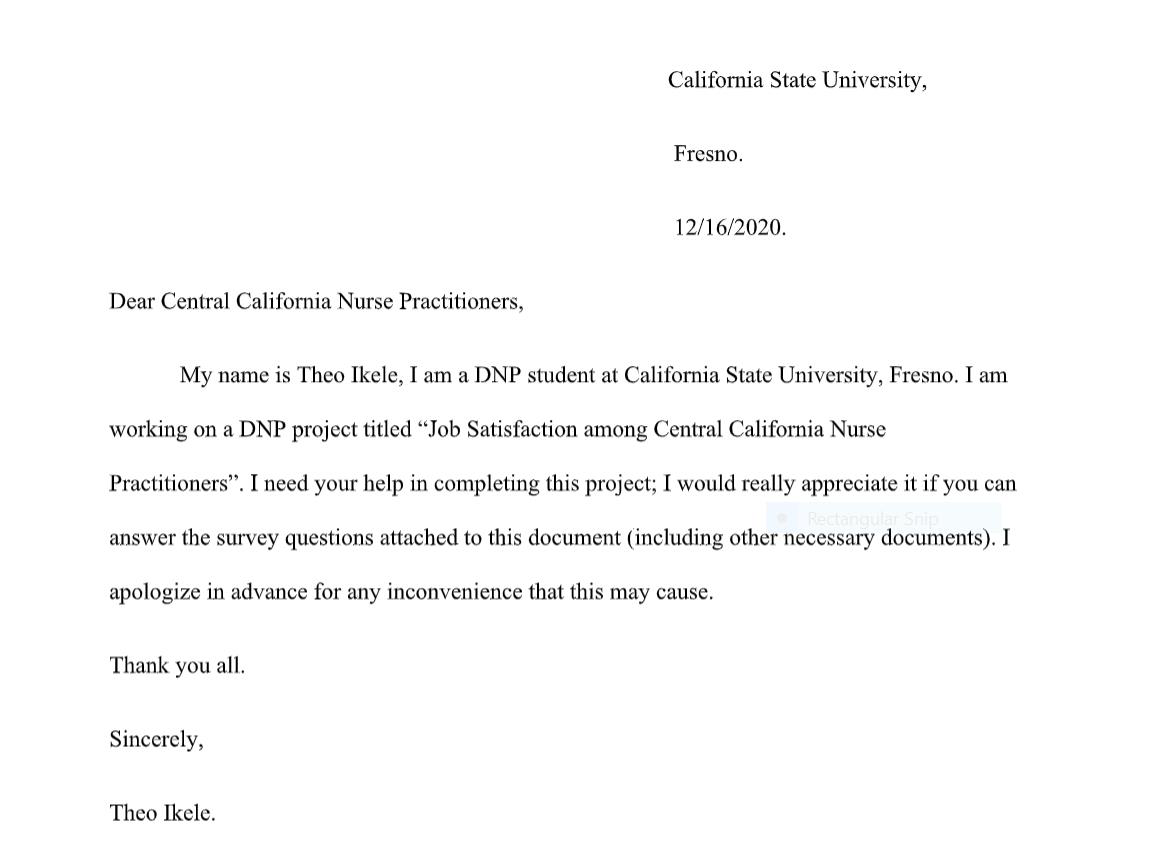
After the Institutional Review Board of California State University, Fresno approved the project, the gathering of the necessary documents such as permission to use the Misener Nurse Practitioner Job Satisfaction Scale (MNPJSS) and other relevant documents began. Electronic mails containing (1) a letter of invitation for voluntary participation in the project and purpose of the project, (2) a consent form, and (3) a survey questionnaire link were sent out to the alumni of California State University, Fresno and members of Sigma Theta Tau who are nurse practitioners in the region under study. Each respondent was required to sign the consent form and send it back to the researcher electronically. The procedure employed during the data collection period included ensuring that all aspects of ethical considerations were met. Initially, the respondents were informed of the research through emails sent out to California State University Alumni that are nurse practitioners working in the Central California/Central Valley region. The emails that contained the web-link to the survey as well as the consent form to be signed prior to participation in the survey were also sent out by the Sigma Theta Tau to its members who are nurse practitioners working in the Central California/Central Valley region. Participants willing to participate in the survey had to read and sign the consent form and email it back to the researcher. Survey responses were automatically sent back to the researcher online. No special procedures were employed in collecting data for this research
Location of Study
This study took place in Central California/Central Valley region.
Protection of Human Subjects
Studies that involve human subjects as respondents usually pose significant risk factors to the individuals’ confidentiality and privacy as enshrined in research ethics for nursing inquiries. According to Fakruddin et al. (2013), it is essential that the participants’ privacy and confidentiality are maintained to prevent any potential harm that could result from leaking the information gathered to third parties. However, in this study, the risk of leaking the participants’ personal details to outsiders was addressed by ensuring that the data were anonymized after it was collected. Each participant was assigned only numbers and no personal identifying information was collected. Moreover, in order to mitigate the risk to this study’s respondents, there were no medical trials or experiments administered and therefore no physical pain, injury or any death caused to the participants; hence there no are foreseeable physical risks in this study. The privacy and confidentiality strategies by gathering data anonymously from respondents ensured that no form of harm—economic, physical, legal, or any other—would befall respondents for participating in this study. Data gathered from this study did not identify respondents by name, physical address or by using any other personally identifiable information. As mentioned earlier, the respondents are only identified as Respondent #1, Respondent #2, and so on.
In addition, the data will be stored in a locked file that is only accessible to the investigator so that the information is not leaked to third parties. The duration for storing the data will be 1 year, whereby upon its lapse, the data will be destroyed by the researcher. The process of data destruction will be by the investigator shredding the documents.
Instruments
The instrument used to carry out this study is that Misener Nurse Practitioner Job Satisfaction Scale (MNPJSS), which is a tool that has been validated for use in the measurement of nurse practitioner job satisfaction (Misener & Cox, 2001). Validation of the MPJSS involved modifying previous nurse practitioner job satisfaction scale by deleting 33 items; this resulted in the following factors: (a) intra-practice partnership/collegiality; (b) challenge/autonomy; (c) professional, social, and community interaction; (d) professional growth; (e) time; and (f) benefits with respective internal consistency reliability estimates of .94, .89, .84, .86, .83, and 79 (Misener & Cox, 2001). The response to each question has six options in a Likert scale ranging from 1 to 6, where 6= Very Satisfied, 5= Satisfied, 4= Minimally Satisfied, 3= Minimally Dissatisfied, 2= Dissatisfied, 1= Very Dissatisfied. The possible maximum score of the MNPJSS is 264. The tool measures both the intrinsic and the extrinsic factors that affect nurse practitioners’ job satisfaction. These factors are affected by the nurse practitioners’ work environment, work condition, work experience among other factors. The contents of the instrument are simple, clear, concise and to help prevent confusion in answering the questions. Permission for the use of this instrument for this study was obtained from the University of Portland.
CHAPTER 4: DISCUSSION
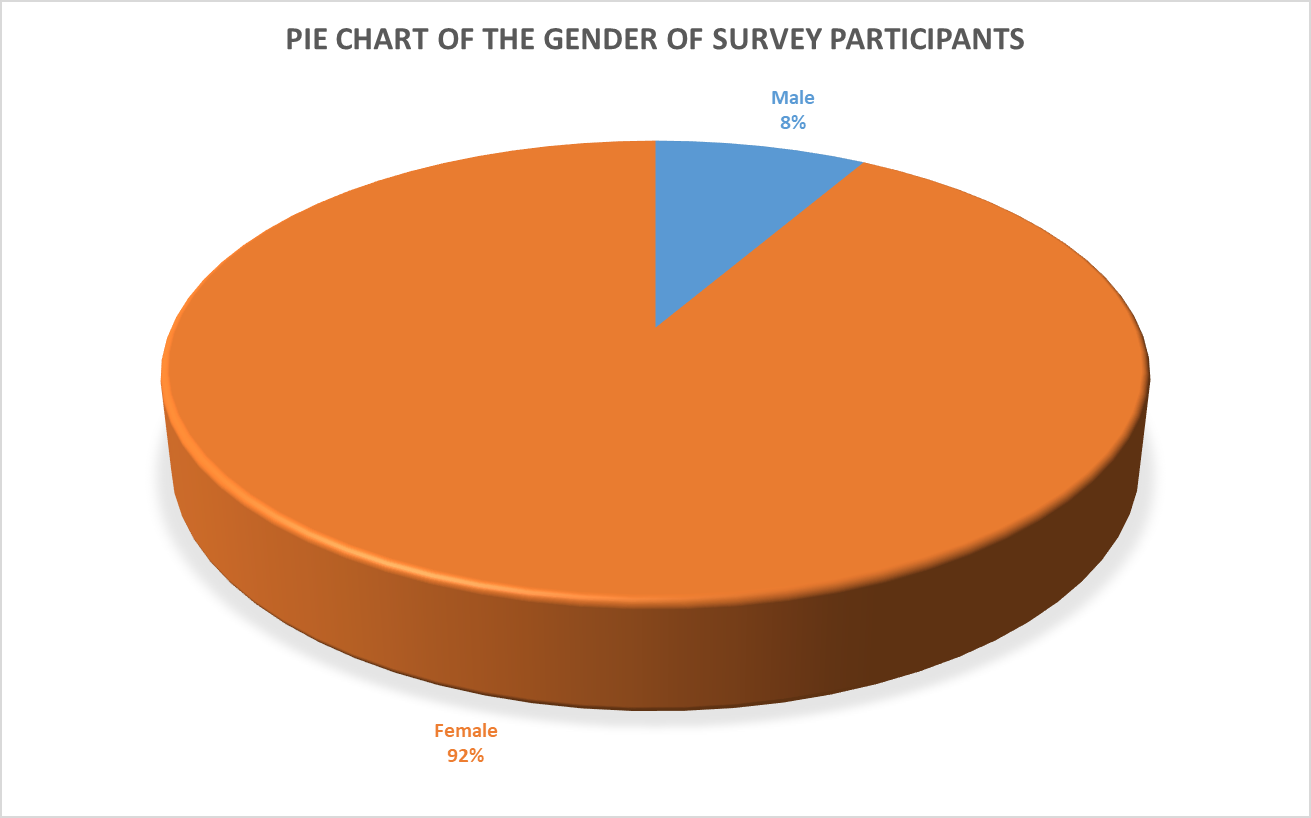
This chapter discusses the findings established by the current study and compares it with the studies that were reviewed under chapter 2. The chapter discusses how the results addressed each of the research questions that underlie this study. There were twenty-nine Central California/Central Valley nurse practitioners that took part in this survey. Their responses showed diversity in racial/ethnic background, nurse practitioner specialties, age, as well as the number of years working as nurse practitioners. Out of the total number of respondents, responses from five of them were excluded from the final analysis because those five respondents failed to completely answer all the MNPJSS item questions. As a result, the total number of participants (N) included in the final result analysis was 24. Table 1 shows the gender of survey participants, frequencies and percentages Figure 1 is a pie chart that shows the percentages of the males and the females that participated in the survey.
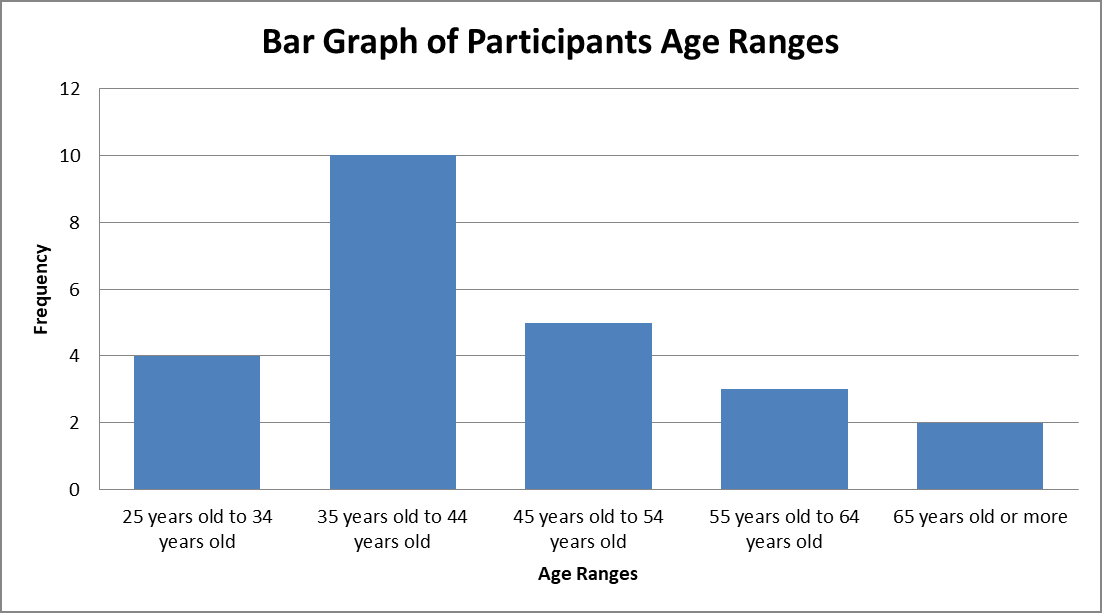
Nurse practitioners who took part in this survey were of various ages; the ages were divided into age ranges. Table 2 shows the age ranges, their frequencies, and the percentages of the participants. Figure 2 shows the bar chart of the age ranges.
| Gender | Frequency | Percentage |
|---|---|---|
| Female | 22 | 91.7 |
| Male | 2 | 8.3 |
Figure 1
Gender of Participants
| Age range (in years) | Frequency | Percentage |
|---|---|---|
| 25 to 34 | 4 | 16.7 |
| 35 to 44 | 10 | 41.7 |
| 45 to 54 | 5 | 20.8 |
| 55 to 64 | 3 | 12.5 |
| 65 or more | 2 | 8.3 |
Figure 2
Bar Chart of Age Ranges of Participants
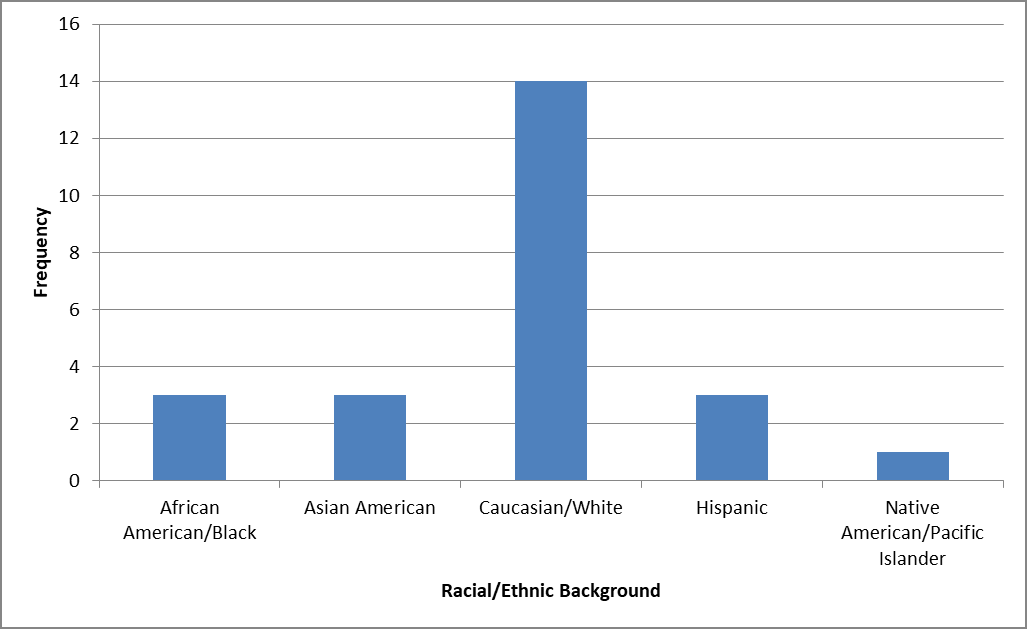
The participants were made up of different racial/ethnic backgrounds. There were three individuals that identified themselves as Black/African Americans, three participants identified themselves as Asians, 14 identified themselves as Caucasians/White, three identified themselves as Hispanics, and one participant identified himself/herself as Native Hawaiian/Pacific Islander. Table 3 shows the ethnic/racial backgrounds of the participants, while Figure 3 is the bar chart of the ethnicity/racial background of the participants.
| Ethnicity/Racial Background | Frequency | Percentage |
|---|---|---|
| African American/Black | 3 | 12.5 |
| Asian American | 3 | 12.5 |
| Caucasian/White | 14 | 58.3 |
| Hispanic | 3 | 12.5 |
| Native American/Pacific Islander | 1 | 4.2 |
Figure 3
Bar Chart of the Ethnic/Racial Background of Participants
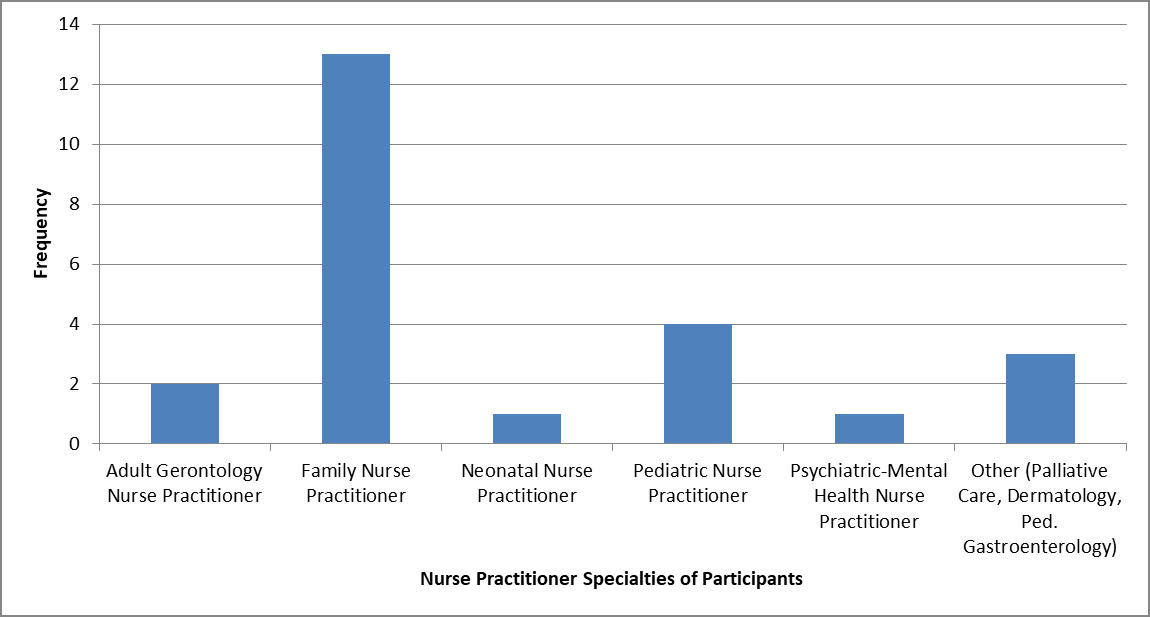
The nurse practitioners’ specialties of survey participants varied; the nurse practitioner specialties, frequencies and percentages of the participants are shown in Table 4; the bar chart is shown in Figure 4.
| Nurse Practitioner Specialty | Frequency | Percentage |
|---|---|---|
| Adult Gerontology Nurse Practitioner | 2 | 8.3 |
| Family Nurse Practitioner | 13 | 54.2 |
| Neonatal Nurse Practitioner | 1 | 4.2 |
| Pediatric Nurse Practitioner | 4 | 16.7 |
| Psychiatric-Mental Health Nurse Practitioner | 1 | 4.2 |
| Other (Palliative Care, Dermatology, Ped. Gastroenterology) | 3 | 12.5 |
Figure 4
Nurse Practitioner Specialties of Participants
There were 18 nurse practitioners who participated in the survey and who had full time jobs, while there were 5 part-time workers. Table 5 shows the number of years that the participants have worked as nurse practitioners
| Years worked as nurse practitioner | Frequency | Percentage |
|---|---|---|
| 0.5 to 5 | 15 | 62.5 |
| 6 to 10 | 6 | 25 |
| 11 to 15 | 1 | 4.2 |
| 16 to 20 | 1 | 4.2 |
| 21 or more | 1 | 4.2 |
Research Question
The goal of this research is to answer the question “What is the level of job satisfaction among Central California/Central Valley nurse practitioners?” In order to do this, the Misener Nurse Practitioner Job Satisfaction Scale (MNPJSS) was used. The tool has a Likert scale ranging from 1 to 6: 1=Very Dissatisfied; 2= dissatisfied; 3= Minimally Dissatisfied; 4= Minimally Satisfied; 5= Satisfied; 6= Very Satisfied. The maximum total score is 264, which would indicate that a respondent is “very Satisfied” with all the MNPJSS items. The 24 participants who answered all the survey item questions had 202.25 total mean score of 4.6 on and a total standard deviation of 8.11. The total mean score of 4.6 means that the job satisfaction of nurse practitioners in Central California/Central Valley lies between “Minimally Satisfied” and “Satisfied,” which corresponds to “4” or “5” respectively on the Misener Nurse Practitioner Job Satisfaction Scale.
The mean value of each of the MNPJSS items was calculated. Tables 6-11 show the mean and standard deviation of each item. The tables also show the subscales into which the MNPJSS are grouped:(1) Intrapractice partnership/collegiality; (2) Challenge/autonomy; (3) Professional, social, and community interaction; (4) Professional growth; (5) Time and (6) Benefits (Misener & Cox, 2001). Each subscale is identified as containing intrinsic factors or extrinsic factors.
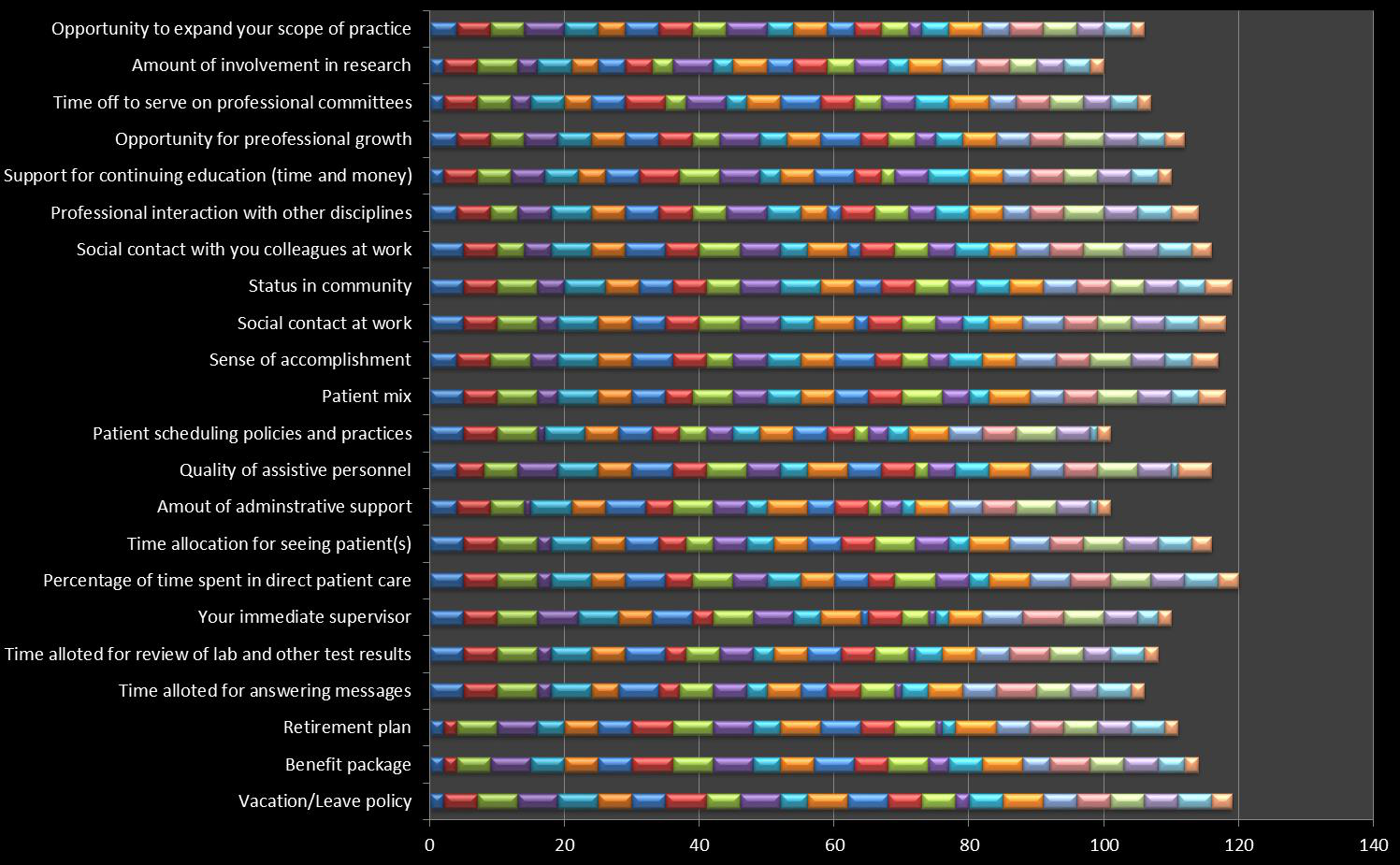
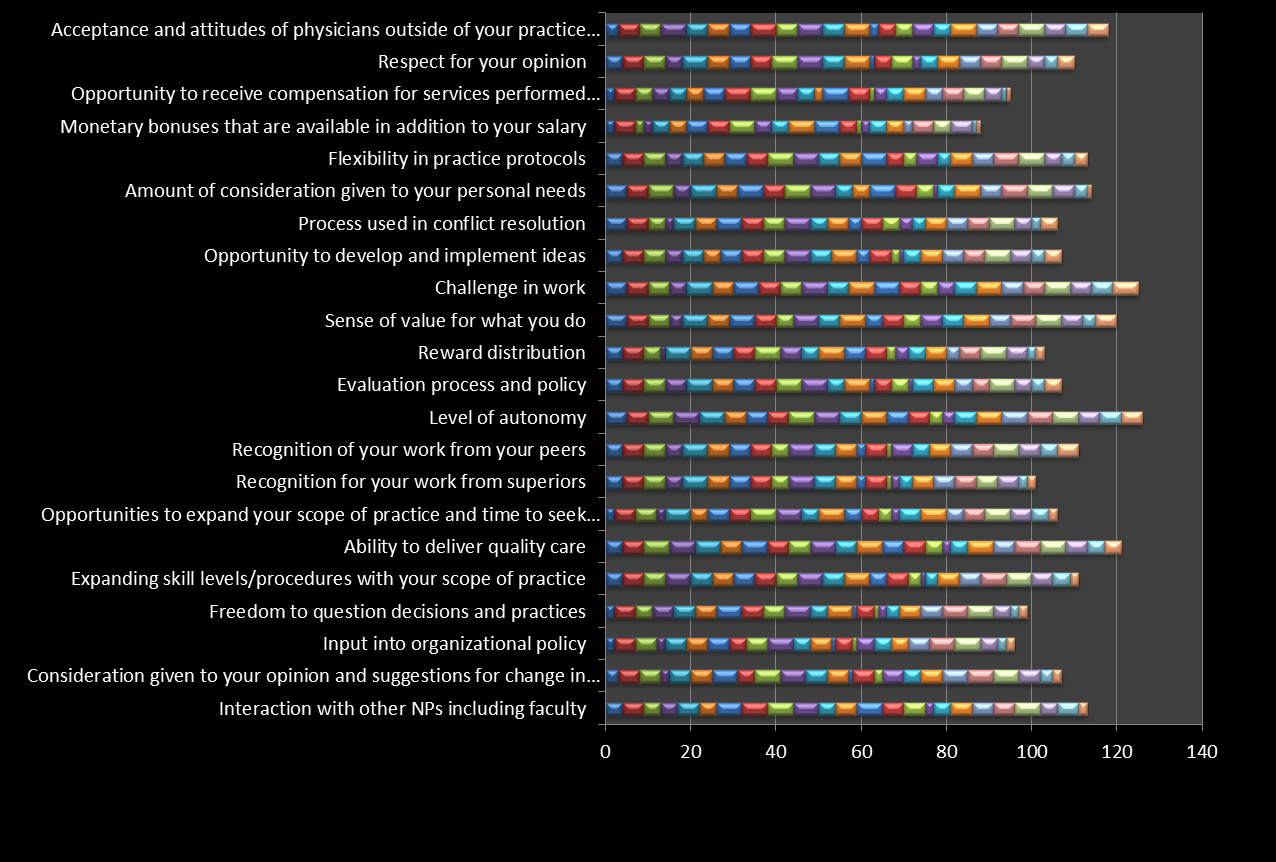
In Tables 6-11, five MNPJSS items have means values that ranges from 5.00 to 5.25; these are the items from which the participants derived satisfaction based on the MNPJSS. Those items are satisfiers and are shown in Table 12.
On the contrary, certain MNPJSS Table 13 shows the MNPJSS items (arranged in descending order) that have total mean value that is less than 5. According to the MNPJSS, values that are less than 5 are not satisfactory. Thirty-nine MNPJSS items each had a mean score that is less than 5; these are the “dissatisfiers” There were 10 “dissatisfiers” that were intrinsic factors and 29 “dissatisfiers” were extrinsic factors. The mean value of all the 39 MNPJSS items that are “dissatisfiers” is ≤ 4.56 (minimally satisfied). This means that the participants were not satisfied with most of the MNPJSS items. Among all the items classified as “MNPJSS dissatisfiers,” “Monetary bonuses that are available in addition to your salary” has the lowest mean value of 3.67, whereas “Status in community” has the highest mean value of 4.96.
| MNPJSS Item | Number of Participants | Mean | Standard Deviation |
|---|---|---|---|
| Amount of consideration given to your personal needs | 24 | 4.75 | 1.452 |
| Your immediate supervisor | 24 | 4.58 | 1.692 |
| Respect for your opinion | 24 | 4.58 | 1.248 |
| Consideration given to your opinion and suggestions for change in the work setting or office practice | 24 | 4.46 | 1.503 |
| Evaluation process and policy | 24 | 4.46 | 1.351 |
| Opportunity to develop and implement ideas | 24 | 4.46 | 1.215 |
| Process used in conflict resolution | 24 | 4.42 | 1.139 |
| Reward distribution | 24 | 4.29 | 1.429 |
| Amount of administrative support | 24 | 4.21 | 1.615 |
| Recognition for your work from superiors | 24 | 4.21 | 1.414 |
| Freedom to question decisions and practices | 24 | 4.13 | 1.650 |
| Input into organizational policy | 24 | 4.00 | 1.532 |
| Opportunity to receive compensation for services performed outside of your normal duties | 24 | 3.96 | 1.546 |
| Monetary bonuses that are available in addition to your salary | 24 | 3.67 | 1.633 |
| MNPJSS Item | Number of Participants | Mean | Standard Deviation |
|---|---|---|---|
| Level of autonomy | 24 | 5.25 | 0.947 |
| Challenge in work | 24 | 5.21 | 0.658 |
| Ability to deliver quality care | 24 | 5.04 | 0.999 |
| Percentage of time spent in direct patient care | 24 | 5.00 | 1.103 |
| Sense of value for what you do | 24 | 5.00 | 0.885 |
| Patient mix | 24 | 4.92 | 0.881 |
| Sense of accomplishment | 24 | 4.88 | 0.850 |
| Flexibility in practice protocols | 24 | 4.71 | 0.999 |
| Expanding skill level/procedures within your scope of practice | 24 | 4.62 | 1.279 |
| Opportunities to expand your scope of practice and time to seek advanced education | 24 | 4.42 | 1.381 |
| MNPJSS Item | Number of Participants | Mean | Standard Deviation |
|---|---|---|---|
| Status in community | 24 | 4.96 | 0.624 |
| Social contact at work | 24 | 4.92 | 0.974 |
| Acceptance and attitudes of physicians outside of your practice (such as specialist you refer patients to) | 24 | 4.92 | 0.974 |
| Quality of assistive personnel | 24 | 4.83 | 1.239 |
| Time allocation for seeing patient(s) | 24 | 4.83 | 1.049 |
| Social contact with your colleagues at work | 24 | 4.83 | 1.007 |
| Professional interaction with other disciplines | 24 | 4.75 | 0.847 |
| Interaction with other NPs including faculty | 24 | 4.71 | 1.122 |
| Recognition of work from your peers | 24 | 4.62 | 1.135 |
| MNPJSS Item | Number of Participants | Mean | Standard Deviation |
|---|---|---|---|
| Opportunity for professional growth | 24 | 4.67 | 0.816 |
| Support for continuing education (time and money) | 24 | 4.58 | 1.248 |
| Time off to serve on serve on professional committees | 24 | 4.46 | 1.179 |
| Opportunity to expand your scope of practice | 24 | 4.42 | 0.974 |
| Amount of involvement in research | 24 | 4.17 | 1.090 |
| MNPJSS Item | Number of Participants | Mean | Standard Deviation |
|---|---|---|---|
| Time allotted for review of lab and other test results | 24 | 4.50 | 1.351 |
| Time allotted for answering messages | 24 | 4.42 | 1.349 |
| Patient scheduling policies and practices | 24 | 4.21 | 1.503 |
| MNPJSS Item | Number of Participants | Mean | Standard Deviation |
|---|---|---|---|
| Benefit package | 24 | 4.75 | 1.327 |
| Retirement plan | 24 | 4.63 | 1.610 |
| Vacation/Leave policy | 24 | 4.60 | 0.813 |
| MNPJSS Item | Number of Participants | Mean | Standard Deviation | Intrinsic/Extrinsic |
|---|---|---|---|---|
| Level of autonomy | 24 | 5.25 | 0.947 | Intrinsic |
| Challenge in work | 24 | 5.21 | 0.658 | Intrinsic |
| Ability to deliver quality care | 24 | 0.504 | 0.999 | Intrinsic |
| Percentage of the spent in direct patient care | 24 | 5.00 | 1.03 | Intrinsic |
| Sense of value for what you do | 24 | 5.00 | 0.885 | Intrinsic |
In order to find out the relationships that exist between job satisfaction and the participant’s demographics shown in Table 14, independent samples t- tests were run. The results show that there was no difference in job satisfaction between males and females as evidenced by the p-value which was greater than 0.05 (p-value was 0.905). It was also found that there was no difference in job satisfaction between participants that have worked as nurse practitioners in the region for less than 10 years when compared to those that have worked for more than 10 years; the p-value was 0.614. There was also no difference in job satisfaction between nurse practitioners that work “Full time” on the one hand and those that work as “Part time/other” on the other hand. The group was divided into two groups: “Full time” vs. “Part time/ other”; those that work under any other different arrangement other than full time are grouped as “Part time or other.” The lack of difference in job satisfaction was evidenced by a p-value of 0.748. No difference was found in job satisfaction between nurse practitioners that are between the ages of 25 years old to 64 years and those that are 65 years old or older as evidenced by p-value of 0.503.
| MNPJSS Item | Number of Participants | Mean | Standard Deviation | Intrinsic/Extrinsic |
|---|---|---|---|---|
| Status in community | 24 | 4.96 | 0.624 | Extrinsic |
| Social contact at work | 24 | 4.92 | 0.974 | Extrinsic |
| Acceptance and attitudes of physicians outside of your practice (such as specialist you refer patients to) | 24 | 4.92 | 0.974 | Extrinsic |
| Patient mix | 24 | 4.92 | 0.881 | Intrinsic |
| Sense of accomplishment | 24 | 4.88 | 0.850 | Intrinsic |
| Quality of assistive personnel | 24 | 4.83 | 1.239 | Extrinsic |
| Time allocation for seeing patient(s) | 24 | 4.83 | 1.049 | Extrinsic |
| Social contact with your colleagues at work | 24 | 4.83 | 1.007 | Extrinsic |
| Amount of consideration given to your personal needs | 24 | 4.75 | 1.452 | Extrinsic |
| Benefit package | 24 | 4.75 | 1.327 | Extrinsic |
| Professional interaction with other disciplines | 24 | 4.75 | 0.847 | Extrinsic |
| Interaction with other NPs including faculty | 24 | 4.71 | 1.122 | Extrinsic |
| Flexibility in practice protocols | 24 | 4.71 | 0.999 | Intrinsic |
| Opportunity for professional growth | 24 | 4.67 | 0.816 | Intrinsic |
| Retirement plan | 24 | 4.63 | 1.1620 | Extrinsic |
| Expanding skill level/procedures within your scope of practice | 24 | 4.62 | 1.279 | Intrinsic |
| Recognition of your work from your peers | 24 | 4.62 | 1.135 | Extrinsic |
| Vacation/leave policy | 24 | 4.60 | 0.813 | Extrinsic |
| Your immediate supervisor | 24 | 4.58 | 1.692 | Extrinsic |
| Support for continuing education (time and money) | 24 | 4.58 | 1.248 | Intrinsic |
| Respect for your opinion | 24 | 4.58 | 1.248 | Extrinsic |
| Time allotted for review of lab and other test results | 24 | 4.50 | 1.351 | Extrinsic |
| Consideration given to your opinion and suggestions for change in the working setting or office practice | 24 | 4.46 | 1.503 | Extrinsic |
| Evaluation process and policy | 24 | 4.46 | 1.351 | Extrinsic |
| Opportunity to develop and implement ideas | 24 | 4.46 | 1.215 | Extrinsic |
| Time to serve on professional committees | 24 | 4.46 | 1.179 | Intrinsic |
| Opportunities to expand your scope of practice and time to seek advanced education | 24 | 4.42 | 1.381 | Intrinsic |
| Time allotted for answering messages | 24 | 4.42 | 1.349 | Extrinsic |
| Process used in conflict resolution | 24 | 4.42 | 1.139 | Extrinsic |
| Opportunity to expand your scope of practice | 24 | 4.42 | 0.974 | Intrinsic |
| Reward distribution | 24 | 4.29 | 1.429 | Extrinsic |
| Amount of administrative support | 24 | 4.21 | 1.615 | Extrinsic |
| Patient scheduling policies and practices | 24 | 4.21 | 1.503 | Extrinsic |
| Recognition for your work from superiors | 24 | 4.21 | 1.414 | Extrinsic |
| Amount of involvement in research | 24 | 4.17 | 1.090 | Intrinsic |
| Freedom to question decisions and practices | 24 | 4.13 | 1.650 | Extrinsic |
| Input into organizational policy | 24 | 4.00 | 1.532 | Extrinsic |
| Opportunities to receive compensation for services performed outside of your normal duties | 24 | 3.96 | 1.546 | Extrinsic |
| Monetary bonuses available in addition to your salary | 24 | 3.67 | 1.633 | Extrinsic |
| Participants’ Demography | Scale total (t) | Sig. (2 tailed) | 95% confidence interval of the difference, Lower | 95% confidence interval of the difference, Upper | P-value |
|---|---|---|---|---|---|
| Male vs. Female | -1.569 | 0.336 | -297.73 | 211.46 | 0.905 |
| Years of experience as NP: <10 years vs. > 10 years | -0.337 | 0.744 | -45.89 | 33.9 | 0.614 |
| Full time vs. Part-time/other | -0.589 | 0.573 | -54.84 | 32.72 | 0.748 |
| Age range: 25 years to 64 years vs. 65 years or older | 0.646 | 0.615 | -161.24 | 190.78 | 0.503 |
The correlation between job satisfaction and the MNPJSS items using Spearman correlation; the results are shown in Table 15 (in descending order of p-values). The results show that there is strong correlation between job satisfaction and most of the MNPJJ items as evidenced by the statistical significance where the p-value was less than 0.5. The correlation means that an increase in any of those variables with strong correlation with job satisfaction such as “Vacation/leave policy,” “Amount of administrative support” can increase job satisfaction. The MNPJSS items whose p-values are greater than 0.005 do not have significant/ correlation relationship with job satisfaction (Table 15).
| MNPJSS Item | Number of Participants | P-value | Sig. (2-tailed) |
|---|---|---|---|
| Vacation/leave policy | 24 | 0.998 | <0.001 |
| Amount of administrative support | 24 | 0.875 | <0.001 |
| Opportunities to expand your scope of practice and seek advanced education | 24 | 0.870 | <0.001 |
| Opportunity to develop and implement ideas | 24 | 0.864 | <0.001 |
| Freedom to question decisions and practices | 24 | 0.859 | <0.001 |
| Input into organizational policy | 24 | 0.853 | <0.001 |
| Respect for your opinion | 24 | 0.830 | <0.001 |
| Ability to deliver quality care | 24 | 0.827 | <0.001 |
| Recognition of your work from superiors | 24 | 0.824 | <0.001 |
| Process used in conflict resolution | 24 | 0.809 | <0.001 |
| Amount of consideration given to your personal needs | 24 | 0.787 | <0.001 |
| Reward distribution | 24 | 0.786 | <0.001 |
| Consideration given to your opinion and suggestions for change in the work setting or office practice | 24 | 0.777 | <0.001 |
| Your immediate supervisor | 24 | 0.766 | <0.001 |
| Sense of value for what you do | 24 | 0.754 | <0.001 |
| Expanding skill level/procedures within your scope of practice | 24 | 0.748 | <0.001 |
| Evaluation process and policy | 24 | 0.737 | <0.001 |
| Opportunity to expand your scope of practice | 24 | 0.730 | <0.001 |
| Flexibility in practice protocols | 24 | 0.707 | <0.007 |
| Level of autonomy | 24 | 0.705 | <0.001 |
| Patient scheduling policies and practices | 24 | 0.699 | <0.001 |
| Opportunity for professional growth | 24 | 0.697 | <0.001 |
| Social contact at work | 24 | 0.685 | <0.001 |
| Social contact with colleagues at work | 24 | 0.670 | <0.001 |
| Sense of accomplishment | 24 | 0.668 | <0.001 |
| Recognition of your work from peers | 24 | 0.656 | <0.001 |
| Time allotted for answering messages | 24 | 0.654 | <0.001 |
| Status in community | 24 | 0.640 | <0.001 |
| Time allotted for review of lab and other test results | 24 | 0.637 | <0.001 |
| Quality of assistive personnel | 24 | 0.634 | <0.001 |
| Interaction with other NPs including faculty | 24 | 0.624 | <0.001 |
| Challenge in work | 24 | 0.583 | 0.003 |
| Percentage of time spent in direct patient care | 24 | 0.576 | 0.003 |
| Patient mix | 24 | 0.575 | 0.003 |
| Opportunity to receive compensation for services performed outside of your normal duties | 24 | 0.550 | 0.005 |
| Monetary bonuses that are available in addition to your salary | 24 | 0.546 | 0.006 |
| Amount of involvement in research | 24 | 0.530 | 0.008 |
| Time off to serve on professional committees | 24 | 0.503 | 0.012 |
| Acceptance of attitudes of physicians outside of your practice (such as specialists you refer patients to) | 24 | 0.495 | 0.14 |
| Professional interaction with other disciplines | 24 | 0.470 | 0.21 |
| Support for continuing education (time and money) | 24 | 0.446 | 0.029 |
| Time allocation for seeing patient(s) | 24 | 0.421 | 0.041 |
| Retirement plan | 24 | 0.339 | 0.105 |
| Benefit package | 24 | 0.355 | 0.88 |
CHAPTER 5: CONCLUSION
The aim of this research was to examine the factors that promote job satisfaction and those that hamper job satisfaction among Central California’s nurse practitioners. The main research question was to explore the level of Central California nurse practitioner job satisfaction. Accordingly, this study involved 24 respondents who completely answered questions relating to several items on the Misener Nurse Practitioner Job Satisfaction Scale (MNPJSS) to explore factors that affect the job satisfaction of the subjects surveyed. The Herzberg’s Motivation-Hygiene theory formed the basis of this study. The data collected were analyzed in order to explore the correlation between job satisfaction and the different MNPJSS items; as well as the correlation between job satisfaction and the different nurse practitioner demographics as they relate to nurse practitioners working in the Central California/Central Valley region. The overall job satisfaction of the nurse practitioners that participated was “minimally satisfied” to “satisfied” based on the MNPJSS rating. Nurse practitioners were more satisfied with intrinsic factors and less satisfied with extrinsic factors of their jobs. Of all the MNPJSS items, nurse practitioners were satisfied with the sense of level of autonomy, challenge in work, ability to deliver quality care, percentage of time spent in direct patient care and sense of value for what they do.
The data have shown that whereas only 5 of the 44 MNPJSS items provide satisfaction to nurse practitioners in the Central California/Central Valley region, the rest of the items (39) do not provide job satisfaction to nurse practitioners in the region. The implication of this is the fact that more actions need to be taken in the areas that the job satisfaction of nurse practitioners is found wanting in order to reverse the trend. It is also necessary to put in place measures that will sustain job satisfaction of Central California/Central Valley nurse practitioners in those areas that they derive job satisfaction.
Implications for Nursing
Nurse practitioners continue to be a very integral part of health care in this country; it is therefore important that issues that relate to their job satisfaction in the Central California/Central Valley region are adequately addressed by the necessary stakeholders at health care facilities, local, and state levels. The improvement of nurse practitioner job satisfaction is very important for the recruitment and retaining of nurse practitioners. This is more important in view of the fact that the Central California/Central Valley region does not have adequate primary care providers to provide health care to the region’s population (hence the designation of many parts of the region as medically underserved areas and health professional shortage areas). This study thus provides crucial information about those factors that play negative roles in the job satisfaction of nurse practitioners in the region.
Adequately addressing the issues job satisfaction of nurse practitioners in this region can help to bring more nurse practitioners to the region; this can help to alleviate the inadequacy of the number of primary care providers such as nurse practitioners in the area. The health care system in the country as well as California continues to go through changes which affect the region. It is therefore necessary that future researchers explore other challenges or new challenges that may affect the job satisfaction of nurse practitioners in this region in order to bring such to light with the hope of addressing such adequately.
REFERENCES
Alshmemri, M., Shahwan-Akl, L., & Maude, P. (2017). Herzberg’s two-factor theory. Life Science Journal, 14(5). Retrieved from http://www.lifesciencesite.com/lsj/life140517/03_32120lsj140517_12_16.pdf
California Board of Registered Nursing, (2021). Nurse practitioner. Retrieved from https://www.rn.ca.gov/applicants/ad-pract.shtml#np
Central California. (2018). Regional maps. Retrieved from https://centralcalifornia.org/location-advantages/maps/
Fakruddin, M., Mannan, K. S. B., Chowdhury, A., Mazumdar, R. M., Hossain, M. N., & Afroz, H. (2013). Research involving Human Subjects - Ethical Perspective. Bangladesh Journal of Bioethics, 4(2), 41–48. doi:10.3329/bioethics.v4i2.16375
Health Resources and Services Administration. (n.d.). HPSA find. Retrieved from https://data.hrsa.gov/tools/shortage-area/hpsa-find\
Maier, S. (2017). California demand for primary care providers to exceed supply by 2030. Retrieved from https://www.ucsf.edu/news/2017/08/408046/california-demand-primary-care-providers-exceed-supply-2030
Misener, T. R., & Cox, D. L. (2001). Development of the Misener nurse practitioner job satisfaction scale. Journal of Nursing Measurement, 9(1), 91–108.
Newington, L., & Metcalfe, A. (2014). Factors influencing recruitment to research: qualitative study of the experiences and perceptions of research teams. BMC Medical Research Methodology, 14(1). doi:10.1186/1471-2288-14-10
Parker, S. (1969). Review: Work and the nature of man. Sociology, 3(1), 125-126. Retrieved from http://www.jstor.org/stable/42850713
Pasarón, R. (2013). Nurse practitioner job satisfaction: looking for successful outcomes. Journal of Clinical Nursing, 22(17-18), 2593–2604. doi:10.1111/j.1365-2702.2012.04331.x
Poghosyan, L., Shang, J., D’Aunno, T. (2017). Practice environments and job satisfaction and turnover intentions of nurse practitioners: Implications for primary care workforce capacity. Health Care Management Review, 42(2), pp. 162-172. doi: 10.1097/HMR.0000000000000094
Price, P.C., Jhangiani, R., Chiang, I.A., Leighton, D.C., & Cuttler, C. (n.d.). Research methods in psychology. Retrieved from https://opentext.wsu.edu/carriecuttler/chapter/overview-of-non-experimental-research/
Spetz, J., Blash, L., Jura, M., & Chu L., P., R. (2018). 2017 survey of nurse practitioners and certified nurse midwives. California Board of Registered Nursing. Retrieved https://www.rn.ca.gov/pdfs/forms/survey2017npcnm-final.pdf
Spetz, J., & Muench, U. (2018). California nurse practitioners are positioned to fill the primary care gap, but they face barriers to practice. Health Affairs, 37(9), 1466–1474. doi:10.1377/hlthaff.2018.0435
Steinke, M. K., Rogers, M., Lehwaldt, D., & Lamarche, K. (2017). An examination of advanced practice nurses’ job satisfaction internationally. International Nursing Review, 65(2), 162–172. doi:10.1111/inr.12389
Vanclay, F., Baines, J. T., & Taylor, C. N. (2013). Principles for ethical research involving humans: ethical professional practice in impact assessment Part I. Impact Assessment and Project Appraisal, 31(4), 243-253. doi:10.1080/14615517.2013.850307
APPENDICES
APPENDIX A: THE MISENER NURSE PRACTITIONER JOB SATISFACTION SCALE
APPENDIX B: IRB APPROVAL
APPENDIX C: PERMSSION TO USE THE MNPJSS INSTRUMENT
APPENDIX D: LETTER INTRODUCING THE STUDY
APPENDIX E: MNPJSS SURVEY RESPONSE BAR CHART
APPENDIX F: MNPJSS SURVEY RESPONSE BAR CHART CONT’D
Fresno State Non-exclusive Distribution License (Keep for your records)
(to archive your thesis/dissertation electronically via the Fresno State Digital Repository)
By submitting this license, you (the author or copyright holder) grant to the Fresno State Digital Repository the non-exclusive right to reproduce, translate (as defined in the next paragraph), and/or distribute your submission (including the abstract) worldwide in print and electronic format and in any medium, including but not limited to audio or video.
You agree that Fresno State may, without changing the content, translate the submission to any medium or format for the purpose of preservation.
You also agree that the submission is your original work, and that you have the right to grant the rights contained in this license. You also represent that your submission does not, to the best of your knowledge, infringe upon anyone’s copyright.
If the submission reproduces material for which you do not hold copyright and that would not be considered fair use outside the copyright law, you represent that you have obtained the unrestricted permission of the copyright owner to grant Fresno State the rights required by this license, and that such third-party material is clearly identified and acknowledged within the text or content of the submission.
If the submission is based upon work that has been sponsored or supported by an agency or organization other than Fresno State, you represent that you have fulfilled any right of review or other obligations required by such contract or agreement.
Fresno State will clearly identify your name as the author or owner of the submission and will not make any alteration, other than as allowed by this license, to your submission. By typing your name and date in the fields below, you indicate your agreement to the terms of this use. Publish/embargo options (type X in one of the boxes).
X Make my thesis or dissertation available to the Fresno State Digital Repository immediately upon submission.
Embargo my thesis or dissertation for a period of 2 years from date of graduation. After 2 years, I understand that my work will automatically become part of the university’s public institutional repository unless I choose to renew this embargo here : fsdr-discuss@csufresno.edu
Embargo my thesis or dissertation for a period of 5 years from date of graduation. After 5 years, I understand that my work will automatically become part of the university’s public institutional repository unless I choose to renew this embargo here: fsdr-discuss@csufresno.edu
Type full name as it appears on submission Theo Ikele
Date May 19, 2021
This HTML version was generated with AI assistance and may contain errors or omissions. The original approved PDF remains the official document of record. An alternative accessible format is available upon request from the document creator in accordance with Title II of the ADA.