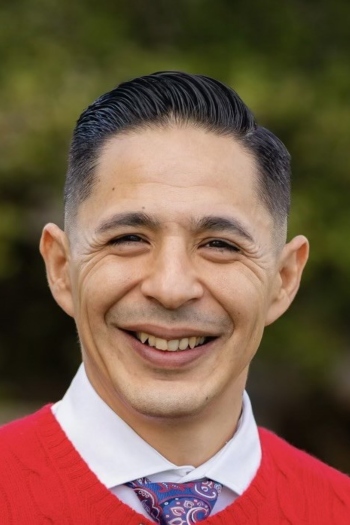
Felipe Mercado, Ed.D., MSW, PPSC, is an assistant professor of Social Work at California State University, Fresno,
author, researcher, and founder and CEO of Wise Souls LLC. His work sits at the intersection
of education, behavioral health, healing-centered practice, and systems change, with
a particular focus on how institutions can move beyond identifying trauma and inequity
toward changing the conditions that produce them.
His scholarship and practice are inseparable from lived experience. Growing up in
California’s Central Valley, Dr. Mercado experienced homelessness, poverty, violence,
and educational systems that often knew how to measure struggle before they knew how
to understand or respond to it. Those experiences shaped a career committed not simply
to helping people survive systems, but to transforming the systems themselves.
Dr. Mercado holds a bachelor’s and master’s degree in Social Work and an Ed.D. in
Educational Leadership. He is continuing doctoral research examining Indigenous approaches
to healing, decolonized social work, and plant-medicine traditions. His interdisciplinary
work brings together healing-centered and trauma-responsive practice, restorative
approaches, neuroscience, contemplative practice, Indigenous knowledge, compassion,
and culturally grounded systems change.
Before entering higher education, Dr. Mercado worked across social work and K–12 education
as a social worker, school counselor, administrator, and systems leader. That experience
continues to shape his scholarship and consulting. He studies the places where individual
pain meets institutional conditions, including belonging, trauma, discipline, educator
well-being, mental health, school climate, leadership, transportation access, first-generation
student success, and whole-child systems.
Dr. Mercado is the creator of the Wise-Compassionate Framework, an evolving model for building educational systems that place human development,
healing, compassion, equity, and student success alongside academic outcomes. His
scholarship on the framework and related areas has appeared in the Journal for Leadership, Equity, and Research, TAPESTRY: A Multimedia Journal for Teachers and English Learners, CLEARvoz, and publications of the Mineta Transportation Institute. His forthcoming
scholarship further examines the integration of the Wise-Compassionate Framework,
health, and community as foundations for holistic student development.
He is the author of A Journey to Compassion: Standing Firm in the Face of Pain, a six-time Amazon bestseller and International Latino Book Awards honoree, and Rethinking Education Together: How the Wise-Compassionate Framework Transforms Student
Success. Since 2023, he has also written The Authentic Self for Psychology Today, where his work explores soul care, systemic trauma, decolonized healing, mindfulness,
belonging, equity, compassion, and the conditions necessary for individual and collective
well-being.
At Fresno State, Dr. Mercado teaches across research, behavioral health, human behavior,
social work practice, policy, thesis, and culturally responsive education. He brings
the same principle to the classroom that guides his work in communities: rigor and
compassion are not competing commitments. Students deserve both.
Beyond the university, Dr. Mercado works with school districts, behavioral-health
organizations, public agencies, and community partners through Wise Souls LLC. He
serves on the boards of the California School-Based Health Alliance and Kings View
Behavioral Health and has contributed to statewide and national conversations on education,
behavioral health, school mental health, restorative practice, compassion, and healing-centered
systems.
Across his work runs one conviction: Data without compassion is surveillance, not care.
Our systems have become increasingly sophisticated at identifying who is struggling.
The more important question is whether they have become equally sophisticated at helping
people heal.
Do our systems love the people they were built to serve?
If not, we have more than a service gap.
We have a responsibility to rebuild them.