Student Clinician Manual
Revised: June 2026
Table of Contents
- STUDENT CLINICIAN MANUAL
- Revised: June 2026
- SECTION 1: WELCOME AND PROGRAM OVERVIEW
- Purpose of This Manual
- Clinic Mission
- Professional Standards
- SECTION 2: CLINICAL EDUCATION REQUIREMENTS
- Clinical Hour Requirements
- Required Hours
- Additional Opportunities
- Clinical Practicum Sequence
- CSDS 230 X 3 semesters
- CSDS 257
- CSDS 267
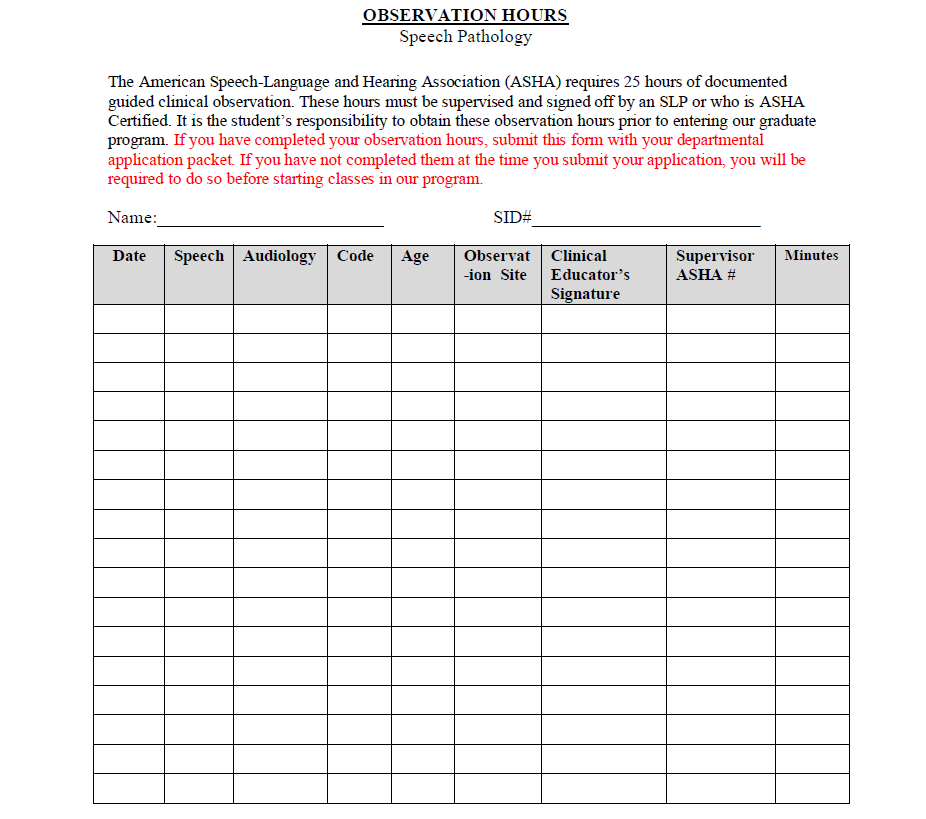
- Observation Hours
- Clinical Hour Requirements
- SECTION 3: ENROLLMENT AND COMPLIANCE
- Enrollment Requirements
- Health and Compliance Requirements
- Professional Liability Coverage
- SECTION 4: CLINIC OPERATIONS
- Clinic Facilities
- Media Center
- Client Records
- SECTION 5: CLINICAL RESPONSIBILITIES
- Prior to Beginning Services
- Client Communication
- Documentation Requirements
- SECTION 6: PROFESSIONAL EXPECTATIONS
- Professional Conduct
- Professional Appearance
- Identification
- SECTION 7: CONFIDENTIALITY
- HIPAA Compliance
- SECTION 8: SAFETY AND INFECTION CONTROL
- SECTION 9: EVALUATION AND GRADING
- SECTION 10: END-OF-SEMESTER RESPONSIBILITIES
- POLICIES, PROCEDURES, AND CLINICAL GOVERNANCE
- SECTION 11: ETHICAL AND PROFESSIONAL STANDARDS
- ASHA Code of Ethics
- Equitable Treatment Policy
- SECTION 12: CLINICAL PLACEMENT POLICIES
- Placement Philosophy
- Student Teaching (CSDS 257)
- Externship (CSDS 267)
- Employment During Placements
- SECTION 13: CLIENT ADMISSION AND SERVICE POLICIES
- Admission Criteria
- Priority Considerations
- Client Referrals
- SECTION 14: CLIENT ATTENDANCE AND PARTICIPATION
- Attendance Expectations
- Excessive Absences
- Cancellation Procedures
- SECTION 15: INFECTION CONTROL POLICY
- Purpose
- Standard Precautions
- Illness
- Exposure Incidents
- SECTION 16: STUDENT PERFORMANCE EVALUATION
- Evaluation Process
- Credit / No Credit Standards
- First Clinical Experience CSDS 230 (C1)
- Second and Third Clinical Experience CSDS 230 (C2 and C3)
- Student Teaching CSDS 257 and Externship CSDS 267
- SECTION 17: CLINICAL REMEDIATION PLAN (CRP)
- Purpose
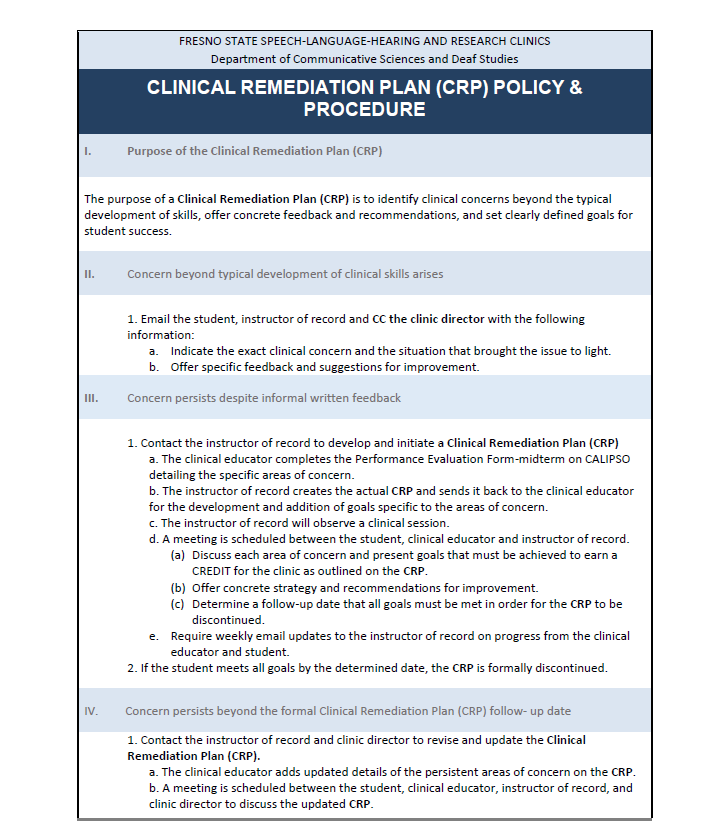
- CRP Process
- Failure to Meet CRP Requirements
- SECTION 18: CLINICAL INCIDENT REPORTS
- Purpose
- CIR Procedures
- Outcomes
- SECTION 19: STUDENT RIGHTS AND APPEALS
- Grade Appeals
- Disability Accommodations
- Title IX
- SECTION 20: QUALITY IMPROVEMENT
- APPENDICES, QUICK GUIDES, FORMS, AND REFERENCE MATERIALS
- APPENDIX A: STUDENT QUICK START CHECKLIST
- APPENDIX B: CLINICAL DOCUMENTATION CHECKLIST
- APPENDIX C: CLINICNOTE QUICK GUIDE
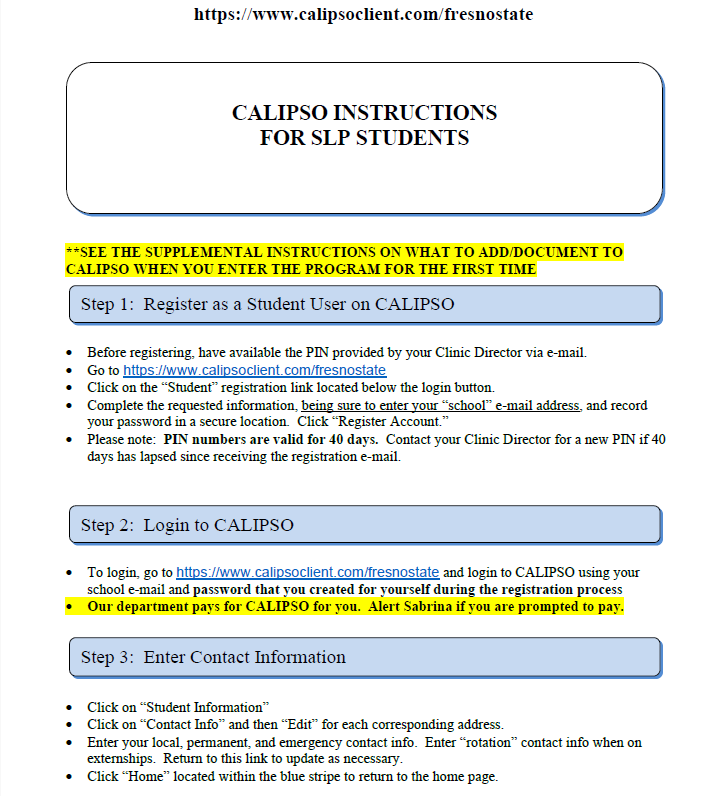
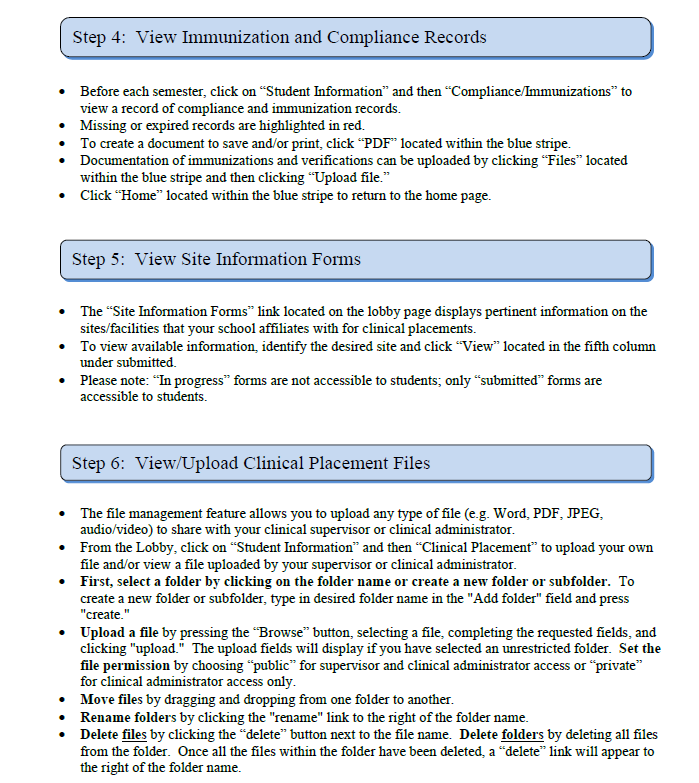
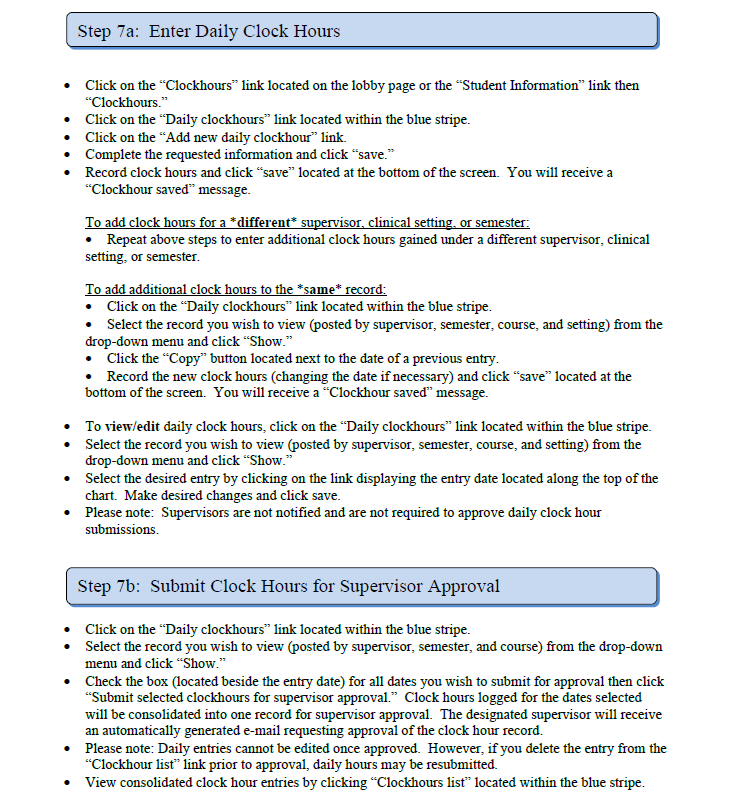
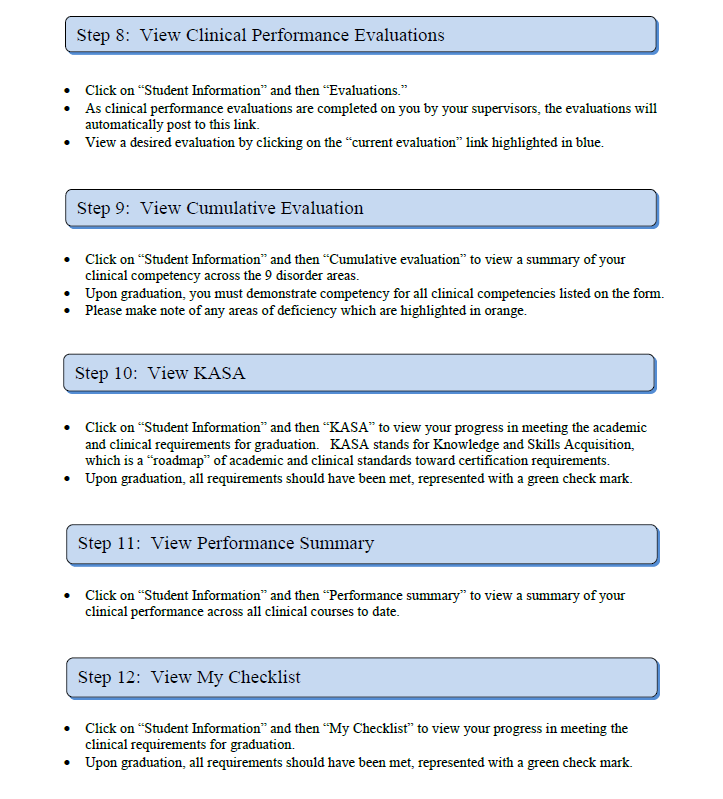
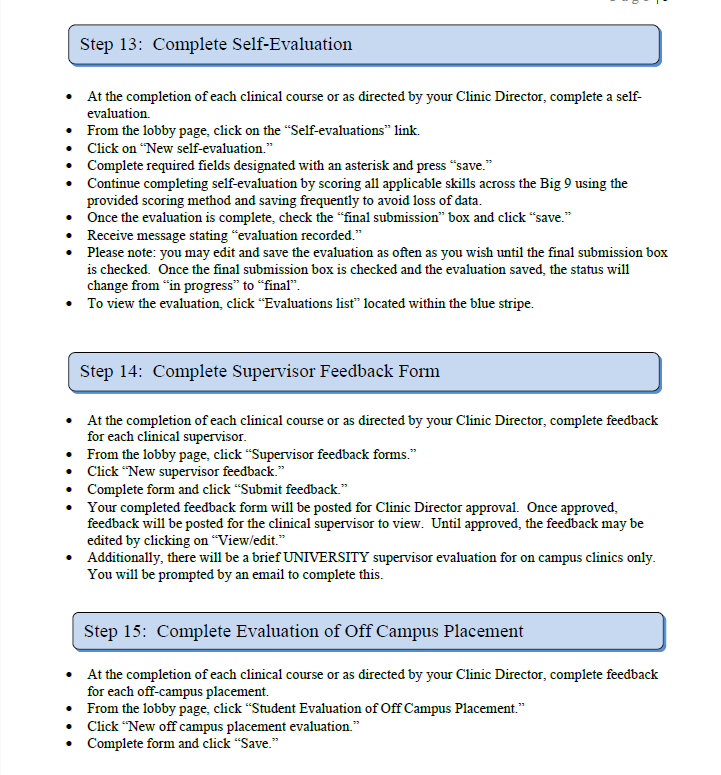
- APPENDIX D: CALIPSO QUICK GUIDE
- APPENDIX E: OBSERVATION REQUIREMENTS
- APPENDIX F: PROFESSIONAL EXPECTATIONS CHECKLIST
- APPENDIX G: EMERGENCY REFERENCE GUIDE
- APPENDIX H: CLINICAL REMEDIATION PLAN POLICY
- APPENDIX I: CLINICAL INCIDENT REPORT POLICY
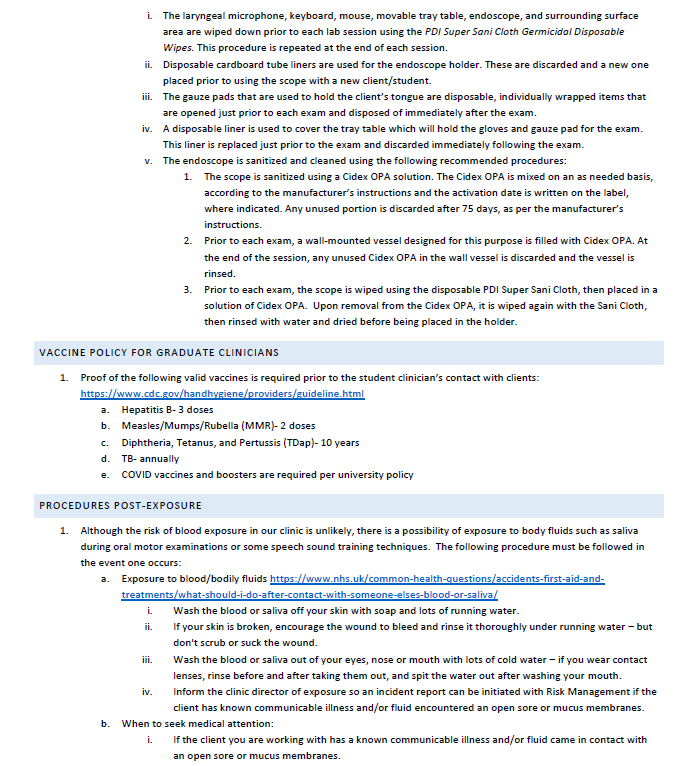
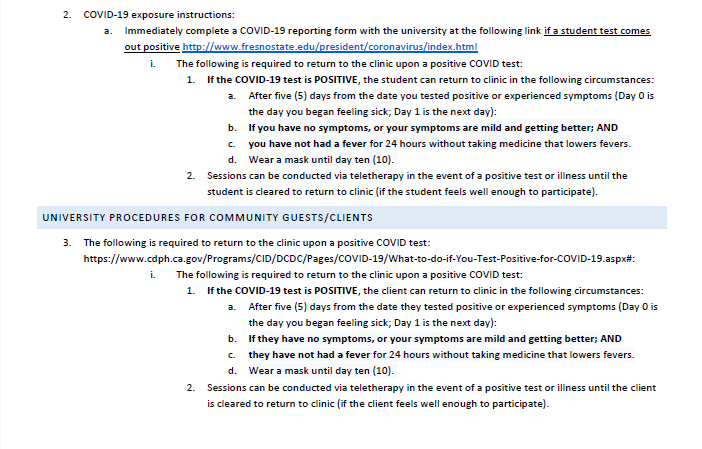
- APPENDIX J: INFECTION CONTROL POLICY
- Appendix K: CSDS 230 CLINC DRIVE
SECTION 1: WELCOME AND PROGRAM OVERVIEW
Purpose of This Manual
This manual provides policies, procedures, expectations, and resources for graduate student clinicians participating in clinical practicum through the Department of Communicative Sciences and Deaf Studies (CSDS) at California State University, Fresno.
Students are responsible for understanding and adhering to all policies contained in this manual, as well as all applicable university, clinic, site, and professional requirements.
Clinical practicum is a required component of the Master of Arts degree in Speech-Language Pathology and is necessary to meet the clinical standards established by the American Speech-Language-Hearing Association (ASHA).
Clinic Mission
The Fresno State–Scottish Rite Speech and Language Clinic is committed to:
- Providing high-quality speech-language services for children and adults.
- Preparing competent, ethical, and culturally responsive speech-language pathologists.
- Meeting the needs of students, clients, and the community.
- Serving as a community resource and providing research opportunities for graduate student clinicians.
Professional Standards
All student clinicians are expected to:
- Adhere to the ASHA Code of Ethics.
- Demonstrate professionalism in all clinical activities.
- Protect client confidentiality.
- Accept and implement supervisory feedback.
- Maintain accurate clinical documentation.
- Represent Fresno State and the profession positively.
SECTION 2: CLINICAL EDUCATION REQUIREMENTS
Clinical Hour Requirements
To satisfy graduation and certification requirements, students must complete 400 clinical contact hours. The following clinical opportunities will be available.
Required Hours
| Clinical opportunity | Hours |
|---|---|
| Guided Observation Hours | 25 hours |
| CSDS 230 x 3 Clinics | 90 hours-approximately |
| CSDS 232- SIMUCASE | 25 hours-approximately |
| CSDS 257- Student Teaching | 100 hours-minimum |
| CSDS 267- Externship | 120-160-approximately |
| TOTAL | 360-400 hours approximately |
Additional Opportunities
Students may earn supplemental clinical hours through approved experiences including:
| Clinical opportunity | Hours |
|---|---|
| Undergraduate/SLPA Hours | 50 hours |
| CSDS 232- LOUD Crowd Clinic | 12 hours |
| CSDS 232- Aural Rehab Clinic | 12 hours |
| CSDS 231- Hearing Screening Clinic | 33 hours |
Maximum allowable hours in each category are below:
| Category | Maximum |
|---|---|
| Guided Observation Hours | 25 hours MAX |
| Clinical Simulation | 75 hours MAX |
| Telepractice | 125 hours MAX |
| Undergraduate/SLPA Hours | 50 hours MAX |
Clinical Practicum Sequence
Students must successfully complete:
CSDS 230 X 3 semesters
On-campus of off- campus collaboration clinical practicum. You may be in a preschool or an individual clinic with clients of a variety of ages and clinical needs.
CSDS 257
Student teaching placement in a school district.
CSDS 267
Medical, private practice, or community-based externship.
Additional specialty clinics may be available to supplement clinical experiences.
Observation Hours
Prior to beginning clinical practicum, students must complete 25 documented guided observation hours.
Observation experiences:
- Must be within the Speech-Language Pathology scope of practice.
- Must be supervised by an appropriately certified and licensed Speech-Language Pathologist.
- Must be documented and verified before enrollment in practicum.
SECTION 3: ENROLLMENT AND COMPLIANCE
Enrollment Requirements
Prior to beginning clinical practicum, students must:
- Complete prerequisite coursework.
- Submit documentation of guided observation hours.
- Establish a CALIPSO account and upload required documentation in full.
- Meet all health and compliance requirements.
- Complete required orientation activities.
Failure to complete required documentation may delay or prevent clinic enrollment.
Health and Compliance Requirements
Students are required to upload these documents to the medical clearance and compliance section in CALIPSO. Only these items are required within the extensive list of items. Please ignore any items not on this list:
- Tuberculosis (TB) clearance (required annually)
- MMR vaccination
- Hepatitis B vaccination
- Tdap vaccination (booster is required every 10 years)
- COVID vaccines are recommended but not required for on-campus placements. However, some off-campus placements require COVID vaccines. You will be alerted ahead of time if this is the case.
Students are responsible for ensuring compliance records remain current throughout their program.
Professional Liability Coverage
Students enrolled at the university and in approved clinical practicum courses are covered under university professional liability policies while participating in assigned clinical activities.
SECTION 4: CLINIC OPERATIONS
Clinic Facilities
The clinic spaces include:
- Eight individual treatment rooms in PHS 222
- Two preschool rooms in PHS 225
- Observation areas in PHS 222 and 225
- Waiting areas in PHS 220
- Media Center in PHS 244
- Clinic Office in PHS 252
- Grad Lounge in PHS 248
Students are responsible for maintaining clinical spaces on a weekly and semesterly basis. Clinic clean-up is mandatory and will be assigned accordingly.
Media Center
The Media Center houses:
- Standardized assessments
- Therapy materials
- Assessment protocols
- Clinical equipment such as sound level meters and audiometers
- Refrigerator, sink, microwave, and coffee maker
- Student mailboxes
Students are responsible for:
- Reserving materials appropriately in the reservation binder on the shelf next to the window in the Media Center.
- Returning materials on time.
- Reporting damaged or missing items.
Client Records
The clinic utilizes ClinicNote as its electronic record system. ClinicNote is HIPAA compliant.
Student clinicians are responsible for reviewing client files prior to services and creating an assessment plan in preparation for the first clinic meeting. At this meeting you will present your plan to your fellow students and clinical educator and obtain approval of the plan. Once approved, you may contact your clients via phone and conduct the interview.
Additionally, students must Maintain accurate client documentation such as SOAP notes, assessment reports/treatment plans, and treatment summaries. It is especially important that ALL communication with the client whether it be an interview, question, absence, or tardy be logged in the Communication Log in ClinicNote.
SECTION 5: CLINICAL RESPONSIBILITIES
Prior to Beginning Services
Once students are assigned clients in ClinicNote, the student can immediately review assigned client records and develop an assessment plan. The clinical educator will schedule a meeting with the group to discuss each plan. Once the clinical educator approves each student’s plan, they can call each client to confirm the day/time and conduct the interview to save time. Students may then reserve assessment materials in preparation for the first day.
Client Communication
Approved communication methods include:
- ClinicNote Portal
- University email
- Google Voice
It is not advised to use your personal cell phone number or personal email while communicating with clients. It is also not advised to accept social media friend requests from clients. All communication must be documented in ClinicNote.
Documentation Requirements
Client documentation in ClinicNote includes:
- SOAP Notes
- Assessment/treatment plan reports
- Treatment Summary Reports
- Discharge Reports
- Contact Notes/Communication Log notes.
- Permission to share documents to and from the clinic (Release Forms)
Documentation must be completed accurately and within timelines established by the clinical educator.
SECTION 6: PROFESSIONAL EXPECTATIONS
Professional Conduct
Students are expected to:
- Arrive on time.
- Be prepared for all clinical activities.
- Communicate professionally in both written and verbal communication.
- Demonstrate respect toward clients, families, supervisors, and peers.
- Maintain ethical standards.
- Accept feedback readily and be prepared to implement recommendations.
- Respect clinic spaces and materials by maintaining them and returning them in good condition.
Professional Appearance
All student clinicians and undergraduate student observers are expected to be well groomed and dressed professionally.
Hair must be clean, well maintained, have a natural appearance, and should not be an unnatural/unconventional color. Facial hair must be well maintained.
Clothing should be practical, yet professional, allowing students to perform activities such as sitting on the floor, bending, leaning over, and reaching overhead without revealing skin or undergarments.
Jewelry must be minimal and should not present a hazard to clients or students.
Excessive perfumes, colognes, or strong scented lotions should be avoided due to sensory issues or allergies.
*Students must follow the dress code of their specific off-campus site.
| ACCEPTABLE | UNACCEPTABLE |
|---|---|
| Nondistressed jeans and pants free of holes and frays | Torn or frayed pants/jeans |
| Plain T shirts- no large logos/pictures/words | Flip-Flops |
| Comfortable and well-maintained shoes, sneakers, and sandals | Dresses or skirts above the knee |
| Blouses and sweaters | Leggings or shorts |
| Knee length (or longer) dresses and skirts | Sweatshirts, sweatpants, or flannel |
| Cardigans and jackets | Midriff or tight-fitting tops |
| Spaghetti straps, off the shoulder, low cut, or open back tops | |
| Plugs, body piercings in the eyebrows, tongue, nose, or lip |
Identification
Students must wear university or site-issued identification when providing clinical services. Some clinical sites may want students to wear the university badge, and others may prefer students to wear site specific badges. Students will receive instructions if the university badge is not needed for a particular site.
SECTION 7: CONFIDENTIALITY
HIPAA Compliance
All client information is confidential.
- HIPAA Compliance is the LAW! See https://www.hhs.gov/hipaa/for-professionals/index.html
- Students must ALWAYS adhere to HIPAA compliance, or students could lose their license or face fines/penalties.
- Do not discuss patients in the open at clinical sites.
- Do not share stories about clients with friends or family, including when names are omitted.
- Don’t lose documents in the site, bring anything out of the site, or leave them in the car.
- DO NOT access the medical records system to access medical records for yourself, friends, family, or ANYONE at any time unless it is directly for patient care.
Violations may result in disciplinary action.
SECTION 8: SAFETY AND INFECTION CONTROL
Students are expected to:
- Follow universal precautions.
- Wash hands before and after sessions.
- Disinfect treatment areas and materials.
- Use personal protective equipment when indicated.
- Follow all clinic infection-control procedures.
Safety concerns should be reported immediately to clinic personnel.
SECTION 9: EVALUATION AND GRADING
Student performance is evaluated continuously through:
- Observation
- Written and verbal feedback
- Conferences
- Midterm evaluations
- Final evaluations
Clinical Educators complete evaluations in CALIPSO.
Students earn Credit (CR) or No Credit (NC) according to program requirements.
SECTION 10: END-OF-SEMESTER RESPONSIBILITIES
Students must:
- Complete all documentation and archive all goals in ClinicNote. Ensure all reports are in place and signed.
- Submit clock hours in CALIPSO.
- Complete supervisor evaluations.
- Complete clinic checkout procedures.
Failure to complete these requirements may delay final grades or clinical hour approval.
POLICIES, PROCEDURES, AND CLINICAL GOVERNANCE
SECTION 11: ETHICAL AND PROFESSIONAL STANDARDS
ASHA Code of Ethics
All student clinicians, Clinical Educators (CEs), faculty, and staff are expected to adhere to the current American Speech-Language-Hearing Association (ASHA) Code of Ethics. https://www.asha.org/policy/code-of-ethics/?srsltid=AfmBOorDJQ-XUlPGoTR3pcRE4kDjlY0pzWfvbFWzzYXwwBINloTE39eI
Ethical responsibilities include:
- Individuals shall honor their responsibility to hold paramount the welfare of people they serve professionally or who are participants in research and scholarly activities.
- Individuals shall honor their responsibility to achieve and maintain the highest level of professional competence and performance.
- In their professional role, individuals shall act with honesty and integrity when engaging with the public and shall provide accurate information involving any aspect of the professions.
- Individuals shall uphold the dignity and autonomy of the professions, maintain collaborative and harmonious interprofessional and interprofessional relationships, and accept the professions’ self-imposed standards.
Failure to comply with ethical standards may result in disciplinary action, remediation, removal from clinic, or failure of clinical practicum.
Equitable Treatment Policy
The Fresno State-Scottish Rite Speech and Language Clinic, including the faculty, staff, and student clinicians, adheres to a policy of nondiscrimination. The Clinic does not discriminate against clients, student clinicians, or staff based on race, religion, national origin, gender, age, sexual orientation, marital status, or disability.
All clients, students, faculty, and staff are entitled to respectful and equitable treatment.
SECTION 12: CLINICAL PLACEMENT POLICIES
Placement Philosophy
Clinical placements are educational experiences designed to provide students with progressively advanced opportunities to develop clinical competencies.
Placement decisions are made by the clinic director and are based on:
- Student learning needs/standards
- Clinical readiness
- Available supervision
- Site availability
- Client needs
- Existing affiliation agreements
Student preferences are considered whenever possible; however, placement requests cannot be guaranteed.
Student Teaching (CSDS 257)
Student Teaching placements are generally completed in public school settings.
Requirements include:
- Full-semester participation.
- Attendance according to district and site schedules.
- Completion of the required 100 hour minimum.
- Closely follow the learning checklist in the syllabus.
- Be concurrently enrolled in CSDS 209.
- Complete assigned credential application components.
- Demonstrate professional behavior.
- Be flexible and don’t be afraid to ask questions or request demonstrations!
Students are expected to attend their assigned placement five days per week through the final day of instruction unless otherwise approved by the clinic director.
Externship (CSDS 267)
Externship placements may occur in:
- Hospitals
- Rehabilitation facilities
- Skilled nursing facilities
- Private practices
- Outpatient clinics
- Early intervention programs
- County agencies
Students are expected to:
- Follow site schedules.
- Follow site policies.
- Complete all required onboarding procedures by the deadline.
- Demonstrate professional behavior.
- Be flexible and don’t be afraid to ask questions or request demonstrations!
Weekend participation may be required depending on the placement. Students are expected to attend their assigned placement five days per week through the final day of instruction unless otherwise approved by the clinic director.
Employment During Placements
Students employed at a clinical site must disclose their employment status to the clinic director.
Clinical supervision requirements must remain independent from employment responsibilities.
Clinical hours may only be counted when supervision and activities meet ASHA requirements.
SECTION 13: CLIENT ADMISSION AND SERVICE POLICIES
Admission Criteria
Client admission decisions are based on:
- Availability of qualified supervision.
- Educational needs of student clinicians.
- Clinic resources.
- Client needs and diagnoses.
- Clinic scheduling parameters.
Admission to clinic services is not guaranteed and is limited to three (3) semesters.
Priority Considerations
When multiple referrals are received, consideration may be given to:
- Continuing clients.
- Student clinician educational needs.
- Availability of specialized services.
- Date of referral.
- Clinic scheduling parameters.
Client Referrals
When services cannot be provided by the clinic, referrals may be made to appropriate community providers.
All referrals must be reviewed and approved by the clinical educator.
Referral activity must be documented in ClinicNote.
SECTION 14: CLIENT ATTENDANCE AND PARTICIPATION
Attendance Expectations
Consistent client attendance is a commitment and is essential for:
- Client progress toward goals.
- Treatment effectiveness.
- Graduate student clinical needs (hours and experience).
Clients are expected to:
- Attend regularly.
- Arrive on time.
- Notify the clinic when unable to attend.
- Clients are not permitted to miss more than three (3) sessions per semester before being removed from clinic. However, some flexibility is given by the clinic director for extenuating circumstances.
Excessive Absences
The clinic director may review continued eligibility for services when excessive absences occur.
Factors considered include:
- Number of absences.
- Pattern of attendance over past semesters.
- Client or caregiver commitment.
Clinic decisions regarding continuation of services are final.
Cancellation Procedures
Clients should notify the clinic via phone, email, or ClinicNote portal as soon as possible when cancellations are necessary.
Student clinicians are responsible for documenting all attendance-related communication in ClinicNote.
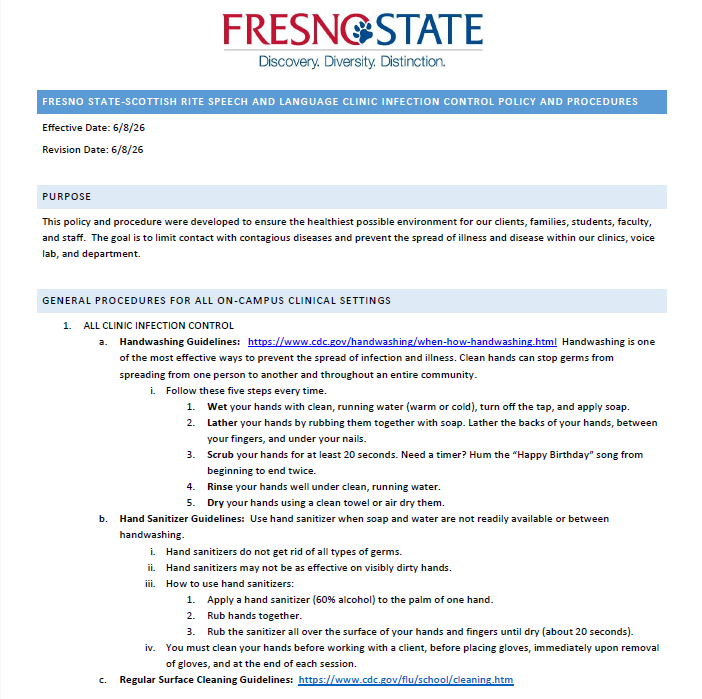
SECTION 15: INFECTION CONTROL POLICY
Purpose
The purpose of infection control procedures is to protect:
- Clients
- Student clinicians
- Clinical educators
- Faculty
- Staff
- Community visitors
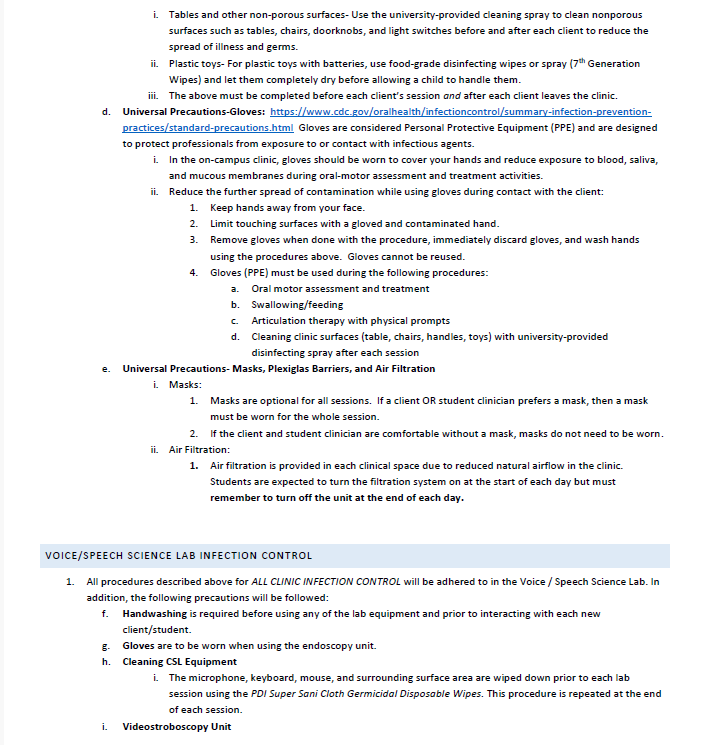
Standard Precautions
Student clinicians shall:
- Wash hands before and after each session.
- Use gloves when appropriate.
- Disinfect treatment surfaces with provided 7th Generation Wipes.
- Clean therapy materials after each use.
- Dispose of contaminated materials appropriately.
Illness
Students who are ill should not attend clinical activities.
Students are responsible for notifying:
- Their clinical educator
- Clinic personnel
- Clients so they don’t attempt to attend the session.
Students may be required to make up missed clinical experiences at the clinical educator’s discretion.
Exposure Incidents
Potential exposure incidents must be reported immediately.
The clinic director will initiate university reporting procedures when necessary.
SECTION 16: STUDENT PERFORMANCE EVALUATION
Evaluation Process
Student clinicians receive ongoing evaluations through:
- Direct observation
- Written feedback
- Informal conferences
- Midterm evaluations
- Final evaluations
Evaluations are completed through CALIPSO.
Credit / No Credit Standards
First Clinical Experience CSDS 230 (C1)
Students must meet the following standards to earn a credit (CR) for the semester.
- Earn a minimum overall rating of 3.0 in the Student Performance Evaluation in CALIPSO
- Earn no score below 2.0.
- Demonstrate satisfactory professional behavior.
Second and Third Clinical Experience CSDS 230 (C2 and C3)
Students must meet the following standards to earn a credit (CR) for the semester.
- Earn a minimum overall rating of 3.5.
- Earn no score below 3.0.
- Demonstrate satisfactory professional behavior.
Student Teaching CSDS 257 and Externship CSDS 267
Students must meet the following standards to earn a credit (CR) for the semester.
- Earn a minimum overall rating of 4.0.
- Earn no score below 3.0.
- Demonstrate satisfactory professional behavior.
Failure to meet these standards may result in a grade of No Credit (NC).
SECTION 17: CLINICAL REMEDIATION PLAN (CRP)
Purpose
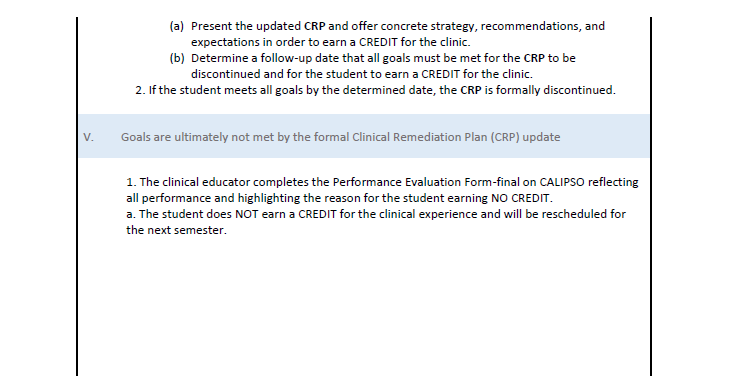
A Clinical Remediation Plan (CRP) provides structured support when student performance falls below expected standards.
The purpose of a CRP is to:
- Identify performance concerns.
- Establish measurable goals.
- Provide support and resources.
- Create a timeline for improvement.
CRP Process
When concerns arise:
- Clinical educator documents concerns.
- Clinic director is notified.
- Student receives written feedback and formal remediation goals are established during a group meeting.
- Follow-up observations and support meetings are conducted.
A CRP may be discontinued when all established goals are successfully achieved, and the student is predicted to meet the standard for passing or earning a credit (CR) for the clinical experience.
Failure to Meet CRP Requirements
Failure to meet remediation expectations may result in:
- Extension of remediation with potential modification to the established goals or an updated deadline.
- Additional supervision.
- No Credit (NC) in practicum.
- Delay in progression through the clinical sequence.
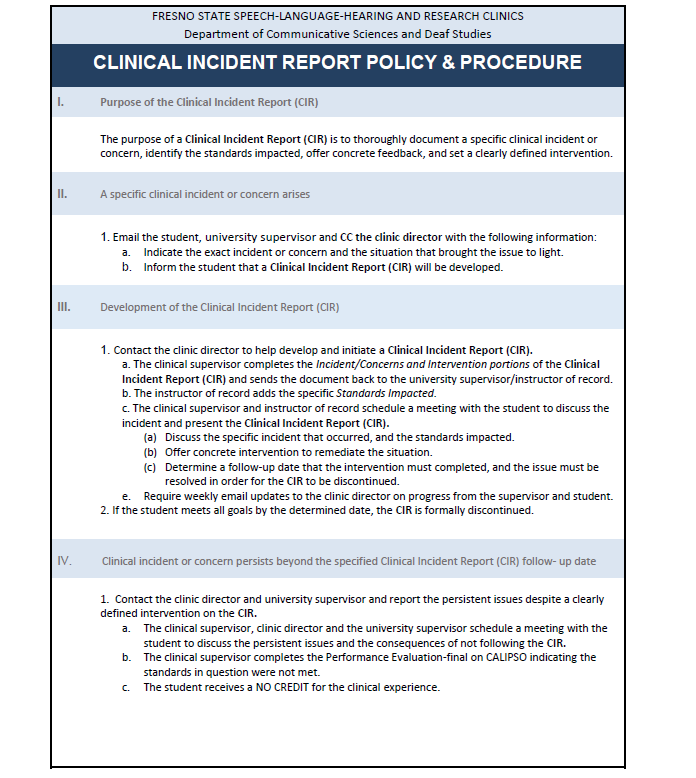
SECTION 18: CLINICAL INCIDENT REPORTS
Purpose
A Clinical Incident Report (CIR) addresses concerns involving:
- Professional conduct
- Ethical behavior
- Confidentiality violations
- Attendance concerns
- Policy violations
- Safety concerns
CIR Procedures
- Incident is documented by the clinic director and clinical educator.
- Student is notified and a meeting is scheduled.
- Corrective actions are identified in the report and each party signs off.
- Follow-up review occurs.
- No further action is taken if the incident is resolved.
- If the incident or issue continues, a no credit (NC) is earned, and the student will be instructed to return to clinic the next semester.
Outcomes
Possible outcomes include:
- Informal resolution.
- Additional training.
- Remediation.
- Clinical probation.
- Failure of clinical practicum.
SECTION 19: STUDENT RIGHTS AND APPEALS
Grade Appeals
If a student receives a grade for a clinic practicum they believe was assigned incorrectly, unfairly, prejudicially, or capriciously, the following steps should be taken:
- The student should speak with the clinical educator who assigned the grade by no later than the end of the third week of the next semester. It may simply be that an error has occurred, which can be easily corrected with a grade correction form signed by the instructor and submitted to the records office.
- If the student is not satisfied with the supervisor's explanation, he or she may discuss the issue with the clinic director, which may arrange a conference with the student and clinical educator to develop a resolution.
- If the student is not satisfied with the clinic director’s intervention, the student may appeal the grade and speak to the department chair about it immediately. The department chair will discuss the allegation with the clinical educator and give the student a response within ten working days.
- If the student is still not satisfied with the department chair's response, the student may submit a written statement protesting the grade to the chair of the Student Academic Petitions Committee (SAPC) within five working days.
- The student should contact the Office of Advising Services , Joyal Administration Building, Room 224, at 278-1787, and ask to make an appointment with the counselor in charge of grade protests. The counselor will provide the student with the necessary paperwork to be submitted to the Student Academic Petitions Committee and will help guide the student through the grade protest process.
- The chair of the SAPC will send the students’ statement to the supervisor who is required to respond by a specified date. The students’ statement and the supervisor's statement will be reviewed by the SAPC committee at its next meeting.
- Once a decision by the SAPC is reached, the student will be notified of it in writing and will receive a copy of the supervisor's written response.
Further information on the University’s Dispute Policy can be found here: http://fresnostate.edu/academics/facultyaffairs/documents/apm/415.pdf
Disability Accommodations
Upon identifying themselves to the instructor and the university, students with disabilities will receive reasonable accommodation for learning and evaluation. For more information, contact Services for Students with Disabilities in the University Library, Room 1202 (278-2811).
Title IX
Fresno State is committed to fostering a safe, productive learning environment for all students. Title IX and CSU policy prohibit discrimination on the basis of sex, which includes sexual harassment, domestic and dating violence, sexual assault, sexual exploitation, and stalking. We understand that sexual violence can undermine students’ academic success and we encourage students who have experienced some form of sexual misconduct to access appropriate resources so they can get the support they need and deserve.
As an instructor, I have mandatory reporting responsibility as a part of my role. It is my goal that you feel comfortable sharing information related to your life experiences in classroom discussions, in your written work, and in our one-on-one meetings. I will seek to keep the information you share private to the greatest extent possible. However, I am required to report information I receive regarding sexual misconduct or information about a crime that may have occurred during your time at Fresno State.
Students can report incidents of alleged sexual misconduct to either or both of the following resources:
Title IX and Clery Compliance Office | titleix.fresnostate.edu | 559.278.5003
Fresno State Police Department | fresnostate.edu/police | 559.278.8400
Students can access confidential support from two separate resources on campus:
Survivor Advocates | fresnostate.edu/survivoradvocate | 559.278.6796
Counseling Services | fresnostate.edu/health/counseling | 559.278.2734
If you have concerns and you are unsure who to contact, please visit the Concern & Action Guide.
SECTION 20: QUALITY IMPROVEMENT
The clinic continuously evaluates:
- Client outcomes
- Student performance
- Clinical Educator effectiveness
- Consumer satisfaction
Student feedback collected through CALIPSO and university evaluation systems contributes to ongoing program improvement. Additionally, consumer satisfaction surveys are maintained in GOOGLE DRIVE.
APPENDICES, QUICK GUIDES, FORMS, AND REFERENCE MATERIALS
APPENDIX A
STUDENT QUICK START CHECKLIST
Before Your First Semester
Complete the following:
- Register for CALIPSO with the PIN provided by the clinic director
- Upload and enter 25 guided observation hours
- Upload immunization records including TB tests
- Attend clinic orientation and complete orientation modules
- Review the Student Clinician Manual in GOOGLE DRIVE
- Review ASHA Code of Ethics
Before Clinic Begins Each Semester
- Complete Placement Request Survey
- Verify immunization and TB compliance records remain current in CALIPSO
- Review assigned clients
- Meet with the clinical educator (CE)
- Develop assessment plans
- Reserve assessment materials
- Confirm client appointments
- Review ClinicNote procedures
APPENDIX B
CLINICAL DOCUMENTATION CHECKLIST
Every Session
Complete:
- Attendance in Communication log (if absent, late, or other)
- SOAP Note
- Data collection
- Session preparation for next visit
Every Client
Maintain:
- Assessment report/Treatment plan
- Current goals
- Treatment summary
- Discharge documentation (if applicable)
- Communication log
APPENDIX C
CLINICNOTE QUICK GUIDE
Before Services Begin
ClinicNote Knowledge Base/training is found at https://clinicnote.thinkific.com/ BEFORE CLINIC STARTS-PREP TIME (1-2 weeks prior to the clients arriving)
- Clients are connected to -supervisors and students.
- Students view all previous reports/notes/case histories to ensure all information about the client is familiar.
- Prepare client/parent interview.
- Prepare an assessment plan to present to the clinical educator.
- Meet with the clinical supervisor to present treatment plan (template in DRIVE).
- Once the plan is approved, call the client/parent:
- Interview the parent/caregiver if appropriate.
- Confirm time/location of clinic session.
- Answer any questions.
- Notify the clinic assistant if the client informs you they are not coming or missing many sessions.
- Record client contact in CONTACT NOTE in ClinicNote.
Initial Session
- Conduct interview and assessment as planned.
- Start the assessment process.
- Go to GENERATE REPORT and open SOAP Note.
Assessment Report and Treatment Plan
- Go to GENERATE REPORT and use the pull-down menu to choose ASSESSMENT AND TREATMENT PLAN REPORT.
- Create a report and SUBMIT back and forth with your supervisor until approved and finalized with an Esignature.
- Enter GOALS in the GOAL MANAGER.
- Print a copy of the report and present the report to the client/parent. The client/parent can take the report home.
Daily Documentation
Following every session:
- Enter SOAP Note.
- Record attendance if absent or late.
- Update goals as needed.
End of Semester
- GENERATE REPORT
- Enter dates for the semester START and END at the top.
- Choose TREATMENT SUMMARY REPORT in the drop-down menu and GENERATE.
- Complete the SUMMARY report.
- Obtain approval from your supervisor and Esign the document.
- Print a copy of the report and send the copy home with the client/parent on the last day after you have reviewed the report with them.
APPENDIX D
CALIPSO QUICK GUIDE
APPENDIX E
OBSERVATION REQUIREMENTS
Observation hours must:
PLEASE READ INSTRUCTIONS CAREFULLY:
FIRST STEP: Click on the link to read and sign the affidavit if one has not been submitted. *If you have already filled one out, please proceed to the second step below.
Student Clinician Affidavit Form
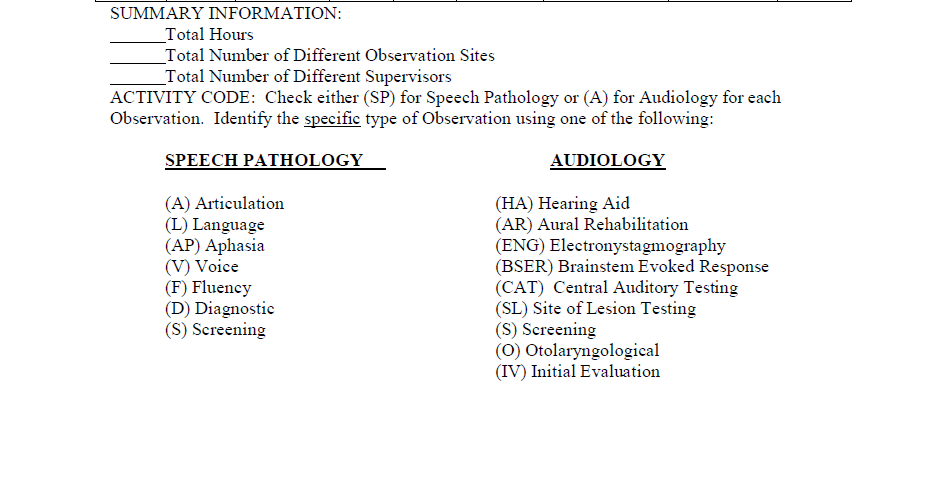
SECOND STEP: Complete the form below.
REMINDERS ON THE DAY OF YOUR OBSERVATION:
- Arrive 10 minutes prior to your scheduled time.
- Introduce yourself to the supervisor and request permission to observe.
- Confirm that the supervisor is willing to sign off on your hours upon daily completion.
- Dress in professional attire appropriate for the clinic setting.
- Refrain from using your cell phone while in the clinic.
Students are responsible for obtaining signatures at the time observations occur.
APPENDIX F
PROFESSIONAL EXPECTATIONS CHECKLIST
Students are expected to:
- Arrive on time (early)
- Be prepared
- Maintain confidentiality
- Dress professionally
- Accept feedback
- Communicate professionally
- Complete documentation promptly
- Follow ethical standards
- Demonstrate cultural responsiveness
- Maintain professional boundaries
APPENDIX G
EMERGENCY REFERENCE GUIDE
Medical Emergency
- Contact Campus Police at 559-278-8400.
- Follow emergency procedures.
- Notify clinical educator.
- Notify clinic director.
- Complete incident documentation.
Fire Emergency
- Evacuate immediately.
- Contact Campus Police.
- Assemble at designated location.
- Await instructions.
Injury or Exposure Incident
- Seek appropriate care.
- Notify clinical educator.
- Notify clinic director.
- Complete required reports with guidance from the clinic director.
APPENDIX H
CLINICAL REMEDIATION PLAN POLICY
APPENDIX I
CLINICAL INCIDENT REPORT POLICY
APPENDIX J
INFECTION CONTROL POLICY
Appendix K
CSDS 230 CLINC DRIVE
As students are admitted to the program, they will be given access to the CSDS 230 Clinic GOOGLE DRIVE. The drive contains helpful information that will assist students as they start clinic. This drive is updated regularly and contains the following information:
- The assessment library/list
- CALIPSO guidance
- Clinic schedules
- ClinicNote guidance
- Credential application
- Helpful resources and websites
- Policies and procedures
- Pre clinic meeting agendas
- Release forms
- Remediation information
- Teletherapy resources
- Templates
- Interpreting access
- Clinic/building maps
This HTML version was generated with AI assistance and may contain errors or omissions. The original approved PDF remains the official document of record. An alternative accessible format is available upon request from the document creator in accordance with Title II of the ADA.