Evaluation of the Effectiveness of Delivering Oral Health Training to Community Health Workers.
Prepared by
- Hayam Megally, MPH, CHES, CPH
- Rachel Doherty, RDHAP, MPH
- Marlene Bengiamin, PhD
This work was supported by grants from Saint Agnes Medical Center and DentaQuest Partnership for Oral Health Advancement.
Executive summary
Oral health is an essential part of general health and well-being. Many studies have shown the link between oral diseases and various health conditions. Oral health literacy is identified as an important factor in determining the oral health outcomes of a person. In the Central Valley, California, where many residents speak English as a second language, the oral health literacy level is considerably low. Community Health Workers (CHWs) have provided a great role in improving the health of their communities with many chronic diseases such as diabetes and heart diseases. They can play the same positive role with oral health; moreover, managing oral health is part of managing co-morbid chronic health conditions. There is a need for training opportunities to assist the CHWs to improve their knowledge about oral health. The Central Valley Health Policy Institute, at California State University Fresno, prepared and implemented an oral health training for CHWs.
The training is composed of three modules. The first module includes general information about oral diseases, their prevention, processes, and management across the lifespan. The second module focused on the connection between oral health and some systemic diseases. Lastly, the third module focused on the different communication techniques that can be used to improve the patient behavior in regards to oral health. Fifty-three CHWs attended the training. The facilitators assessed their knowledge by a pre- and post-test knowledge quizzes. The participants responded to a course evaluation form provided at the end of the training to assess their training acceptance and to capture their feedback. For three months, participants received a monthly follow-up survey to learn about their experiences and challenges in applying what they have learned within their scope of work. A video conference was conducted three months after the end of the program to assess the overall training impact.
The data analysis revealed an improvement in the participants’ overall knowledge. The course evaluation showed an overall acceptance of the training contents and presentation. The follow up survey showed retention of gained knowledge, 96% strongly agreed and agreed that the training helped them develop new skills that improved their capacity to serve their community, 100% shared information about oral health with their communities, and 87% recommended the training to others. The evaluation showed an overall effectiveness of the training in improving the knowledge and perception about oral health among participants. CHWs can benefit from participating in an oral health training to better serve their communities in regards to sharing information about oral health.
Background
Oral health is an integral part of general health and well-being. Many studies have shown the link between oral diseases and various health conditions such as diabetes, cardiovascular diseases, pulmonary diseases, adverse pregnancy outcomes, Alzheimer, strokes and pancreatic cancers. However, it is only recently that these oral-systemic links have gained attention, and a movement is emerging toward the inclusion of oral health into general health strategies. This movement was initiated by the Surgeon General’s report 2000 that referred to oral health diseases in America as the “Silent Epidemic” burdening children and adults throughout the United States. The World Health Organization (WHO) adopted this idea in 2002, when its Global Oral Health Program policy emphasized that oral health is integral and essential to general health, as well as a determining factor for quality of life. More recently, a WHO resolution called for oral health to be integrated into chronic disease prevention programs. In addition, Healthy People 2020 goals state that oral health is a leading health indicator. One of the main goals is to prevent and control oral and craniofacial diseases, conditions, and injuries, and to improve access to preventive services and oral health care. In addition, oral health literacy is identified as an important factor in determining the oral health outcomes of a person. In the Central Valley, California, where many residents speak English as a second language, the oral health literacy level is considerably low. Community Health Workers (CHWs) have provided a great role in improving the health of their communities with many chronic diseases such as diabetes and heart diseases. They can play the same positive role with oral health; moreover, managing oral health is part of managing co-morbid chronic health conditions. There is a need for training opportunities to assist the CHWs to improve their knowledge about oral health.
Goal and Objectives
The main goal of this training was to improve oral health literacy among residents in Fresno County by training 50-60 Community Health Workers on basic oral health information.
Objectives:
By the end of the training, the participants will:
- Identify the process and prevention of common oral diseases across the lifespan
- Understand the interrelationship between diabetes and oral diseases
- Recognize the importance of oral health care during pregnancy
- Practice how to employ the concept of Motivational Interviewing while sharing information about oral health with their patients
- Recognize the importance of cultural sensitivity when educating patients about oral health
- Identify various low-cost and free dental services in Fresno County
- Show 20% improvement in their oral health general knowledge as demonstrated by pre-test and post-test quizzes.
Methods:
Curriculum contents:
The training is composed of three sessions, where each session lasts 3 hours. The first session is mainly discussing the basic information about most common oral diseases, their prevalence, sequelae of untreated oral diseases, terminology, and the process of developing tooth decay and gum diseases. The second session includes oral diseases across the lifespan, prevention and management according to each stage of life as well as its different challenges and needs at each stage, and the interrelationship between oral health and chronic diseases and conditions with more emphasis on diabetes and pregnancy. The third session focuses on some of the communication techniques that CHWs may employ when informing their patients about oral health. These techniques include Motivational Interviewing concepts and the teach-back method. The third session also includes a component that illustrates the importance of providing culturally and linguistically appropriate oral health services. That section addressed the need for cultural sensitivity in any health discussion with patients and their families. Lastly, various low cost and free local oral health resources and dental insurance coverage, particularly public insurance were shared. Several videos were incorporated into the presentations to emphasize the concepts discussed and to provide visual aid to the educational slides.
Hands-on activities and discussions:
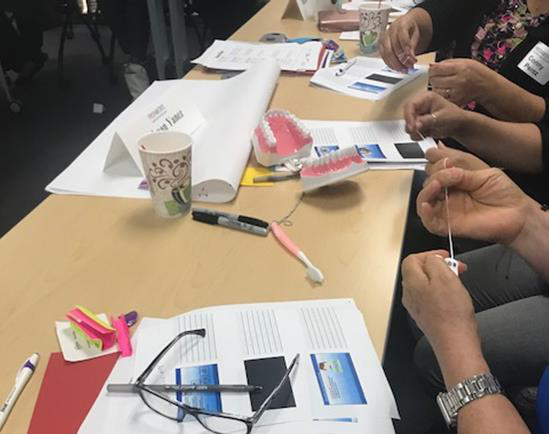
To support the learning objectives of this oral health training, approximately one-fourth of the time of each session is devoted to hands-on activities and open discussions. Each activity was chosen to serve the learning objective that preceded it. For instance, after introducing the concept of Motivational Interviewing (MI) and showing a short video that demonstrates the use of MI in a dental setting, the participants were divided into groups of three and were given the opportunity to do a role- play activity. They were assigned roles to practice as either a patient, a community health worker or an observer following a given scenario. The participants then had the opportunity to report back as an entire group and to engage in an open discussion to share each group’s observations. All of the activities aim to allow the participants to practice, as a group, the learned concept and to give an opportunity for open discussion to interactively share their views according to their different scopes of practice, perspectives, experiences, and backgrounds.
Recruitment:
The training curriculum was piloted before implementation. A flyer (Appendix 1) that explains the purpose, schedule, and location of the training was sent out to local partners. The training was mainly focusing at this stage on oral diseases and its connection to diabetes. We were successful to recruit five participants who accepted to attend the pilot training aiming to collect their feedback and suggestions for improvements. The participants for the pilot included two patient navigators that work at a Federally Qualified Health Center (FQHC), two participants from Saint Agnes Diabetes Empowerment Education Program (DEEP), a dental director of an FQHC. The pilot training was delivered over three consecutive days. Each participant was encouraged to provide the implementers with their feedback that was expected to vary according to their perspectives and scope of work.
The training contents were refined and finely tuned taking into consideration the pilot group feedback and suggestions. The participants were advised to recommend the training to others who may benefit from and are interested in attending the sessions. Results of the pilot revealed a need to include other related health issues besides diabetes. Accordingly, the curriculum was further expanded to cover oral diseases across the lifespan, including pregnancy, childhood and older adults, this was also in addition to diabetes as an example of a chronic disease that have a bidirectional relationship with oral health.
After piloting and revising the training, a wider range of recruitment procedure started by reaching out to all our CBOs and partners to announce the delivering dates and times of the free oral health training. The flyers were emailed and the recipients were advised to spread the word to others who may be interested in attending. No incentives were offered, however, it was emphasized that the training on such an important health issue was free of charge. The participants were encouraged to make sure to attend all the three sessions to be able to receive a Certificate of Completion that would be distributed at the end of the final session.
The recruitment procedures, in addition to the pilot participants’ feedback, revealed the need to expand the curriculum focus to include other health conditions besides diabetes and stages of life as well. This modification in the training curriculum have encouraged and opened the door for more participants to sign up. The recruitment flyer was updated to reflect the added health issues (Appendix 2).
Implementation
The training was delivered to 53 participants, divided into the pilot and 4 additional groups, each composed of 7- 15 participants. The retention rate was 94%. Participants were given a folder containing the PowerPoint printout for each session, the agenda, and selected printed handouts that reflected the topics discussed at each session. The handouts were selected from various credible and up to date oral health resources. Some of these handouts were in Spanish according to availability of the translated versions. Many of the printed materials were patient friendly, with plain language, illustrating graphics, and pictures. Each session began with a pretest on basic dental knowledge, and sharing the general guidelines for public conversation.
At the end of each session, the participants were asked to fill out a daily evaluation form (Appendix 3) for an opportunity to provide feedback on the session, suggestions and comments. In addition, at the end of the last day (day3), they were given an overall course evaluation form (Appendix 4) to complete. The overall course evaluation included both open and closed ended questions intended to capture their feedback and comments on the overall course.
Pre and Post knowledge quiz:
The participants were given a pre-test before the beginning of each session and a post-test after the end of the third session to capture the overall improvement in their oral health knowledge. The questions were put together in a way that reflect what is covered during the three modules. Improvement in knowledge was calculated for each group separately because each group began with different baseline oral health knowledge and varied in their scope of practices.
The total average knowledge improvement, for all five groups, was 19.2 percent (Table1). Percent improvement ranged from 0% to 53%.The group that did not show any improvement l were dental outreach workers who had previous dental health awareness. The group that improved by 4% was the pilot group, which included one dentist, one health educator, and three experienced patient navigators. The training objective was to improve participants’ basic oral health knowledge by 20% and we nearly achieved this goal, however the quantitative pre and post-test measures do not reflect the whole story. In addition to the quantitative pre and post-tests, the facilitators observed and recorded an increase in knowledge during verbal activities such as “Take Home Messages” and “Q&A”. Participants had the ability to get answers to their own questions that were not asked on the quiz. Moreover, participants self-reported an increase in knowledge on the written evaluations. Additional increase was reflected through qualitative analysis where many of the participants reported that they had learned about the bidirectional relationship between oral health and diabetes and that caries is an infection passed from caregiver to child. Table 1 illustrates the percentage of knowledge improvement per each group.
| Group | PILOT | 1 | 2 | 3 | 4 | ALL GROUPS AVERAGE |
|---|---|---|---|---|---|---|
| Percent Change in Knowledge Pretest to Post-test | 4% | 22% | 53% | 0% | 17% | 19.2% |
Course evaluation:
Daily session evaluation:
Qualitative analysis from the comments and verbal feedback on the daily evaluations were positive for all three sessions and the responses were similar across all groups. The main themes extracted from the evaluations were that they were pleased with the organized delivery of every session and the fact that the training facilitators were oral health professionals.
Overall course evaluation quantitative data (close-ended questions) findings:
The participants were given an overall course evaluation form to complete at the end of the third session that included close-ended questions asking how they would rate the training in terms of various indicators. Overall, the aim of the evaluation was to gage the usefulness of each session. Participants’ responses were analyzed using Statistical Package for Social Sciences (SPSS) software. The analysis showed that 83% of participants thought the first and second sessions were very useful while 87.5% rated the third session as very useful. (Table 2, 3, 4)
| Response group | Rating | Frequency | Percent | Valid Percent | Cumulative Percent |
|---|---|---|---|---|---|
| Valid | neutral | 1 | 2.1 | 2.1 | 2.1 |
| somewhat useful | 2 | 4.2 | 4.3 | 6.4 | |
| useful | 5 | 10.4 | 10.6 | 17.0 | |
| very useful | 39 | 81.3 | 83.0 | 100.0 | |
| Total | 47 | 97.9 | 100.0 | ||
| Missing | System | 1 | 2.1 |
| Response group | Rating | Frequency | Percent | Valid Percent | Cumulative Percent |
|---|---|---|---|---|---|
| Valid | somewhat useful | 1 | 2.1 | 2.1 | 2.1 |
| useful | 7 | 14.6 | 14.6 | 16.7 | |
| very useful | 40 | 83.3 | 83.3 | 100.0 | |
| Total | 48 | 100.0 | 100.0 |
| Response group | Rating | Frequency | Percent | Valid Percent | Cumulative Percent |
|---|---|---|---|---|---|
| Valid | somewhat useful | 1 | 2.1 | 2.1 | 2.1 |
| useful | 5 | 10.4 | 10.4 | 12.5 | |
| very useful | 42 | 87.5 | 87.5 | 100.0 | |
| Total | 48 | 100.0 | 100.0 |
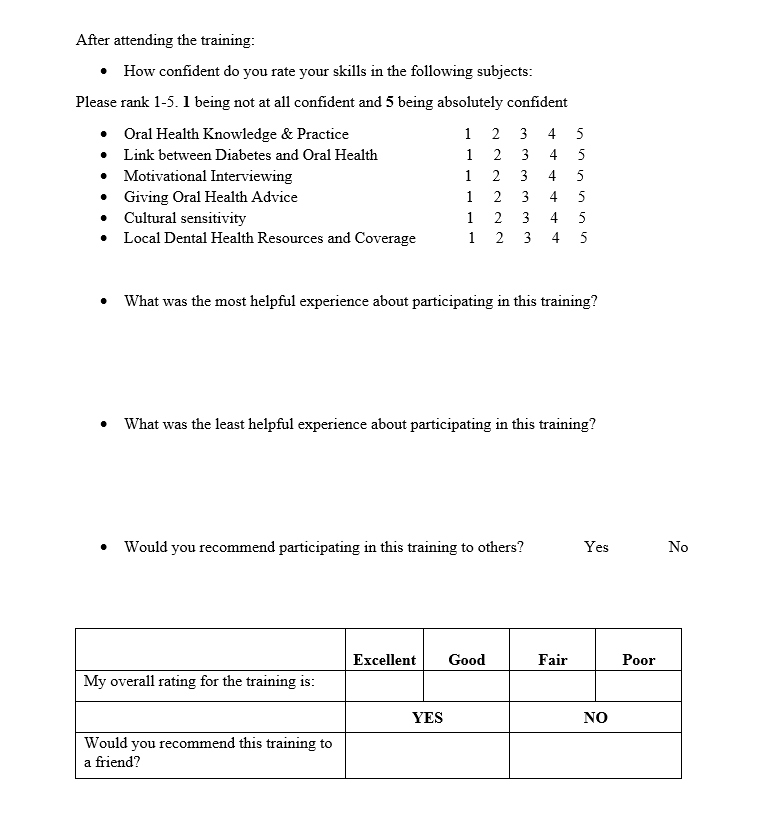
When participants were asked about the skills they had developed after attending the training, 93.5 % of participants were either absolutely confident or confident about their skills in oral health knowledge as a result of the training. In regards to the understanding they had developed in terms of linking diabetes to oral health, 88.8 % reported that they were either confident or very confident about this particular skill. Eighty six percent of participants reported being confident or very confident about the Motivational Interviewing techniques discussed and practiced during the training. When asked about their ability to give oral health advice, 86.7% of them rated their skills as confident or very confident. In terms of cultural sensitivity concepts, 84.5% of participants rated their skills in this regard as confident or very confident. When asked about their knowledge about local dental health resources and coverage, 88.9% reported either being confident or very confidents in regard to this particular skill. All of the participants showed willingness to recommend the training to others. In terms of the overall rating of the training, 83.7% of participants rated the training as excellent while 14% rated it as good. (Table 5)
| Response group | Rating | Frequency | Percent | Valid Percent | Cumulative Percent |
|---|---|---|---|---|---|
| Valid | fair | 1 | 2.1 | 2.3 | 2.3 |
| good | 6 | 12.5 | 14.0 | 16.3 | |
| excellent | 36 | 75.0 | 83.7 | 100.0 | |
| Total | 43 | 89.6 | 100.0 | ||
| Missing | System | 5 | 10.4 | ||
| Total | 48 | 100.0 |
Overall course evaluation qualitative data (open-ended questions) findings:
The overall course evaluation included some open-ended questions to allow participants to express comments, suggestions, and concerns. The facilitators encouraged the participants to respond in Spanish if this was their preferred language. One of the CVHPI team translated the Spanish responses into English following the training.
When asked about what the training had missed or needed to go into more in-depth explanation the following responses were reported:
- The need to allow more time and opportunity to further discuss oral health care barriers, coverage, challenges, and solutions.
- A need for more local data concerning oral health issues specific to the Central Valley.
- How to care for the underserved population in our county.
- Oral health training in Spanish.
- Further dialogue on cultural aspects and concerns
- Need for more tips and techniques to employ Motivation Interviewing in their work.
- More information about the care for children’s teeth.
When the participants were asked about the most useful parts of the training,
- Motivational Interviewing was the most repeatedly appreciated piece of the training along with its accompanying activity.
- The topic of cultural sensitivity.
- The overall conversation about the importance of an effective communication between patients and health providers.
- The ability to better communicate with their clients after attending the training, especially after getting acquainted with dental terminology, pathology, and treatment procedures.
- The connection and importance of oral health to general health, especially in relation to chronic diseases, pregnancy, older adults, and children’s’ health.
- The provided handouts and resources.
- Including the activities and allotting time for open discussion.
- The call to provide future local oral health trainings.
Observation:
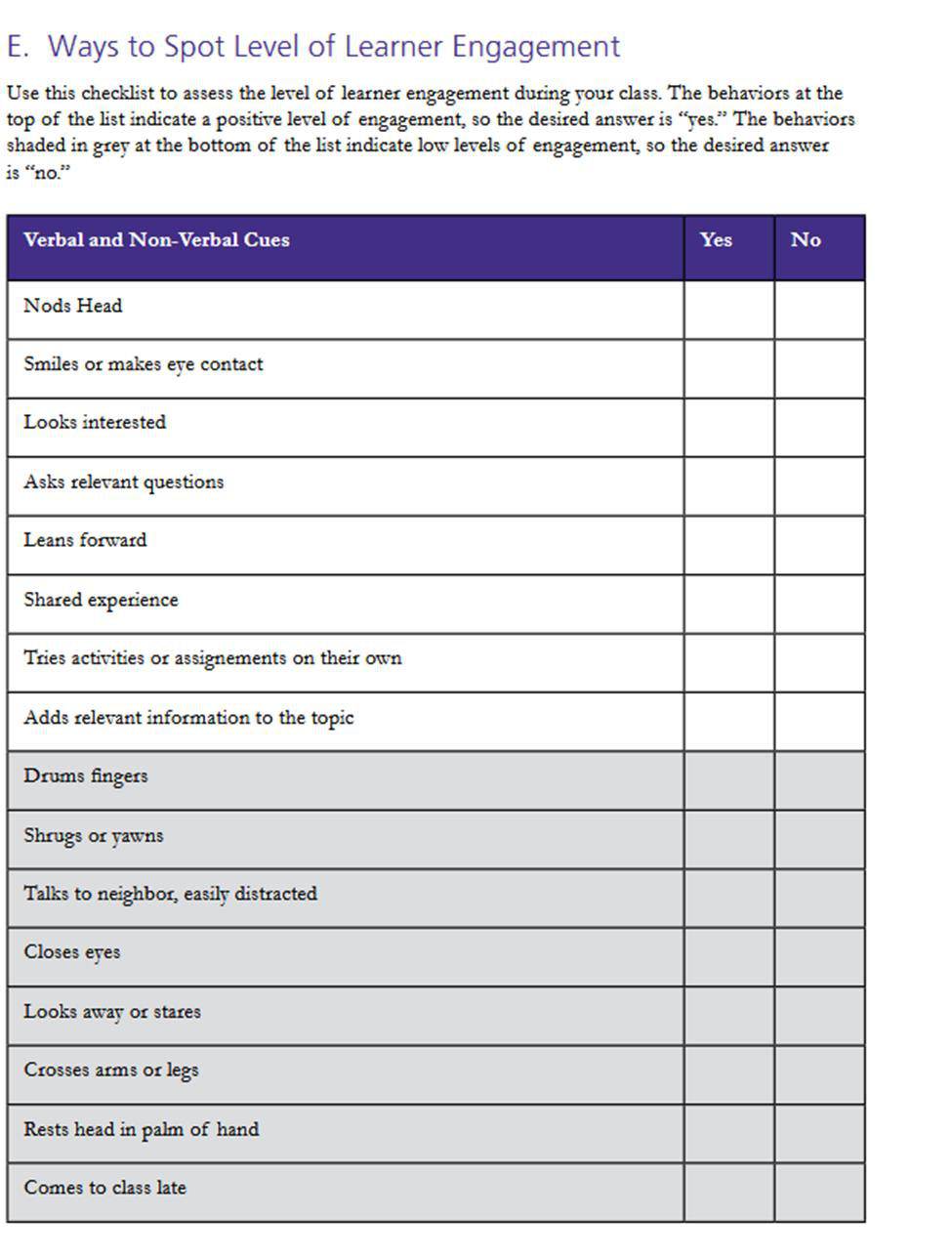
During each session, the co-facilitator observed participants to identify indicators of engagement throughout the session using a tool for recording these observations (Appendix 5). Indicators representing “low levels of engagement” were subtracted from the indicators considered to be deemed “high levels of engagement” to obtain a total engagement score. Levels of engagement were categorized as follows: satisfactory (6-8 points), fair (5-3), and poor engagement (2-0).
Analyses revealed that the range in engagement level was (3-8) averaging 5.2 for all groups.
Groups one through four were categorized as having satisfactory engagement; however, two out of the three pilot sessions fell into the fair category.
Level of Learner Engagement
(6-8) Satisfactory Engagement (3-5) Fair Engagement (0-2) Poor Engagement
| Group | + | - | Score | Level of Engagement |
|---|---|---|---|---|
| Pilot | 8 | 3 | 5 | Fair |
| Group 1 | 8 | 2 | 6 | Satisfactory |
| Group 2 | 8 | 0 | 8 | Satisfactory |
| Group 3 | 8 | 1 | 7 | Satisfactory |
| Group 4 | 8 | 1 | 7 | Satisfactory |
| Group | + | - | Score | Level of Engagement |
|---|---|---|---|---|
| Pilot | 8 | 2 | 6 | Satisfactory |
| Group 1 | 8 | 2 | 6 | Satisfactory |
| Group 2 | 8 | 1 | 7 | Satisfactory |
| Group 3 | 8 | 0 | 8 | Satisfactory |
| Group 4 | 8 | 0 | 8 | Satisfactory |
| Group | + | - | Score | Level of Engagement |
|---|---|---|---|---|
| Pilot | 6 | 3 | 3 | Fair |
| Group 1 | 8 | 1 | 7 | Satisfactory |
| Group 2 | 8 | 0 | 8 | Satisfactory |
| Group 3 | 8 | 0 | 8 | Satisfactory |
| Group 4 | 8 | 0 | 8 | Satisfactory |
Follow up with participants:
At the beginning of each session, participants were asked to verbally commit to answer a monthly survey that will be emailed to them for three consecutive months and to attend a video conference via Zoom after approximately four months of the training. The goal of these monthly emails and zoom meeting is to capture the experiences and challenges they faced after attending the training and taking the information to implement within their scope of work and in their communities. The survey included few questions to capture the retention of knowledge gained from the training.
Follow up Survey Findings:
Three monthly emails were sent to participants using Survey Monkey and they were encouraged to respond to survey that would take about 5-8 minutes to finish.
- 40% strongly agreed and 56% agreed that the training helped them develop new skills that improved their capacity to serve their community.
- 93% agreed and strongly agreed that the training content was relevant and useful to their scope of work and 84% recommended the training to others.
- 100% of respondents affirmed that they have shared information gleaned from the training about oral health within their scope of work, to family members, friends…etc.
Following are some of the respondent’s examples when asked to share an incident when they shared the oral health information taught in the training:
“I had a presentation in my church and they liked all the information that I give to them.”
“It was at an outreach and was able to share the information that adults now have Dent-Cal benefits. Many adults were unaware that they had benefits.”
“Yes, I was able to demonstrate, using a doll, how to hold an infant on your lap to clean the infant's gums. I was able to discuss with the parent, the importance of doing this.”
Following are some responses about challenges faced:
“Changing habit is a great challenge. It was challenging to make them understand the impact and importance of oral health in our life.”
“Many people seem to take the info and it goes one ear and out the other.”
“I feel like people don't take the info seriously. It is not a priority until it affects them. If there was a way to do education more hands on where they do not dismiss what I say right away.”
“[Desired] more information on how to provide care and assist children with disabilities.”
Lastly, when they were asked if they recommended the training to others, 84% of them chose yes as an answer, however, 16% did not give a response.
Follow-up Video Conference Findings:
The session was offered through Zoom and lasted for about 20 minutes during which the attendants were given the chance to answer the following three questions:
-
“How useful was the training to you?”
Respondents expressed that the training was useful. They also stated that they had shared oral health information they took from the training within their scope of work and beyond, for example, at churches and schools. One of the Registered Nurses (RN) who had completed the training works with First-5 mothers with whom she educated, as well as passing oral health information onto her co-workers. She stated:
“I was able to inform patients about what they were being charged for in their dental offices”.
Another participant who works with moms in a Black Infant Health (BIH) program said that she uses the information with her clients and had referred people to one of the resources provided in the training (the Fresno City College dental hygiene clinic).
-
Can you share with us an incident when you shared information about oral health?
One respondent shared that she was able to use the handouts given at the training to help educate her diabetic patients about the importance of taking care of their oral health. Another participant mentioned that she included a section on oral health in the newsletter at her workplace. A participant RN made the statement that the information she provided on oral health was surprising to patients stating that it was because they told her that their providers usually ask about their medical care but not their oral health. Additionally, several respondents expressed the benefits of using the handouts as an educational tool while sharing oral health information with their clients. Participants explained that it enhanced clarity of the oral health topic and that the materials were well received. A participant shared that her sister scheduled a dental appointment when her baby’s first tooth erupted and began cleaning her mouth immediately in response to passing along what she had learned about infant oral health in the training.
-
What challenges do you face when trying to share oral health information?”
One respondent mentioned that she noticed a shortage of patient friendly factsheets and suggested that more handouts should be created and made available at the training that are easy to understand by the patients and lay person. Some also shared that a main challenge was to convince their adult clients to take care of their oral health care since they were focused on their children’s oral health needs. She said that she tells people that oral health issues are not just for kids and made the closing remark that’ “ this [oral health] is an everyone issue.”
Challenges:
Limited time
While putting together the training, it was challenging to include all the important and vital information about oral health in the limited allowed time. Oral health is a broad health issue that incorporate so many aspects, and the limited time forced us to focus on the introductory information, yet essential to know, about oral health. For each group, the focus addressed the learning needs of the participants, which were reflected by their scope of practice. For instance, the group of trainees that included outreach workers who assist mainly parents to find a dentist for their children, the area of focus was children and pregnant women oral health.
Organizations’ limited staff capacity
Another challenge we faced during the recruitment phase was the job duties that the participants already have within their work place. Many of them work with patients on daily basis and it required many arrangements to allow them to attend the three training days. Initially, the training was planned to be delivered over three consecutive days, however, after communicating with partners, we decided to spread the days apart to be delivered either as weekly sessions or twice a week.
Next steps:
Our plan to continue on this work is mainly reflecting the needs that we observed during the different phases of this project that through recruiting, delivering and following up with the participants.
- Expanding the scope of the curriculum
The need to expand the criteria for the participants who can attend the training, and not limit it to diabetes educators, was obvious during the recruitment phase. This led us to expand the participant’s pool to include any community health workers regardless of the specific health issue they focus or work on. Moreover, during the implementation phase, the participants showed a high interest in learning about various health issues beyond diabetes interrelation to oral health.
These examined needs inspired us while planning for next steps, which may include and not limited to:
- Deliver the training to wider array of health professionals including nursing students at Fresno State. The School Nurse Consultant at CSU, Fresno showed an interest in collaborating with us to include the training as part of their curriculum.
- Create series of webinars that can be available on the CVHPI website. Each webinar will cover a specific topic related to oral health e.g. prevention of oral diseases among children, diabetes and its connection to oral heath…etc.
- Train caregivers for special population e.g. caregivers for older adults and children with special needs.
- Hold oral health educational events at different locations where we can reach out to larger number of people who can benefit from the information e.g. health fairs, community events….etc.
Appendices
Appendix 1 Recruiting Flyer (Oral Health and Diabetes):
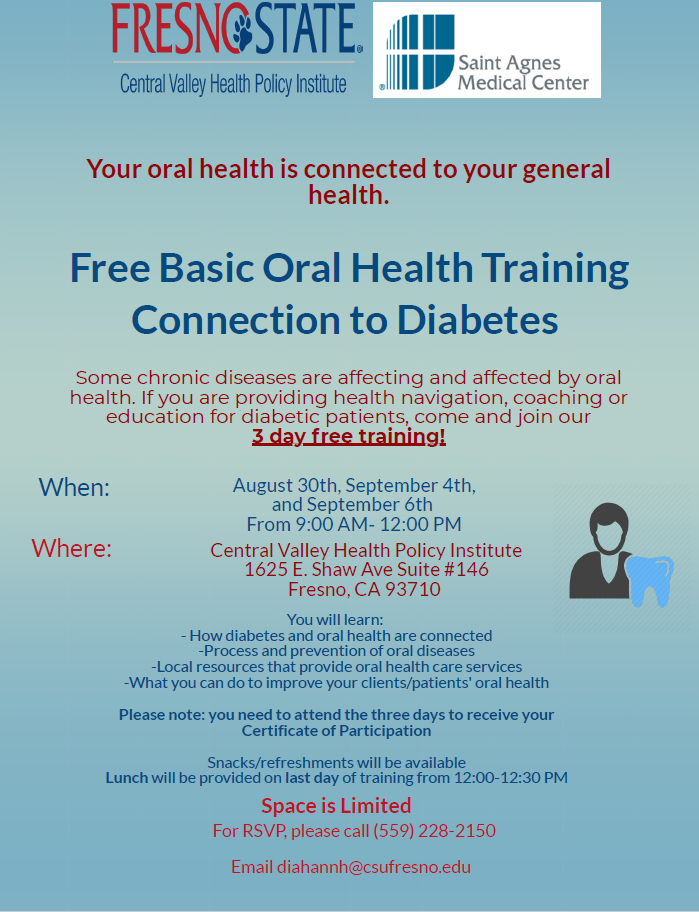
Free Basic Oral Health Training — Connection to Diabetes
Fresno State Central Valley Health Policy Institute; Saint Agnes Medical Center
Your oral health is connected to your general health.
Some chronic diseases are affecting and affected by oral health. If you are providing health navigation, coaching or education for diabetic patients, come and join our 3 day free training!
- When:
- August 30th, September 4th, and September 6th From 9:00 AM-12:00 PM
- Where:
- Central Valley Health Policy Institute 1625 E. Shaw Ave Suite #146 Fresno, CA 93710
You will learn:
- How diabetes and oral health are connected
- Process and prevention of oral diseases
- Local resources that provide oral health care services
- What you can do to improve your clients/patients’ oral health
Please note: you need to attend the three days to receive your Certificate of Participation
Snacks/refreshments will be available
Lunch will be provided on last day of training from 12:00-12:30 PM
Space is Limited
For RSVP, please call (559) 228-2150
Email diahannh@csufresno.edu
Appendix 2 Recruitment flyer (Oral health across the life span):
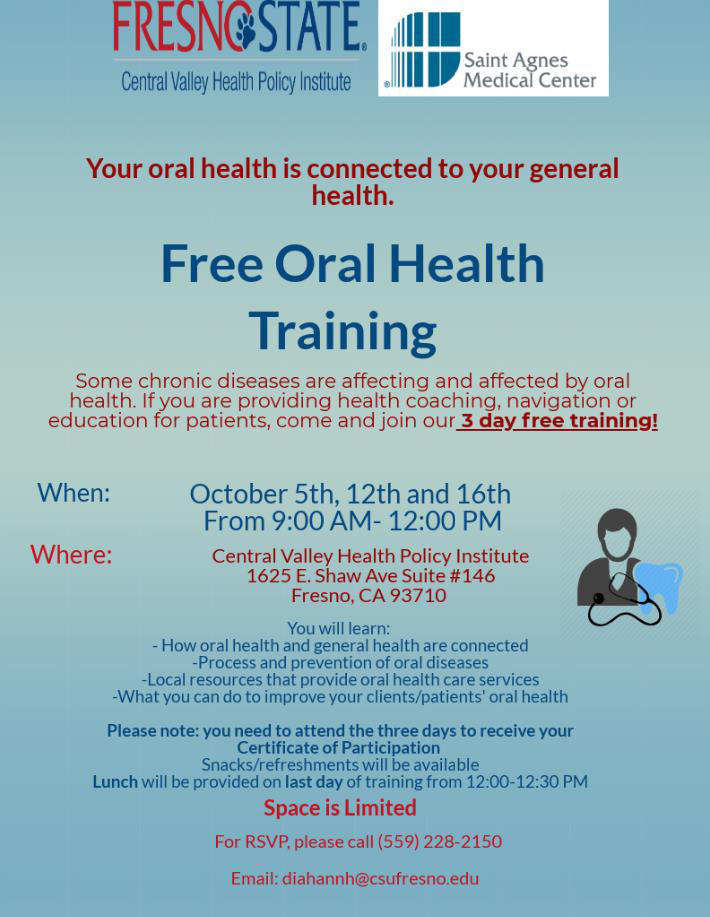
Free Oral Health Training
Fresno State Central Valley Health Policy Institute; Saint Agnes Medical Center
Your oral health is connected to your general health.
Some chronic diseases are affecting and affected by oral health. If you are providing health coaching, navigation or education for patients, come and join our 3 day free training!
- When:
- October 5th, 12th and 16th From 9:00 AM-12:00 PM
- Where:
- Central Valley Health Policy Institute 1625 E. Shaw Ave Suite #146 Fresno, CA 93710
You will learn:
- How oral health and general health are connected
- Process and prevention of oral diseases
- Local resources that provide oral health care services
- What you can do to improve your clients/patients’ oral health
Please note: you need to attend the three days to receive your Certificate of Participation
Snacks/refreshments will be available
Lunch will be provided on last day of training from 12:00-12:30 PM
Space is Limited
For RSVP, please call (559) 228-2150
Email: diahannh@csufresno.edu
Appendix 3: Daily evaluation form:
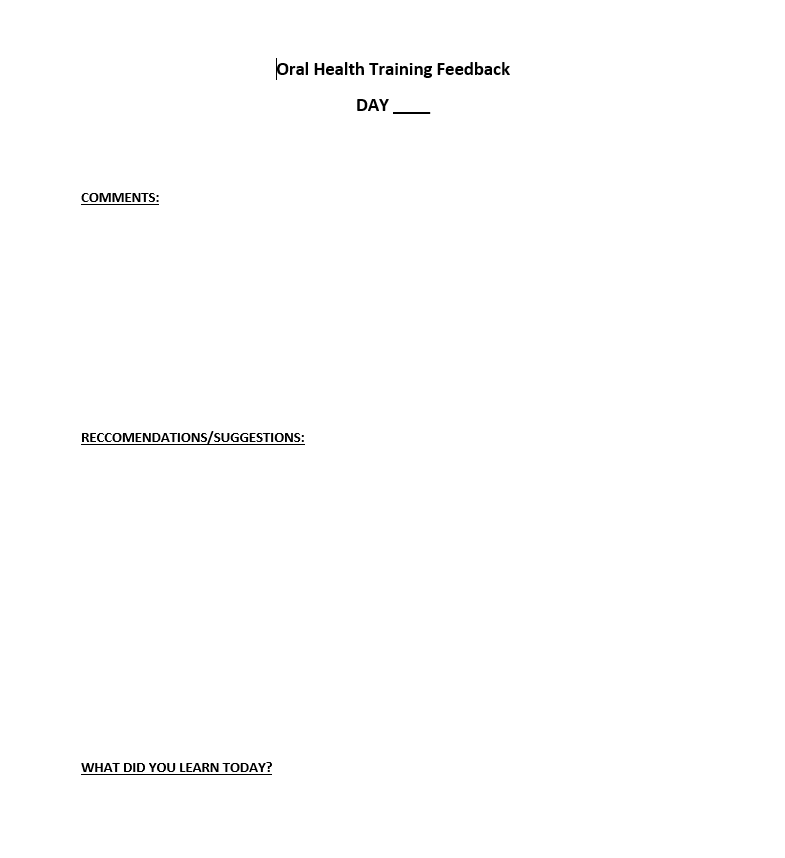
Oral Health Training Feedback
DAY ____
- COMMENTS:
- RECCOMENDATIONS/SUGGESTIONS:
- WHAT DID YOU LEARN TODAY?
Appendix 4 Overall course evaluation form:
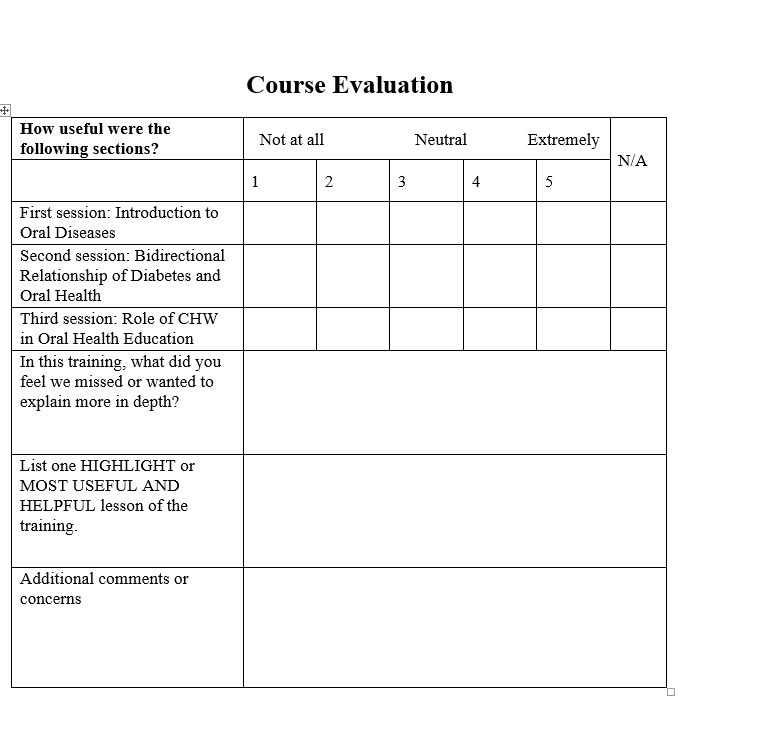
Course Evaluation
How useful were the following sections? Not at all (1), Neutral (3), Extremely (5); N/A is also available.
| Section | 1 | 2 | 3 | 4 | 5 | N/A |
|---|---|---|---|---|---|---|
| First session- Introduction to Oral Diseases | ||||||
| Second session: Bidirectional Relationship of Diabetes and Oral Health | ||||||
| Third session: Role of CHW in Oral Health Education |
- In this training, what did you feel we missed or wanted to explain more in depth?
- List one HIGHLIGHT or MOST USEFUL AND HELPFUL lesson of the training.
- Additional comments or concerns
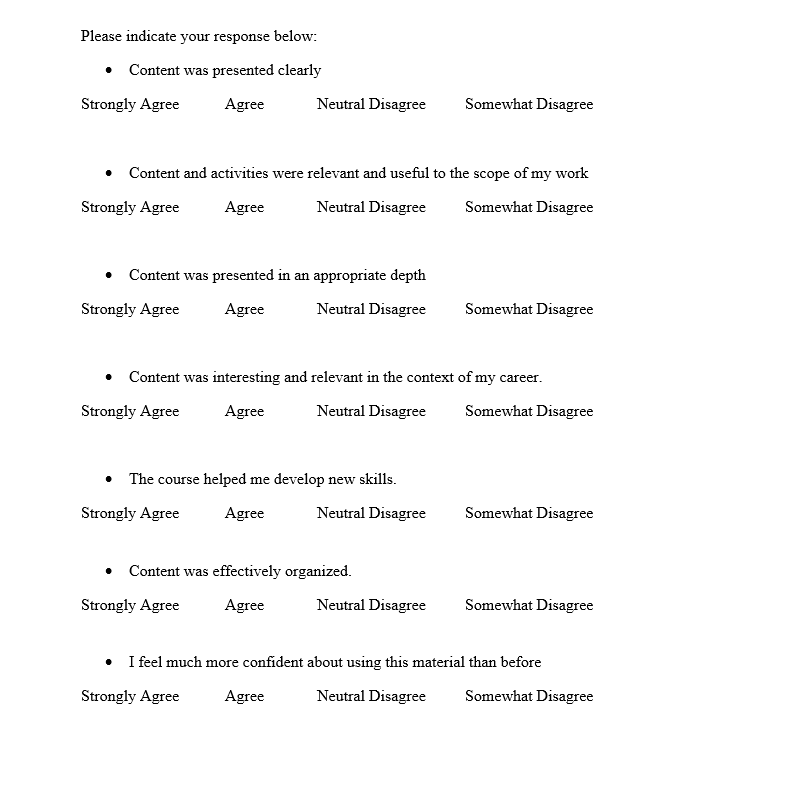
Please indicate your response below:
- Content was presented clearly
Strongly Agree; Agree; Neutral; Disagree; Somewhat Disagree
- Content and activities were relevant and useful to the scope of my work
Strongly Agree; Agree; Neutral; Disagree; Somewhat Disagree
- Content was presented in an appropriate depth
Strongly Agree; Agree; Neutral; Disagree; Somewhat Disagree
- Content was interesting and relevant in the context of my career.
Strongly Agree; Agree; Neutral; Disagree; Somewhat Disagree
- The course helped me develop new skills.
Strongly Agree; Agree; Neutral; Disagree; Somewhat Disagree
- Content was effectively organized.
Strongly Agree; Agree; Neutral; Disagree; Somewhat Disagree
- I feel much more confident about using this material than before
Strongly Agree; Agree; Neutral; Disagree; Somewhat Disagree
After attending the training:
How confident do you rate your skills in the following subjects:
Please rank 1-5, 1 being not at all confident and 5 being absolutely confident
| Subject | 1 | 2 | 3 | 4 | 5 |
|---|---|---|---|---|---|
| Oral Health Knowledge & Practice | |||||
| Link between Diabetes and Oral Health | |||||
| Motivational Interviewing | |||||
| Giving Oral Health Advice | |||||
| Cultural sensitivity | |||||
| Local Dental Health Resources and Coverage |
- What was the most helpful experience about participating in this training?
- What was the least helpful experience about participating in this training?
- Would you recommend participating in this training to others?
- Yes / No
| My overall rating for the training is: | Excellent | Good | Fair | Poor |
|---|---|---|---|---|
| Response |
| Question | YES | NO |
|---|---|---|
| Would you recommend this training to a friend? |
Appendix 5 Level of engagement observation tool
E. Ways to Spot Level of Learner Engagement
Use this checklist to assess the level of learner engagement during your class. The behaviors at the top of the list indicate a positive level of engagement, so the desired answer is “yes.” The behaviors shaded in grey at the bottom of the list indicate low levels of engagement, so the desired answer is “no.”
| Verbal and Non-Verbal Cues | Yes | No |
|---|---|---|
| Nods Head (positive engagement) | ||
| Smiles or makes eye contact (positive engagement) | ||
| Looks interested (positive engagement) | ||
| Asks relevant questions (positive engagement) | ||
| Leans forward (positive engagement) | ||
| Shared experience (positive engagement) | ||
| Tries activities or assignments on their own (positive engagement) | ||
| Adds relevant information to the topic (positive engagement) | ||
| Drums fingers (low engagement) | ||
| Shrugs or yawns (low engagement) | ||
| Talks to neighbor, easily distracted (low engagement) | ||
| Closes eyes (low engagement) | ||
| Looks away or stares (low engagement) | ||
| Crosses arms or legs (low engagement) | ||
| Rests head in palm of hand (low engagement) | ||
| Comes to class late (low engagement) |
This tool was adopted from: Effective Adult Learning: A Toolkit for Teaching Adults by Northwest Center for Public Health Practice, University of Washington.