Meeting the Moment: How CBOs Led the COVID-19 Response in Fresno County
AUTHORS:
- AMANDA CONLEY, MA
- ARMANDO RAMIREZ, BA
- ANA RUBIO, BA
- KENDRA STAUB, BA
- JOHN CAPITMAN, PhD
- TANIA PACHECO-WERNER, PHD


Acknowledgments
The authors would like to extend appreciation to Sandra Celedon, Genoveva Islas, and Dr. Tania Pacheco-Werner for their time and input on the Power Building and the COVID-19 Equity Project: Immigrant and Refugee Coalition; this case study would not be complete without their contributions. We also extend a special thank you to Guadalupe Corona for her editing contributions.
Funders and Contributors:
The California Endowment and Fresno Building Healthy Communities commissioned this report to highlight power building in the Immigrant and Refugee Coalition and the COVID-19 Equity Project.
Author Note:
This case study was supported by a grant from Fresno Building Healthy Communities to the Central Valley Health Policy Institute at Fresno State. The views expressed in this case study are those of the authors and do not necessarily reflect those of the funders or the University.
Suggested Citation
Central Valley Health Policy Institute. (2023). Meeting the Moment: How CBOs Led the COVID-19 Response in Fresno County. California State University, Fresno.
Table of Contents
| Section | Page |
|---|---|
| Acknowledgments | 2 |
| Introduction | 4 |
| Sandra Celedon | 4 |
| Genoveva Islas | 6 |
| Tania Pacheco-Werner | 7 |
| Theory of Change | 9 |
| The Immigrant and Refugee Coalition: Developing a Community Health Worker Model to Address COVID-19 | 11 |
| Addressing Inequities: Socio-political and Historical Challenges | 14 |
| Conclusion: The CEP and Shaping a New CHW Model | 16 |
| Moving the CHW Model Forward in Fresno County | 16 |
| Photos Credit | 18 |
Introduction
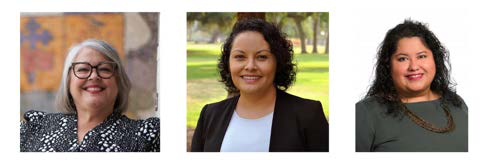
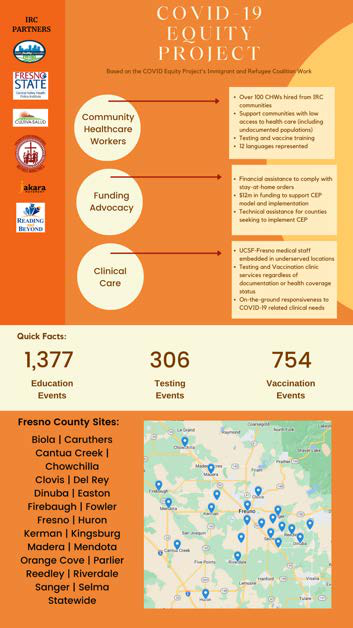
This case study focuses on three health equity leaders who have been involved with Fresno Building Healthy Communities (Fresno BHC) Coalition in Fresno county and who helped develop the Immigrant and Refugee Coalition’s (IRC) COVID-19 Equity Project (CEP) and the efforts of their coalition in developing and obtaining funding and support for an equity-based community health worker (CHW) model. The CHW model was rooted in the participation of long-standing community-based organizations (CBOs) and local institutions who share more than a decade of history advancing health equity for vulnerable populations, including the Central Valley Health Policy Institute at Fresno State. The CEP was designed to address a constellation of critical COVID-19-related health inequities including place, language barriers, access to health education and care, and culturally concordant care in Fresno County. The CHW model has been a success, receiving local, state, and federal recognition as a best practice model for addressing COVID-19 as a community-led solution.
Sandra Celedon:
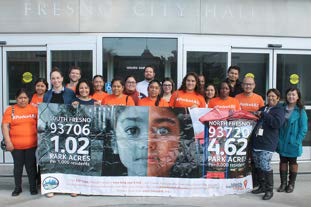
Sandra Celedon, President and CEO of Fresno BHC, has been a key contributor towards change in the Fresno community, encouraging the implementation of policies that serve to provide residents with a healthier and safer place to live. Previous to Celedon joining Fresno BHC, she served as a manager for outreach and enrollment programs at Clinica Sierra Vista, a federally qualified health center dedicated to providing resources and access to health care for underserved communities. Over the years, she has earned multiple recognitions and has been elected to various positions, including the boards of directors for the Public Policy Institute of California and Catalyst California. In 2020, Celedon was elected as vice-chair for the Fresno Commission on Police Reform, a commission in charge of developing recommendations within the Fresno Police Department. Celedon credits Calwa as an inspiration for her work – a small unincorporated community in South Fresno that she says embraced and invested in her growth, from childhood to adulthood, after immigrating from Mexico as a young child.
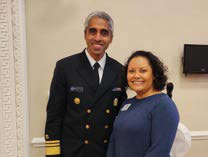
- Celedon has presented on the CEP work at both state and federal levels, most recently
sharing CEP outcomes at the invitation of the White House and the Centers for Disease
Control and Prevention’s Summit on COVID-19 Equity and “What Works” Showcase
- The COVID-19 Equity Project model was highlighted as a best practice to lead future models and inventions
- Celedon has earned multiple awards:
- In 2020, she was recognized as a Health and Human Services Hero (awarded to individuals who make a difference in the Central Valley) by Fresno State - College of Health and Human Services
- In 2021, she received the Champions for Equity Award -Transformative Partner Award (this award is granted to racial justice leaders) by Advancement Project California
Genoveva Islas:
Genoveva Islas, founder and executive director of Cultiva la Salud, has dedicated herself to creating opportunities for better access to health services for underrepresented and underserved families. Islas, a daughter of farm laborers, was born in Fresno, California and raised in a small rural community. She later became the first in her family to attend and graduate from college with an advanced degree. With her background, Islas’ work has been key in obtaining resources to help families maintain healthier lifestyles, such as increased access to healthy foods and beverages, as well as physical activity. For six years, from 2006-2012, Islas was at the head of the Central California Regional Obesity Prevention Program as the program director. She bridged the collaborative efforts between public health departments and community-based organizations throughout the San Joaquin Valley’s eight regions, supporting them as they created and focused on providing their communities with the resources they needed to foster a healthier lifestyle.
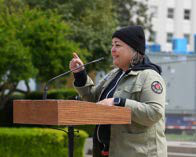
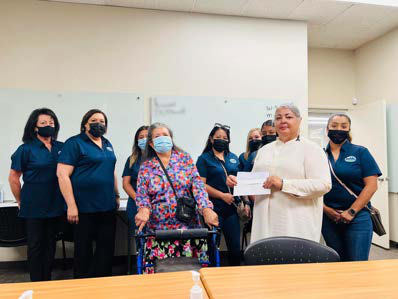
In previous years, Islas has been appointed to various positions, such as serving on the Health Benefit Exchange Board for California (Covered CA) and the California Partnership for the San Joaquin Valley board, a position to which former Governor Jerry Brown appointed her. She was elected to and currently serves on the Fresno Unified School District School Board. In more recent times, Cultiva la Salud created their program “Saving the Señoras” which focused on helping the elderly women in their community have access to their basic needs, such as deliveries of groceries, household items, and personal hygiene products, which became harder to obtain with the isolation brought on by the COVID-19 pandemic. In 2023 Genoveva was awarded the Saint Agnes Community Award for making the COVID-19 vaccine accessible for Latino communities residing in rural areas in Fresno County and the Woman of the Year award by Dr. Joaquin Arambula for the California Assembly District 31, an honor granted annually by the California Legislative Women’s Caucus to women who have focused on creating positive changes in their communities.
- In 2021, Islas was recognized as a Health and Human Services Hero (awarded to individuals who make a difference in the Central Valley) by Fresno State - College of Health and Human Services
- Islas has been recognized as a Culture of Health Leader (a program that helps develop leaders working to advance health equity in their communities) by the acclaimed Robert Wood Johnson Foundation
- Islas is a trustee on the Fresno Unified School District Board (advocates for food security and free meals for students)
Tania Pacheco-Werner:
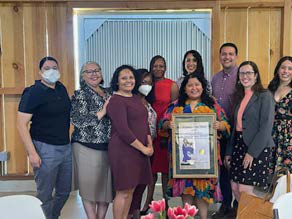
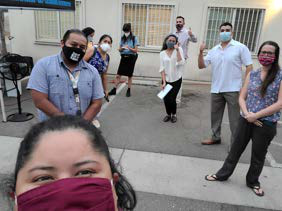
Dr. Tania Pacheco-Werner, Director at the Central Valley Health Policy Institute (CVHPI) at Fresno State, was born in Mexico and immigrated to the United States at a young age. Growing up in a different country and having to learn a second language were challenges sometimes accompanied by disparaging comments claiming that she did not belong and could not be a contributing member of society. Despite this, Pacheco-Werner devoted her time to making a difference and began working with CVHPI as a health policy intern during graduate school at the University of California, San Francisco.
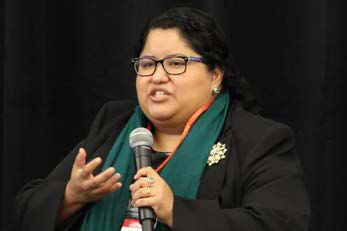
During her journey, Pacheco-Werner has focused on researching and lifting up issues that affect community health. Air pollution is one topic that she has taken upon herself to highlight along with its negative impacts on community health, especially for vulnerable populations such as pregnant women, which can result in preterm birth. In 2020, Governor Gavin Newsom appointed Pacheco-Werner as a member of the California Air Resources Board; she also serves on the San Joaquin Valley Air Pollution Control District. In 2022, Assembly member Dr. Joaquin Arambula elected Pacheco-Werner as Woman of the Year for the 31st Assembly District. In 2022, Pacheco-Werner was also named Educator of the Year in the College Category by the Mexican American Education Association in 2022 for the Facebook calls and education videos that she and other members of the CVHPI team conducted during the pandemic
- Member of the American Public Health Association’s Latino Caucus for Public Health
- In 2021, Pacheco-Werner was a panelist for “Exposing Inequities and Expanding Access – Building a Better Health Care System for the Latino Community” hosted by the California Latino Legislative Caucus 2021 Policy Conference
- In 2021, Pacheco-Werner was invited to the podcast: The SAiGE Podcast, where Dr. Pacheco-Werner talked about the importance of getting vaccinated, the difference between the available vaccines, and addressing questions and concerns
- Pacheco-Werner was invited to the podcast: Vaccine Equity – Vaccinating All 58, Look West: How California is Leading the Nation
- In October 2022, Pacheco-Werner was invited as a Funding the Next Generation panelist for: “How Crisis Creates Change: Taking public health outside the walls of 2020 government using CARES Act funding” to discuss the CEP
Theory of Change
The Fresno BHC Coalition grew out of the Fresno Patient Care Coalition–an informal group of community residents and advocates in Fresno County that came together in approximately 2005 to coordinate their efforts and increase investment in health prevention efforts. In 2007, community members who were part of this coalition organized to elevate the need for the largest healthcare foundation in California -The California Endowment–to select Fresno as one of the 14 sites to receive a 10-year investment through the Building Healthy Communities Initiative.1
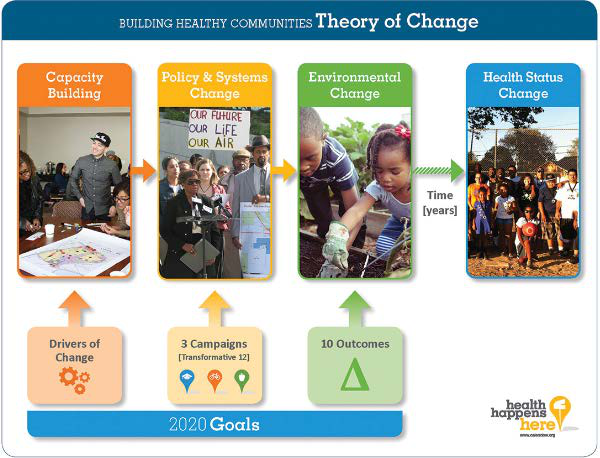
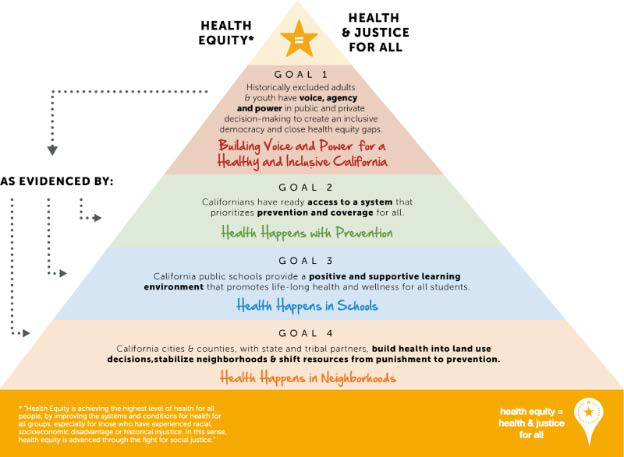
The California Endowment’s (TCE) Building Healthy Communities (BHC) initiative efforts were based on a Theory of Change (TOC, see addendum) to increase health equity through a long-term investment in capacity building, policy and systems change, and environment change, as a means to improve overall health status at the population level. Investments were made in technical assistance to strengthen Fresno BHC Coalition partners at the organizational level, and numerous high-level training sessions with field experts on how systems work and policies are developed and implemented, were provided over the span of the initiative. However, halfway through the initiative, the theory was realigned as Northstar Goals and Indicators (see Addendum C for Northstar Goals) to reflect TCE findings that people power and power building at the local level were vital to achieving health equity.
1 The California Endowment (TCE). TCE was created in 1996 and is a not-for-profit, statewide foundation with over $3 billion in assets. TCE’s mission is to expand access to affordable, quality health care for underserved individuals and communities and to promote fundamental improvements in the health status of all Californians. Source: Our Story. (2023). The California Endowment. https://www.calendow.org/our-story/
According to TCE, the realignment meant building power and voice so that “historically excluded adults and youth residents have voice, agency, and power in public and private decision-making to create an inclusive democracy and close health equity gaps.”2
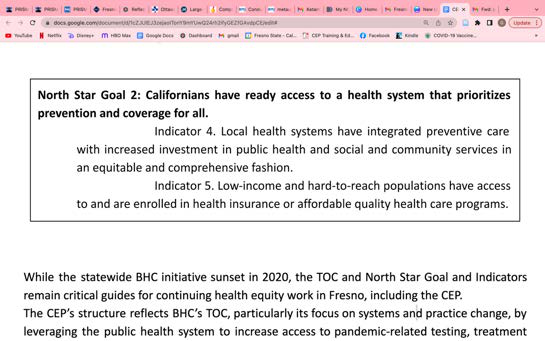
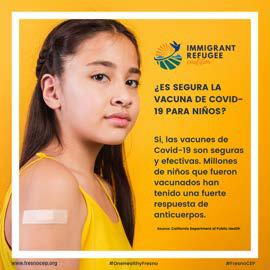
While the statewide BHC initiative sunset in 2020, the TOC and North Star Goal and Indicators remain critical guides for continuing health equity work in Fresno, including the CEP. The CEP’s structure reflects BHC’s TOC, particularly its focus on systems and practice change, by leveraging the public health system to increase access to pandemic-related testing, treatment, and social service support for communities who have historically experienced exclusion. The CEP also continued to use an approach prioritized by Fresno BHC: meet people where they are. This translated to the CEP taking pandemic related information sessions, testing and treatment sites, and direct financial and social service support, regardless of health coverage or immigration documentation status, directly into underserved communities in the County.
2 Learning and engagement – building voice and power. The California Endowment. Source: https://www.calendow.org/learning/building-voice-and-power
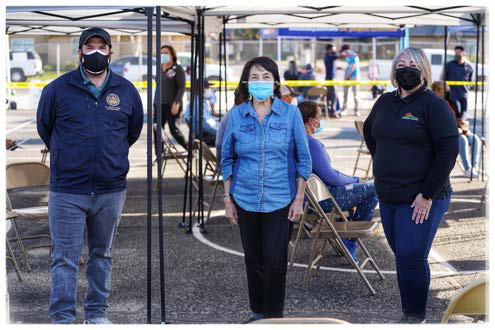
The Immigrant and Refugee Coalition: Developing a Community Health Worker Model to Address COVID-19
“The IRC didn’t just start from COVID-19. This really came from our historical work at Fresno Building Healthy Communities around Community Benefit Programs, Hospital Community Benefit Programs, and the fact that we have been having conversations with residents for over a decade.” - Sandra Celedon, President & CEO, Fresno Building Healthy Communities
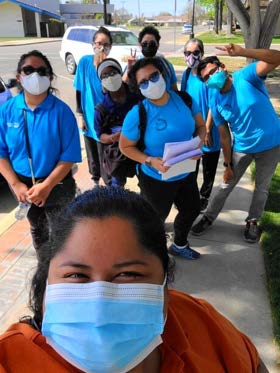
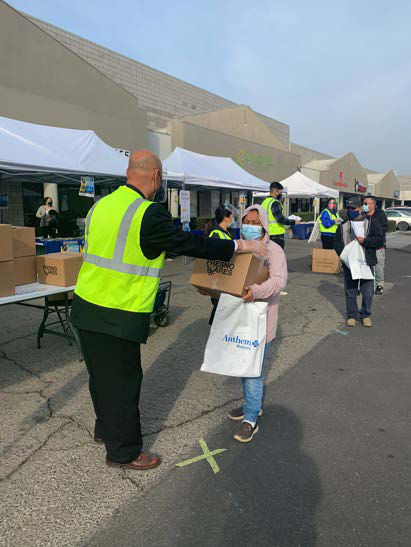
The roots of the Immigrant and Refugee Coalition (IRC) lie in informal conversations between leaders of local organizations, agencies, and institutes, who have worked together to address health equity issues in Fresno for more than a decade. They organized necessary basic aid after the Governor’s stay-at-home orders were implemented, to Fresno County’s most vulnerable populations, including elders, refugees, undocumented residents, and non-English speaking residents. These conversations, between CBO and institute leaders, centered on meeting the most basic needs of residents, proved to be the seeds that would grow into what is now known as the IRC, a group of six organizations who, for the last three years, have built an equity-based COVID-19 response model.







This quick response to the pandemic relied on more than a decade of power building work. It involved local-level efforts to implement policies that support health equity, and a consistent increase in the technical capacity of CBOs, their staff and resident leaders. It also included the development and pilot study of a community health worker (CHW) model to address health inequities conducted more than a decade before the pandemic.
The IRC is made up of organizations who work with different, though sometimes overlapping, populations facing similar pandemic-related challenges. As a coalition, they worked together with the public health department and other governmental agencies to ensure that ARPA and CARES Act dollars included IRC communities. In a twofold strategy they used these funds to: 1) implement a tested community health worker model to address inequities in access to COVID19 testing and vaccination implementation, as well as provide community health education, and; 2) provide direct financial assistance to essential workers financially impacted by the Governor’s stay-at-home orders.3 Part of the earlier power building work came with the CHW model itself, which had previously been tested by CVHPI in 2008. Two CHW pilot studies focused on local Latino and immigrant communities to address gaps in access to health care and support services. According to Pacheco-Werner, undocumented Latino residents were left out of many strategies to combat COVID-19, and the 2008 pilot studies demonstrated that only 1% had access to a medical home. The first pilot study investigated ways to improve ongoing inequities in access to health care faced by Latinos, including elders; the second study, “The Effectiveness of a Promotora Health Education Model for Improving Latino Health Care Access in California's Central Valley” (2009) found that the model proved beneficial for undocumented Latinos prior to the implementation of the Patient Protection and Affordable Care Act. From these studies, Pacheco-Werner knew the model was a potential fit for other vulnerable communities served by the IRC. As COVID-19 stay-at-home orders were implemented across California, Pacheco-Werner wanted to replicate the CHW model to improve healthcare access for IRC populations, knowing they were the most likely to face obstacles to accessing healthcare, coverage, and pandemic-related resources
Addressing Inequities: Socio-political and Historical Challenges
At the organizational level, integrating the CEP structure’s CHW model into existing city and county government agencies was challenging at the decision-making level. While IRC was able to secure $12m in funding for the implementation of the CEP model, it was difficult to retain control of how the program operated and who would lead the work while working with County governing bodies. An example of this occurred during discussion about which organization would lead as the fiscal agent. Fresno BHC was initially rejected as the fiscal agent, despite the organization’s previous experience in such a role and their work in helping to design and find funding for the program. These leadership roles are important; they are positions that allow an organization the power to provide funds and make decisions that improve health equity for vulnerable populations. While Fresno BHC was able to take over as the fiscal agent as the pandemic continued, the Fresno County Board of Supervisors (FCBOS) removed Fresno BHC from the role as the CEP evolved as an ongoing project post-pandemic.
This decision was a disappointment to CBO leaders who crafted the pandemic-response model and wanted to see Fresno BHC, which has more than a decade of experience serving as a backbone organization, remain in this oversight role. Celedon, Fresno BHC’s CEO, still viewed the CEP as an important win as it embedded a novel health equity model into a mainstream source of health care in the County. “Ultimately, the desire is there [to embed the CHW model]. Even if you’re giving our model to somebody else, it tells me you want to implement a model that prioritizes health equity and that’s half the battle,” said Celedon.
Werner-Pacheco shared that some of the initial difficulty in getting an agreement from local government bodies had to do with how the CEP challenged old systems used to address community health. These old systems, she said, produce and reproduce inequities in community health outcomes. For example, the CHW aspect of the CEP utilized a workforce of resident leaders, many of whom are women of color and immigrants, who received extensive training and expertise but would otherwise be overlooked as candidates in traditional health programs. Islas stated that some of these ongoing tensions are likely grounded in the composition of the FCBOS, which she noted does not reflect the composition of the community and that this lack of representation in the FCBOS is at the root of its conflicts with advocates, including the Fresno BHC Coalition, many of whom are people of color and women.
Conclusion: The CEP and Shaping a New CHW Model
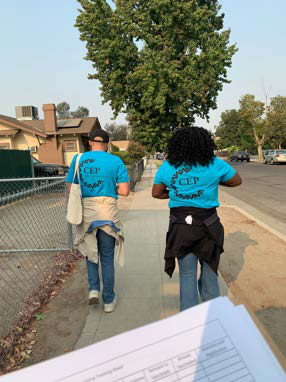
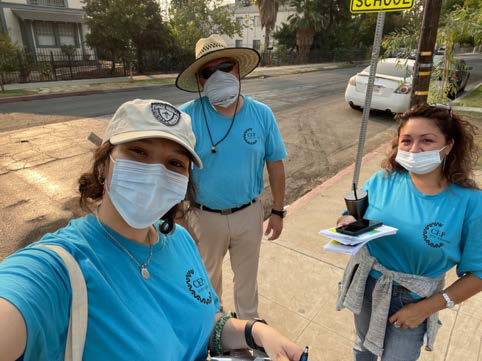
The CEP is a notable success, with the model being lifted up by the Governor’s office as a place-based solution to addressing pandemic-related health challenges, and has been replicated in multiple counties across the State, challenging the longstanding idea that CBOs and CHWs are not a good fit for sustaining a community health model. Thousands of COVID-19 tests and vaccinations in Fresno County were dispensed through the CEP, along with vital information in multiple languages that educated communities on how to avoid contracting COVID-19, and more than 100 CHWs were deployed throughout the County, with 40 embedded into the Fresno Unified School District. Overall, the CEP leveraged more than $12m in funds to address COVID-19 health equity efforts. Pacheco-Werner noted that the CEP has become a launch pad for CBOs who have expanded their health equity work through new funders, including larger philanthropy groups. In addition to the aforementioned gains, the power building work that laid the foundation for the IRC and CEP has led to new programs and projects that both center health equity and also utilize the CHW model in new ways.
Moving the CHW Model Forward in Fresno County
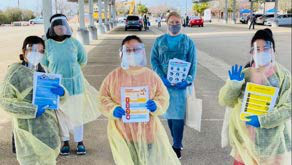
Currently, the Fresno County CEP model has been shifted to the Fresno County Health Improvement Partnership (FCHIP) who will continue its aims in Fresno County through the HOPE (Health, Outreach, Prevention, Equity) Pathways Community Hub model with $7.2m in funds from the FCBOS. Inspired by the CEP, FCHIP strives to identify specific health inequities and provide sustainable, long-term health outcomes to disadvantaged Fresno communities. Their network of eight care-coordination agencies will pool their resources to support CHWs in breaking down linguistic and cultural barriers and improving overall health within their communities.
Another model that emerged from the CEP efforts is the Advancing Health Literacy (AHL) project. Funded by the US Department of Health and Human Services’ Office of Minority Health, the AHL project will focus on improving health literacy by providing community education related to health concepts to improve communication between residents in rural communities and medical providers, empowering people so they can be more active in their health-related decision making. The AHL project includes CBOs from both the CEP’s IRC and African American Coalitions and provides COVID-19 education, contact tracing, testing, vaccination clinic, relief support, and incentives. They will also provide access to community health educators, personal protective equipment (PPE), chronic disease education and materials, and social services.
Photo Credits
- Genoveva Islas
- Fresno BHC
- Central Valley Health Policy Institute
- Fresno BHC
- Fresno BHC
- Cultiva La Salud
- Cultiva La Salud
- Sonya Christian
- Tania Pacheco Werner
- Tania Pacheco Werner
- Immigrant Refugee Coalition
- Immigrant Refugee Coalition
- Fresno BHC
- Fresno BHC
- Fresno BHC
- Central Valley Health Policy Institute
Addendum A. CEP Structure and Metrics in Fresno County
Addendum B. The California Endowment, Building Healthy Communities Initiative, Theory of Change
Addendum C. The California Endowment: North Star Goals
https://www.gov.ca.gov/2020/03/19/governor-gavin-newsom-issues-stay-at-home
This HTML version was generated with AI assistance and may contain errors or omissions. The original approved PDF remains the official document of record. An alternative accessible format is available upon request from the document creator in accordance with Title II of the ADA.