Importance of CHW Input Incorporation in Evaluation Methods
Presenter: Davenna Morales, BSc
Central Valley Health Policy Institute
California State University, Fresno
Abstract ID: 534777
INTRODUCTION
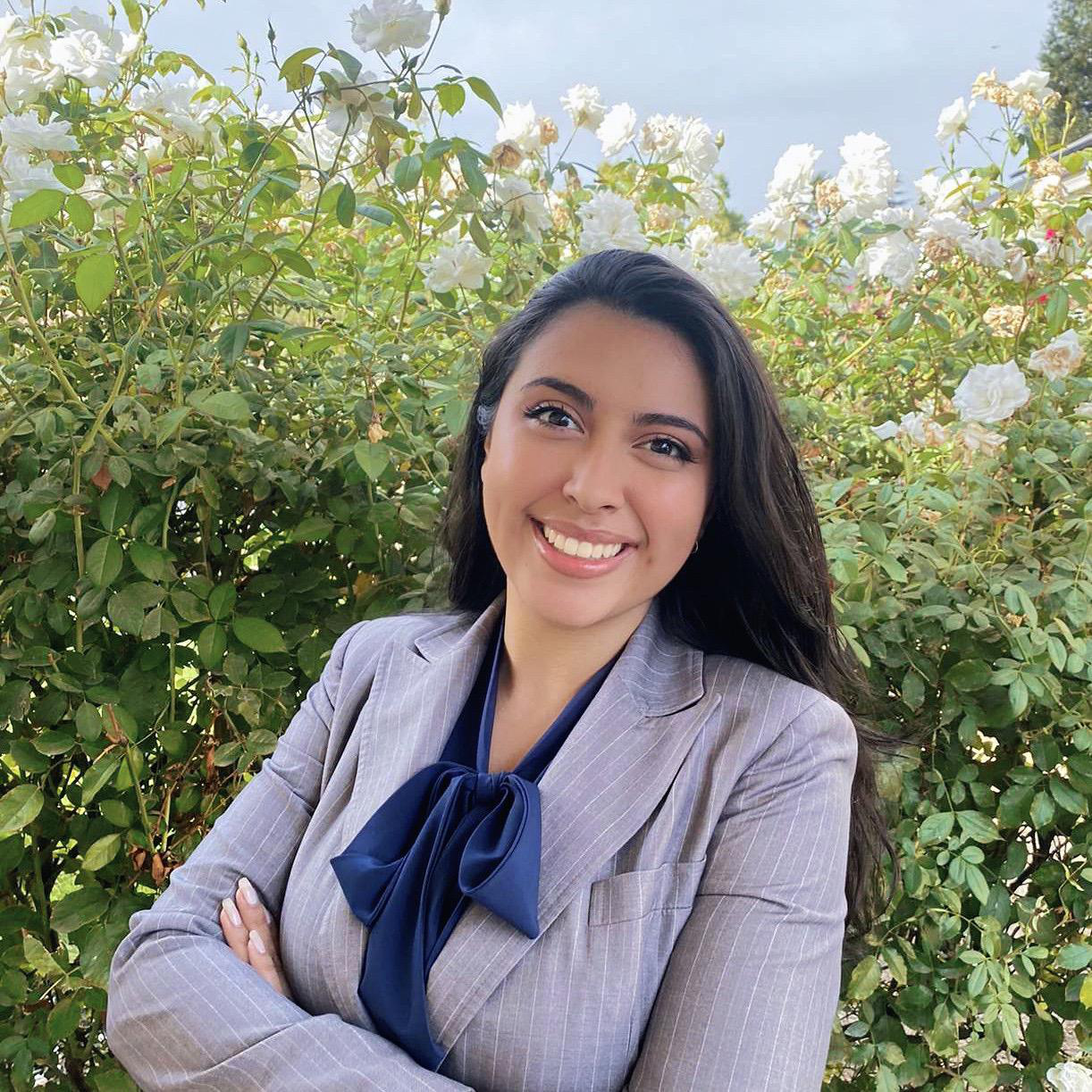
Davenna Morales, BSc
Pronouns: She/Her/Hers
Research Assistant
Central Valley Health Policy Institute (CVHPI)
California State University, Fresno
FINANCIAL DISCLOSURES
The Advancing Health Literacy - Fresno County team would like to extend a special thanks to these funders for making this project possible:
- Fresno County
- Office of Minority Health (OMH) of the U.S. Department of Health and Human Services (HHS)
There are no relationships to disclose or conflicts of interest for the activities presented in this presentation.
BACKGROUND: Advancing Health Literacy (AHL) Project
A CHW-led intervention targeted at improving structural and healthcare barriers within rural West Fresno
Mission of AHL:
- increase in health literacy among residents to:
- help address vaccine hesitancy
- stop the spread of COVID-19
- Work to eliminate health disparities within Fresno by increasing awareness on COVID-19 transmission, testing, and vaccines
BACKGROUND: Targeted Areas
- Top agricultural-producing county in the United States
- The highest concentrated poverty rate in California 1
- Some of the targeted zip codes in this project (93210, 93640, 93657, 93606) have barriers
that exceed the 90th percentile when compared to the rest of the nation for the following
burdens 2:
- Housing Burden
- DOT Transportation Barriers
- Linguistic Isolation
Source:
- Fresno Economic Opportunities Commissions. (2022, November 13). Strategic Planning- Poverty in Fresno County. Fresno EOC. https://fresnoeoc.org/strategic-planning-poverty-in-fresno-county/
- Climate and Ecconomic Justice Screening Tool, Data 2023, https://screeningtool.geoplatform.gov/en/#16.67/36.729446/-119.708855
BACKGROUND: AHL Project
Role of CHW’s:
- Conduct outreach to connect with participants who experience one or more barriers to health literacy (SDOH)
- Administer Baseline Needs Assessment, give health education materials, and provide referral
- Deliver Follow Up assessments to see referral success
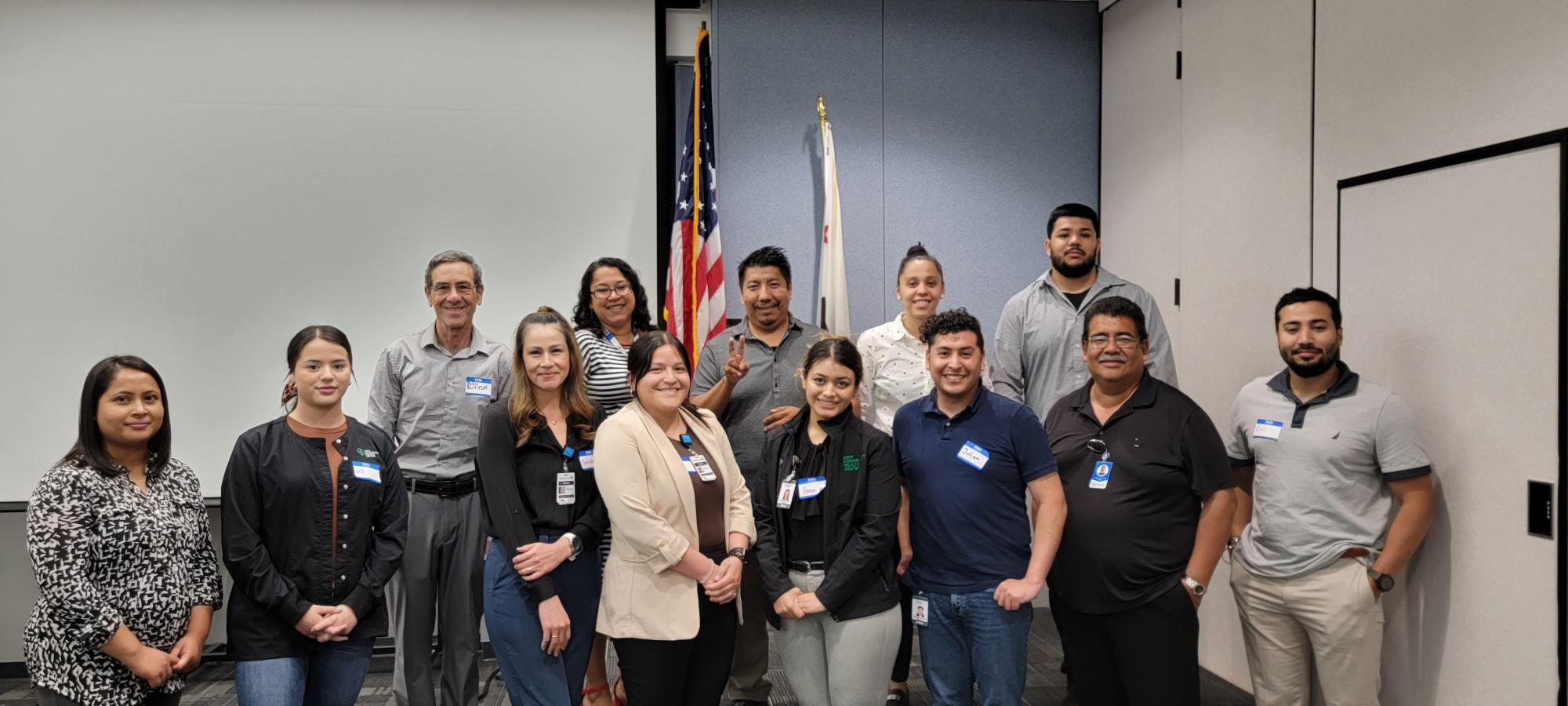
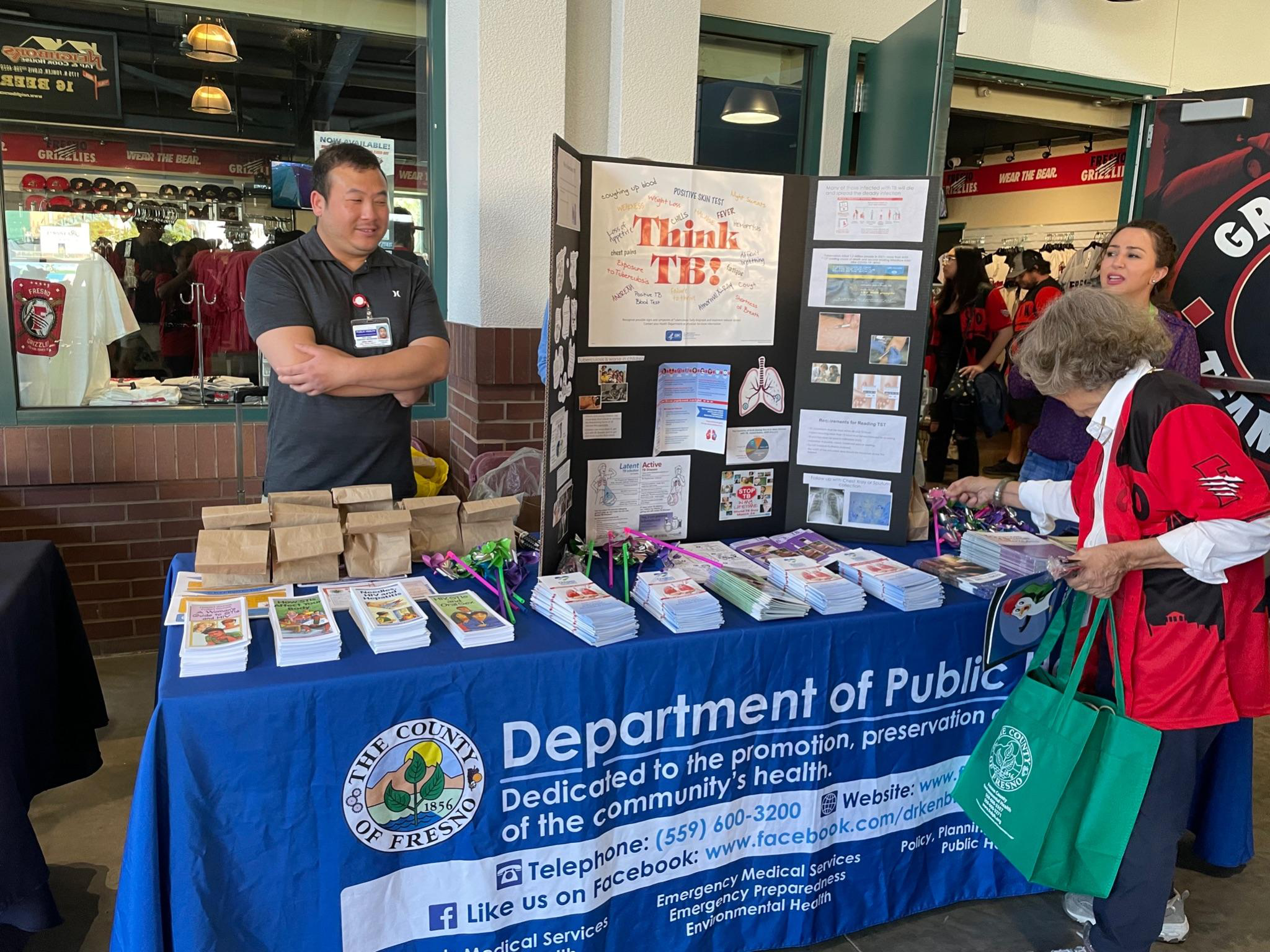
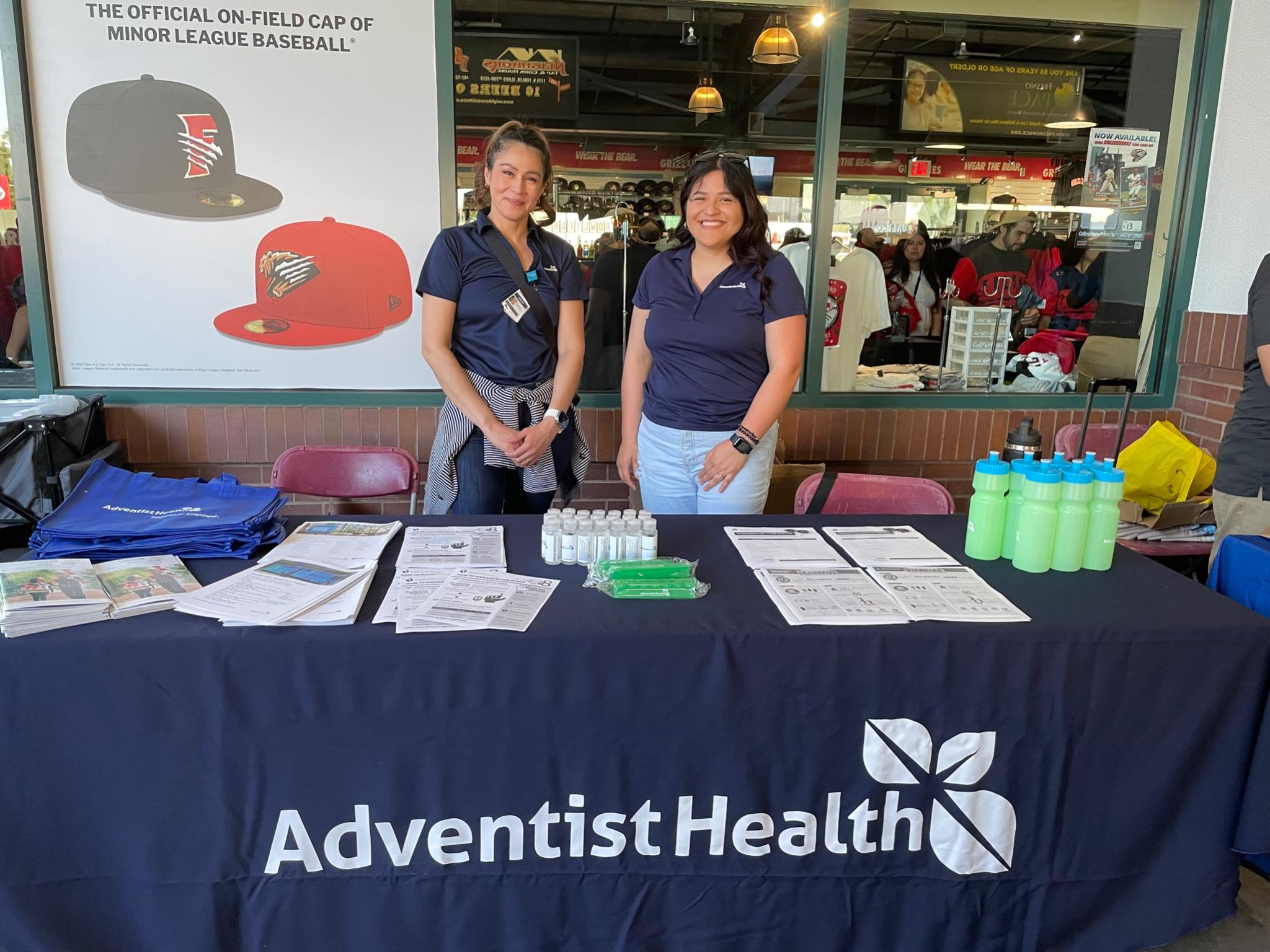
What We Saw: Low Referral Rates
The charts show referrals requested and contacts made or referrals initiated for each category.
Positive Screening: Referrals Requested vs Contact Made/Initiated
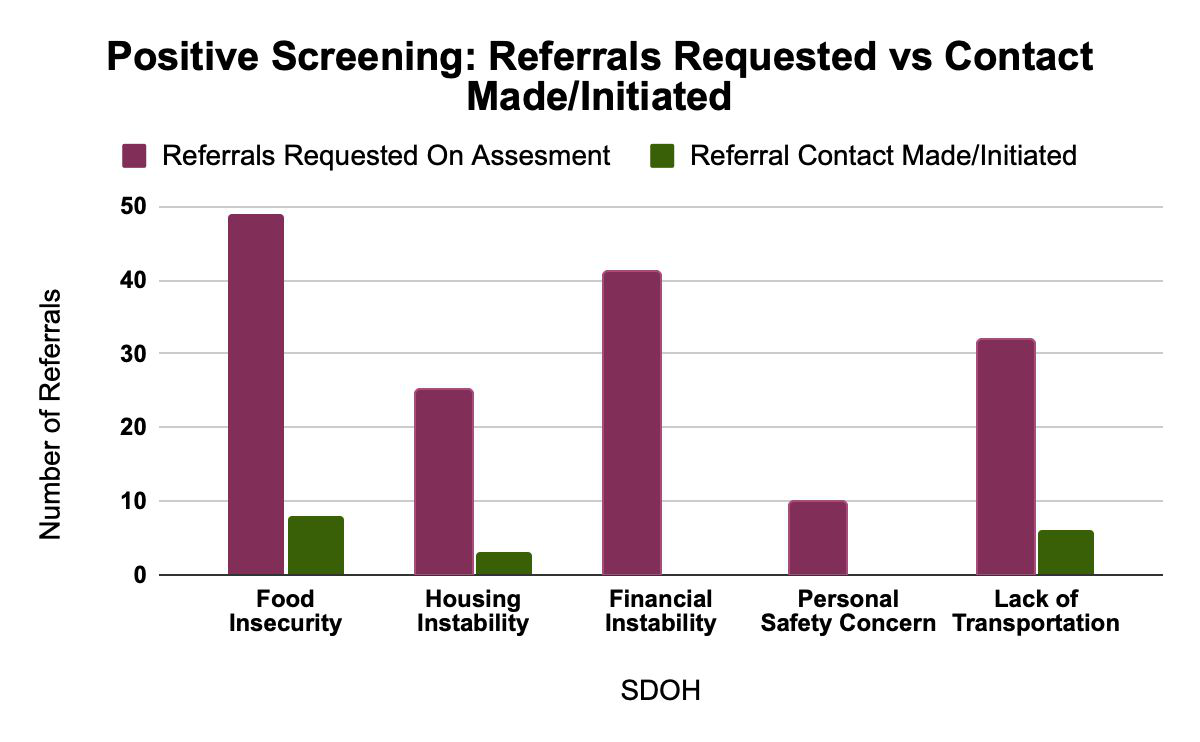
| SDOH | Referrals Requested On Assessment | Referral Contact Made/Initiated |
|---|---|---|
| Food Insecurity | 49 | 8 |
| Housing Instability | 25 | 3 |
| Financial Instability | 41 | 0 |
| Personal Safety Concern | 10 | 0 |
| Lack of Transportation | 32 | 6 |
Referral Type: Referrals Requested vs Initiated
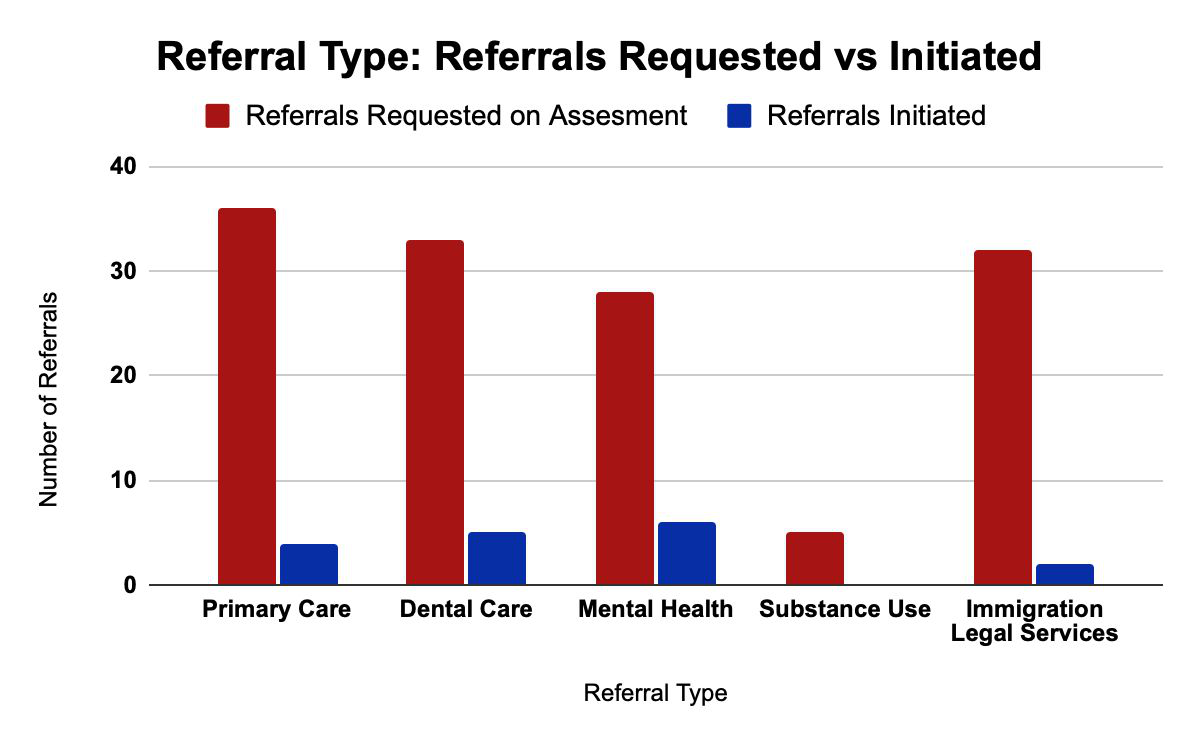
| Referral Type | Referrals Requested on Assessment | Referrals Initiated |
|---|---|---|
| Primary Care | 36 | 4 |
| Dental Care | 33 | 5 |
| Mental Health | 28 | 6 |
| Substance Use | 5 | 0 |
| Immigration Legal Services | 32 | 2 |
METHODS: What We Did
-
CHW Phone Interviews
- Conducted 8, one-on-one anonymous phone interviews (30-60 min each) with project CHW’s
- Questions centered the CHW’s:
- field experience
- identifying systemic and organizational barriers
-
Data Analysis
- CHW Interview content was analysed using grounded theory to establish themes
-
Disseminate Findings & Next Steps
- Findings were discussed with partners and CHWs
- Yielded next steps and support building during grant period
CHW INTERVIEW FINDINGS
Lack of Essential Services
| Service | Barriers |
|---|---|
| Transportation |
|
| Housing |
|
| Medical & Dental services |
|
Cascade of Unmet Needs
Lack of Access (Housing, Transportation, Medical Services) leads to:
- Client Mistrust and Misunderstanding
- Inability to overcome barriers with health education alone
Both lead to CHW Burnout and Emotional Burden.
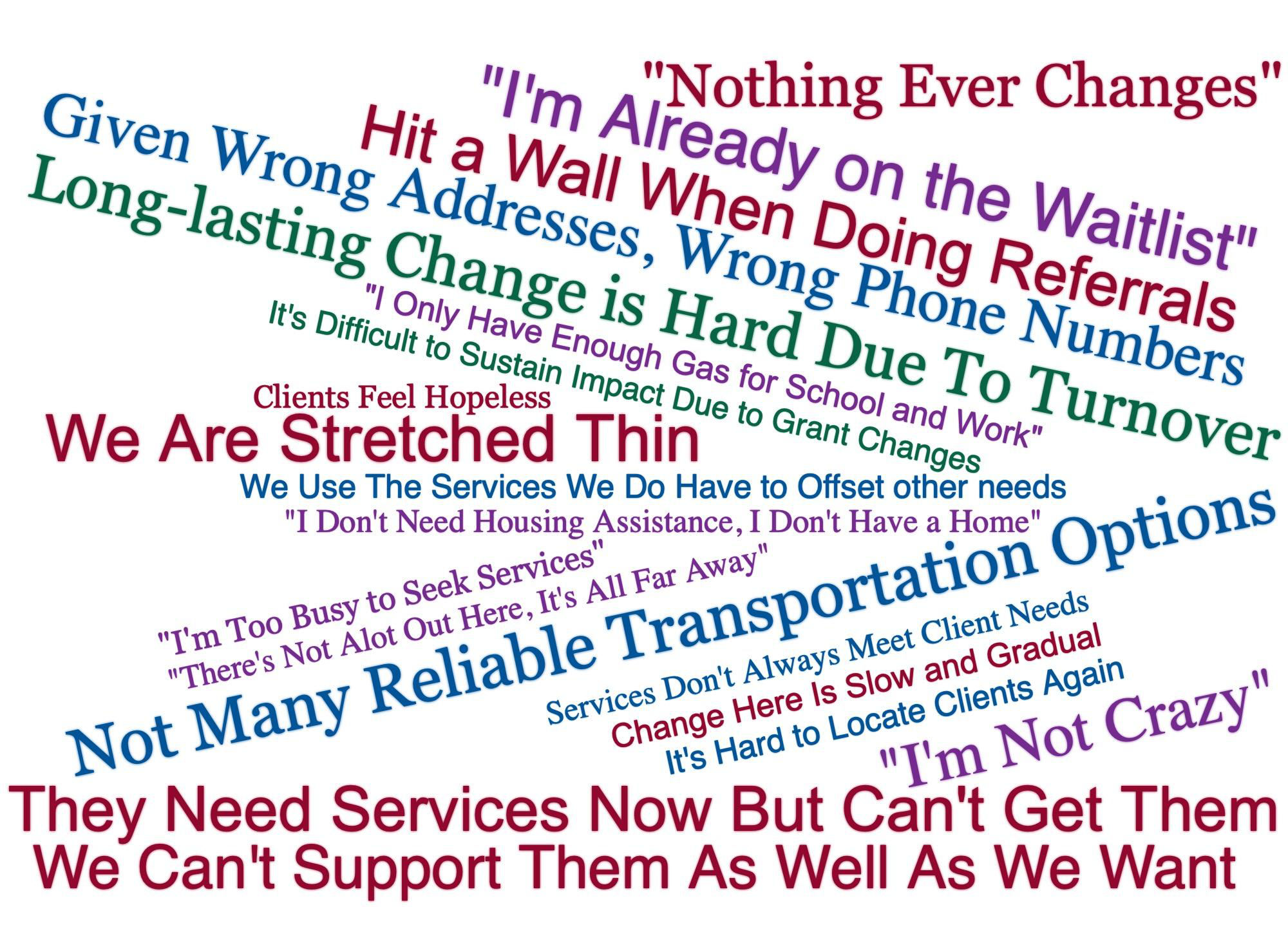
Word Cloud
- “Nothing Ever Changes”
- “I’m Already on the Waitlist”
- Hit a Wall When Doing Referrals
- Given Wrong Addresses, Wrong Phone Numbers
- Long-lasting Change is Hard Due To Turnover
- “I Only Have Enough Gas for School and Work”
- It’s Difficult to Sustain Impact Due to Grant Changes
- Clients Feel Hopeless
- We Are Stretched Thin
- We Use The Services We Do Have to Offset other needs
- “I Don’t Need Housing Assistance, I Don’t Have a Home”
- “I’m Too Busy to Seek Services”
- “There’s Not Alot Out Here, It’s All Far Away”
- Not Many Reliable Transportation Options
- Services Don’t Always Meet Client Needs
- Change Here Is Slow and Gradual
- It’s Hard to Locate Clients Again
- “I’m Not Crazy”
- They Need Services Now But Can’t Get Them
- We Can’t Support Them As Well As We Want
CHW Burden and Burnout
Organizational barriers/grantwork
- Phrasing of assessment questions affected CHW ability to connect and build relationships with community members
- Length of the Assessment also affected rapport building
- Different levels of experience and training
- Involvement in several projects was hard to juggle
- Short grant periods
NEXT STEPS
-
Info Dissemination and Discussions
- Presented findings to partners
- Discussed next steps with the AHL Project
-
Incorporation of CHW Feedback
- CHW trainings in requested areas
- CVHPI administered surveys to CHW’s to gather continuous feedback as the project progressed
IMPORTANCE
Fresno specific:
- Highlighted systemic challenges and barriers from perspective of West Fresno citizens and CHW’s
Across Grantwork:
- CHW input highlighted the systemic and organizational barriers
- The value CHW feedback brings to community based interventions
The diagram shows the connected relationship between CHW Burnout, Client Mistrust, and Lack of Services.
- Lack of Services leads to Client Mistrust.
- Lack of Services leads to CHW Burnout.
- Client Mistrust leads to CHW Burnout.
Recommendations
- Incorporating CHW input when writing health assessments, community intervention goals, etc
- Recognizing CHW’s as an essential part of the healthcare team
- Pushing for CHW reimbursement from insurance and other “hard money” means
- Developing trainings that equip CHW’s with transferable skills in all grant work
- Advocating for grant funding for CHW-led interventions
- Continuing the discussion surrounding the value CHW work and perspectives bring to addressing disparity
Thank You!
AUTHORS:
Davenna Morales, BS; Kate Ingram, MPH; Dustin Hedrick, BA;
Emanuel Alcala, PhD
QUESTIONS PLEASE CONTACT:
Davenna Morales
davennam@mail.fresnostate.edu