The Right to Fair and Healthy Housing: How CBOs are Leading the Fight for Housing Security in Fresno
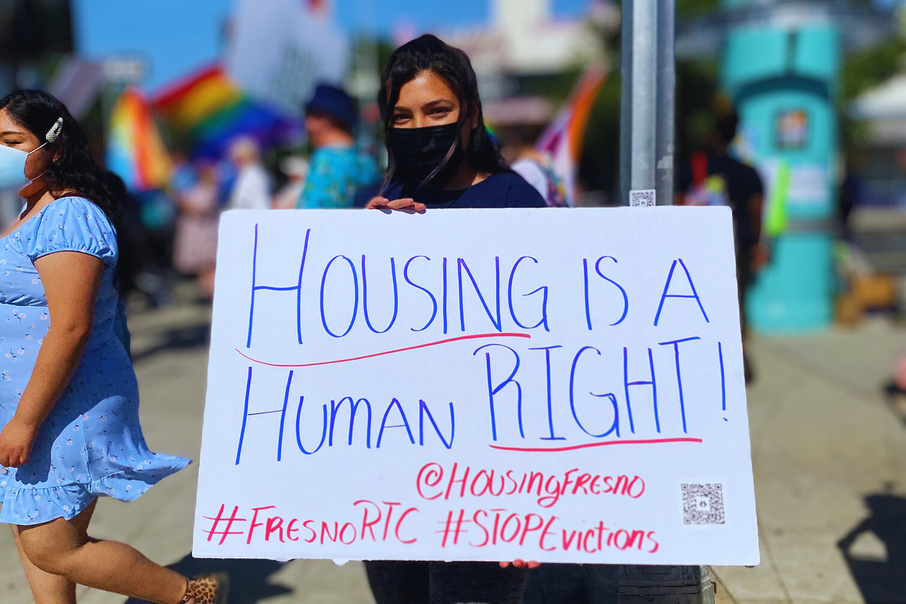
How CBOs are Leading the Fight for Housing Security in Fresno
- Amanda Conley, MA
- Armando Ramirez, BA
- Ana Rubio, BA
- Kendra Staub, BA
- John Capitman, PHD
- Tania Pacheco-Werner, PHD
Funding provided by:

Acknowledgments
The authors would like to extend appreciation to Dr. Amber Crowell, Dr. Janine Nkosi, and Grecia Elenes for their time and input on The Right to Fair and Healthy Housing: How CBOs are Leading the Fight for Housing Security in Fresno; this case study would not be complete without their contributions. We would like to acknowledge the contribution of many Central Valley Healthy Policy Institute staff, especially Guadalupe Corona, and Atziri Barboza for their great contributions and for editing this report.
Funders and Contributors:
Fresno Building Healthy Communities and The California Endowment commissioned this report to highlight power building in Fresno housing access efforts.
AUTHOR NOTE:
This case study was supported by a grant from Fresno Building Healthy Communities to the Central Valley Health Policy Institute at Fresno State. The views expressed in this case study are those of the authors and do not necessarily reflect those of the funders or the University.
Suggested Citations
Central Valley Health Policy Institute. (2023). The Right to Fair and Healthy Housing: How CBOs are Leading the Fight for Housing Security in Fresno. California State University, Fresno.
Authors
- Amanda Conley, MA
- Armando Ramirez, BA
- Ana Rubio, BA
- Kendra Staub, BA
- John Capitman, PhD
- Pacheco Werner, PhD
Commissioned By

TABLE OF CONTENTS
Housing Wins Since 2013
| Housing Win | Description |
|---|---|
| BLIGHTED VACANT BUILDING ORDINANCE | The Fresno city Council adopts ordinance compelling property owners to bring blighted properties up to code. |
| VACANT/BLIGHTED PROPERTY REGISTRY | The ordinance mandates that vacant/blighted property owners register with the city to create a tracking system for properties. |
| RENTAL INSPECTION PROGRAM | Fresno Rental Housing Inspection Act lays out a framework for regular interior inspections and code enforcement action on all rental properties city wide. |
| RENTAL INSPECTION REQUEST PROGRAM | Renters are able to report complaints about rental housing conditions with the City taskforce. |
| EMERGENCY RENTAL ASSISTANCE PROGRAM | Millions of federal and state dollars to provide rental assistance. Advocates continue to pressure City to help renters. |
| EVICTION PROTECTION PROGRAM | Access to legal representation when an unlawful detainer has been filed with the courts. |
Introduction
Since 2013, the Fresno Building Healthy Communities (Fresno BHC) Coalition has worked with community-based organizations (CBOs) and residents in central, southeast, and southwest Fresno as one of fourteen Building Healthy Communities (BHC) Initiative sites throughout California, initially supported by a $1 billion investment from The California Endowment (TCE), to advance statewide policies that directly address health inequities at the community level. The Fresno BHC Coalition has done this through power building in Fresno around issues that affect residents most, including affordable housing and housing-related policies, by amplifying adult and youth residents’ voices and working to increase their inclusion in decision-making at public and private levels.
During the last ten years, Fresno BHC Coalition partners have focused on a number of housing issues, including improving the condition of rental units and the creation of a rental housing inspection program within the City of Fresno. They have also worked on addressing blighted housing in neighborhoods which led to the City implementing the Blighted and Vacant Building Ordinance, which outlined responsibilities for property owners of vacant housing and included the development of the vacant and blighted property registry. However, the COVID-19 pandemic created a new set of unique housing challenges. Two of the most important issues centered on preventing evictions through two different pathways: a Right to Counsel program for those directly experiencing the eviction process, and the Emergency Rental Assistance Program (ERAP) to provide pandemic-related rent relief for City residents.
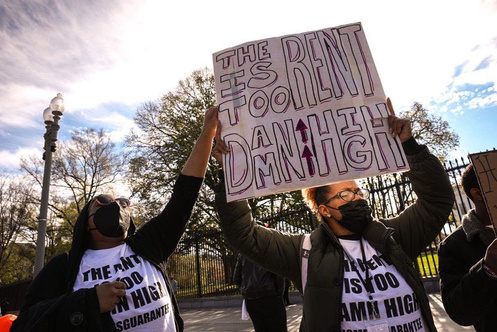
In 2020, as federal, state, and city governments began implementing housing policies to prevent displacement during the COVID-19 lockdowns, pressing and pre-existing housing issues in Fresno became even more salient during the pandemic, including wrongful evictions. Fresno BHC Coalition partners had already been examining local eviction data, assessing the landscape of the eviction court process and what protections residents had against wrongful evictions, which residents reported as a growing problem. As the Fresno BHC Coalition was working to prevent wrongful evictions, there was also the issue of providing emergency funds to supplement rental costs necessitated by the COVID-19 lockdowns. A program providing emergency funds would allow renters to remain current on their housing costs while many faced financial hardships brought on by COVID-19-related job loss and unemployment.
Power Building and the Fresno BHC Coalition: Working Together
“Not one of us is at the table but many of us are at the table and we're speaking with one collective voice to advance a North Star vision that will transform our housing system as we know it.” -Janine Nkosi, Ed.D., Director of Housing Justice Initiatives, Faith in the Valley and Fresno State Instructor
Fresno BHC has served as a convener of a coalition of CBOs and residents for more than a decade. Many CBOs involved in the coalition have a strong presence in the community, and long-standing relationships with residents, which provided a solid foundation for working collectively on local housing issues. A strength noted about power-building within a coalition is that many of the coalition partners work in both geographic areas and issues that overlap, which immediately creates a stronger power base. This also increases resources and the ability of the Fresno BHC Coalition to work with residents to identify both housing goals and solutions that put residents in the role of community experts. Past examples include the rental housing inspection program and the blighted property registry, two policy pieces implemented by the City as a direct result of coalition advocacy based on resident-informed priorities and policy innovations. Working as a collective, the coalition and its partners collected community-level data, such as canvassing neighborhoods to document vacant, blighted properties and searching out case studies from other cities to provide potential evidence-based solutions for Fresno housing issues.
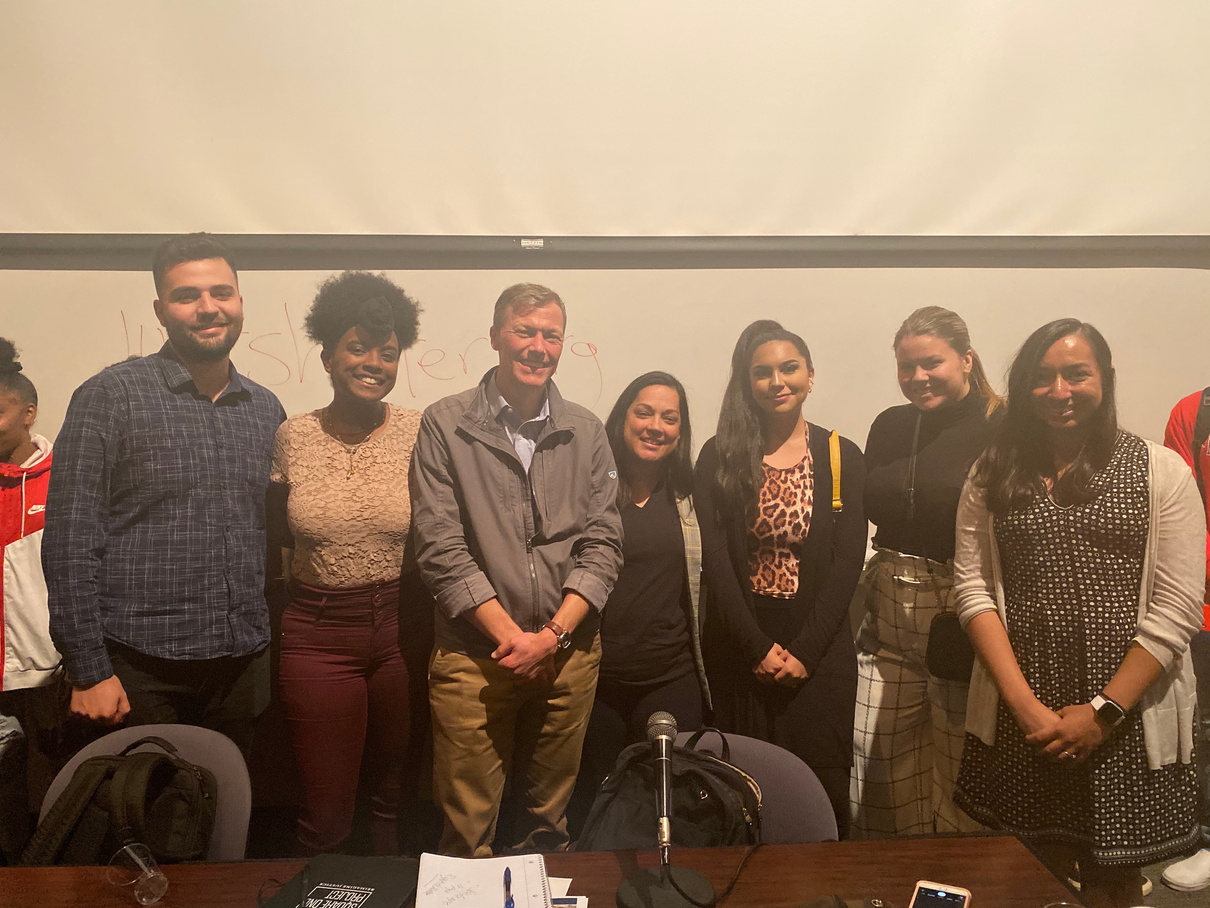
This history of working together, the Fresno BHC Coalition, its partners, and residents laid the groundwork for addressing housing needs brought on by the COVID-19 pandemic. Local housing advocates shared that having dedicated space within CBOs and communities for discussions about housing was an important piece in addressing issues with housing. In concert, the resulting increase in resident power meant that residents took on more and more of the work. Finally, the culmination of more than a decade of housing advocacy provided the necessary experience to prevent housing displacement during the pandemic in two important ways. The first was by ensuring legal support for residents facing eviction and the second was aligning a portion of pandemic-related funding into a rental assistance program for residents and property owners.
“When we're able to clearly recognize the interconnections between slum housing, high rent, illegal evictions, retaliation, and harassment from landlords, etc. our thinking about the kinds of solutions we need becomes more clear that we need something that's much more holistic and transformative.”
–Dr. Janine Nkosi, Director of Housing Justice Initiatives, Faith in the Valley
Right to Counsel: Addressing Evictions
Leading up to their 2019 report on evictions in Fresno County, Fresno BHC Coalition partner Faith in the Valley (FiV) worked closely with Fresno State students to address and collect data on local housing issues. As a coalition partner, FiV provided researchers who could collect data on evictions and explore city records for answers to basic housing questions that few local agencies seemed to have, such as how many evictions were filed with the courts per year. While there was ample publicly available data on evictions, little analysis was available to understand the magnitude of local evictions or who was most affected. A recurring issue around evictions seemed to be centered within the process itself, with residents unclear about what their rights were when served an eviction notice, or even the ability to understand when landlords failed to follow the proper eviction protocols. Researchers and advocates also began to see a connection between slum housing and retaliatory evictions against residents who reported ordinance violations or filed complaints related to housing conditions. Based on this information, Drs. Amber Crowell and Janine Nkosi wondered how such issues played out in the local eviction courts, as residents seemed to be at a disadvantage in interpreting tenancy law, which led to them attending eviction hearings to observe what residents were experiencing.
Largely, they found, residents have no legal representation in local eviction courts and little understanding of eviction law or court procedures; in contrast, property owners are often represented by counsel who specialize in evictions. For residents, the lack of legal counsel and representation meant that even in cases of wrongful eviction, most residents lacked the specialized legal knowledge to build a case and present evidence that adhered to courtroom protocols, which resulted in court decisions overwhelmingly favoring property owners who had the resources to secure legal representation. According to advocates, on top of court-mandated fines that could be contained within judgments, residents might also be ordered to pay for the property owner’s legal fees. These findings from courtroom observations informed the policy advocacy for a right to counsel for residents facing eviction.
“These people [landlords] have a really strong presence in local politics and can throw a lot of weight behind getting what they want.”
- Dr. Amber Crowell, Housing Coordinator, Faith in the Valley, and Associate Professor at Fresno State
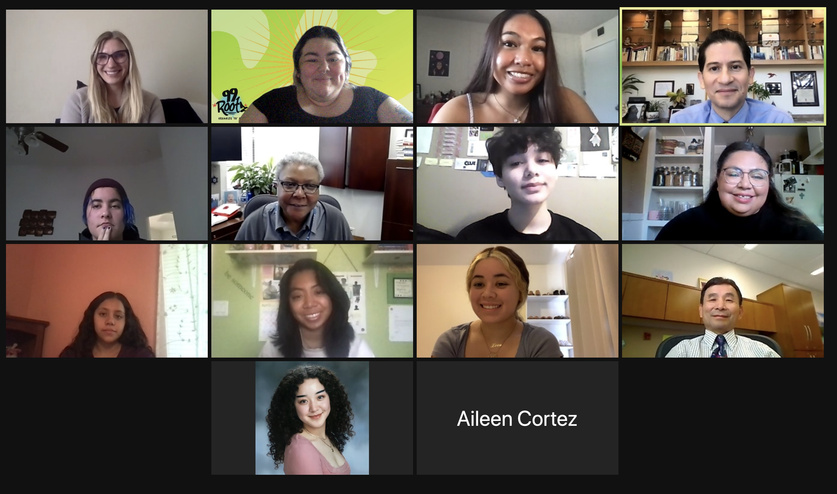
However, there was resistance. Advocates noted that some members of both the city council and important city leadership were also landlords, and the city council also met in closed sessions that left advocates and residents in the dark regarding the decision-making process. There were also other organized groups, including the California Apartment Association, which advocates stated held sway with local elected leaders. Overall, advocates said it was impossible to ignore that the City tended to side with property owners in disputes, not tenants. Complicating matters, the COVID-19 pandemic hit right as advocates began conversations with stakeholders about implementing the Right to Counsel campaign. The pandemic shifted the focus for advocates and residents to the multiple-level eviction moratoriums that would potentially provide eviction protection, as well as making the local-level request that eviction courts cease activity, shutting down the eviction pipeline as employment and housing issues began to peak. There were also logistical considerations for the coalition; organizing for a Right to Counsel moved online, with advocates and residents utilizing new technologies to meet and work together virtually.
Identifying and Overcoming Obstacles
Some of the challenges to getting support for the Right to Counsel noted by advocates is that while residents can flood the public comments sessions at city council meetings, it is up to city council members to read the reports put together by faculty researchers, students, residents, and CBOs that document issues such as eviction. According to Crowell, another difficulty is that when finding solutions for issues like evictions, decision-makers may come up with plans that do not reflect or include community input. For instance, advocates are still working to expand the current Eviction Protection Program to a universal program that ensures representation for those facing eviction. Residents going through evictions also find it difficult to advocate for themselves, policy advancements, and the broader community while dealing with the drastic hardships that eviction brings. Additionally, Nkosi noted that it is difficult for undocumented tenants to trust the city attorney’s office in situations where landlords retaliate by threatening to involve ICE; there is also a lack of basic education materials in language-accessible formats regarding tenant rights in eviction situations.
One way that Fresno BHC Coalition organizations, such as FIV and Leadership Counsel for Justice and Accountability (LCJA), combatted both the lack of attention to the eviction issue and then exclusion in decision-making processes around the Right to Counsel was to generate support through social media while amplifying the voices of residents and advocates. Faculty members from Fresno State also fielded eviction-related questions from decision-makers about what their research suggested; Crowell shared that it was an opportunity to direct city leaders back to the residents to hear the needs of people experiencing eviction directly. Advocates also connected residents needing legal assistance to local non-profit organizations, such as Central California Legal Services. They also needed to address narratives about a Right to Counsel program in the community, including the notion that such programs would prohibit landlords from evicting tenants who posed a threat to community safety.
Eviction Protection Program: Scoring a Win
“The whole eviction process is incredibly scary. It's incredibly daunting. Being sensitive to this is of the utmost importance.”
--Grecia Elenes, Regional Policy Manager, Leadership for Justice and Accountability
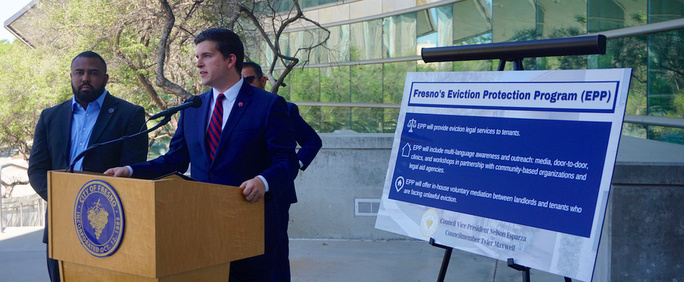
Advocates stated that the fight for a universal Right to Counsel program continues; however, a major win came out of the research and advocacy efforts with the City. In response to advocates’ push, the Fresno City Council allocated funds to create the Eviction Protection Program, a fund that pays for legal representation for residents facing evictions where an unlawful detainer (UD) has been filed with the courts.
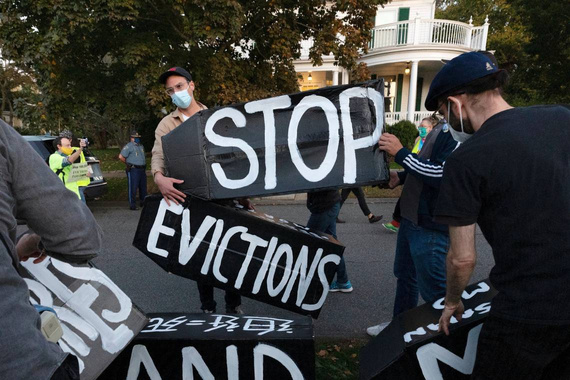
“The biggest concern was finding someone who took the contract seriously,” Elenes stated. “Ideally, someone who is from the community and sensitive to resident needs. They wanted someone who would ease the burden of the process and [provide] support, not just take the contract for a check.” Advocates also pushed for legal services to be available to tenants prior to the UD process, as the timeline once a UD has been ordered is tight.
Next Steps
The Eviction Protection Program (EPP) is now available to residents experiencing an unlawful detainer. However, advocates shared that there is room for improvement. In the coming months, there will be a push to align the implementation more tightly to community input; the two most primary improvements being sought are that:
- legal representation should be selected by residents facing eviction, not attorneys chosen by the City to serve the program
- the program should be a universal Right to Counsel, which would provide access to legal representation for all residents facing eviction, unlike the current funding structure that has a predetermined budget cap that potentially limits how many residents can access the program.
It should also be noted that evictions do not exist in a vacuum. Advocates state that eviction goes hand in hand with, and is related to, other housing issues such as displacement. Last year, the Thrivance Group released an anti-displacement report, Here to Stay, for the City. Grounded in community input, the report included a universal right to counsel recommendation that local advocates say align with community-determined needs, guaranteeing legal representation to anyone facing eviction. Along with a universal Right to Counsel program, tenants and advocates will also continue to push for homeownership and financial education classes, downpayment and closing cost assistance programs, which are already available in some locales, to increase the number of homeowners in Fresno, along with supporting efforts to increase the production of affordable options for both rental and owner-occupied housing.
ERAP: Aligning pandemic funds to meet local needs
The pandemic compounded local housing issues as stay-home orders affected individual and family incomes, including the ability to meet rent and mortgage payments. As residents began to express concerns about housing security as the pandemic continued, the City and County of Fresno began to receive pandemic-related state and federal funding. Residents reported that they had no choice but to work, even when ill, because they could not afford to take time off work.
Grecia Elenes, the former Regional Policy Manager at Leadership for Justice and Accountability (LCJA), shared that the pandemic essentially “wrecked” local communities and that there was an immediate need to begin budget advocacy for the pandemic-related funding to address the inequities being magnified by COVID-19, including housing justice and access to health care. Previous advocacy and organizing work meant that there were existing relationships with elected leaders, including the city council. Working with residents to establish community-based priorities through monthly meetings, advocates helped to align and appropriate sufficient funds. One of these priorities would become the Emergency Rental Assistance Program (ERAP), which advocates explained, in hindsight, was a challenge to both design and administer.
One of the challenges that Fresno faced, in particular, was an issue that had grown over time and was exacerbated during the fallout of the Great Recession a decade ago; Fresno has some of the highest rates of concentrated poverty in the country, with many neighborhoods reporting household poverty at more than 40 percent. 1 However, the reach of pandemic-related financial stress was felt throughout the city. Advocates stated that the scope of the issue reached across most of the city, hitting households in the moderate-income ranges as well. Small landlords also shared with advocates that they could not make payments on rental properties when tenants could not pay rent due to COVID-19-related health issues. This meant creating a program that was flexible enough to meet the needs of a broad range of households, both owner-occupied and rentals, while ensuring there were no restrictions on who could be reached by the funds, including immigration documentation status.
Together, advocates and residents wrote a formal letter to city leadership to outline necessary financial assistance and attended public comment sessions to enable residents to speak directly with the city council. Broadly, the city council and city officials agreed that rental assistance was an important issue. Advocates followed up, tracking the budgeting process to ensure alignment with resident priorities and also addressed accessibility issues. However, two issues were noted:
- some documentation requirements for the ERAP created obstacles for communities as many residents lacked access to the documents required by the program, including tax documents and bank statements
- the city expressed concerns that moderate-income families also be eligible for funds to prevent financial hardship, as defined by the California Department of Housing and Community Development. 2
Identifying and Overcoming Obstacles
With $54m in federal and state funds, the City implemented the ERAP, and local CBOs were able to begin aiding residents with the application process. 3 It was here that CBOs learned about the obstacles communities faced in applying for assistance, and that the scope of the program should include moderate-income households. However, advocates reported that there was confusion about who would be administering and managing the program. There was also a lack of cultural humility reported, as the barrier for those who could not easily access required documentation, such as tax information and bank statements, or barriers to internet access for online applications, was not addressed as the program rolled out, which meant that many residents struggled to complete the application process. This left CBOs trying to bridge the gap. This was also a novel program, and advocates shared that neither the City nor CBOs had the infrastructure in place to fine tune the implementation process in real time, and both needed time to adapt to providing program services.
“The community with the lowest application percentages was in district five. It's not for lack of need, because we know district five–we have impoverished neighborhoods, lower income-immigrant communities, and so it became obvious that people and, to this day I'm still talking to folks and letting them know ‘hey, this funding exists.” People say, ‘I asked a family member. I asked a friend for money to help pay for this or this or that.’ And so we wanted to ensure that this community had access to the funds. We knew we were already going to have a hard enough time getting people to buy into this program and actually ask for this money even when it's meant for them.” --Grecia Elenes, Regional Policy Manager, Leadership for Justice and Accountability
Some residents also shared with advocates that the timeline of application for assistance posed issues; the application approval process was reported to be 2-3 months, which meant that someone applying for assistance to pay rent in January did not hear back until April. If a resident needed assistance for the following month, this process generated a lengthy delay in assistance, requiring multiple applications and wait periods. By the time the first application was accepted, approved, and funds dispensed, a resident needing more than a month of assistance shared they were further financially behind than at the start, which advocates stated showed a lack of urgency from the City.
Other factors that created barriers had to do, at times, with communities being reluctant to accept help. “One thing that the immigrant community doesn’t want are handouts,” said Elenes. “It's the hardest thing to get people to take free money without anything in return, and, let alone that at the time, there was still the whole discussion around the public charge, and so many folks immediately said ‘no’.” The public charge issue emerged in 2017 in a leaked Trump administration executive order, which proposed a change to the rules surrounding immigrant access to social programs, which many policy experts explain had a chilling effect on immigrant communities’ willingness to accept assistance from local, state, or federal government agencies. 4 Elenes stated that by analyzing which city districts were applying for ERAP, it became clear that national anti-immigrant narratives played a role. While this did present a barrier, the program was a noteworthy step toward aligning public funds for communities often excluded from safety net programs.
Next Steps
“The ERAP needs to be extended beyond COVID-19. Most people are only a paycheck away, or a medical bill or an accident away, from financial ruin.” –Grecia Elenes, Regional Policy Manager, LCJA
In the short term, advocates report that residents need ERAP to be a permanent program, as economic and housing insecurity across the city remain salient issues, and that the program be extended to homeowners struggling with mortgage payments. As previously mentioned, advocates continue to push for more permanent solutions to housing insecurity through increasing home ownership and expanding affordable housing options in the city. Advocates stated that comprehensive homeownership programs, down payment/closing cost assistance, financial education, and guidance on the home buying process are all steps that could increase home ownership. They are also advocating for increasing rental and owner-occupied affordable housing throughout the city to improve housing and financial security.
Advocates also noted that allowing residents to join public meetings through virtual means improved community attendance at meetings and that this attendance option should continue to be implemented to maximize community input and participation. Currently, residents can view the meetings live through a broadcasting system and leave electronic comments through the City’s website.
Conclusion
Historically, City leadership has had little oversight regarding the eviction process, which has led to landlords having the advantage in eviction situations. The threat of eviction has likely had a chilling effect on renters reporting housing issues. With residents, advocates formulated two programs to fight predatory housing practices and increase financial support: the Eviction Protection Program (EPP) and the Emergency Rental Assistance Program (ERAP). The EPP's ultimate goal is universal legal representation for those facing eviction. While the City has dedicated funds for renters facing unlawful detainers (UD), more action is needed to implement additional recommendations to make the program whole. Advocates note that they will continue to fight for a fully funded eviction protection program that provides support for addressing UDs and beyond. ERAP successfully leveraged millions of dollars to help renters stay in their homes during the pandemic; the ERAP continues to provide renters and homeowners access to funding support for rental assistance while advocates plan to continue pushing the City for additional affordable housing, home ownership support, and down payment/closing cost assistance.
The pandemic highlighted the housing inequities Fresno renters face, both in housing precarity and the emotional toll paid by residents at risk of losing housing, as well as the connections between housing, health, employment, and beyond. The Fresno BHC Coalition has made progress overall in securing housing support for residents before and during the pandemic; advocates note that these two successes, the ERAP and EPP, are just the beginning of the policy landscape that needs to be developed to improve housing security in Fresno. At the local level, both of these efforts garnered significant media attention that has raised public awareness about affordable housing and housing protections. It has also brought additional residents into the conversation about housing rights in Fresno and increased the number of people participating in local and state efforts to develop sustainable and equitable housing solutions.
WORKS CITED
- Kneebone, E., & Holmes, N. (2022, March 9). U.S. concentrated poverty in the wake of the Great Recession. Brookings. Retrieved February 23, 2023, from https://www.brookings.edu/research/u-s-concentrated-poverty-in-the-wake-of-the-great-recession/
- Income Limits | California Department of Housing and Community Development. (n.d.). Retrieved October 18, 2023, from https://www.hcd.ca.gov/grants-and-funding/income-limits
- Mayor's office. Mayor. (n.d.).Emergency Rental Assistance Program Retrieved October 12, 2022, from https://www.fresno.gov/mayor/erap/
- Bernstein, H., Gonzalez, D., Karpman, M., & Zuckerman, S. (2020). Amid confusion over the public charge rule, immigrant families continued avoiding public benefits in 2019. Washington, DC: Urban Institute.
Photo Credits
- Revolving Door Project
- Janine Nkosi
- Janine Nkosi
- Fresno Bee
- The Business Journal
For more information, please visit cvhpi.org