Mil Hojas (A Thousand Layers): Leadership and Power Building for Park Equity
Mil Hojas
(A Thousand Layers)
Leadership and Power Building for Park Equity
Prepared By: Ana Rubio, Atziri Barboza, and Armando Ramirez
Background
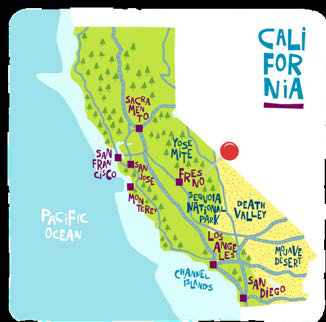
Fresno Building Healthy Communities (BHC) began in 2010 as one of 14 sites in California funded by The California Endowment. Fresno BHC focuses on addressing health equity issues in central, southeast, and southwest Fresno neighborhoods, an area that became known as “The Fresno BHC Place.”
Fresno BHC began to formulate campaigns to address the issues that their community conversations brought forward. Two important concepts emerged from this work, people power and power building.
People Power
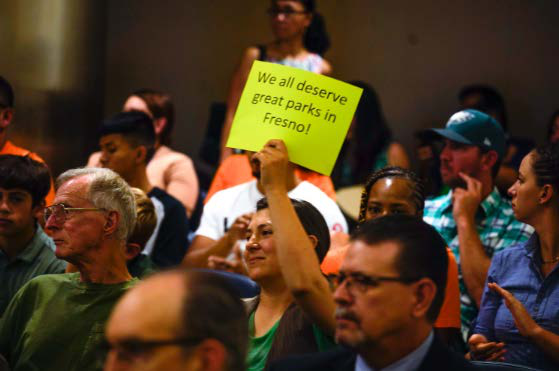
People Power refers to building communities where “historically excluded adults and youth residents have voice, agency, and power in public and private decision making to create an inclusive democracy and close health equity gaps.”
Power Building
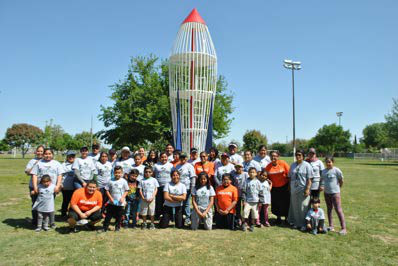
Power Building is an investment in “an emerging ecosystem of organizations with diverse capacities, skills, and expertise”; these are then mobilized as resources to prioritize health equity in decision-making spaces.
Park Space
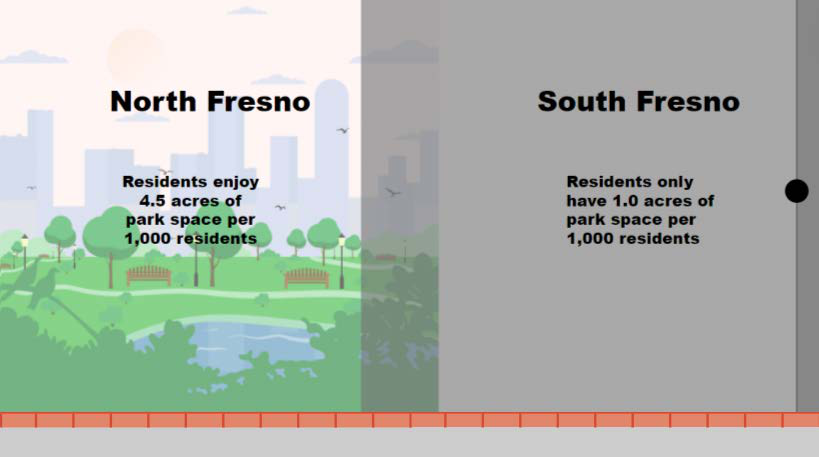
| Location | Park space |
|---|---|
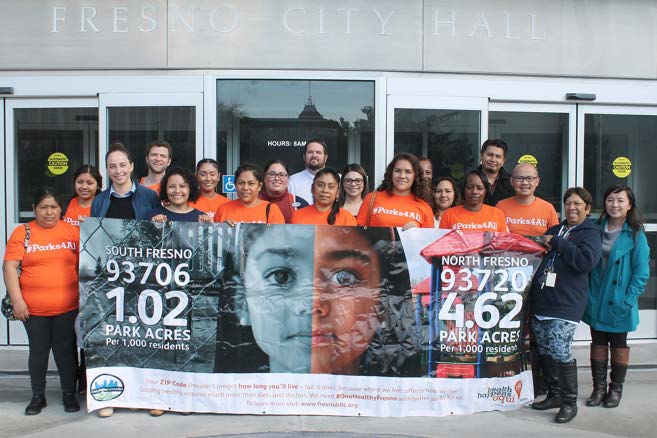
| North Fresno | Residents enjoy 4.5 acres of park space per 1,000 residents. |
| South Fresno | Residents only have 1.0 acres of park space per 1,000 residents. |
Introduction: Building Power for Health Equity
Conversations between Fresno BHC and residents and youth identified:
- lack of parks and green spaces in their neighborhoods.
- lack of amenities in existing parks.
The Fresno BHC Coalition:
- worked to empower neighborhoods.
- leverage existing funds.
- increase the involvement of the community residents.

People Power: Emerging Health Equity Leaders
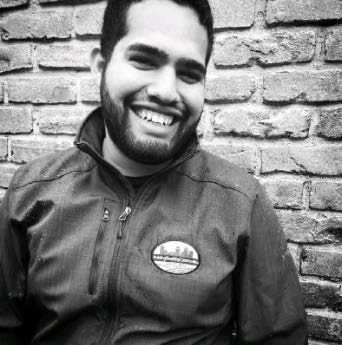
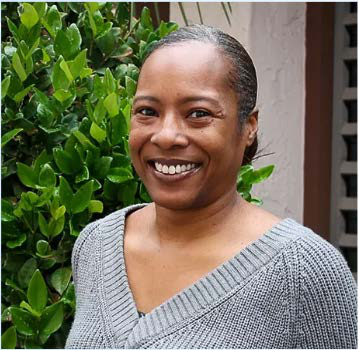
Kimberly McCoy, former project director for Fresno BHC. Currently serves as a policy advocate at the Central California Asthma Collaborative.
Antonio Jauregui, former Fresno youth leader. Currently holds the role of a political power-building advocate at the Community Water Center.
IMAGE SOURCE: ANTONIO JAUREGUI
“We went on this learning experience together or this journey together. Being able to connect residents to their power and letting them know it’s okay to voice which you would like to see, and what you don’t want to see in your Community.”
Kimberly McCoy, former project director for Fresno BHC
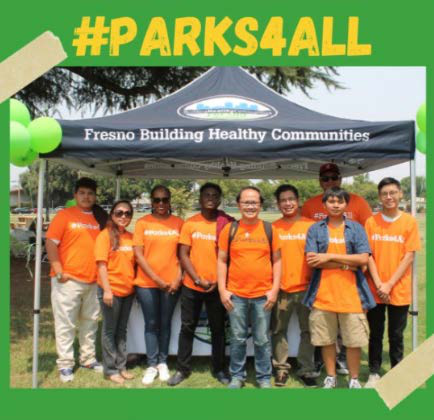
“Healthy parks mean healthy residents, which result in a healthy community, and one healthy Fresno”
Antonio Jauregui, Fresno BHC Youth Leader
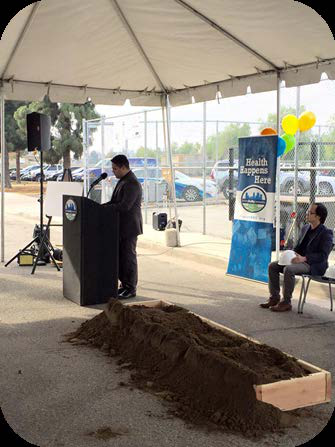
IMAGE SOURCE: FRESNO BARRIOS UNIDOS
Growing Leadership: #Parks4All and Measure P
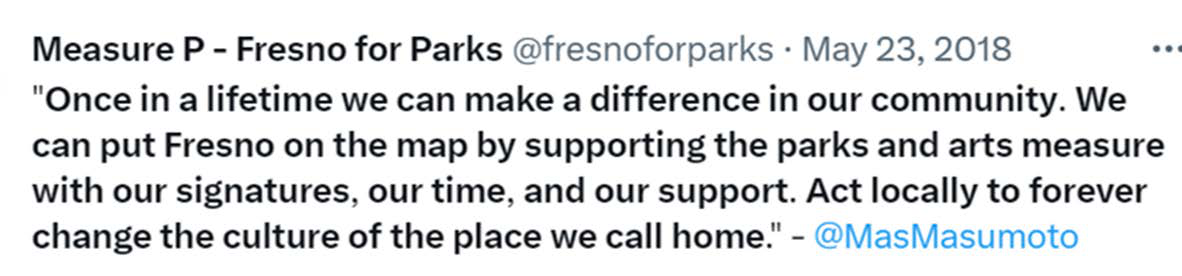
Fresno BHC Coalition partners joined together to form the #Parks4All campaign to:
- Change the narrative on parks in Fresno.
- Secure necessary investments to improve existing parks in south Fresno.
- Build parks where they are absent from neighborhoods.
Measure P:
- Would provide a funding base for Fresno parks, recreation, and arts.
- Proposed to add a ⅜ or 0.375 cent sales tax for purchases made in the City of Fresno for the next 30 years.
Fresno BHC gathered 12,000 signatures in two months to put Measure P on the ballot in 2018. A total of 30,000 were needed.
*Each book represents 1,000 signatures
Measure P Opposition

Criticism often centered on:
- Potential new tax revenues being allocated to parks instead of City service providers.
- Adding new parks would potentially increase crime.
- Police needed more funding to protect the existing parks and community.
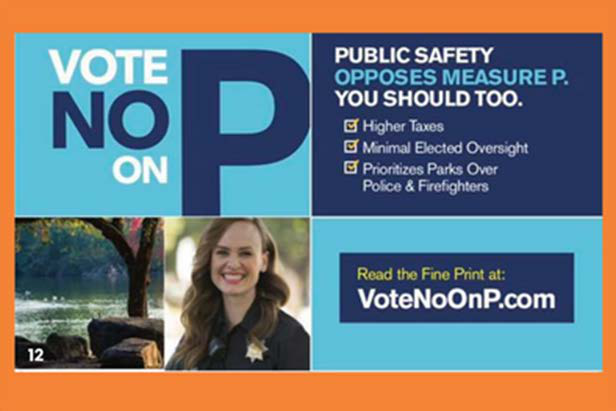
IMAGE SOURCE: FRESNANS FOR A SAFER COMMUNITY
“...They came out swinging hard by having the language wrong on the ballot. The opposition was to the max. Taking down our ’Yes on P’ signs and putting up their ’No on P’ signs and giving misinformation to the public. We really had to overcome a lot of opposition.”
—Kimberly McCoy
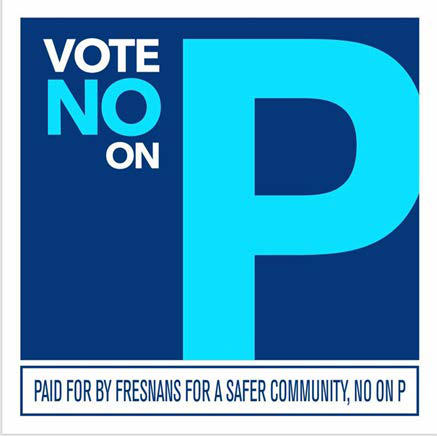
IMAGE SOURCE: FRESNANS FOR A SAFER COMMUNITY
Measure P and #Parks4All: The Fight for Fresno Parks
- Measure P passed with a simple majority vote (52%).
- Measure P was challenged by City officials & was not declared a win.
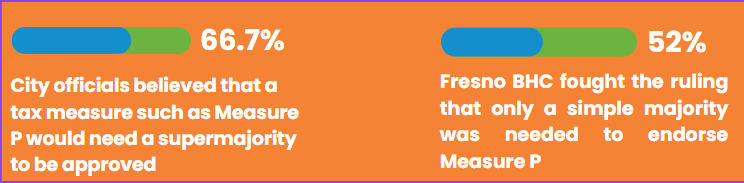
City officials believed that a tax measure such as Measure P would need a supermajority to be approved. Fresno BHC fought the ruling that only a simple majority was needed to endorse Measure P.
- Fresno BHC filed a lawsuit against the City of Fresno at Fresno County Superior Court and lost.
- Fresno BHC requested an appeal. The case went to the Supreme Court of California which overturned the previous ruling.
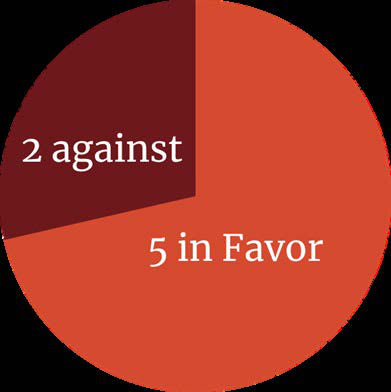
- Measure P became implemented as a citizen-led initiative after the City Council voted 5-2 to accept the ruling.
City Council Votes

Recreation, Arts, and Parks Commission
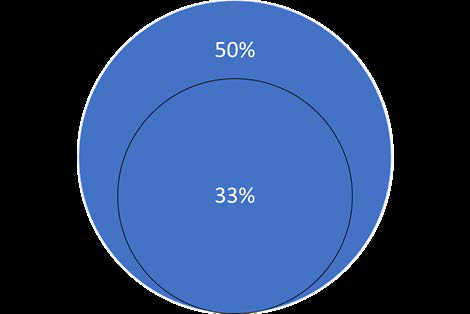
The Recreation, Arts, and Parks Commission was also formed, with one of their tasks being to determine the top 50% of highest-needs neighborhoods for parks investment.
The commission will advocate for the the top 33% highest needs neighborhoods to receive the park funding.
-

Commission selected 50% highest-needs neighborhoods
-

City Council narrowed down to 33% highest-needs neighborhoods
Equity in Parks
“All the hard work and hours that I put in, I was just very proud to be selected to be on the Commission but to become Chair of the Commission was something that I just never thought would happen and I was at a loss for words.” -Kimberly McCoy
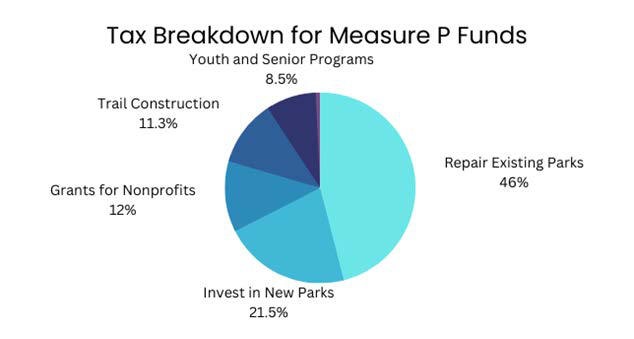
| Use of funds | Percentage |
|---|---|
| Repair Existing Parks | 46% |
| Invest in New Parks | 21.5% |
| Grants for Nonprofits | 12% |
| Trail Construction | 11.3% |
| Youth and Senior Programs | 8.5% |
| Unspecified | *0.75% |
Parks Champions
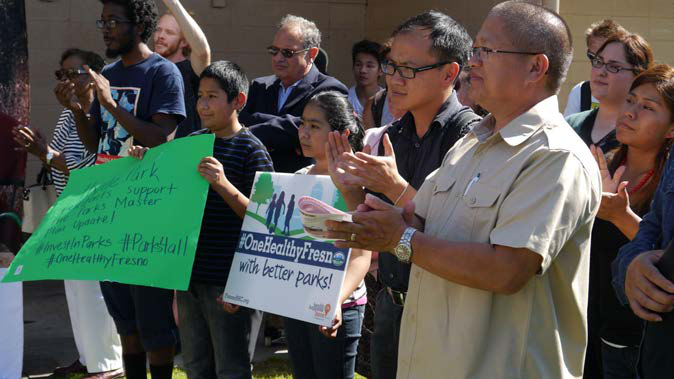
The fight for adequate parks began with south Fresno residents.
Fresno BHC’s efforts helped the community unite their voices to fight for investments.
Together, advocates, youth, and resident leaders navigated the political system to ensure funds were secured.
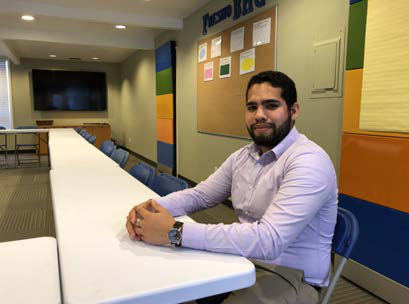
IMAGE SOURCE: FRESNO PARKS
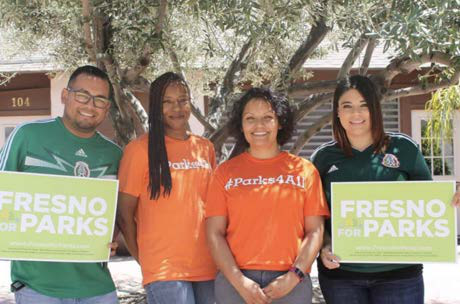
IMAGE SOURCE: KVPR
Thank you!!
For more information, visit us at
cvhpi.org
Thank you to advocates and residents for their work.
Thank you to our funders who made this work possible