Cultivating Connections: Leadership and Power Building for Merced School Equity
Presented By:
Guadalupe Corona, BS
Ana Rubio, BA
Central Valley Health Policy Institute
Background
Building Healthy Communities (BHC) was a 10-year place-based initiative funded by The California Endowment to advance statewide policies that directly address health inequities at the community level.

The Merced Place is made up of southwest Merced and east Merced County.
Introduction
BHC Merced has focused on providing a platform for residents and creating change within three major focus areas:
- Restore and improve school climate
- Improve neighborhoods
- Expand healthcare systems and access
BHC Merced transitioned to Valley Onward (a 501 c(3) non-profit organization) after the BHC initiative finished in 2020.
People Power and Power Building
People Power1 refers to building communities where “historically excluded adults and youth residents have voice, agency, and power in public and private decision making to create an inclusive democracy and close health equity.”
Power Building2 is an investment in “an emerging ecosystem of organizations with diverse capacities, skills, and expertise”; these are then mobilized as resources to prioritize health equity in decision-making spaces.”
1, 2 Definitions come from The California Endowment from https://www.calendow.org/learning/building-voice-and-power/.
Working Together: Building People Power in Schools
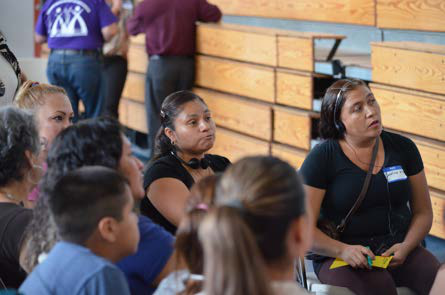
- Leaders from the School Action Team (SAT) came together to push for improvements in the school system and for youth.
- The SAT combined efforts with Merced districts for the implementation of restorative approaches within the school system rather than the previous zero tolerance policies.


BHC Merced and residents changed school systems and practices in Merced:
- How student needs are addressed addressed
- How community is engaged in the Local Control Funding Formula (LCFF) and the Local
Control and Accountability Plan (LCAP) processes
- Parents were empowered through trainings
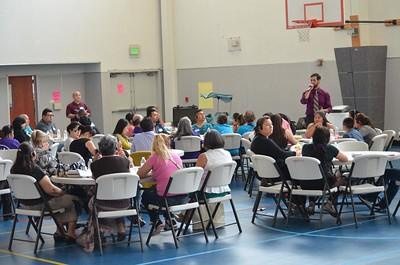
- Planning meetings were moved to more accessible areas in the community
BHC’s School Action Team
| Category | Details |
|---|---|
| Before SAT: |
|
| Impact of SAT: |
|
School Leadership: Stepping up for Merced Schools
Tsia Xiong, active community advocate and parent
- One of the leaders for School Action Team (SAT)
- Motivated by personal experiences to improve inequities in schools

School Leaderships: Stepping up for Merced Schools
Mercedes Rodriguez
“I know people now, and I can reach out to them, and they can connect me with other people, who reach out to other people. Pretty soon, it’s like this web begins to form and all the ideas come together.”
–Mercedes Rodriguez
LCFF & LCAP
| Category | Details |
|---|---|
| The Local Control and Funding Formula (LCFF) |
|
| Local Control Accountability Plan (LCAP) |
|
Restorative Justice in Schools: Breaking the School to Prison Pipeline
Improve suspension and expulsion rates for students of color in Merced

- Provide students and parents with adequate resources
- Language accessibility
- Important to have culturally competent counselors working with students
Building Power and Capacity in Transformative Work
- Xiong wanted to shift from advocating to organizing
- Public space for residents to speak freely = leaders

“Organizing is very intentionally helping people, nurturing their skills, and realizing their potential.”
-Tsia Xiong
Overcoming Challenges
| Category | Details |
|---|---|
| Challenges: |
|
| Improvements: |
|
What’s Next
- Increase parent involvement
- Prepare and empower parents with necessary materials
- Transparency between schools and parents
- Empower and build leaders within the community
Conclusion
- Xiong grew his leadership skills by nurturing leadership in others
- Continue to lift up community voices
- Increase inclusivity of voices from different backgrounds
- Rodriguez believes organizing is the key to long lasting change

“We have a story, everybody has a story. The question is, can we get [people] out to the public arena, so they could share the story? And can we get multiple people or resident leaders to come, hundreds of them to share this story?”–Tsia Xiong, Director of API Leadership, Faith in the Valley
For more information
For more information, visit us at cvhpi.org.
Thank you to advocates and residents for their work.
Thank you to our funders who made this work possible.