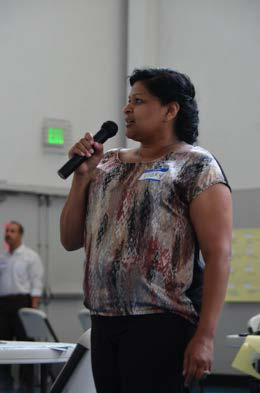
Cultivating Connections: Leadership and Power Building for Merced School Equity
BHC MERCED

ACKNOWLEDGMENTS
THE AUTHORS WOULD LIKE TO EXTEND APPRECIATION TO TSIA XIONG AND MERCEDES RODRIGUEZ FOR THEIR TIME AND INPUT REGARDING STATE AND LOCAL SCHOOL FUNDING POLICIES, AND SCHOOL CLIMATE CAMPAIGNS; THIS CASE STUDY WOULD NOT BE COMPLETE WITHOUT THEIR CONTRIBUTIONS. WE WOULD LIKE TO ACKNOWLEDGE THE CONTRIBUTION OF MANY CENTRAL VALLEY HEALTHY POLICY INSTITUTE STAFF, INCLUDING A SPECIAL THANK YOU TO GUADALUPE CORONA FOR HER EDITING CONTRIBUTIONS.
FUNDERS AND CONTRIBUTORS
THE CALIFORNIA ENDOWMENT AND BUILDING HEALTHY COMMUNITIES MERCED COMMISSIONED THIS REPORT TO HIGHLIGHT LEADERSHIP BUILDING WITHIN THE BHC MERCED COALITION DURING THE LOCAL CONTROL FUNDING FORMULA (LCFF) LOCAL CONTROL AND ACCOUNTABILITY PLAN (LCAP), AND SCHOOL CLIMATE CAMPAIGNS.
AUTHOR NOTE
THIS CASE STUDY WAS SUPPORTED BY A GRANT FROM THE CALIFORNIA ENDOWMENT TO THE CENTRAL VALLEY HEALTH POLICY INSTITUTE AT FRESNO STATE. THE VIEWS EXPRESSED IN THIS CASE STUDY ARE THOSE OF THE AUTHORS AND DO NOT NECESSARILY REFLECT THOSE OF THE FUNDERS OR THE UNIVERSITY.
SUGGESTED CITATION
CENTRAL VALLEY HEALTH POLICY INSTITUTE. (2023). CULTIVATING CONNECTIONS: LEADERSHIP AND POWER BUILDING FOR MERCED SCHOOL EQUITY. CALIFORNIA STATE UNIVERSITY, FRESNO.
AUTHORS
- AMANDA CONLEY, MA
- ARMANDO RAMIREZ, BA
- ANA RUBIO, BA
- ANTHONY JANSKY, BA
- JOHN CAPITMAN, PHD
- JAZMINE KENNY, PHD
- TANIA PACHECO-WERNER, PHD
COMMISSIONED BY


TABLE OF CONTENTS
BHC Merced Timeline
In review

| Year | Timeline |
|---|---|
| 2010 | Building Healthy Communities started their 10-year initiative with the BHC Merced Place focusing on South Merced and East Merced County |
| 2013-2014 |
|
| 2015-2016 | Local Control Funding Formula (LCFF) funds were used in schools across Merced County for behavioral and mental health services (Merced Union High School District), physical education staffing and programming (Planada and Le Grand Districts), and improved school climate through restorative justice practices (Merced Union High School District, MCOE, Le Grand Union High School District). |
| 2017-2018 |
|
| 2019-2020 |
|
Introduction
The Merced Place, southwest and east Merced county, is one of fourteen Building Healthy Communities (BHC) sites throughout California taking part in a 10-year place-based initiative, from 2010 to 2020, supported by a $1 billion investment from The California Endowment (TCE), to advance statewide policies that directly address health inequities at the community level.
Over the past decade, Building Healthy Communities (BHC) Merced has focused on providing a platform for residents and making a difference within three major focus areas:
- restoring and improving school climate
- improving neighborhoods
- Expanding healthcare systems and access.
This case study focuses on school advocacy and community organizing work that increased equity in Merced schools for students and parents through the development of people power and power building.
Working together: People Power in Schools
Leaders from the School Action Team (SAT) including Tsia Xiong and resident advocate Mercedes Rodriguez have come together to push for improvements in the school system and for youth. They have combined efforts with four districts of Merced, including the Merced County Office of Education, Le Grand Union High School District, and Merced Union High School District, in an effort to implement restorative approaches within the system rather than the previous zero tolerance policies. In partnership with parents and advocates, BHC Merced pushed for these changes in order to improve the performance and outcomes of their students.
People Power
Building communities where "historically excluded adults and youth residents have
voice, agency, and power in public and private decision making to create an inclusive
democracy and close health equity gaps. 1
Power Building
Power building is an investment in “an emerging ecosystem of organizations with diverse
capacities, skills, and expertise”; these are then mobilized as resources to prioritize
health equity in decision-making spaces. 2
Relatedly, BHC Merced has worked to increase the level of community engagement in advocating and equitably allocating funds distributed to Merced schools. Despite the outlined directions of the Local Control Funding Formula (LCFF), the purpose and allocation of these funds were not always made clear to the community. BHC Merced empowered parents by holding trainings on school district budgets and providing public comments at budget meetings. Successful improvements were made, including moving planning meetings to areas in Merced that previously lacked representation.
School Leadership: Stepping Up for Merced Schools
Tsia Xiong
A vital piece to embedding equity into schools begins with community leaders who organize and empower residents to make change in their local schools. BHC Merced, as a people power coalition, included advocates, organizers, residents, and youth leaders. This coalition's efforts transformed local school policies and practices to reflect community input and priorities. In doing so, resident access to decision-making bodies increased and improved.

“I know, truly, in my own history that I have the capability and knowledge I need to make a difference. That’s what really shaped my own thinking to really be active in the community and activate residents to come together.”
–Tsia Xiong, Director of API Leadership, Faith in the Valley
Xiong, an active community member within Merced’s school system, has played a pivotal role in increasing resident access to decision-making bodies and helped guide parents and adults who work with youth to be youth allies; he’s done this work from multiple roles over the years as an advocate, community organizer, and appointed school board member. Xiong’s personal experience during his own time in school motivated him to pursue changes regarding the current state of the school system. He recalled feeling the impact of inequity when it came to how educational resources were distributed. He also described experiencing racism firsthand, and how experiences during his youth still fuel his work today. Xiong came to the United States as a refugee from Laos during the Vietnam War and was placed into a middle school in Stockton. During this time, he did not see schools devote individualized attention to refugee students, but rather saw disproportionate rates of suspensions and expulsions among refugee students, including some of Xiong’s friends. Due to the lack of support and funding resources allocated to high-need students, students would often drop out or be incarcerated.
“I’ll contribute, somehow, until my last breath, because I believe it is very critical that I contribute in any way, shape or form–I'm more than happy to do this because our community is in more pain than ever before.”
–Tsia Xiong, Director of API Leadership, Faith in the Valley
For the last 30 years, Xiong has dedicated himself to helping improve inequities in schools. Prior to BHC Merced, he had numerous encounters with policymakers in the Central Valley region and at the state level, including working to improve student conditions in the Merced Union High School District. However, he mentioned that obtaining grant funding to support the work was difficult: “With the support of BHC, I was able to expand [the work] to other leaders, increase the capacity, to really bring leaders together, really bring energy to the work.”
Mercedes Rodriguez
“I know firsthand that if you go in and you complain or ask for something to be changed, they don't really do anything but, once you get a group of people together, then they you know, people start they notice and they listen more and then, once you start it's just, it grows…”
--Mercedes Rodriguez, retired teacher and Merced School Leader
Mercedes Rodriguez, a retired elementary school teacher and current resident advocate, explained that she learned about BHC Merced’s Local Control and Accountability Plan (LCAP) meetings through a friend; she continued to attend when she realized their importance to improving resources for students. Soon, she was asked to take charge of leading the meetings, introducing members, and is still involved in the LCAP efforts. Rodriguez explained that a large part of the support she received was from BHC Merced, which offered multiple training sessions and opportunities to practice leadership. Rodriguez stated that there were times in which she felt “at the bottom of the ladder of leaders,” but as these leaders shared their experiences and their connections continued to be cultivated, she knew they would be able to make a difference by organizing together.
LCFF/LCAP
The LCFF, introduced in California at the start of the 2013–14 school year, was a groundbreaking education policy that changed the way the State distributes funds to school districts. The LCFF allowed increased funds to be allocated toward low-income students, English learners, and foster care youth with the goal of improving student outcomes. The intention of LCFF was to support school districts by addressing the education inequities that directly impact student outcomes through this increased funding for resources. The LCFF included a statute that made clear that community and parent engagement, in both the planning and implementation stages, was mandatory. As a result, LCAP was developed as a tool for educational institutions to form action plans, set goals and shift resources toward the improvement of student outcomes, in partnership with local communities. Together, the LCFF and LCAP allowed school districts greater control and flexibility at the local level to improve student outcomes.
Because of the lack of engagement between the parents and the school districts in Merced, many were unaware of how funds were specifically being allocated with local school districts. Following meetings with the school board, a resolution was passed so that budgets would require the involvement of parents and youth allies in LCAP decision making. A key part of this movement to increase parent involvement in resource decision making started with organizer Xiong.
Through Xiong’s experience working within the education system and his experience as an organizer, he wanted to provide resources for students that had never existed before within the Merced school system. For instance, he noted that there was a large portion of Asian students facing expulsions and recalled from his personal experience that many of the friends he grew up with faced similar consequences.
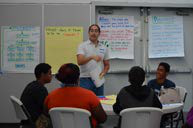
“And now grown up, as an advocate I feel like there's a huge suspension and expulsion of Asian students,” said Xiong, “particularly a whole bunch of my friends who grew up in the 1980s were either incarcerated, or dropped out and because there weren't any types of support, particularly dealing with funding, like the LCFF or LCAP money.”
Restorative Justice in Schools: Breaking the School-to-Prison Pipeline
While Xiong was working on bridging the achievement gap among Southeast Asian students in the Central Valley, he learned that much of his work was not only advocating for the residents in his city, but also being a guide to help them find their own voice. Part of this work needed to include improving suspension and expulsion rates for students of color. Fighting for equity in Merced school districts, Xiong and BHC Merced advanced equity by increasing resources to support students of color and their parents to become more informed on the expulsion process. Xiong started by connecting with the school board.
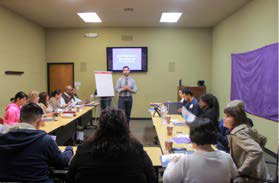
“I built a solid relationship with the school board, along with a couple of my residents, so that we can meet with them, building relationships with them, and one year after we did that, the next couple of LCAP meetings, guess who hosted it? We hosted. We also went on to host the annual LCAP meeting every year in January.”
Xiong also made sure that the school district included his team at every meeting involving LCAP, advocating to increase student opportunities and resources from the LCAP budget to make improvements for academic success. However, the next step was to address inequities that the team learned were happening in local school expulsion hearings.
Xiong looked for ways to engage parents and help them secure needed resources when their child was facing expulsion or the resources to prevent expulsion altogether. Xiong explained that some school correspondence was not created with equity in mind. For example, the Student Code of Conduct, if available, was hard to comprehend for those that may not have the literacy skills to understand the complexity of the materials. Additionally, some parents who could not read English, did not understand the materials at all. BHC Merced also secured resources to have both student handbook and expulsion information disseminated in multiple languages. By doing this, and securing interpreters, students and parents were better equipped to defend themselves during suspension and expulsion hearings. Beyond this, Xiong also believed it was important to have culturally competent counselors available for students and families.
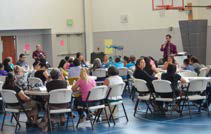
“Hmong people make up about 43% of the school population,” said Xiong, “and the school districts just kind of failed our Hmong students miserably and that's including access to counselors, to teachers was below 1% or zero percent. Zero counselors and yet, if you look at the ADA [Americans with Disabilities Act] and other typical Title I, VI or VII or other special categories we make about 43% and at the end we didn't see any of that money going to our community or students.”
Building Power and Capacity in Transformative Work: Advocacy and Organizing
“With BHC Merced support and the resources they have, I was able to dive deeper in terms of determining what kind of outcomes we need to move forward, and that really set the stage for the leadership in Merced. To be able to provide a clear analysis of LCAP, BHC has so many resources to bring, like consultants. They really helped us think through school budgets that were new to use. It allowed us to figure out how to meet with people with positions of power and how to agitate them in such a way to really make a difference. So that really set up a new chapter for me.” –Tsia Xiong, Director of API Leadership, Faith in the Valley
Before Xiong became involved with BHC Merced, he worked with the school district and budget as an advocate for the community. He would routinely show up to meetings and town halls, but it was mentally taxing for him. “I had done 10 years of advocacy. I got burnt out. A lot of the time, everything leads up to you.” As an advocate, Xiong also realized there was a lack of community involvement. He explained that although advocating meant fighting for people, many times people were unaware of what the fight was about. “I was doing a lot of advocacy work where I usually speak on behalf of people and a lot of the time they don't really know why I'm fighting for them.” BHC Merced showed Xiong that organizing and community engagement were a powerful tool to bring about substantive change. In comparison to only advocacy, Xiong said, “Organizing is very intentionally helping people, nurturing their skills, and realizing their potential.” He focused on raising the voices of those affected by school inequities and provided space for them to speak freely and bring more people together, to create leaders. Xiong stated that people in the community are important to making change, otherwise, changes do not stay in place.
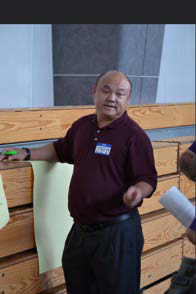
“He [Xiong] brings us together, he's kept us together. I guess that's what you need. You need somebody there that pulls it all together, brings you together. People participate because they want change. They're there because either their own experiences have been positive, or the experiences of their own children are not positive and they want that to change.”
--Mercedes Rodriguez, retired teacher and Merced School Leader
Rodriguez also believed that bringing the community and their ideas together was key to long-lasting change. She shared her own experience, explaining how meeting a variety of people positively impacted the work she does. “Until now, I never realized this,” said Rodriguez, “but I know people now, and I can reach out to them, and they can connect me with other people, who reach out to other people, and then pretty soon this, it's like this web begins to form, and all the ideas come together.” She stated that initially she was uncertain about what sort of impact she could make. Connecting with others, she learned, people who she could rely on for support, was empowering.
Building Capacity through Shared Learning
In 2015, a train-the-trainer workshop focused on LCFF was hosted by Children Now, who lead the Children's Movement of California. This training included local stakeholders, residents, and community leaders who all learned skills on how to become Merced school champions. Some key takeaways from this workshop were:
- develop a better understanding of LCFF
- understand how the LCAP process worked
- how to promote more authentic relationships between parents and schools.
On several occasions, Xiong brought many people together in support of different school-related campaigns, including for the Hmong community and students. He also worked to translmove town hall meetings into community spaces to make them more accessible. He came to realize that people had the capacity to build power if they were comfortable speaking to city officials about issues that affect their community. BHC Merced provided multiple trainings that focused on public speaking, technical policy and budgeting assistance, and media communication to increase resident capacity and confidence in addressing local leaders. When Xiong was fighting against the suspension and expulsion of students of color, he noted the determination of the parents on the team. “They don't always have the education necessary to make change but if they receive training, they are able to move mountains because they know what is best.”
Overcoming Challenges
Xiong and his team encountered many challenges working to improve Merced schools. Two came to the forefront as challenges that were solved over time. These include increasing accessibility of the materials that schools share with students, parents and guardians. There was also little transparency about when school and district meetings were taking place, and what level of involvement was open to the community. With the help of BHC Merced, Xiong’s efforts successfully secured resources to address the issue of accessibility, with the student handbook being translated into Spanish and Hmong. In addition, automated phone calls to homes and social media posts were also translated into multiple languages.
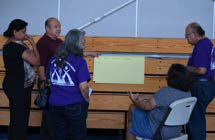
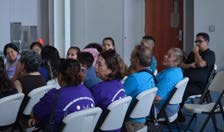
However, Xiong explains that it is more than simply having the resources; it is about teaching and training the residents how to use and understand the materials they receive from schools. Rodriguez stated that the meeting accessibility increased by the addition of Spanish and Hmong interpreters, explaining how this positively impacted community attendance. “Part of all of this is that we actually got to where we could have interpreters [for Spanish and Hmong language speakers],” said Rodriguez. “This was a part of what came out of all these meetings. Parents needed interpreters, and we were able to have the school district provide them. This was a big plus. Now anybody could come, and they would be able to understand what's going on.”
In concert with increasing language accessibility in school-related materials, Rodriguez also noted that BHC Merced helped increase awareness of school board meetings in the community and that the board meetings were often held in district offices outside of community neighborhoods.
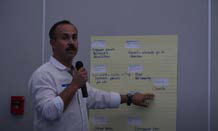
Additionally, parents and guardians were often unaware that school board meetings were happening or that important factors that affect student achievement were being discussed at these meetings, such as school budget allocations. According to Rodriguez, this lack of outreach made parents, guardians, and youth allies feel as though their input was not welcome, and it also allowed school leadership to make decisions without pushback or input from the community. Xiong and the SAT brought large numbers of people to advocate that the school board meetings be both transparent in their promotion and outreach, and that they were also held where parents were able to attend. They succeeded in getting the meetings embedded into the community, with meeting spaces being moved to neighborhood school campuses so that their scheduled times and physical access were not barriers.
Ongoing Challenges: Using a Racial Equity Lens
“We certainly put a bandage on people you know, or on the system, but the real costs have not been talked about. And I'll tell you the root cause: The root cause we have to face is racism. It’s a social construct in our midst. And unless we discuss [racism] and talk about and share, and have courageous and dangerous conversations with people who have power, it will continue to exist.”
–Tsia Xiong, Director of API Leadership, Faith in the Valley
When looking at accessibility issues, it is also important to investigate their root causes. One of the larger findings in the statewide BHC initiative was that an aim to achieve health equity also needed to address the issue of racial justice. In 2018, The California Endowment’s governing board made a commitment to racial equity because of its underlying tie to health equity.
What is Next?
“I think we need to revolutionize how school budgets are working, and we need to revolutionize how parents and Community should have a stake at the budget hearing and are they being taken seriously.”
–Tsia Xiong, Director of API Leadership, Faith in the Valley
Xiong shared that the next steps included continuing to build people power in Merced to increase parents’ involvement in the school system and its decision-making processes, including working toward implementing a participatory budget process.
He also noted that he would like to see more transparency between schools and the community, as the community needs to have input on the millions of dollars provided by LCAP, as he shared that LCAP funds were still being applied to general funds, which potentially dilutes their ability to improve student outcomes. Xiong also mentioned that he will continue to work with PICO, another organization that brings community members together into a multi-racial/ethnic, faith-based environment, in an effort to improve equity and address racism in Merced schools and beyond.
“We have a story, everybody has a story. The question is, can we get them out to the public arena, so they could share the story? And can we get multiple people or resident leaders to come, hundreds of them to share this story?”
–Tsia Xiong, Director of API Leadership, Faith in the Valley
For the time being, Xiong said that while increasing accessibility to materials and processes related to school suspension and expulsion, there was more work to be done to prepare and educate parents, guardians and youth allies to help them understand what the resources mean in practice, and how they can be used to improve outcomes for students. This is a part of what Xiong said was next: Empowering and building leadership among community members to become school champions. Part of this work will be done through one-on-one engagement, meeting with residents and providing support to increase community voice through storytelling and helping residents connect with each other through their shared experiences. One of the most important elements to providing support, Xiong noted, is by actively listening to what others have to share.
Conclusion: The End of the Story
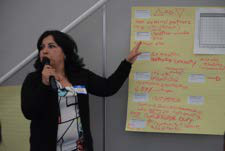
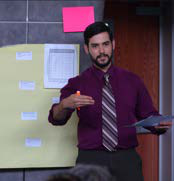
“[As an advocate] I used to speak on behalf of people and a lot of the time they didn’t really know why I'm fighting for them, but community organizing is very intentionally helping people, nurturing their own skills, and helping them to realize their potential, and that's a huge dynamic change from working in the past, before joining PICO and BHC.” –Tsia Xiong, Director of API Leadership, Faith in the Valley
Overall, while BHC Merced has transitioned to Valley Onward, the work in Merced schools continues, engaging and uniting community voices. For Xiong, he attributed his growth as a leader to his time working with BHC Merced and shared that working with the SAT was an opportunity to improve his leadership skills by nurturing the leadership skills he found in others; helping others move into leadership roles was an important part of learning that there is power in community organizing. Rodriguez also singled out this idea: “if you go in and you complain or ask for something to be changed, they don't really do anything. Once you get a group of people together, then people start to notice and then they listen.” This would include youth voices, which need to continue being lifted to achieve sustainable school improvements. While major improvements have been made over the last decade, there is still work to do, especially in increasing the inclusiveness of voices from diverse backgrounds. According to Xiong, community organizing is vital to making this happen. While Xiong acknowledged that advocates play an important role in improving student outcomes, community organizing is a powerful tool that can empower school champions from communities who, through capacity building and nurturing, can carry the work into the future.
WORKS CITED
- https://www.calendow.org/learning/building-voice-and-power/
- https://www.calendow.org/learning/building-voice-and-power/
PHOTO CREDITS
- UC SAN DIEGO
- VALLEY ONWARD
- VALLEY ONWARD
- VALLEY ONWARD
- VALLEY ONWARD
- VALLEY ONWARD
- VALLEY ONWARD
- VALLEY ONWARD
- VALLEY ONWARD
- VALLEY ONWARD