Weekly Resources Call: Equipping Community Health Workers with Accurate Information for COVID-19 Response
December 2023
Table of Contents
- Acknowledgments 2
- Funding and Contributors 2
- Contributing Authors 2
- Suggested Citation 2
- INTRODUCTION 3
- Taking Pandemic-related Information to Underserved Communities in Fresno 3
- Reaching Vulnerable Communities via Social Media & Streaming 5
- Spanish Resources Call Format: A Social Determinants of Health Approach 5
- METHODS 9
- RESULTS 9
- COVID-19 Health Information and Weekly Updates Enhanced CHW Workflow 9
- Calls Served as a Resource for CHWs to Reach Communities in a Different Way 10
- Challenges and Opportunities for Increasing CHW and Community Attendance 12
- DISCUSSION 13
- Challenges to Maintaining Public Interest and Attendance throughout the Pandemic 13
- Ensuring Information is Accurate, Timely, and Culturally and Linguistically Appropriate 13
- CONCLUSION 14
Acknowledgments
The Central Valley Health Policy Institute would like to extend our appreciation to all the COVID-19 Equity Project partners and community health workers who made this report possible. We would also like to express gratitude to the community-based organizations that contributed to the Weekly Resources Call and the community members who participated in the call throughout the years.
Funding and Contributions
Fresno County and the City of Fresno funded this project as a localized effort to prevent the spread of COVID-19 and address health disparities related to the pandemic among vulnerable populations in Fresno County. We would like to thank CVHPI staff Armando Ramirez for his contributions to the design of this report.
Contributing Authors:
Guadalupe Corona Gomez
Atziri Barboza
Tania Pacheco-Werner, PhD
Stephanie Chan, MPH
Suggested Citation
Corona, G., Barboza, A., Pacheco-Werner, T., Chan, S. (2023). Weekly Resources Call: Equipping Community Health Workers with Accurate Information for COVID-19 Response. Central Valley Health Policy Institute.
Introduction
Taking Pandemic-related Information to Underserved Communities in Fresno County
The COVID-19 Equity Project (CEP) sought to address health disparities related to the pandemic among underserved communities and hard-to-reach populations in Fresno County. The multi-organization collaboration began in the summer of 2020 and consisted of the African American Coalition, the Disability Equity Project, and the Immigrant Refugee Coalition (IRC). All three coalitions were instrumental in conducting the CEP’s COVID-19 response activities during the pandemic. The community-based approach of the CEP used the community health worker (CHW) model to prevent the spread of COVID-19 and fill in the gaps in access to relevant health information and resources. The CHWs supported CEP’s activities, which included contact tracing, isolation and quarantine support, community outreach, COVID-19 education, and providing COVID-19 testing and vaccination services. The CHWs were a critical link between community-based services and communities because of shared lived experiences and cultures. The weekly community resources call was an integral part of the response and was a tool to help CHWs keep updated with ever-changing guidelines and emerging science.
As many resources and services moved online for shelter-in-place policies at the beginning of the pandemic, a need to bridge technological and informational gaps within underserved communities emerged. In partnership with the County of Fresno, the Central Valley Community Foundation (CVCF) and community-based organizations (CBOs) facilitated weekly “Fresno County COVID Community Meetings” through Zoom to provide CBOs with the latest information, including public health guidance from the Fresno County Department of Public Health (FCDPH). The Central Valley Health Policy Institute (CVHPI) saw a need to make this information available to the public in Spanish. In partnership with the CVCF, FCDPH, and Immigrant and Refugee COVID-19 Response Team partners, CVHPI started translating the information and providing it to the community through Facebook the next day. The Spanish Weekly Resources Call began in April 2020. The partnerships involved in the CEP and the weekly call continued throughout the pandemic, and the County remained a partner of the call until January 2022.
WEEKLY RESOURCES CALL TIMELINE
- APRIL 2, 2020
In partnership with the Fresno County Department of Public Health (FCDPH), the Central Valley Community Foundation (CVCF) and community-based organizations (CBOs) facilitated a weekly COVID-19 call through Zoom to provide CBOs with the latest information. The “Fresno County COVID Community Meeting” launched. - APRIL 17, 2020
The Central Valley Health Policy Institute (CVHPI) saw a need to make this information available to the public in Spanish. In partnership with the CVCF and the FCDPH, the Immigrant and Refugee COVID-19 Response Team launched the Spanish Weekly Resources Call. - JANUARY 2021
The CEP activities shifted from the three coalitions to solely the Immigrant Refugee Coalition (IRC), and the call was integrated into the IRC CHW model. Through the work surrounding the call, the CVHPI team reached 6,813 individuals whose primary language was English and 3,359 individuals whose primary language was Spanish. - OCTOBER 2022
Both the English and Spanish Weekly Resources Calls ended.
Reaching Vulnerable Communities via Social Media & Streaming
The CVHPI team took important information from agencies being transmitted during the “Fresno County COVID Community Meetings” to a public platform in Spanish, increasing access to accurate COVID-19 information among Spanish-speaking families in rural and underserved communities. The team attempted to reach families in a way that was most accessible to them. The calls were held on Zoom and live-streamed on Facebook, with outreach to WhatsApp groups and small-town and Spanish-speaking local Facebook groups. These two mediums allowed people to join by phone, the Facebook app, or Zoom, depending on their level of digital literacy. A Facebook account was created using Dr. Tania Pacheco-Werner’s name and image, which was already recognized, so that community members could know that the person sharing the information was from their own community.
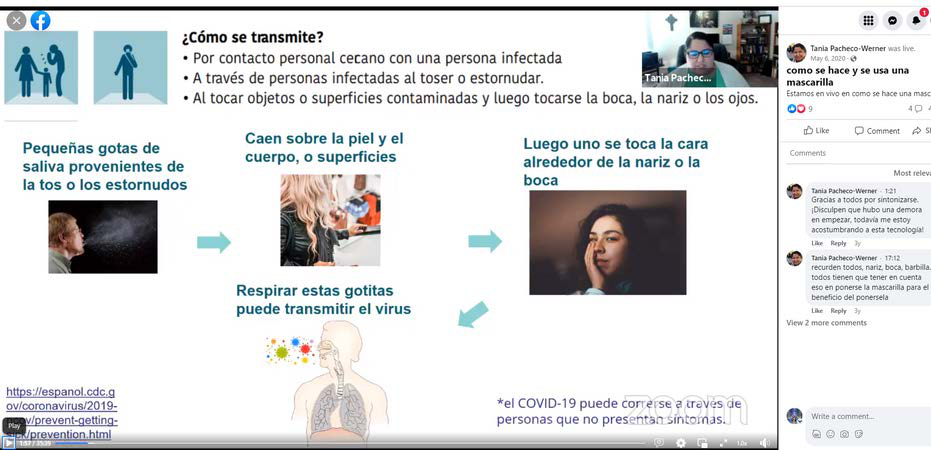
Image 2: PowerPoint title slide with the title “Community Call for COVID-19 Resources.”
Image 3: Outreach flyer for the weekly resource calls.
Spanish Resources Call Format: A Social Determinants of Health Approach
Every week on the call, the team shared health and community resources information; a health educator shared COVID-19 updates from the FCDPH; community-based organizations presented the resources and services they offered; and the CVHPI offered a list of the latest testing sites or explained late-breaking scientific information. The call also periodically had state and local officials and experts on to discuss resources and topics relevant to the community, such as state-funded relief assistance for immigrants, eviction protections, and Deferred Action for Childhood Arrivals updates. After every call, the CVHPI team posted the call materials on the Facebook page, including slides, flyers, and educational infographics. In addition, Dr. Pacheco-Werner would do Facebook live-streamed videos throughout the week to provide updates on COVID-19 guidance, including when vaccines were available, how to wear a mask properly, and data on COVID-19 and children. The Facebook page provided a strong platform to reach the community and to collaborate with other CBOs, which included partnering for the weekly call and each other’s live streams to share resources across audiences. Through the CEP collaboration, a network of community groups providing similar services and resources developed, which was important to building community trust. In 2021, the call reached 300-900 viewers weekly through the Facebook live stream. The weekly Spanish calls were a method to make reliable and accurate information more accessible to the broader community during a time when there were rapid changes, misinformation, and fear surrounding the pandemic.
As the pandemic progressed, the call was integrated into the IRC CHW model to supplement CHW health information. The call provided CHWs with pandemic updates, community resources, and educational flyers and infographics, further equipping them with health information and resources to fulfill their roles. The call was organized into five sections: Fresno County COVID-19 cases and statistics, the CEP announcements (vaccination, testing, and treatment sites), COVID-19 updates (policy and guidance changes, scientific research findings, and COVID-19 variants and vaccination updates), other public health news (Monkeypox, influenza, etc.), and resources (food distribution events, financial assistance, housing assistance, immigration services, etc.). In response to a community’s expressed need, the team developed and distributed a PDF flyer summarizing each call’s resources and vaccination events.
Through the work surrounding the call, the CVHPI team reached 4,612 individuals whose primary language spoken was English, 1,198 individuals whose primary language was Spanish, and 3,258 whose primary languages were English and Spanish from May 2, 2022 through February 22, 2023. The call was integrated into the IRC CHW model initially to supplement the health information of the monolingual Spanish-speaking CHWs. However, as the call progressed, it became an essential component of how some CHWs prepared outreach strategies and selected materials for their interactions with their communities. In partnership with the IRC, the CVHPI team prepared and hosted the weekly call in Spanish and English, and ensuring materials were culturally and linguistically appropriate to meet population literacy was important. To better understand the impact of these calls on CHW workflow, the team conducted focus groups with former CHWs.
The Weekly Calls were essential to CHWs’ outreach and interactions with the communities they served.
Methods
The purpose of the focus groups was to determine the extent of the calls’ impact on the IRC CHW workflow. The qualitative analysis sought to explore to what extent the calls were helpful throughout the pandemic, the most useful aspect of the calls, how CHWs applied the information and materials to their work, and how a similar framework of the calls could be used to address other public health issues. The CVHPI research team recruited participants who were CHWs through the IRC and had engaged with the weekly call hosted by the CVHPI and the IRC. The study utilized an initial recruitment email sent in English and Spanish to individuals who held positions as CHWs or related roles, including a link to a CEP Focus Group Pre-Survey questionnaire. The research team conducted two focus groups, one in Spanish and one in English. The CVHPI team assigned participants to a focus group depending on the participant’s preferred language(s). The focus group sessions were held via Zoom and were facilitated by a team of three to four research assistants. The research team transcribed the focus groups’ recordings and conducted a thematic analysis to analyze all data collected from the sessions. Two research assistants independently coded the transcripts and generated themes, followed by a team review to ensure accuracy and address inconsistencies.
Results
COVID-19 Health Information and Weekly Updates Enhanced CHW Workflow
Overall, CHWs identified the calls as a useful resource for their workflow. CHWs reported that the COVID-19 health information, such as vaccine education, was the most helpful aspect of the calls. More specifically, updates on COVID-19 vaccines, boosters, and vaccination guidance were the most useful, considering these topics were complex and often changing throughout the pandemic. Other updates mentioned to be helpful include the following topics: COVID-19 data (cases and transmission) and mask mandates. The calls were also a convenient resource for coalition members to get informed and stay updated about the state and progress of COVID-19 locally, specifically the information on Fresno County COVID-19 data and vaccine availability.
Calls Served as a Resource for CHWs to Reach Communities in a Different Way
A helpful aspect of the calls was the sharing of resources and health services like flyers, testing and vaccination clinics, and community events including those hosted by partner CBOs. CHWs used the information and flyers, including the condensed PDF flyer of resources and vaccination events, during work-related events and community outreach to share with the community and answer common questions. A participant in the English focus group said:
“I know you would send us flyers as well, so we would print them out, and we would share with the community at the events that we would go to. Also, when we would help out at vaccine events, it was good to know like when you can take the vaccine, what vaccine, the ages, and the requirements. So, the community, when they would go to the vaccine, to get their boosters or their vaccine, they would ask us questions of like, what vaccine can I get if I already got this vaccine and questions about the booster. So it was very helpful. So that’s the way I would apply it. I would be able to answer their questions.”
CHWs provided accurate vaccine-related information in a timely manner, including updates on the booster vaccines to community members. The calls helped CHWs connect community members to community-based resources and health services such as vaccination clinics, testing services, and food distribution events. The calls were a useful resource for CBOs to reach the community differently: some CHWs used the information from the calls to create social media content, including sharing the resources and the Facebook live streams on their CBO’s social media pages. One participant in the Spanish focus group emphasized how the calls provided a practical way to quickly deliver information to the community.
It updated me in a very practical way about everything that was happening with COVID-19. The updates were very good with the graphics and all the information that they had. So it was very useful; they were very useful for me. In fact, I miss them, because for me they were a very, very good resource to be able to approach the community from another place...to me it always seemed a perfect window, super useful to inform the community of all the resources and all the opportunities that exist for the community.
The calls supported CHWs in delivering culturally and linguistically appropriate information to the communities they serve. Bilingual CHWs reported that attending both the Spanish and English calls was beneficial, and some CHWs mentioned that the Spanish call helped them learn how to say certain words in Spanish. The Spanish call provided a space for Spanish-speaking CHWs to get information they could share with their communities, which include residents who speak Spanish and Mixteco. Another participant in the Spanish focus group shared that the space provided for CHWs to receive updates was the most helpful aspect.
... the calls that were held, that space was provided to find out what was happening, the update, and more than anything, a space, since my language is Mixteco, where I could go with my community and inform, give that information which helped a lot, it helped me personally, to be informed about what was happening week by week. It was a very good thing for the community.
Although bilingual CHWs mentioned that attending both calls was helpful and that the calls were complementary, some mentioned they were unable to attend both calls due to work conflicts and time constraints. Overall, the CHWs found the calls helpful and expressed appreciation for the calls and the team who worked on them.
Challenges and Opportunities for Increasing CHW and Community Attendance
Some participants also shared what they perceived to be the challenges and opportunities of the weekly calls. During focus group discussions, CHWs shared that they would have wanted the calls to be made a greater priority by the CBOs so that they could have attended more of the calls. CHWs reported that if they did not attend the calls during the time they were part of the project, it was due to conflicting work schedules or responsibilities. Some CHWs reported an information gap for those CHWs who could not attend the calls due to other work responsibilities and schedule conflicts. One participant stated that the schedule change of the calls, while a valid attempt to increase attendance, may have created confusion and thus negatively affected attendance.
It was recommended by the CHWs that CBOs work together to reserve time slots allocated exclusively for the calls to avoid scheduling conflicts. To increase the reach and attendance of the calls within the greater community, CHWs recommended that the CBOs work together to promote the calls through flyers and social media and collaborate with media outlets with bigger platforms. Ensuring effective communication and leveraging collaboration between CBOs is crucial to maintaining a high attendance rate.
DISCUSSION
Challenges to Maintaining Public Interest and Attendance throughout the Pandemic
Although calls were helpful according to the CHWs, one of the biggest challenges the CVHPI team faced was maintaining engagement throughout the pandemic. As public concern and interest in COVID-19 diminished, call attendance and social media engagement declined. The team struggled to find a day and time to maximize the attendance of CHWs and community members. In an attempt to increase CHW attendance, the CVHPI team changed the day and time of when the Spanish and English calls took place. Although the team made the changes based on the survey responses of CHWs, it did not significantly improve attendance.
Ensuring Information is Accurate, Timely, and Culturally and Linguistically Appropriate
Time was a significant challenge. The ever-changing scientific findings and policy recommendations related to the pandemic required the CVHPI team to be flexible. There was a lot of pandemic-related information and changes to research and report on, often requiring the team to incorporate important updates made public moments before a call took place. The team learned to adapt quickly to changes to ensure timely and consistent dissemination of accurate, updated information.
Furthermore, ensuring materials were culturally and linguistically appropriate to meet population literacy was important. The team needed to allocate a greater amount of time to develop the Spanish call materials, since this process required ensuring culturally appropriate translations, in addition to researching pandemic information and gathering data relevant to the Latino and Spanish-speaking communities. Due to a shortage of Spanish-speaking research assistants, the CVHPI hired more Spanish-speaking research assistants to increase the team’s capacity for developing Spanish materials in a timely manner.
CONCLUSION
When the weekly calls were incorporated into the IRC CHW model, the calls served to supplement the CHW training curriculum and strengthen the capacity of the CHWs to serve vulnerable communities in Fresno County. This method of recurring calls helped to further ensure the continuous dissemination of updated information and maintain CHWs informed about the latest health information and available resources. The findings of the qualitative analysis indicate that the calls positively impacted and enhanced the CHW workflow. The calls supported CHWs in providing accurate health education and information that was culturally and linguistically responsive. The calls were a unique approach to capacity building for CHWs because they offered CHWs another way to become a source of health and resource information and a different way to reach communities.
There is still work to be done moving forward to address the digital divide to ensure rural and underserved communities have access to health information. This weekly call method can be a way to make accurate information more accessible in a timely manner, especially at a time when there are rapid changes and a lot of misinformation and misunderstanding. Recurring calls that provide updates and resources can be incorporated into CHW program models addressing other public health issues and used to help further build the capacity of CHWs. After three years of developing the calls, the CVHPI recommends other programs interested in using this method to:
- Make the section on public health information and updates informative yet concise
- Always include a thorough section on community resources
- Factor in the needed time to ensure all information is culturally and linguistically appropriate.
For more information visit CVHPI.org
This HTML version was generated with AI assistance and may contain errors or omissions. The original approved PDF remains the official document of record. An alternative accessible format is available upon request from the document creator in accordance with Title II of the ADA.