Health Literacy Intersections with Mental Health and Social Determinants of Health in Fresno County
Dustin Hedrick, B.A.; Davenna Morales, B.S.; Tania Pacheco-Werner, PhD; Emanuel Alcala, PhD

Background
Setting: West Fresno County
- West Fresno ranks in the highest quartile for social vulnerability in the US
- Little research on health literacy within Fresno County
- Latino communities make up the largest demographic in Fresno County
- Mental health barriers including lack of access and cultural stigma widely affect Latino populations
The Advancing Health Literacy (AHL) Intervention:
- Collected baseline data from participants economic instability, mental health problems, and health literacy levels
- Used baseline data to examine how health literacy is associated with self-reported mental health, and if the social determinants of health moderated these relationships
Race of Fresno County
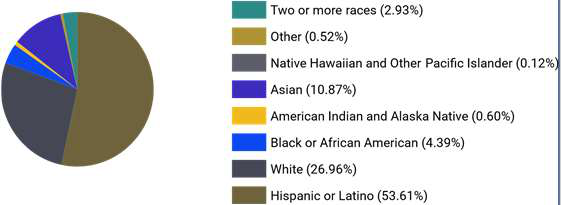
| Race | Percentage |
|---|---|
| Two or more races | 2.93% |
| Other | 0.52% |
| Native Hawaiian and Other Pacific Islander | 0.12% |
| Asian | 10.87% |
| American Indian and Alaska Native | 0.60% |
| Black or African American | 4.39% |
| White | 26.96% |
| Hispanic or Latino | 53.61% |
Demographics
Age Groups
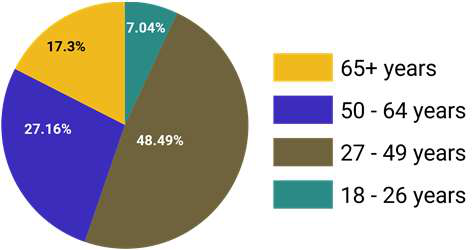
| Age group | Percentage |
|---|---|
| 18 - 26 years | 7.04% |
| 27 - 49 years | 48.49% |
| 50 - 64 years | 27.16% |
| 65+ years | 17.3% |
Gender
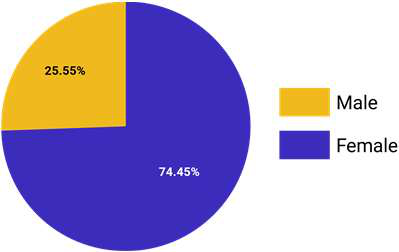
| Gender | Percentage |
|---|---|
| Male | 25.55% |
| Female | 74.45% |
Economic Insecurity
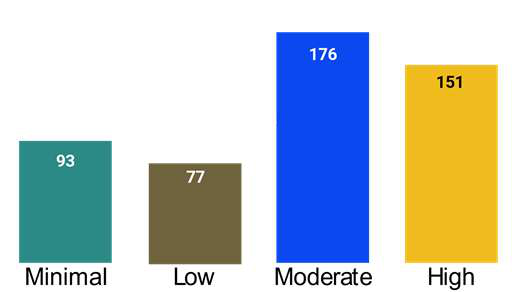
| Level | Participants |
|---|---|
| Minimal | 93 |
| Low | 77 |
| Moderate | 176 |
| High | 151 |
Methods
Data Collection
- Community Health Workers (CHWs) recruited participants through FQHCs, RHCs, and community outreach.
- Data collection occurred from June 2022 to May 2023
- A total of 609 survey responses were collected
- CHWs employed Motivational Interviewing techniques to elicit responses from participants
Data Analysis
- Data analysis was conducted in STATA/SE 15
- 496 responses were included in the final analysis
- Composite scores were calculated using exploratory factor analysis and reliability assessments
Results
Economic Insecurity by Mental Health
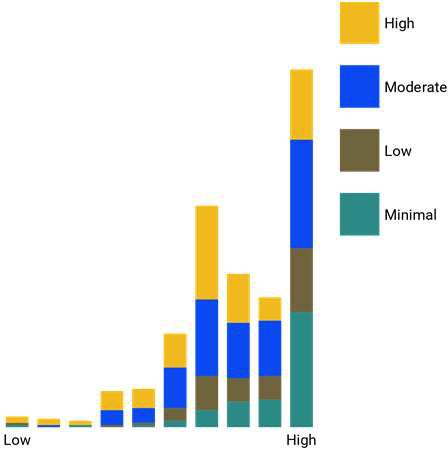
The stacked bars run from Low to High mental health, from left to right. The stacked segments represent economic categories labeled Minimal, Low, Moderate, and High. Individual segment counts are not printed.
Mental Health
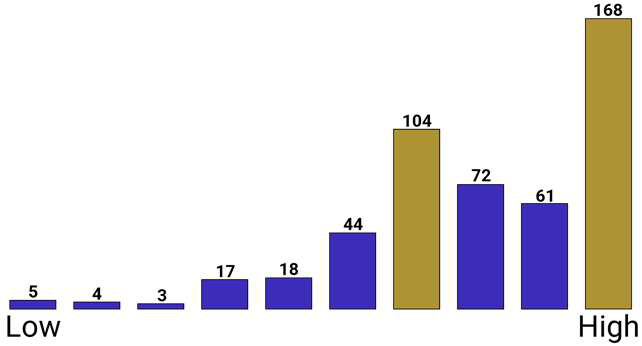
| Bar position, from Low to High | Participants |
|---|---|
| 1 (Low) | 5 |
| 2 | 4 |
| 3 | 3 |
| 4 | 17 |
| 5 | 18 |
| 6 | 44 |
| 7 | 104 |
| 8 | 72 |
| 9 | 61 |
| 10 (High) | 168 |
The chart labels the ends of the scale Low and High; individual mental health score values are not shown.
Discussion
Barriers to Mental Health in Fresno County:
- Lack of Access:
- few local clinics with long waitlists
- lack of reliable public transportation in rural areas
- seeking care is time consuming
- Health literacy barriers
- Mistrust
Additional Barriers for Latino populations:
- Cultural stigma and shame
- many do not understand what mental health services entail
- hesitation to disclose mental health related struggles on surveys
- Being discouraged due to lack of services
- High trauma rates in undocumented communities, but no insurance to seek care
- Language barriers contribute to health literacy and access challenges
Effectiveness of AHL:
- Reached a large population (n= 293) of low income Latinos that showed low health literacy rates at baseline
- CHW’s attempted to overcome systemic barriers by providing transportation referrals, meeting clients at their homes, connecting them with nearby resources but these efforts alone cannot fully overcome barriers in SDOH categories and challenges in mental health
Results and Barriers
- Participants with lower levels of positive mental health were made up primarily of
those with higher economic insecurity
- This indicates that economic insecurity may be a barrier to accessing needed mental health services
- Due to the barriers mentioned above there was limited follow-up with participants after data was collected
Next Steps and Recommendations
Next Steps:
- Continue to disperse findings via abstracts and manuscripts
- Continue analysis on data collected
Recommendations:
- Additional research that examines the relationship between mental health, health literacy and SDOH
- Future health literacy initiatives must examine how other SDOH may create barriers to their intervention and within their targeted populations
- Policy changes to increase transportation infrastructure
Acknowledgements
“This project is supported by the Office of Minority Health (OMH) of the U.S. Department of Health and Human Services (HHS) as part of a financial assistance award totaling $3,000,000 with 100 percent funded by OMH/OASH/HHS. The contents are those of the author(s) and do not necessarily represent the official views of nor an endorsement, by Office of Minority Health/OASH/HHS, or the U.S. Government. For more information, please visit https://www.minorityhealth.hhs.gov/.”
We would like to thank the Fresno County Department of Public Health for organizing and facilitating this project. We would also like to acknowledge the Community Health Workers and CBOs, without whom this project would not have been possible.
References
- Ahmedani BK. Mental Health Stigma: Society, Individuals, and the Profession. J Soc Work Values Ethics. 2011 Fall;8(2):41-416. PMID: 22211117; PMCID: PMC3248273.
- CDC/ATSDR Social Vulnerability Index (SVI) | Place and Health | ATSDR. (2023, December 6). https://www.atsdr.cdc.gov/placeandhealth/svi/interactive_map.html
- Pérez-Flores NJ, Cabassa LJ. Effectiveness of Mental Health Literacy and Stigma Interventions for Latino/a Adults in the United States: A Systematic Review. Stigma Health. 2021 Nov;6(4):430-439. doi: 10.1037/sah0000343. Epub 2021 Oct 25. PMID: 35368243; PMCID: PMC8974450.
RESEARCH POSTER PRESENTATION DESIGN © 2011
www.PosterPresentations.com