From Data to Action: Addressing Social Determinants of Health in the San Joaquin Valley
Fresno State, Central Valley Health Policy Institute
Prepared By:
- Rose Velasquez
- Juner S. Mendoza, BS
- Tania Pacheco-Werner, PhD
Table of Contents
Introduction
This analysis draws upon the Social Determinants of Health and Health Outcomes in the San Joaquin Valley dashboard by the Central Valley Health Policy Institute at California State University, Fresno (Mendoza, S., Sheikh, S., Khakh, K., & Pacheco-Werner, T. (2025). The dashboard compiles a comprehensive set of health and social determinants of health indicators across nine counties in California’s San Joaquin Valley, Fresno, Kern, Kings, Madera, Merced, San Joaquin, Stanislaus, and Tulare, alongside regional and statewide averages. By integrating quantitative metrics on healthcare access, education, economic conditions, and community well-being, the dashboard offers a multidimensional view of population health in one of California’s most underserved regions. The San Joaquin Valley, despite its agricultural productivity and demographic significance, faces longstanding structural challenges that contribute to persistent disparities in health outcomes.
The purpose of this analysis is to interpret and contextualize selected data presented in the dashboard, identifying critical patterns and interrelationships that inform evidence-based policy recommendations. By examining both strengths and vulnerabilities across the selected indicators, this report seeks to tell the story behind the data, one shaped by geographic, economic, and systemic challenges. Through targeted case studies and comparative assessments, the analysis highlights opportunities for state and local policymakers to intervene in ways that are equitable, sustainable, and responsive to the specific needs of Central Valley communities. Ultimately, this work aims to support a data-informed policy environment that advances health equity throughout the region.
1) Academic Motivation and Its Implications on Health Outcomes in Merced County

| Statement/domain | Percentage |
|---|---|
| Cleanliness of their school | 37% |
| Finding interest and meaning in school activities | 20% |
| How connected they felt to the school (i.e. feeling welcom...) | 49% |
| Personal academic motivation | 59% |
| The presence of a caring adult relationships in their lives | 47% |
| Whether they have a teacher or other adults in their life t... | 60% |
| Promoted Parental Involvement | 42% |
Note: Numbers above report the average percentage of 9th graders reporting 'Strongly Agree' or 'Agree' to statements regarding domains of social engagement and support.
Ellipses indicate labels truncated in the source chart.
Dashboard source: View the source dashboard
Academic motivation among adolescents is a foundational determinant of long-term well-being and health equity. Data from the California Healthy Kids Survey (CalSCHLS) reveal that Merced County had lowest percentages in educational protective factors among 9th graders in comparison to other San Joaquin Valley counties: personal academic motivation (59% average percentage of 9th graders reporting 'Strongly Agree' or 'Agree' to statements regarding their personal academic motivation), high expectations from adults (60%), and caring adult relationships (47%). These indicators are markedly different from the other averages for the San Joaquin region. The lack of motivational support in Merced compounds the county’s vulnerability by weakening protective factors that are essential during formative adolescent years. Academic motivation, when nurtured by educators and school environments, is closely linked to self-esteem, resilience, future educational attainment, and socioeconomic mobility, critical social determinants of health. Without adequate encouragement and structural support from the educational system, youth in Merced may face increased risks of school dropout, mental health challenges, substance use, and lower health literacy.
Policy Implications and Recommendations:
To address these deficits, health and educational policy should recognize and act on the critical connection between youth development and community health outcomes. Recommendations include:
-
Invest in School-Based Mentorship Programs: School-based mentorship programs could offer meaningful support for students in Merced County, where many report low academic motivation and a lack of positive adult figures in their lives. Research by Chan et al. (2013) analyzed Big Brother Big Sister school-based mentoring (SBM) programs and found that while the academic gains were modest, the quality of the mentoring relationship itself had a strong impact on students’ development. Specifically, students in high-quality mentoring relationships showed improvements in their relationships with parents and teachers, which were then linked to better academic attitudes, higher self-esteem, fewer behavior problems, and increased prosocial behavior (Chan et al., NIH). These benefits were consistent across different age groups and genders. For Merced, implementing school-based mentoring could provide students with the stable, supportive relationships they need to feel motivated in school and more connected to their communities.
-
Targeted Outreach in Merced(Place-Based Investment): Allocate state or county health equity funds to Merced for evidence-based interventions aimed at increasing academic engagement and adult-student connectedness.
-
Proposition 56 demonstrates how need-based funding can effectively target and uplift specific communities. In 2018, California allocated $2 million in Prop 56 tobacco tax revenue to Community-Based Adult Services (CBAS) centers through SB 856, prioritizing those in the most expensive counties where operating costs are highest (DHCS, 2018). By directing funds to 16 CBAS centers in these high-need areas, the state ensured that support went where it was most urgently required. This approach highlights how targeted funding, based on cost and community need, can strengthen local services and promote greater equity across diverse regions. While Proposition 56 focused on healthcare funding, it serves as a useful structural analogy for how need-based, place-specific investments can improve outcomes in underserved communities. In 2018, Prop 56 revenues were directed to CBAS centers in high-cost counties, illustrating how targeted resource allocation can address systemic disparities. Similarly, Merced County could benefit from tailored educational or youth development investments that respond to local indicators of need, even though the sectors differ.
-
2) Teen Alcohol Use/Suicide Risk in Madera County
Among the San Joaquin Valley counties, Madera shows particularly alarming data on youth alcohol use and mental health risk. According to the California Healthy Kids Survey, Madera County has the highest percentage (29%) of 9th graders reporting alcohol or drug use in the past 30 days and the highest percentage (12%) of students who report having been very drunk or high seven or more times. Madera also reports the highest rate (20%) of 9th graders who have seriously considered suicide within the past year. The data illustrates a relationship between frequent substance use and suicidal ideation among youth, this is also well-documented in public health literature. The early and repeated use of alcohol or drugs can impair emotional regulation, increase impulsivity, and exacerbate underlying mental health conditions, all of which are known risk factors for suicide.
| Statement/domain | Percentage |
|---|---|
| Report alcohol or drug use in the past 30 days | 29% |
| Felt very drunk or sick after drug/alcohol use at least 7 or m... | 12% |
| Considered suicide in the past 12 months | 20% |
| Experienced cyberbullying one or more times | 19% |
| Whether they experienced a period of chronic sadness (>2 w... | 31% |
| Feeling 'Very Safe' or 'Safe' in their school | 57% |
| Being harassed or bullied in the past 12 months | 39% |
| 'Yes' to regularly eating breakfast | 54% |
Note: Numbers above report the average percentage of 9th graders reporting 'Strongly Agree' or 'Agree' to statements regarding domains of behavioral risks.
Ellipses indicate labels truncated in the source chart.
Dashboard source: View the source dashboard
Policy Implications and Recommendations:
-
School-Based Prevention Programs: Initiated in middle school, implementing evidence-based substance use and mental health education, including peer-led support groups and confidential counseling access.
-
There is a strong correlation between youth drug use and mental health challenges, making early, accessible mental health care essential. According to the NIH, “many individuals who develop substance use disorders (SUD) are also diagnosed with mental disorders, and vice versa,” with research showing that over 60% of adolescents in substance use disorder treatment programs also meet diagnostic criteria for another mental illness (NIH, 2020). This connection underscores the importance of early intervention, especially within schools. As Paul Tchounwou notes, untreated mental health issues in children can lead to “poor educational attainment, compromised physical health, substance abuse, juvenile delinquency, and unemployment,” as well as an increased risk of suicide. Yet, an estimated 75% of students with mental health needs receive inadequate or no treatment at all. Given that children spend most of their time in school, school-based mental health services (SBMHS) offer a timely and cost-effective way to identify and treat mental health issues before they escalate. Providing confidential, school-based therapy not only improves student well-being but can also reduce the risk of later substance abuse by addressing underlying mental health conditions early on.
-
-
Invest in Mental Health Professionals: CHCF 25- “Therapists-in-training are the future workforce for a state that is facing a severe shortage of mental health providers, yet most new graduates (57%) never achieve licensure, according to analysis of national data on master’s-level graduates in mental health counseling and social work.” (Data specific to California as of 2025)
-
- Fully Funded Supervision Pathways
- Streamlined and Transparent Licensure Processes
- Tuition and Debt Relief for Service in Underserved Areas
- Academic Partnerships and Incentives
- Peer Support and Retention Programs
- Central Valley-Specific Workforce Investment
-
There are 121,000 Mental Health Professionals in the state of California, according to the California Institute for Public Policy (McConville, 23). The distribution is illustrated in the image below(CIPP, McConville ‘23), and the Madera statistics are as follows:
Mental Health Professionals in California and Madera County 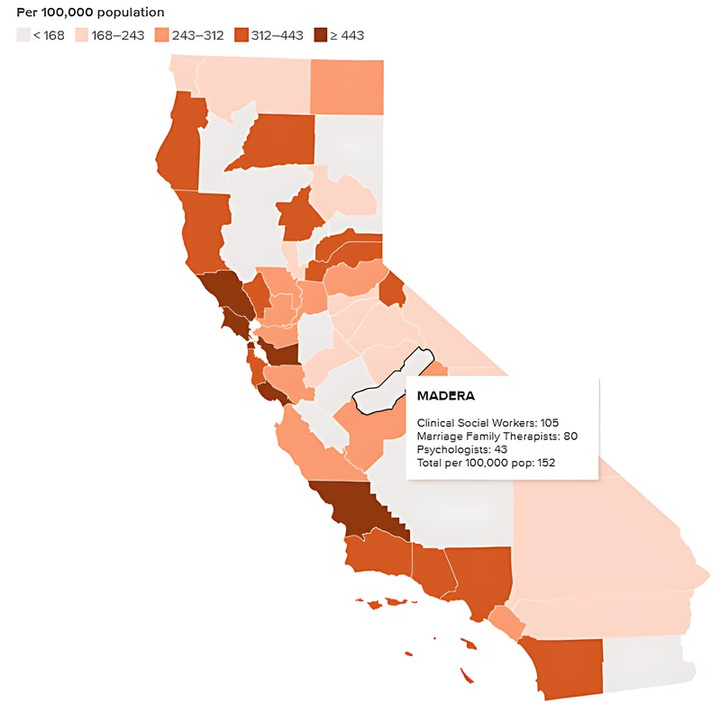
Madera mental health professionals Measure Value Clinical Social Workers 105 Marriage Family Therapists 80 Psychologists 43 Total per 100,000 pop 152 The California county map groups providers per 100,000 population into the following legend categories: <168; 168–243; 243–312; 312–443; ≥443. Madera is highlighted.
-
-
Parental and Caregiver Engagement: Family-centered models are essential in early intervention because they prioritize strong partnerships between therapists and families. Evguenia Popova’s 2022 study found that therapists often employed relational strategies, such as “empathizing, encouraging, and instructing,” aligning with family-centered care (Popova). However, there’s room to improve in areas like information sharing and collaborative problem-solving. These practices not only support a child’s development but also strengthen family engagement, an important factor in early learning and long-term educational success. As Popova notes, tools like the MPOC(Measure of Processes of Care) and CAM(Clinical Assessment of Modes) show that therapist communication directly impacts the quality of care and a child’s future outcomes.
3) Infant Mortality in Madera County
Madera County exhibits a puzzling public health contradiction. Despite strong indicators typically associated with positive infant outcomes, such as low rates of low birthweight (6%), the lowest preterm birth rate in the region (8.00%), and the highest rate of exclusive breastfeeding at 3 months (26%), the county reports the highest infant mortality rate in the region at 6.480 deaths per 1,000 live births, well above the state average. This disparity suggests that while the prenatal and immediate postnatal conditions appear favorable, factors affecting infant health after birth and systemic barriers to accessing ongoing pediatric care may be at play.
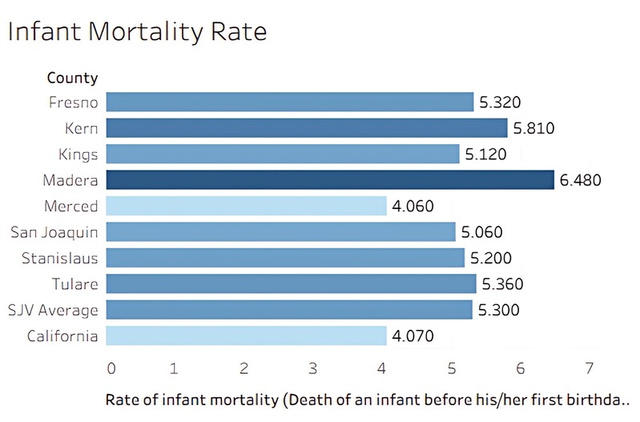
| County/region | Deaths per 1,000 live births |
|---|---|
| Fresno | 5.320 |
| Kern | 5.810 |
| Kings | 5.120 |
| Madera | 6.480 |
| Merced | 4.060 |
| San Joaquin | 5.060 |
| Stanislaus | 5.200 |
| Tulare | 5.360 |
| SJV Average | 5.300 |
| California | 4.070 |
Dashboard source: View the source dashboard
One significant structural issue likely contributing to this outcome is the closure of Madera Community Hospital in late 2022, which left the county without a full-service acute care hospital. The absence of a local hospital has likely:
- Reduced access to neonatal intensive care for infants with complications.
- Limited emergency care for both infants and mothers.
- Increased travel time to receive urgent or specialized care introduces delays that can be fatal in time-sensitive infant health crises.
- Contributed to healthcare provider shortages and higher burdens on nearby counties.
Additionally, although Madera has high breastfeeding rates and low preterm birth rates, the percentage of mothers receiving adequate prenatal care (71%) is one of the lower percentages than in other counties and may be concentrated unequally across the population. For example, in neighborhoods with >40% poverty, early prenatal care rates drop to 75%. These pockets of underserved populations may face higher infant health risks that are not reflected in countywide averages.
According to a study titled “Infant Mortality in Rural and Nonrural Counties in the United States,” done in 2020, there is a clear geographical link between infant mortality and rural areas. However, this study found that “Higher infant mortality rates in rural counties are best explained by their greater socioeconomic disadvantage than more-limited access to health care or the greater prevalence of mothers’ individual health risks.” This shows that in some cases, healthcare is there, but it may not be available or affordable, meaning that affordability and accessibility should be the focus of the resulting policy. While the present analysis centers on infant mortality and health infrastructure, related research on mental health outcomes in economically distressed communities, such as the Advancing Health Literacy intervention in West Fresno County, reinforces the broader implications of economic instability on health behaviors and outcomes.
Though the latter focused on mental health and not maternal care, it found that individuals experiencing economic insecurity reported lower mental health scores, and that higher health literacy helped mitigate this relationship (Hedrick, Morales, Alcala, & Pacheco-Werner, 2024). These findings point to an intersectional framework where economic and informational inequities intersect, suggesting the importance of holistic strategies that address upstream social determinants, including income and education, in any effort to reduce infant mortality and other health disparities in the San Joaquin Valley.
Policy Implications and Recommendations:
-
California’s Department of Health Care Services (DHCS) is transforming Medi-Cal to build a more person-centered, equitable, and coordinated health system. This includes expanding coverage to 700,000 more adults and adding services like doulas and community health workers to support maternal and infant health better (DHCS, 2024). These changes aim to improve access to care, particularly in rural and underserved areas, by addressing both physical and mental health needs and reducing systemic barriers to care. Medi-Cal can further increase accessibility by covering Telehealth costs.
-
Telehealth could expand access to maternal and infant care, especially in rural areas where hospital obstetric services are increasingly limited. According to Monisa Aijaz (2023), maternal mortality and poor health outcomes are disproportionately high among rural, low-income, and marginalized populations due to unequal access to healthcare, social support, and economic stability. Even with expanded postpartum Medicaid coverage, many people in these communities lack paid leave and must return to work soon after childbirth, limiting their ability to receive critical postpartum care. Telehealth helps bridge this gap by allowing patients to access services remotely, reducing travel time, and offering flexibility for those balancing work and caregiving responsibilities. As defined by the Health Resources and Services Administration, telehealth includes technologies such as videoconferencing and internet-based communication to deliver long-distance care. These innovations have been identified as a promising strategy to “address access gaps and poor maternal outcomes” in underserved populations (Aijaz, 2023). Incorporating telehealth into Medi-Cal’s transformation can help ensure that all birthing people, regardless of their geographical location, receive timely, quality care. Although there is a clear link between telehealth implementation and increased accessibility, research showing improved health is limited at this time. Additionally, telehealth itself is under a push and pull dynamic amongst government officials:
- Without action by Congress, many Medicare telehealth flexibilities (e.g., reimbursement for home visits and audio-only services) are set to expire by late 2025, creating what analysts call a “telehealth cliff” (Lalangas 2024).
- California has enacted streamlined Medi‑Cal enrollment for mobile/intermittent clinics (SB 819), reducing barriers and potentially benefiting mobile health and telehealth programs starting January 1, 2026 (CAFP 2025).
Highest rates of people who are uninsured (11%- H78): Expand Medi-Cal outreach and enrollment, potentially through partnerships with local organizations
Community Health: Uninsured Individuals 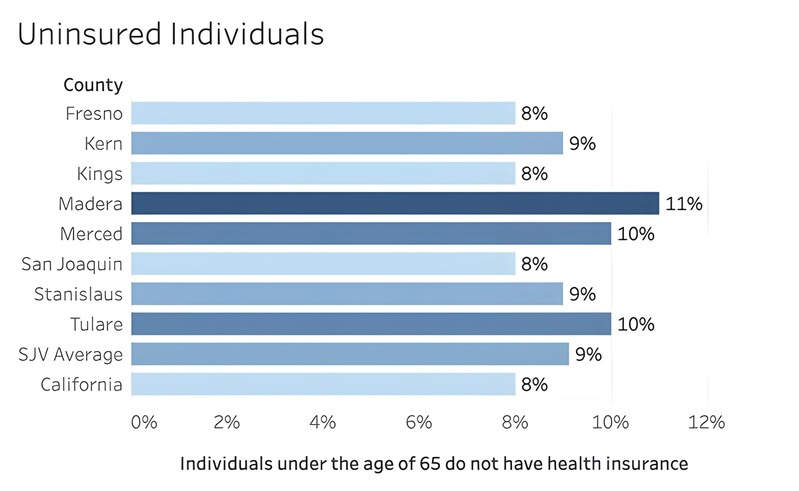
Community Health: Uninsured Individuals County/region Individuals under age 65 without health insurance Fresno 8% Kern 9% Kings 8% Madera 11% Merced 10% San Joaquin 8% Stanislaus 9% Tulare 10% SJV Average 9% California 8% Dashboard source: View the source dashboard
The California Healthcare Foundation, 2002 found that in California, “local organizations play a central role in the state's efforts to enroll low-income children in Medi-Cal and Healthy Families.” At the time, they had identified that over 726,000 uninsured children who qualified for Medi-Cal, and an additional 535,000 uninsured children who qualified for Healthy Families had been helped by these organizations to achieve successful enrollment. While the Affordable Care Act changed eligibility and many were able to get health insurance, due to policy changes at the federal and state level, we are now at a place where people will lose access and as remedies come online, people will once again need help to enroll in programs that give them access to care.
- While the CHCF report dated back to 2002, the findings remain relevant in highlighting that community organizations and outreach efforts have long played a vital role in ensuring access to affordable, life-saving healthcare.
-
-
To incentivize more healthcare workers to serve in the Central Valley, California should invest in long-term, equity-focused workforce development. According to the California Health Care Foundation (CHCF), a key strategy is to invest in students from underrepresented communities through pathways or pipeline programs that offer academic, financial, and mentoring support. These programs are particularly effective for Latino/x and Black students, who often lack access to higher education opportunities, demographics that are highly represented in the Central Valley. Additionally, CHCF emphasizes the need to streamline education and training, reducing the cost and time it takes to become a licensed healthcare professional. This makes it easier for Central Valley residents to pursue health careers without the burden of debt or relocation. Offering professional growth opportunities, such as wage increases, continuing education, and skill training that doesn't require leaving the workforce, can help retain existing health workers and attract new ones. By supporting these efforts through partnerships with state agencies, colleges, and community-based organizations, California can build a sustainable healthcare workforce rooted in and committed to serving the Central Valley.
Community Health: Population Rate of Providers County/region Population for every 1 Primary Care Physician Fresno 1,480 Kern 2,090 Kings 2,690 Madera 2,130 Merced 2,390 San Joaquin 1,710 Stanislaus 1,530 Tulare 2,160 SJV Average 2,023 California 1,230 Dashboard source: View the source dashboard
4) Infant Mortality and Prenatal Care in Merced County
Merced County presents an unusual health outcome profile. According to the data, Merced has the lowest infant mortality rate among the Central Valley counties, 4.060 deaths per 1,000 live births. This figure stands out as a regional success, especially when compared to neighboring counties like Madera (6.480) and Kings (5.120).
However, this outcome contrasts sharply with Merced’s low rates of early and adequate prenatal care, which are among one of the lowest in the region: Only 70% of pregnant people in Merced receive adequate prenatal care, compared to 71% in Madera and nearly 80% in Kern. Across three indicator neighborhood poverty levels, Merced shows the lowest or second-lowest early prenatal care rates, with:
| Neighborhood poverty level | Early prenatal care |
|---|---|
| <10% poverty areas | 75% |
| 10–19% poverty areas | 78% |
| 20–29% poverty areas | 78% |
| 30–39% poverty areas | 73% |
| 40%+ poverty areas | 66% |
This disparity suggests that low prenatal care utilization in Merced is not simply a function of poverty, a conclusion supported by the data showing low prenatal care rates even in the county's more affluent areas. Several possible explanations include: postnatal healthcare access may be stronger than prenatal services, cultural and familial care networks may play a role, and/or a low-risk pregnancy population (a low of 6% of children born underweight).
Policy Implications and Recommendations:
-
Launch a Countywide (Culturally Competent) Prenatal Outreach and Education Campaign: A countywide prenatal outreach campaign in Merced could boost prenatal care enrollment by raising awareness and reducing barriers. As the NIH explains, health communication campaigns are “purposive attempts to inform or influence behaviors in large audiences” using organized messaging across multiple platforms to benefit public health. In Merced, a multilingual, culturally relevant campaign using trusted local messengers could encourage more people to enroll in Medi-Cal and seek early prenatal care, helping reduce maternal and infant health disparities. It is worth noting that these campaigns are in support of general health education, and research specifically linked to prenatal care is limited.
-
Create Incentives for OB/GYNs and Nurse Midwives to Practice in Merced
- Greater access to primary care physicians is a need in Merced generally- 2,390:1 (population to physician ratio, I79)
- Highest rate of Preventable Hospital Stays due to lack of quality/accessible primary care (3,367 hospital stays per every 100,000 people, I83)
Look at number 3 on Infant Mortality in Madera County
-
Address the high rate of uninsured people (11%)
Look at Number 2 on Infant Mortality in Madera
5) Health Habits in Kern County
Kern County faces public health challenges, particularly related to lifestyle-related risk factors and sexually transmitted infections. According to County Health Rankings:
- Adult Smoking Rate: 16% (compared to 14% in Fresno and ~9% state average)
- Adult Obesity Rate: 37%, one of the highest in California
- Chlamydia Cases: 633 per 100,000 residents (compared to 624 in Fresno)
- HIV Prevalence: 308 per 100,000, markedly higher than Fresno (284)
These indicators collectively suggest a high burden of preventable chronic disease, poor sexual health outcomes, and behavioral health risks within Kern’s adult population. The overlap of these risk factors intensifies health inequities and long-term medical costs for individuals and the county health system.
Community Health Impacts Include: Chronic Disease Burden, Sexual Health Concerns, and Behavioral and Structural Health Behaviors
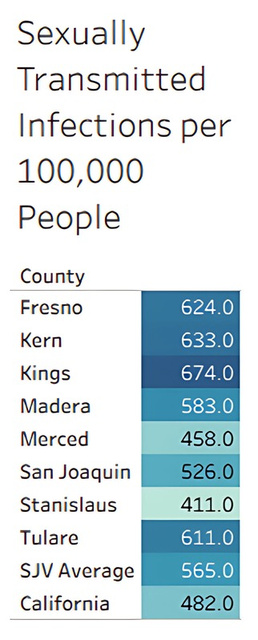
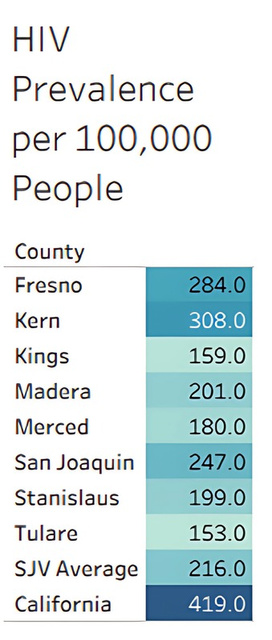
| County/region | Sexually Transmitted Infections per 100,000 People | HIV Prevalence per 100,000 People |
|---|---|---|
| Fresno | 624.0 | 284.0 |
| Kern | 633.0 | 308.0 |
| Kings | 674.0 | 159.0 |
| Madera | 583.0 | 201.0 |
| Merced | 458.0 | 180.0 |
| San Joaquin | 526.0 | 247.0 |
| Stanislaus | 411.0 | 199.0 |
| Tulare | 611.0 | 153.0 |
| SJV Average | 565.0 | 216.0 |
| California | 482.0 | 419.0 |
Dashboard source: View the sexually transmitted infections dashboard
Dashboard source: View the HIV prevalence dashboard
Policy Implications and Recommendations:
-
In rural areas across the San Joaquin Valley, including Kern County, accessible medical care is not always readily available or accessible, nor are virtual healthcare options. For this reason, investment in mobile health and prevention services is crucial. According to an article by Nelson C. Melon in the International Journal for Equity in Health discussing a study analyzing 3,491 mobile health centers from 2007 to 2017, “More than half of their clients are women (55%) and racial/ethnic minorities (59%). Of the 146 clinics that reported insurance data, 41% of clients were uninsured, while 44% had some form of public insurance. The most common service models were primary care (41%) and prevention (47%).” By increasing accessibility to primary care and preventive services, there is potential to alleviate the health burden on Kern and similar counties facing harm.
-
To incentivize primary care and preventive services, payment schemes must motivate providers to focus on early intervention. According to an article from Science Direct by Zixuan Wang, fee-for-service pays per treatment, which can discourage prevention, while capitation offers a fixed amount per patient, promoting cost savings but often leading to “underinvestment in preventive services.” In contrast, GP fundholding gives doctors a set budget to manage care, and if they prevent illness and reduce costs, they keep the savings. Penalty schemes fine providers for failing to meet prevention targets. According to the study, “the GP fundholding scheme and the penalty scheme are more effective in encouraging preventive service provision in primary care.” It also finds that “an increased marginal treatment cost always incentivizes the GP to allocate more working time to preventive services,” showing that the right financial structures can shift provider behavior toward long-term health outcomes.
-
Food Insecurity:
According to the University of California Agriculture and Natural Resources Website, “Lack of access to fruits and vegetables has been cited as a contributing factor to the obesity epidemic, particularly in low-income communities.” Making programs like CalFresh more accessible to low-income communities and also expanding where CalFresh can be used (farmers’ markets) would be another angle to address weight management programs.
-
Harm Reduction:
To address the high rates of HIV in Kern County, California, harm reduction strategies should be expanded as a public health priority. These approaches aim to “lessen harms associated with drug use and related behaviors that increase the risk of HIV infection,” which often include needle sharing and unprotected sex (NIH). Programs like needle exchanges have proven effective in reducing HIV transmission by promoting safer injection practices. For instance, after Washington, D.C. implemented a needle exchange program, the monthly rate of new HIV infections among drug users dropped by about 70 percent, demonstrating the power of such interventions (NIH). Additionally, medication-assisted treatment (MAT), such as buprenorphine/naloxone, has been shown to reduce risky behaviors in people who inject drugs, lowering their chance of contracting HIV. As the NIH notes, “many people receiving treatment for substance use disorders stop or reduce their drug use and related behaviors, including unsafe sex.” Expanding MAT access, needle exchange programs, and efforts to overcome community resistance can help Kern County combat its HIV crisis with strategies proven to reduce harm and save lives.
-
Considering the reluctance to engage in Harm Reduction Strategies in conservative/rural communities, we look to America’s South for comparison. As stated by Megan Stanton and colleagues in an article from the National Institute for Health, openness to these policies can also be an effective way to produce health outcomes:
-
“Drug-related mortality data revealed an increased need for harm reduction, and harm reduction policy data revealed an increased political openness to harm reduction. Frequency distributions revealed that approximately half of the HIV service organizations surveyed reported that their organizations reflect a harm reduction orientation, and only 26% reported providing harm reduction services. Despite low utilization rates, HIV service organizations indicated a strong interest in harm reduction. Logistic regressions revealed that while increased mortality rates do not predict HIV service organization implementation of harm reduction, a harm reduction-friendly policy context does” (Stanton 2022).
-
-
In addition to harm reduction, comprehensive sexual education for children, adolescents, and young adults is another form of evidence-based approach to engage parents, schools, and young individuals to promote autonomy (Mohammed & Haque, 2024). Comprehensive sexual education promotes decisions in regard to the “promotion of health, well-being, and gender equality that can be sustained into adulthood” (Mohammed & Haque, 2024). This educational approach can reduce the effects of STI’s in the region.
-
Prevention care such as equitable access to contraception, and HIV Pre-exposure Prophylaxis (PrEP) for all genders, ethnicities and races are important tools to reduce HIV prevalence. However, there are still barriers and inequities to HIV PrEP medication access. For example, Black and Latino/a/e have limited knowledge, and awareness for HIV PrEP medication (Bonacci, Smith, & Ojikutu, 2021). Policy efforts are needed to promote equitable access to prevention medication. Reducing racial disparities that exist in vulnerable populations can reduce the prevalence of HIV in the community at large.
-
6) Fresno County Health Access Analysis
Fresno County shows a positive correlation between strong healthcare access and a low rate of preventable hospital stays (2,779 per 100,000 people). Key contributing factors include:
- Low Uninsured Rate: Only 8% of residents under 65 lack health insurance, increasing access to routine care.
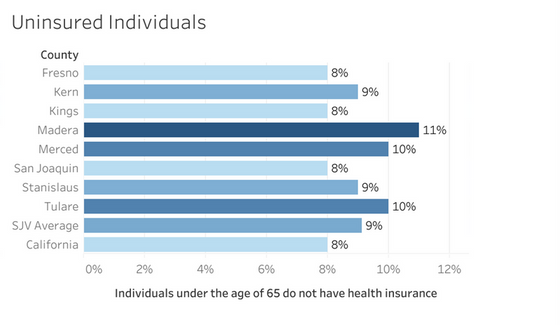
| County/region | Individuals under age 65 without health insurance |
|---|---|
| Fresno | 8% |
| Kern | 9% |
| Kings | 8% |
| Madera | 11% |
| Merced | 10% |
| San Joaquin | 8% |
| Stanislaus | 9% |
| Tulare | 10% |
| SJV Average | 9% |
| California | 8% |
Dashboard source: View the source dashboard
-
Good Provider Access:
- Primary Care Physicians: 1,480:1
- Mental Health Providers: 210:1
- Other Providers (NPs, PAs): 1,020:1
- Dentists: 1,560:1
These ratios suggest residents can access a range of medical services, helping prevent costly hospital visits. However, preventive care usage is low, with only 42% of Medicare enrollees getting flu shots and 38% receiving annual mammograms, indicating a gap between access and preventive behavior.
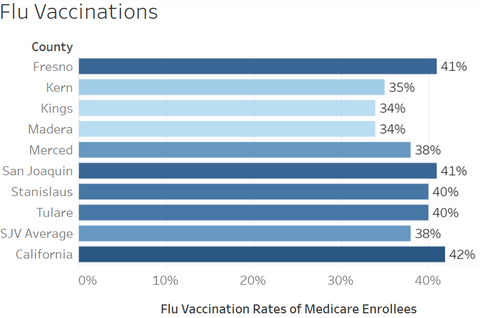
| County/region | Flu Vaccination Rates of Medicare Enrollees |
|---|---|
| Fresno | 41% |
| Kern | 35% |
| Kings | 34% |
| Madera | 34% |
| Merced | 38% |
| San Joaquin | 41% |
| Stanislaus | 40% |
| Tulare | 40% |
| SJV Average | 38% |
| California | 42% |
Note: The narrative reports 42% for Fresno; the chart labels Fresno 41%.
Dashboard source: View the source dashboard
Policy Implications and Recommendations:
-
Boost Preventive Outreach: To increase flu shots and regular wellness checks in Fresno County, local health leaders should continue to use proven strategies like those outlined in Healthy People 2030. The initiative notes that “sending vaccination reminders, making vaccines available in non-traditional places like workplaces, and reducing costs are important strategies” for boosting flu vaccination rates. Continuing to apply those similar tactics such as mobile clinics at farms or job sites, bilingual text reminders, and free screenings at community events, can continue to also increase participation in annual checkups and preventive screenings, helping catch health issues early and improving long-term outcomes in the county.
-
Support Provider Recruitment: Incentivize medical professionals to work in underserved Fresno areas, and look to number 3 on Infant Mortality in Madera County
-
Invest in Mobile & School Clinics: Implementing mobile health clinics in Fresno County can significantly improve access to primary and preventive care, particularly for underserved and rural populations. According to Tulane University, mobile clinics offer “quality care at a lower cost than that of traditional healthcare delivery modes,” with a return on investment of 12:1. By preventing unnecessary emergency room visits, saving an average of 600 ER trips per clinic per year, these clinics reduce costs while delivering essential services directly to where people live and work. Mobile health clinics also specialize in serving uninsured, low-income, and rural populations, which make up a significant portion of Fresno County. Their flexibility allows providers to adapt services to the unique and evolving needs of local communities. In addition to continue to reinforce mobile units to offer screenings, vaccinations, and wellness checks, mobile clinics connect patients to broader community resources and empower them to navigate the complex healthcare system. With targeted outreach and partnerships, ongoing funding to mobile clinics can become a powerful tool for reducing health disparities and promoting long-term wellness across Fresno County.
Conclusion:
Fresno’s strong insurance coverage and provider availability help keep preventable hospitalizations low. Strengthening preventive care engagement is the next step toward even better health outcomes.
Conclusion
Given the recent passage of the federal One Big Beautiful Bill (OBBB), several of the programs highlighted in this analysis face mounting challenges, underscoring the urgent need for increased state-level action. The bill’s significant cuts to Medicaid, alongside new eligibility verification and work requirements, threaten the viability of community-based services, such as Community-Based Adult Services centers, mobile clinics, and school-based mental health programs, which rely heavily on Medicaid reimbursement (Investopedia, 2025). Nutrition-focused policies, including efforts to expand CalFresh access in low-income counties like Kern, may also suffer as the federal government shifts greater financial and administrative responsibility for SNAP to states (National Law Review, 2025).
Moreover, the bill’s dismantling of subsidized federal student loans and the repeal of the Biden Administration’s SAVE repayment plan could disrupt pathways to license more mental health professionals, already workforce of concern across the Central Valley (California Health Care Foundation, 2024). While California has taken steps like SB 819 to streamline mobile clinic enrollment and Medi-Cal transformation initiatives to improve maternal and pediatric care, these efforts may not be enough without robust, equity-driven state investments to fill federal funding gaps (Family Docs, 2025; DHCS, 2024). In this shifting landscape, California must act decisively to preserve and expand the place-based, prevention-focused health programs that address long-standing disparities in the San Joaquin Valley.
This analysis highlights persistent structural health disparities across the San Joaquin Valley, shaped by under-resourced systems, socioeconomic inequities, and uneven access to preventive care. Quantitative indicators, ranging from low academic motivation in Merced County and elevated suicide risk in Madera to high preventable hospitalization rates in Kern, illustrate how social determinants intersect with health outcomes in geographically and economically marginalized communities. The effectiveness of targeted interventions, such as mentorship programs, school-based mental health services, mobile clinics, and culturally tailored prenatal outreach, is evident when supported by place-based investments.
The destabilizing impact of recent federal policy changes, particularly under the One Big Beautiful Bill Act, necessitates a more proactive and coordinated response at the state and regional levels. California’s ability to mitigate these challenges will depend on its willingness to prioritize equity-driven funding mechanisms, workforce development pipelines, and integrated service delivery models capable of sustaining health improvements across diverse populations in the region. Addressing these disparities is not only essential for improving regional health metrics, but also critical for advancing statewide goals related to health equity and long-term population well-being.
References
- Bonacci, R. A., Smith, D. K., & Ojikutu, B. O. (2021). Toward Greater Pre-exposure Prophylaxis Equity: Increasing Provision and Uptake for Black and Hispanic/Latino Individuals in the U.S. American journal of preventive medicine, 61(5 Suppl 1), S60–S72. https://doi.org/10.1016/j.amepre.2021.05.027
- California Department of Health Care Services. (2024, August 16). CalAIM: Transforming Medi-Cal. Retrieved July 21, 2025, from https://www.dhcs.ca.gov/CalAIM/Pages/CalAIM.aspx
- California Health Care Foundation. (2024, February 20). Bridging the care gap: Addressing California’s health care workforce needs [Quick read]. California Health Care Foundation. Retrieved July 21, 2025, from https://www.chcf.org/resource/bridging-the-care-gap
- California HealthCare Foundation. (2002). Local efforts to increase health insurance coverage among children in California. https://www.chcf.org/wp-content/uploads/2017/12/PDF-LocalEffortsToInsureChildren
- California Department of Health Care Services. (2024). Medi-Cal transformation overview. https://www.dhcs.ca.gov
- California Health Care Foundation. (2024). Mental health workforce and equity investments. https://www.chcf.org
- California Department of Health Care Services. (2018, June 27). Prop 56 CBAS funding allocation. https://www.dhcs.ca.gov/services/Pages/Prop-56-CBAS-Funding-Allocation.aspx
- Chan, C. S., Rhodes, J. E., Howard, W. J., Lowe, S. R., Schwartz, S. E. O., & Herrera, C. (2013). Pathways of influence in school-based mentoring: The mediating role of parent and teacher relationships. Journal of School Psychology, 51(1), 129–142. https://pmc.ncbi.nlm.nih.gov/articles/PMC3593655/
- Ehrenthal, D. B., Kuo, H.-H. D., & Kirby, R. S. (2020). Infant mortality in rural and nonrural counties in the United States. Pediatrics, 146(5), e20200464 https://pmc.ncbi.nlm.nih.gov/articles/PMC7605083/
- Family Docs. (2025). SB 819 and the future of mobile clinics. https://www.familydocs.org
- Hedrick, D., Morales, D., Alcala, E., & Pacheco-Werner, T. (2024, October). Negative effects of economic insecurity on mental health and how health literacy attenuates this relationship [Conference presentation]. APHA 2024 Annual Meeting and Expo, American Public Health Association, Minneapolis, MN. https://apha.confex.com/apha/2024/meetingapi.cgi/Paper/551738?filename=2024_Abstract551738.html&template=Word
- Investopedia. (2025, July). Here’s what’s in Trump’s “One Big Beautiful Bill.” https://www.investopedia.com
- Klapstein, L. (2021, June 16). How do mobile health clinics improve access to health care? Tulane University School of Public Health and Tropical Medicine. Retrieved July 21, 2025, from https://publichealth.tulane.edu/blog/mobile-health-clinics/
- Klisch, S., & Soule, K. E. (2020, January 10). UCCE promotes CalFresh to increase access to healthy, local food. UC Delivers. University of California Agriculture and Natural Resources. Retrieved July 21, 2025, from https://ucanr.edu/blog/uc-delivers/article/ucce-promotes-calfresh-increase-access-healthy-local-food/
- Li, L., Gao, M., Zhang, Y., & Wang, J. (2022). Encouraging preventive services in primary care through payment schemes. Health Policy, 126(8), 720–726. https://doi.org/10.1016/j.healthpol.2022.06.007
- Malone, N. C., Williams, M. M., Smith Fawzi, M. C., Bennet, J., Hill, C., Katz, J. N., & Oriol, N. E. (2020, March 20). Mobile health clinics in the United States. International Journal for Equity in Health, 19, Article 40. https://doi.org/10.1186/s12939-020-1135-7
- McConville, S. (2023, August 29). Access to mental health providers is highly uneven across the state. PPIC Blog. Public Policy Institute of California. Retrieved July 21, 2025, from https://www.ppic.org/blog/access-to-mental-health-providers-is-highly-uneven-across-the-state/
- Mendoza, S., Sheikh, S., Khakh, K. & Pacheco-Werner, T. (2025). Social Determinants of Health and Health Outcomes in the San Joaquin Valley. https://public.tableau.com/views/SocialDeterminantsofHealthandHealthOutcomesintheSanJoaquinValley/HealthIndicatorsStoryboard?:language=en-US&:sid=&:redirect=auth&:display_count=n&:origin=viz_share_link
- Mohammed Tohit, N. F., & Haque, M. (2024). Empowering Futures: Intersecting Comprehensive Sexual Education for Children and Adolescents with Sustainable Development Goals. Cureus, 16(7), e65078. https://doi.org/10.7759/cureus.65078
- National Institute of Allergy and Infectious Diseases. (n.d.). Harm reduction to lessen HIV risks. U.S. Department of Health & Human Services. Retrieved July 21, 2025, from https://www.niaid.nih.gov/diseases-conditions/harm-reduction youtube.com+15niaid.nih.gov+15niaid.nih.gov+15
- National Institutes on Drug Abuse. (2020, April). Common comorbidities with substance use disorders research report (NIH Publication No. NBK571451). In NCBI Bookshelf. National Center for Biotechnology Information. https://www.ncbi.nlm.nih.gov/books/NBK571451/
- National Law Review. (2025). The telehealth cliff and SNAP changes under OBBB. https://www.natlawreview.com
- Popova, E. S., O’Brien, J. C., & Taylor, R. R. (2022). Communicating with intention: Therapist and parent perspectives on family-centered care in early intervention. American Journal of Occupational Therapy, 76(5), 7605205130. https://doi.org/10.5014/ajot.2022.049131
- Richter, A., Sjunnestrand, M., Romare Strandh, M., & Hasson, H. (2022, March 15). Implementing school-based mental health services: A scoping review of the literature summarizing the factors that affect implementation. International Journal of Environmental Research and Public Health, 19(6), Article 3489. https://doi.org/10.3390/ijerph19063489
- Smith, M. S., Martino, S., Ade, H., St. Hilaire, C., & McGowan, T. A. (2022). Harm reduction implementation among HIV service organizations in the U.S. South: Contextual influences and organizational adoption. Harm Reduction Journal, 19, Article 123. https://doi.org/10.1186/s12954-022-00677-4
- U.S. Department of Health and Human Services, Office of Disease Prevention and Health Promotion. (n.d.). Increase the proportion of people who get the flu vaccine every year (IID-09). Healthy People 2030. Retrieved July 21, 2025, from https://odphp.health.gov/healthypeople/objectives-and-data/browse-objectives/vaccination/increase-proportion-people-who-get-flu-vaccine-every-year-iid-09
- Zhao, X. (2020, April 27). Health communication campaigns: A brief introduction and call for dialogue. International Journal of Nursing Sciences, 7(Suppl 1), S11–S15. https://doi.org/10.1016/j.ijnss.2020.04.009