Children of the San Joaquin Valley: Preventable Childhood Illness in Merced County

Background and Implications
Preventing childhood illness is a key public health objective because many of the health conditions developed in childhood will negatively impact the individual well into adulthood. This report examines how pediatric preventable emergency department visits and hospitalizations are related to individual and neighborhood factors in Merced County.
Summary of Findings
In the San Joaquin Valley, non-white, low-income children, ages zero to five, are most at risk for experiencing emergency department visits and hospitalizations.
The most frequent preventable emergency department visits and hospitalizations for these children are respiratory conditions related to home and neighborhood conditions, such as exposure to second-hand smoke and mold and mildew in housing and proximity to major roadways and other air polluting sources in neighborhoods.
Children in Merced County are 2.8 times more likely to be hospitalized than children from other regions in California (276/10,000; 97/10,000 respectively). These elevated rates are likely due to lower social-economic status and less access to adequate preventive care opportunities.
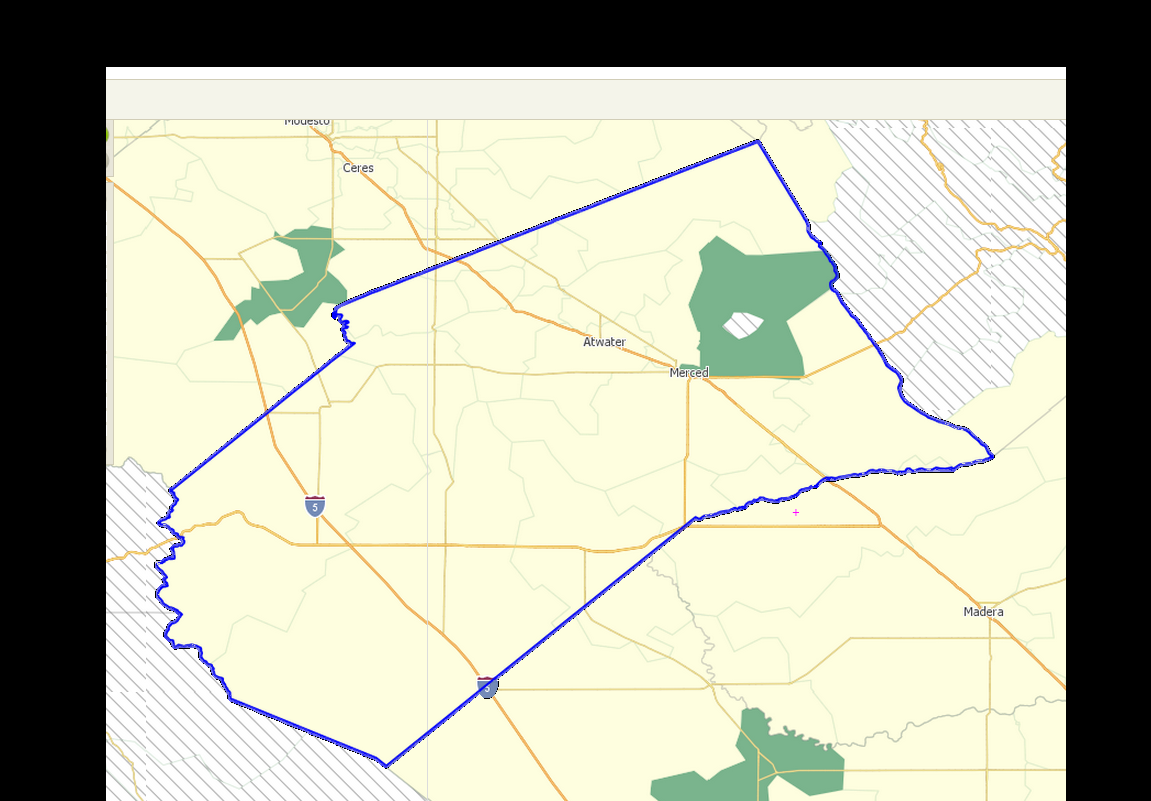
Rate of Childhood Hospitalization /10,000 in the population
 < 380
 ≥ 380
Hospitalization rates computed from 2009-2011 data from the California Office of Statewide Health Planning and Development (OSHPD). Cases included were children ages 0-14. Map was created with HealthyCity.org
The communities highlighted in Figure 1 have the highest rates of child hospitalization in Merced County.
In Table 1, the majority of emergency department visits are for diagnoses that are considered preventable. These are primarily respiratory conditions for which early preventative care and possibly public health programs could reduce the incidence and severity. Though still relatively infrequent events in the county, these cases account for more than $3.8 million in health care costs. As indicated by the decreased proportion of preventable hospitalizations, most of these children are not admitted, though when they are, more than $3.3 million is spent on hospital-based health care for these children.
| Hospital Use | Frequencya | % | Rateb | Cost/Yearc,d |
|---|---|---|---|---|
| Emergency Department | ||||
| Emergency Department Total | 28,860 | 100% | 146 | $5,772,000 |
| Preventable | 19,091 | 66% | 96 | $3,818,200 |
| Non-Preventable | 9,769 | 34% | 49 | $1,953,800 |
| Hospital Discharge | ||||
| Hospital Discharge Total | 5,460 | 100% | 28 | $11,981,060 |
| Preventable | 1,546 | 28% | 8 | $3,392,439 |
The most frequent preventable and non-preventable conditions include pneumonia, asthma, and bronchitis.
a indicates the sum of the three year (2009-2011) interval.
b indicates the rate per 1,000 in the population.
c emergency department visits are estimated to cost $600 per visit.
d hospitalizations are estimated to cost $6,583 per visit.
How Does Public Health Reduce Preventable Childhood Illness?
Public health departments offer programs and services that support families, create health-promoting resources for neighborhoods and promote policies and systems that build healthier communities. In Merced County, the Public Health Department operates programs that aim to reduce preventable childhood illnesses.
Nurse Family Partnership
Merced County’s Nurse Family Partnership (NFP) program engages low-income women with social and/or health risks who are pregnant for the first-time. Public Health Nurses partner with their clients to ensure that their babies are born healthy, their children achieve healthy growth and development, and their families become more economically self-sufficient. Through regular home visits, nurses provide information, education, as well as encouragement and support that enable participating families to know how to protect the health of their children and when to seek medical care before preventable emergency visits are necessary. In 2015, NFP supported 86 clients and has the capacity to serve up to 100 clients throughout Merced County.
Adolescent Family Life Program
The Adolescent Family Life Program (AFLP) works with teens that are pregnant and parenting. Social Workers promote positive youth development by focusing on the teen’s strengths and resources. The program aims to help each teen:
- achieve health during and after pregnancy
- ensure that her child is born healthy and grows and develops appropriately
- complete her education and gain employable skills
- avoid repeat pregnancies
With an emphasis on helping teens be informed and responsible parents, AFLP aims to assist teenage families reduce childhood preventable illnesses and injuries. In 2015, AFLP served 87 pregnant and parenting teens in Merced County.
Partnership to Improve Community Health
The Partnership to Improve Community Health (PICH) initiative works to create community policy, system and environmental changes that will increase health-promoting opportunities and improve the population’s health. Two strategies undertaken by the Public Health Department, and its community partners, that decrease preventable childhood illnesses are highlighted below:
Smoke-Free Multi-Unit Housing
“I like the (smoke-free) policy because when people are permitted to smoke, it can trigger an asthma attack in my son. Normally he’s fine, but if he smells smoke, he has to use his inhaler.”
Housing Authority Resident, 2015
Childhood respiratory infections are directly related to exposure to second-hand smoke which can seep into non-smokers’ apartments through ventilation systems. PICH supports housing owners and managers by serving as a resource in the creation and implementation of smoke-free policies as well as providing tenant education about the benefits of smoke-free environments. Smoke-free multi-unit housing policies results in fewer children exposed to second-hand smoke, a reduction in childhood respiratory illnesses, and healthier children.
In 2015, PICH supported the Merced County Housing Authority’s passage of a Smoke-free Policy for its 488 low-income multi-unit housing complexes.
Breastfeeding Supportive Environments
Breastfeeding during an infant’s first months of life confers health protections against common childhood illnesses. Babies who are exclusively breastfed for the first six months of life have fewer respiratory illnesses as well as fewer hospitalizations and doctor visits. PICH supports local hospitals in the establishment of the Baby-Friendly Hospital Initiative (BFHI), an internationally recognized effort to protect, promote and support breastfeeding. BFHI status means that newborns and mothers will have a full range of support increasing the likelihood that successful breastfeeding practice will be established. In 2015, Merced County’s hospital systems, Dignity Health, Mercy Medical Center, Merced and Sutter Memorial Hospital, Los Banos, are in the process of establishing BFHI with support from the Public Health Department through its PICH grant.
This report was produced by the California State University, Fresno, Central Valley
Health Policy Institute in partnership with the San Joaquin Valley Public Health Consortium.
The Merced County Department of Public Health is a member of the Consortium.
SAN JOAQUIN VALLEY PUBLIC HEALTH CONSORTIUM
www.sjvphc.org
September, 2016
260 E. 15th St, Merced, CA 95341
(209) 381-1200