Adolescent Health in the San Joaquin Valley: Teen Childbearing in San Joaquin County
Healthy Future
Background and Implications
Promoting healthy pregnancies and births while reducing teen pregnancies are key objectives for public health. Research indicates that early investment in initiatives that tackle these issues improve the health and well-being of the overall community. This report presents a few recent trends in teen births, and shows a few comparisons between California and San Joaquin County (SJC), as well as the cost savings associated with their prevention.
Summary of Findings
Social factors such as socioeconomic status and employment opportunity impact teen births. Figure 1 illustrates that SJC has a higher teen birth rate than the state. However, over time, the county has reduced teen births at a rate similar to the state. A 36% decline in the teen (females ages 15 - 19) birth rate from 2009 to 2013 is shown in SJC: from 39 births per 1,000 teen females down to 25 births per 1,000 teen females. The county experienced a total of 4,833 teenage births during those five years. African Americans accounted for 11% and Latinas for 56% of those teen births, while they composed 7% and 43% of the general population, respectively.
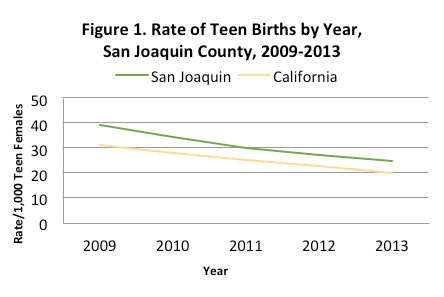
The chart compares San Joaquin County, represented by a green line, with California, represented by an orange line. The horizontal axis shows years 2009 through 2013. The vertical axis is labeled Rate/1,000 Teen Females and runs from 0 to 50 in increments of 10. Both rates decline, with San Joaquin County remaining above California. Exact values are not printed beside the plotted points.
Prevention of teen pregnancy provides a benefit for youth and the community as a whole. Table 1 shows conservative estimates of costs to taxpayers due to teen births. The National Campaign to Prevent Teen and Unplanned Pregnancy estimates that the average cost of a teen birth is $1,462. By reducing the rate of teen births, SJC has saved 36% of the costs in 2013 compared to 2009.
| Year | Ratea of Teen Births | Total Costs of Teen Childbearingb | % Decline in Teen Birth Rate Compared to Previous Year | Cumulative Savings Due to Decline in Teen Birth Rate |
|---|---|---|---|---|
| 2009 | 39 | $1,774,868 | - | - |
| 2010 | 35 | $1,565,802 | 10.2 | $209,066 |
| 2011 | 30 | $1,359,660 | 14.2 | $415,208 |
| 2012 | 28 | $1,238,314 | 6.6 | $536,554 |
| 2013 | 25 | $1,127,202 | 10.7 | $647,666 |
a rate per 1,000 live births
b based on average cost of teen birth in California $1,462 (2010)
How Does Public Health Help Reduce Teen Pregnancy and Improve Adolescent Health?
San Joaquin County Public Health Services (PHS) staff offer support to families and work with community partners to create and promote policies and systems to improve opportunities for all adolescents to be healthier. PHS operates the following programs that aim to prevent teen pregnancies, or help when they happen, and promote health and well-being.
Adolescents
- Adolescent Family Life works with teens that are pregnant or parenting. Case managers promote positive youth development by focusing on the teen’s strengths and resources to help them be healthy, complete their education and avoid repeat pregnancies.
- Cal-Learn works with pregnant and parenting teens who receive CalWORKS (California Work Opportunity and Responsibility to Kids) aid and services to complete high school, become independent and form healthy families. Case managers help with services referrals and access to care.
- Clinics offer screening and treatment of sexually-transmitted diseases as well as education for their prevention.
Infants (for those teens who have given birth to have healthier babies)
- Black Infant Health empowers pregnant and mothering African American women to make healthier choices for themselves and their families. It uses a weekly group-approach with complementary case management to help women develop life skills, learn strategies for reducing stress, build social support, and connect with community and social services.
- Breastfeeding Promotion improves practices, policies, and staff training to increase breastfeeding initiation and support in hospital and outpatient settings.
Healthier teen lifestyles
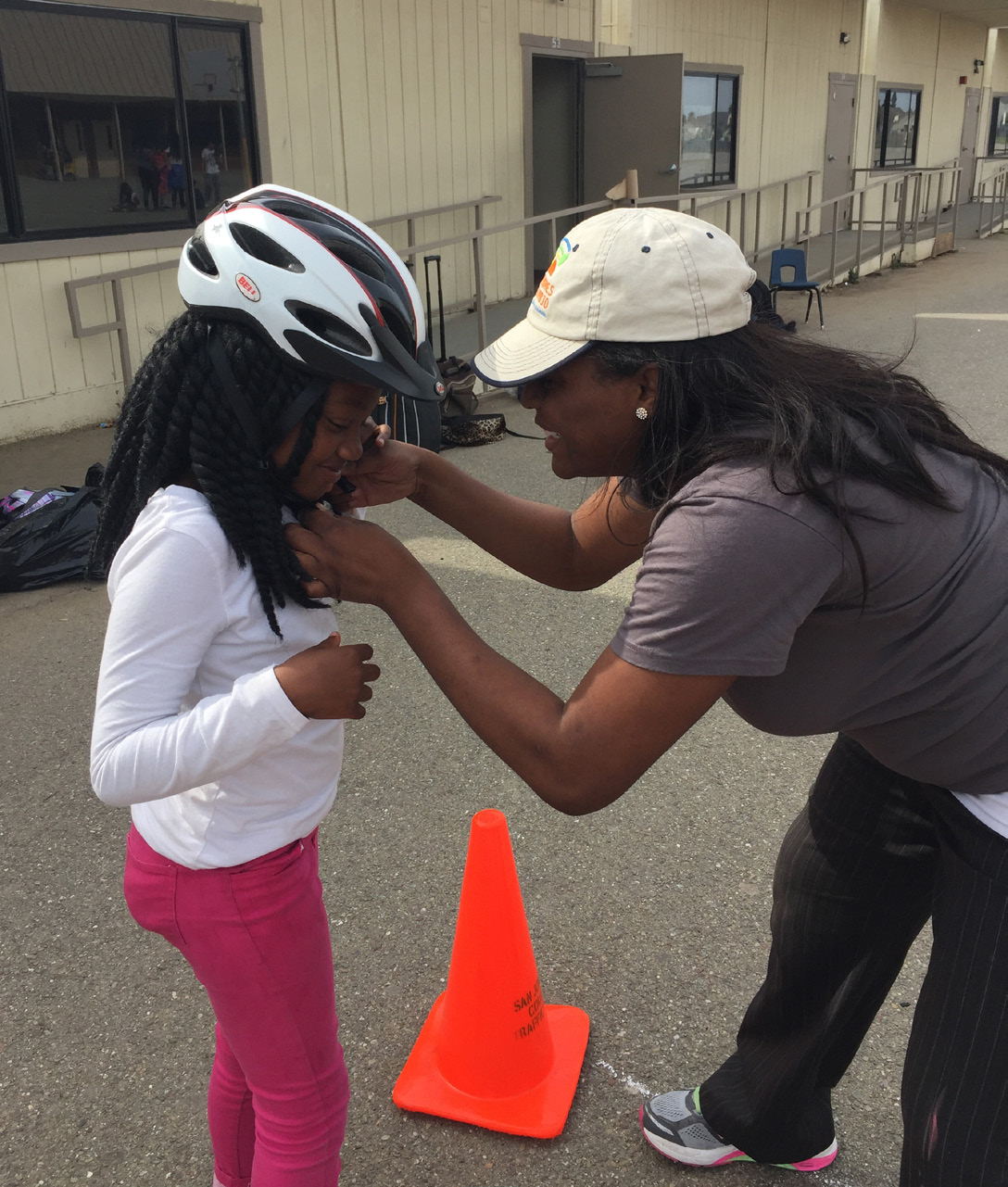
- Nutrition Education and Obesity Prevention provides students in schools that have high free- or reduced-price meals with nutrition education and opportunities to increase fruit and vegetable consumption, reduce unhealthy food and beverage consumption, and increase physical activity through experience with and exposure to school gardens and participation in walking or biking programs.
- Safe Routes to School promotes physical activity for youth and families through regular walking or biking to and from schools.
Staff also assist schools with wellness policy support and technical assistance, as needed.
Access to health care
- Child Health and Disability Prevention (CHDP) promotes periodic health assessments and services for low-income children and teens, provides referrals for necessary diagnosis and treatment along with care coordination, and links families with resources and health care services.
- Health Care for Children in Foster Care coordinates and monitors health care services, like CHDP, for children in foster care.
Recommendations to improve opportunities for better adolescent health
There are many areas on which PHS and partners can collaborate to prevent teen pregnancy and promote adolescent health and well-being by improving the upstream social environments and policies that impact personal and public health.
- For example, regarding food security, the American Academy of Pediatrics recommends that health care providers inquire with their patients’ families about access to adequate food and connect them to resources when needed.
- They, and most service providers, can similarly inquire at client encounters about families’ housing adequacy and connect them to resources.
- Efforts by partners to improve education for all, and particularly high-school graduation of everyone, will have significant long-term public health improvements.
1601 E. Hazelton Ave., Stockton, CA 95205
(209) 468-3411 • www.sjcphs.org

Health Equity for All
SAN JOAQUIN VALLEY PUBLIC HEALTH CONSORTIUM
www.sjvphc.org
September 2016