Children of the San Joaquin Valley: Preventable Childhood Illness in Stanislaus County

Health Equity for All
Background and Implications
Addressing childhood illness is a key public health objective because many of the conditions developed in childhood will negatively impact the individual well into adulthood. This report examines how pediatric preventable emergency department visits and hospitalizations are related to individual and neighborhood factors in Stanislaus County.
Summary of Findings
As shown in Table 1, the majority of emergency department visits by children in Stanislaus County are for diagnoses that are considered preventable. These are primarily respiratory conditions for which early preventive care and public health programs could reduce the incidence and severity. Though relatively few events in the county, these cases account for more than $5.9 million in health care costs. Most of these emergency department visits do not become hospital admissions, although more than $6.5 million is spent on hospital-based health care for preventable causes.
Overall, children in Stanislaus County are 2.9 times more likely to be hospitalized than children from other regions in California (284/10,000; 97/10,000 respectively). These elevated rates are likely due to lower socioeconomic status (SES) and less access to preventive care opportunities.
Within the San Joaquin Valley (SJV), non-white, low-income children, ages zero to five, are most at risk for experiencing emergency department visits and hospitalizations. The most frequent preventable emergency department visits and hospitalizations for these children are respiratory conditions related to exposure to second-hand smoke, mold and mildew in housing, and proximity to major roadways and other air polluting sources in neighborhoods.
Figure 1 shows the rates of child hospitalization throughout Stanislaus County.
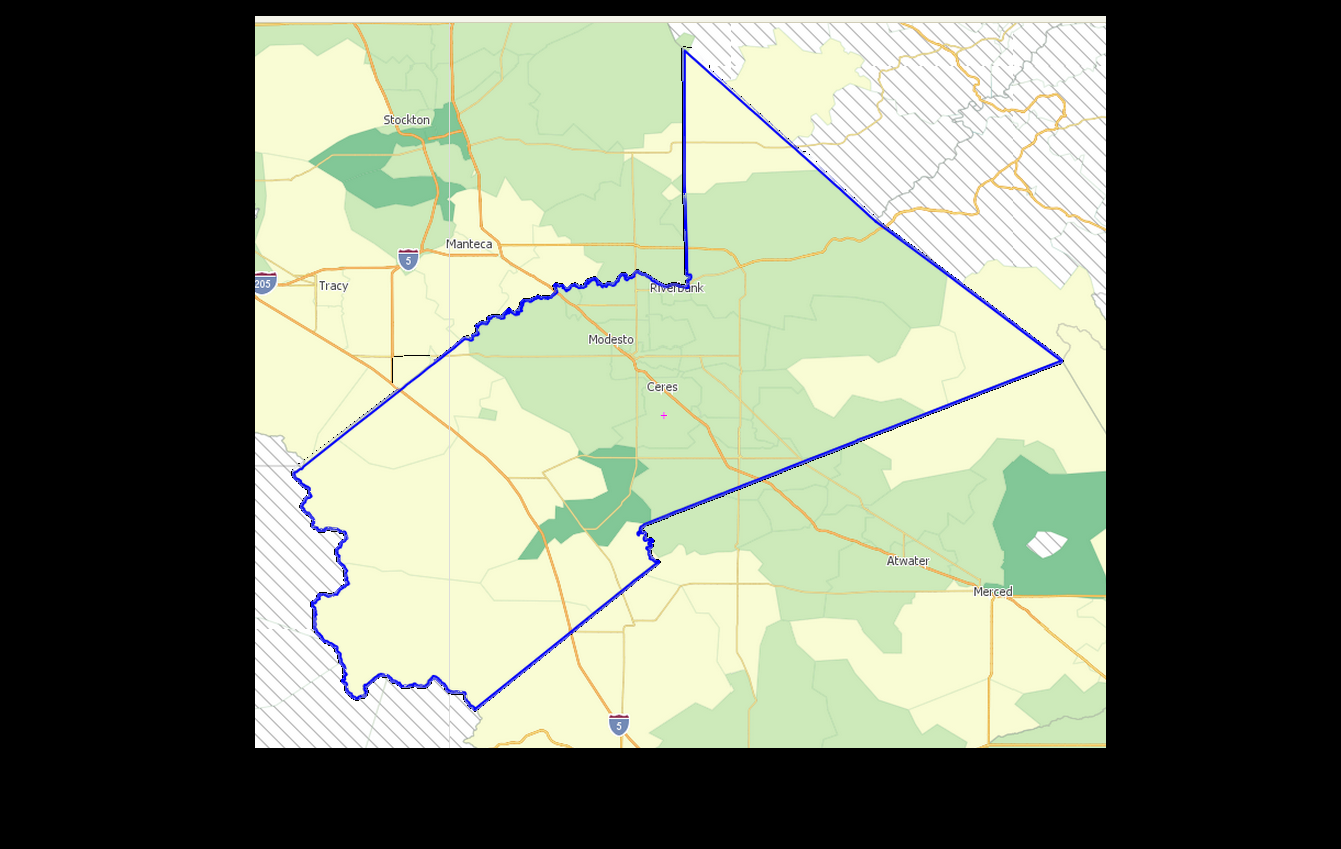
Rate of Childhood Hospitalization/10,000 in the population
- < 229 (state average): Pale yellow
- 230–292: Light green
- ≥ 293: Darker green
Hospitalization rates computed from 2009-2011 data from the California Office of Statewide Health Planning and Development (OSHPD). Cases included were children ages 0-14. The legend cut-point is one standard deviation above the mean for California as a whole. Map was created with HealthyCity.org
| Hospital Use | Frequencya | % | Rateb | Cost/Yearc,d |
|---|---|---|---|---|
| Emergency Department | ||||
| Emergency Department Total | 48,365 | 100% | 132 | $9,673,000 |
| Preventable | 29,959 | 62% | 82 | $5,991,800 |
| Non-Preventable | 18,406 | 38% | 50 | $3,681,200 |
| Hospital Discharge | ||||
| Hospital Discharge Total | 10,372 | 100% | 28 | $22,759,625 |
| Preventable | 2,965 | 29% | 8 | $6,506,198 |
| Non-Preventable | 7,407 | 71% | 20 | $16,253,427 |
The most frequent preventable and non-preventable conditions include pneumonia, asthma, and bronchitis.
a indicates the sum of the three year (2009-2011) interval.
b indicates the rate per 1,000 in the population.
c emergency department visits are estimated to cost $600 per visit.
d hospitalizations are estimated to cost $6,583 per visit.
The major causes of childhood mortality are preventable, including:
- Conditions related to short gestation and low birth weight
- Newborn affected by maternal factors
- Accidental drowning
- Homicide prior to age 15.
The childhood (0-14 years) mortality rate in Stanislaus County is 22% higher than in the state (53/100,000; 41/100,000, respectively). Childhood mortality rates within Stanislaus County are highest in impoverished areas and in communities of color. The children in these areas are highly susceptible to the negative influences that accompany low SES, such as decreased access to many services and opportunities and heightened sensitivity to stress experienced during key developmental periods.
What is Stanislaus County Doing to Address Childhood Illness?
Stanislaus County Health Services Agency (HSA)’s mission is to
- Promote wellness and healthy lifestyles,
- Prevent illness and injury,
- Provide quality care and treatment, and
- Preserve access to healthcare for the underserved through leadership, continuous improvement, and teamwork.
This applies to individuals of all ages.
HSA provides primary and specialty health care services to the community via its network of federally qualified health center look-alike outpatient clinics located throughout the county. HSA’s Public Health Division works to promote lifestyles, policies and infrastructure that extend the length of life and enhance the quality of life for all county residents. HSA works to improve children’s quality of health in three main ways.
Providing a Healthy Foundation
HSA collaborates with the Stanislaus Children and Families Commission, Community Services Agency, Family Resource Centers, Stanislaus County Office of Education and other partners to provide babies a healthy start in life through home visiting and case management programs which provide one-on-one guidance about healthy parenting, nutrition, physical activity and safety.
- Mothers with high risk pregnancies receive support through multiple home visiting programs including Healthy Birth Outcomes, High Risk Maternal/Child Health and Nurse Family Partnership programs.
- Pregnant women and children under five receive vouchers for healthy food to improve nutrition during pregnancy, infancy and childhood; support for breastfeeding; and referrals to maternal, prenatal and pediatric healthcare-related services through the Women Infants and Children (WIC) Program. This contributes towards the reduction in both chronic and infectious disease rates among mothers and children.
- Teen mothers receive support from Adolescent Family Life and Cal Learn programs.
Reducing Behavioral and Environmental Risk Factors
HSA strives to improve the health of children and other county residents by working to reduce the three largest behavioral risk factors for poor health: too little physical activity, poor nutrition and exposure to tobacco. In addition, HSA works with partners to improve the physical, social and built environments to promote health and well-being and make adopting healthy lifestyles easier.
- The WIC and Nutrition Education and Obesity Prevention (NEOP) programs provide nutrition education.
- Under HSA’s leadership, the Built Environment Advisory Committee is promoting the creation of physical infrastructure that will allow people to be more physically active by working with city and county planning departments, planning commissions, public works departments and neighborhood organizations to increase the number of sidewalks, bike paths, parks and other areas for safe physical activity through the Framework for a Thriving Stanislaus.
- HSA is working with the Heart Education Awareness Resource Team (HEART) Coalition, the Tobacco Outreach and Prevention Services (TOPS) Coalition and other partners to educate residents as well as to encourage governments, businesses and other employers to adopt health-friendly policies and reduce exposure to tobacco and electronic cigarettes.
- HSA is working with the Stanislaus Asthma Coalition to improve outdoor air quality throughout the county and provide resources to schools, agencies and families to reduce children’s exposure to unhealthy air, as well as improve indoor air quality.
Improving Access to Health Care
HSA and Stanislaus County Behavioral Health and Recovery Services (BHRS) improve access to health care for children and residents of all ages by collaborating with partners such as hospitals, health facilities, health plans, government agencies and universities to:
- Conduct outreach to enroll people in insurance plans and link them to a medical home or other source of care;
- Combat the severe provider shortage in the county by training
- Doctors through the Valley Family Medicine and the Valley Orthopedics Residency Programs;
- Nurses through Associate of Science and Bachelor of Science in Nursing programs and internships;
- Social workers and mental health professionals through the BHRS Training Program and providing information on loan assumption programs; and
- Physical and occupational therapists through internships.
HSA is committed to promoting its vision of “healthy people in a healthy Stanislaus.”