Children of the San Joaquin Valley: Preventable Childhood Illness in Tulare County

Health Equity for All
Background and Implications
Addressing childhood illness is a key public health objective, given that many of the conditions developed in childhood will negatively impact the individual well into adulthood. This report examines how pediatric preventable emergency department visits and hospitalizations are related to individual and neighborhood factors in Tulare County.
Summary of Findings
In the San Joaquin Valley, non-white low-income children, ages zero to five, are most at risk for experiencing emergency department visits and hospitalizations.
The most frequent preventable emergency department visits and hospitalizations for these children are respiratory conditions related to home and neighborhood conditions, such as exposure to second-hand smoke and mold and mildew in housing and proximity to major roadways and other air polluting sources in neighborhoods.
Children in Tulare County are 2.7 times more likely to be hospitalized than children from other regions in California (265/10,000; 97/10,000 respectively). These elevated rates are likely due to lower social-economic status and less access to equal preventive care opportunities.
The communities highlighted in Figure 1 have the highest rates of child hospitalization in Tulare County.
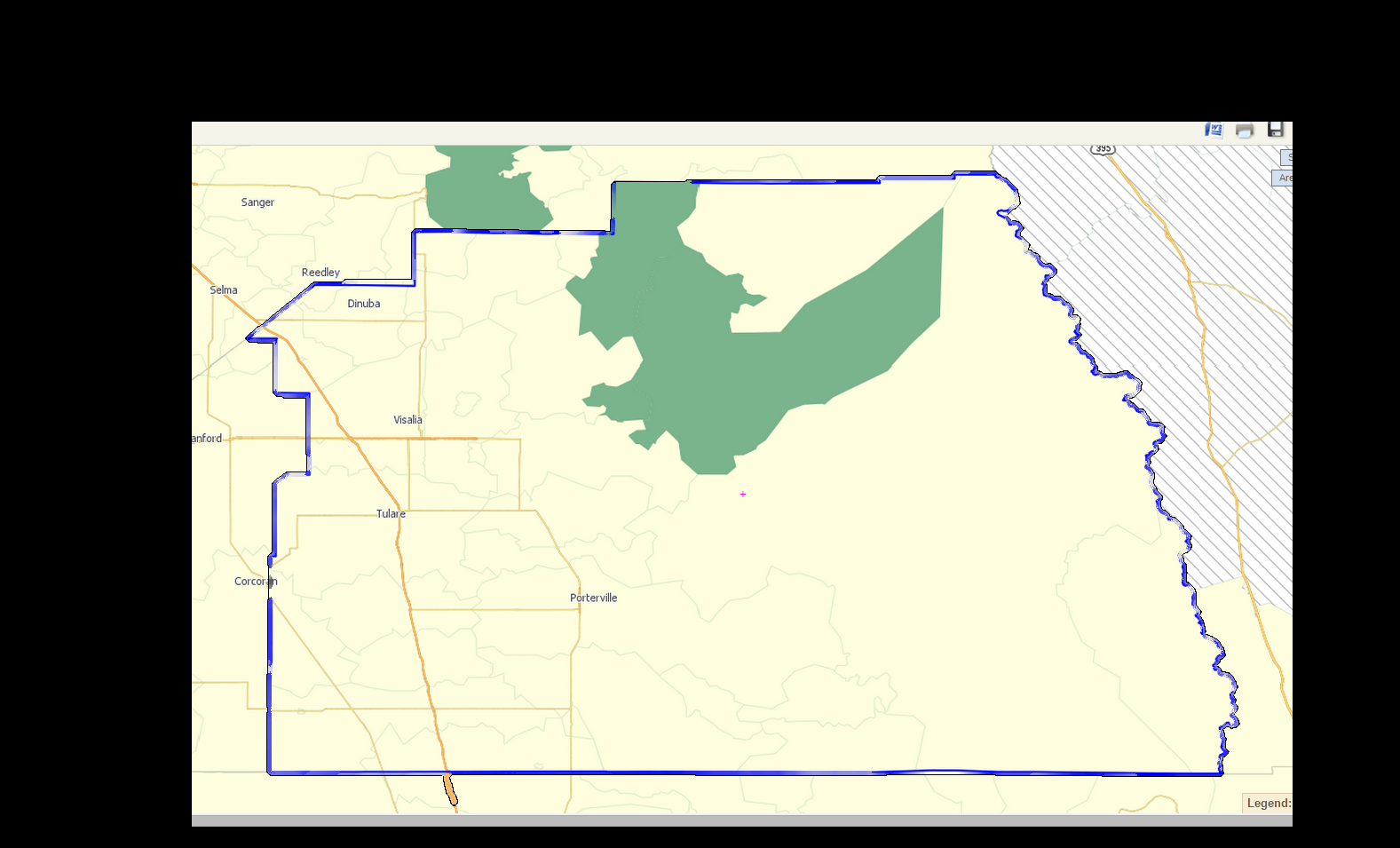
Rate of Childhood Hospitalization/10,000 in the population
- < 380: Pale yellow
- ≥ 380: Green
Hospitalization rates computed from 2009-2011 data from the California Office of Statewide Health Planning and Development (OSHPD). Cases included were children ages 0-14. The legend cut-point is one standard deviation above the mean for California as a whole. Map was created with HealthyCity.org
In Table 1, the majority of emergency department visits are for diagnoses that are considered preventable. These are primarily respiratory conditions for which early preventive care and possibly public health programs could reduce the incidence and severity. Though still relatively infrequent events in the county, these cases account for more than $4.5 million in health care costs. As indicated by the decreased proportion of preventable hospitalizations, most of these children are not admitted, though when they are, more than $5.7 million is spent on hospital-based health care for these cases.
| Hospital Use | Frequencya | % | Rateb | Cost/Yearc,d |
|---|---|---|---|---|
| Emergency Department | ||||
| Emergency Department Total | 36,422 | 100% | 102 | $7,284,400 |
| Preventable | 22,508 | 62% | 63 | $4,501,600 |
| Non-Preventable | 13,914 | 38% | 39 | $2,782,800 |
| Hospital Discharge | ||||
| Hospital Discharge Total | 9,453 | 100% | 26 | $20,743,033 |
| Preventable | 2,623 | 28% | 7 | $5,755,736 |
| Non-Preventable | 6,830 | 72% | 19 | $14,987,296 |
The most frequent preventable and non-preventable conditions include pneumonia, asthma, and bronchitis.
a indicates the sum of the three year (2009-2011) interval.
b indicates the rate per 1,000 in the population.
c emergency department visits are estimated to cost $600 per visit.
d hospitalizations are estimated to cost $6,583 per visit.
Current Programs and Services in Tulare County
Tulare County currently has a number of initiatives aimed at improving childhood health outcomes, beginning with prenatal care, since a healthy childhood starts with a healthy pregnancy. Tulare County continues initiatives into infancy and early childhood to ensure that the foundations of a healthy childhood are set at the earliest possible opportunity.
Special Supplemental Nutrition Program for Women, Infants, and Children (WIC)
The Special Supplemental Nutrition Program for Women, Infants, and Children (WIC) starts by promoting good health through proper nutrition from pregnancy through the early stage of childhood. WIC provides nutrition-related services for pregnant women and children under five and collaborates with the three Tulare County hospitals to encourage the exclusive breastfeeding of infants under six months. The program further provides nutrition education and referrals to services ranging from health care to social services, in addition to providing special checks that can be used to buy nutritious foods at many local stores. WIC provides a valuable service for Tulare County residents and sees approximately 28,000 clients monthly on average, helping to ensure that poor nutrition does not contribute to negative pregnancy outcomes such as low birth weight or complications during pregnancy or birth. WIC also helps to ensure that infants and children up to five years old have access to good nutrition which is so vital for establishing a healthy childhood.
Perinatal Wellness Program
Tulare County Public Health clinics partner with the Tulare County Mental Health Department to provide perinatal care through the Perinatal Wellness Program. The program is an evidence-based program which seeks to address postpartum depression issues in order to promote healthier outcomes for mothers and babies as well as healthy bonding and attachment between mother and infant. While any perinatal woman living in Tulare County and screened for postpartum depression can participate as long as she does not currently suffer from a serious mental illness, the program also has a mandate to target underserved and unserved populations.
Support for Pregnant Women and Infants at Risk
Tulare County also identifies and provides services to pregnant women and infants who may incur significant risks during the prenatal stage through infancy.
- For example, women who are identified as having a baby at risk for alcohol and/or other drug exposure are eligible for case management services through the Prenatal Substance Exposure Program.
- Under the Drug Exposed Infant Program, infants and children up to three years of age can receive case management services as well. The program is designed for infants and children whose mothers were identified as using drugs during pregnancy (for instance, through a positive urinalysis drug screening or through maternal admission of drug use/abuse during pregnancy).
- And the High-Risk Infant Program (HRIP) provides inter-agency team coordination services to infants and their families who meet the criteria for the program. Case management services are provided for children from birth to three years of age.
Preventing Illness, Injury, and Death
Finally, Tulare County has programs that help protect infants and children from illness, injury, and death.
- The Car Seat Program provides car seat safety education at no cost to the recipient, plus a free car seat to those who complete the full educational requirements for program eligibility.
- Like the previously mentioned program, the Safe Asleep Program (SASP) promotes better health outcomes through a combination of providing both education and health/safety products at no cost. The program promotes a safe sleep environment of infants by providing 1-3 home visits which include education sessions about safe sleep. The program additionally supplies a Pack-n-Play portable play pen at no cost to the recipient. The program provides these services in order to prevent Sudden Infant Death Syndrome (SIDS).
- Additionally, the county holds childhood vaccination clinics across the county to promote vaccination among children of all ages, and strives to eliminate causes of lead poisoning through the Childhood Lead Poisoning Prevention Program.
Future Childhood and Perinatal Health Initiatives
Tulare County Public Health Department hopes to be able to expand all the childhood and perinatal initiatives and be able to reach more families. We are currently conducting a Community Health Assessment (CHA) and developing a Community Health Improvement Plan (CHIP) in partnership with community stakeholders and the Public Health Institute (PHI). The process includes extensive public engagement and forging strong relationships with community partners which will allow us both to develop new initiatives and improve existing ones throughout the county.