Undergraduate Field Experience Student Manual

PUBLIC HEALTH
Revised Spring 2024
College of Health and Human Services
Department of Public Health
559.278.4014
Table of Contents
- PUBLIC HEALTH
- MISSION STATEMENT
- COURSE DESCRIPTION AND PREREQUISITES
- INTRODUCTION
- PURPOSE OF THIS MANUAL
- THE VALUE OF FIELD EXPERIENCE
- RELATIONSHIP BETWEEN FIELD EXPERIENCE AND CLASSROOM KNOWLEDGE
- GRADING
- REQUIREMENTS
- PLANNING FOR A FIELD EXPERIENCE
- SUPERVISION
- FIELD EXPERIENCE COORDINATOR
- SITE PRECEPTOR
- EMERGENCY AND INJURY PROCEDURES
- PROCEDURES FOR INCIDENTS INVOLVING STUDENTS (NO INJURY TO STUDENT)
- REASSIGNMENT OF A STUDENT
- EVALUATION
- AGENCY
- NON-PROFIT AGENCIES
- FOR-PROFIT SITES
- USE OF EMPLOYMENT AS A FIELD EDUCATION SITE
- WORKING WITH AGENCIES
- AGENCY RIGHTS AND RESPONSIBILITIES
- RESPONSIBILITIES
- RIGHTS
- UNIVERSITY RESPONSIBILITIES
- STUDENT RIGHTS
- RESPONSIBILITIES OF THE STUDENT
- STUDENT RECOURSE AND DUE PROCESS
- NONDISCRIMINATION POLICY
- RACE, COLOR, ETHNICITY, NATIONAL ORIGIN
- GENDER
- SEXUAL HARASSMENT, INCLUDING SEXUAL VIOLENCE
- AGE, RELIGION, SEXUAL ORIENTATION OR GENETIC INFORMATION
- DISABILITY
- STUDENT COMPLAINT REPORTING
MISSION STATEMENT
The mission of the Department of Public Health is to promote, preserve, and restore health. This is accomplished by educating undergraduate and graduate students to be effective leaders and practitioners at the local, national, and international levels.
COURSE DESCRIPTION AND PREREQUISITES
This manual covers the requirements and enrollment processes for:
PH 152T. Introductory Experience in Community Health Education and Promotion (1-3; MAX TOTAL 6)
Designed for current Public Health students, this course provides placement into local agencies that will allow for hands-on experience in a broad range of public health-related topics. Each placement is intended to provide experience and understanding of requirements related to the eight core roles and responsibilities of a health educator. A minimum of 120 hours (max 150) of directed observation under the supervision of a public health liaison is a course requirement. This topic may be repeated for credit.
PH 152T will have a set of online, asynchronous, instructional training modules and require a minimum of 120 hours (max 150) in the field.
Some agencies prefer to schedule the hours during the regular working hours while others prefer to space the hours over a longer period. In addition, some agencies may provide greater scheduling flexibility with evenings and weekends.
PH 152T. Introductory Experience in Community Health Education and Promotion is an elective course only for students in the Public Health major.
INTRODUCTION
The undergraduate field experience in the Department of Public Health provides students an opportunity to observe, participate, and learn from practicing public health professionals, which in turn, helps to prepare them for work as a public health professional.


Most field experience positions are on a volunteer basis for which students do not receive financial support.
A list of agencies with Memorandum of Understanding (MOUs) can be found by contacting the Department of Public Health.
PURPOSE OF THIS MANUAL
This manual has been developed to inform and prepare students enrolled in PH 152T: Introductory Experience in Community Health Education and Promotion.
This manual provides insight into the process through which students may receive university credit while gaining valuable work experience to enhance their academic coursework. This manual is intended to provide students with the necessary information to secure field experience and fulfill the university requirements for receiving academic credit for their work.
THE VALUE OF FIELD EXPERIENCE
Field experience provides students with the opportunity to integrate educational knowledge and skills gained in the classroom into the practice of Public Health. The focus of the field experience is the application of technical skills and the integration of disciplinary knowledge within the workplace and community. In addition, the Field experience aids students in developing professional attitudes and strengths in their discipline.
RELATIONSHIP BETWEEN FIELD EXPERIENCE AND CLASSROOM KNOWLEDGE
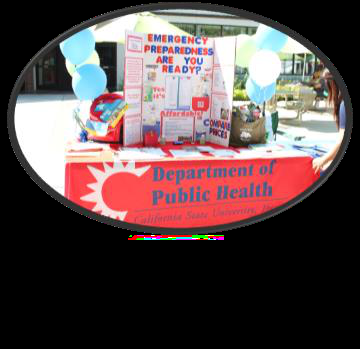
The integration of class and field learning is one of the major objectives for all public health students. The field experience allows students the opportunity for experiential learning under academic supervision.
The student intern can explore different ideas and methods in the classroom and take the information back to the agency.
In addition, the field experience serves as a vital function for students by allowing them to:
- Develop practical skills.
- Determine which approaches work in practice and how they must be adapted to specific situations.
- Gain access to practical information that is not available in courses and books.
- Clarify their own needs for further study.
Every effort is made to use the learning experience gained in the field experience in class discussion and to structure class assignments so that they may be connected to the field. Additionally, course content from the core areas of human behavior, policy, laws and regulations, and research is to be integrated into the student’s experiences in the field and vice versa.
Objectives of the Undergraduate Field experience:
- Analyze the structure, general function, and programs of the agency including their goals and objectives.
- Identify the program and interpersonal relationships within the agency, describing individual roles within the organization.
- Identify the relationships the agency has with the Public, and particularly with other health personnel and organizations.
- Identify public health problems of the Public that need to be approached within the agencies responsibilities
- Describe the roles of administration, mid-management and technical staff of the agency.
- Demonstrate teamwork skills in functioning as a member of the team.
GRADING
PH 152T is only approved for CR/NC.
Field Experience Period
Fall Semester: When paperwork is completed, through the last day in November.
Spring Semester: When paperwork is completed, through last day in April.
REQUIREMENTS
The following must be completed no later than the first Monday in May for the upcoming fall semester and the first Monday in December for the upcoming spring semester for which the student is to enroll.
- Field experience placement must be confirmed.
- A qualified preceptor must have been approved by the department.
- Class enrollment must take place.
- All paperwork must be signed and completed.
To begin the field experience, the student must follow the process and complete the required forms as well as obtain the necessary signatures.
The student must develop a set of goals and objectives. To accomplish this, the student will work with their agency preceptor and the department Field experience Coordinator to develop a set of goals and objectives that are specific to the work to be completed at the agency and are based on the core competencies for public health professionals and the 10 Essential Public Health Services.
Required Paperwork for Placement*
The following documents need to be submitted prior to the start of the field experience, sent to you in an Adobe Sign link (by Claudia Ceja, University Internship Coordinator) after you have secured a site.
- Field experience Authorization Form
- Student Field Experience Agreement and Performance Standards
- Agreement to Safeguard Confidential Information
- Criteria for onsite preceptors
- Field experience Learning Plan Agreement
- Semester Work Plan/Job Description
- Release of Liability
If you do not receive your finalized copy within 5 business days, please have the student contact Claudia Ceja, at cceja@csufresno.edu.
*Students cannot begin the field experience if these forms are not submitted and approved.
NOTE: Some sites may require background checks, medical testing, and fingerprints. These expenses may need to be covered by the student.
PLANNING FOR A FIELD EXPERIENCE
Students must start planning for their field experience at least one semester prior to enrolling. Students should begin by discussing their interests with their academic advisor and then the Field Experience Coordinator (FEC).
Students who need to be placed in a field experience need to take the preliminary steps to identify their interests and potential placement sites. The FEC has a list of active sites for you to choose from. Once sites of interest have been identified, the student must send a resume and cover letter to the FEC. Shortly after that time, the FEC will connect you with the preceptor from each site of interest. It will be your responsibility to schedule an interview with the contact person of the prospective organization(s) only after consultation with the FEC. Please note that all placements made by the FEC are unpaid.
It is possible to obtain paid internships, but only if the student identifies their own field experience placement. In this case, the student must take the initiative to contact the agency and agree when the field experience will take place. Only after an agreement has been made, the student must contact the FEC. At that time, and before ANY work begins, the FEC will make sure all MOU paperwork and other agency agreements are in place.
For both paid and unpaid field experiences, once the placement site has been selected, and all University-required paperwork is approved, the student should:
- Contact the agency preceptor to complete the Learning Plan Agreement.
- Become familiar with the agency (e.g., website, financial, service area).
- Assume responsibility for planning finances, travel, and living arrangements during the field experience timeframe.
SUPERVISION
Each student enrolled in PH 152T will have a Field Experience Coordinator (FEC) and an Agency Preceptor.
FIELD EXPERIENCE COORDINATOR
The department’s FEC assists the student in completing all required paperwork and in the enrollment, process if necessary.
The department’s FEC may schedule on-site visits with each student and their agency preceptor or develop other means to maintain contact through the field experience assignment.
The department’s FEC will work with the course faculty for evaluation and grade assignment of the student.
All students will maintain contact with the department’s FEC at scheduled times throughout the semester. The time, location and method will be discussed during the registration period.
SITE PRECEPTOR
Day-to-day supervision will be conducted by the agency preceptor in accordance with the agency’s rules and practices.
The agency preceptor needs to possess supervisory or management responsibilities at their worksite.
The Agency Preceptor will coordinate the field experience and give the Field experience Coordinator a final evaluation of the student.
EMERGENCY AND INJURY PROCEDURES
LIABILITY INSURANCE
The department requires that students carry liability insurance. This insurance is obtained through the university and the cost is included in student fees.
All field experience related injuries must be immediately reported to your Field experience Coordinator and the chairperson of the Department of Public Health. Completion of forms will be necessary in most cases.
Medical facilities that must be used:
Fresno State Health Center
Phone: 559-278-2734
Hours of Operation 8:00 – 5:00 Mon.-Fri.
Medical assistance limited to first aid treatment.
If seriousness of injury requires, call 911.
DOCUMENTATION
The FEC will immediately contact a University representative when the injury is reported so the Student Intern, Notice of Claim form can be sent directly to the injured Student Intern.
A Supervisor’s Report of Work Injury form must be completed for every injury and sent to the W/C office within 24 hours from the date the injury is reported. (This form is located at http://www.fresnostate.edu/ehsrms/ under workers’ compensation.) This form must be signed by the Department Chair.
The completed forms are returned to the Workers’ Compensation Office
QUESTIONS?
Contact the Workers’ Compensation Specialist at 559-278-2125 or if after hours contact the University Police Department. If not available call Environmental Health and Safety at 559-278-6910.
For more information about workers’ compensation benefits access http://www.fresnostate.edu/ehsrms/ and look under Workers’ Compensation.
PROCEDURES FOR INCIDENTS INVOLVING STUDENTS (NO INJURY TO STUDENT)
All field experience-related incidents that are relevant to student’s practice liability must be immediately reported to the department’s FEC. Depending on the nature of the incident, the student may be required to provide a written report to the department’s FEC, who will apprise the University as warranted.
REASSIGNMENT OF A STUDENT
During the first three weeks of field experience, a change in placements is generally permitted when:
- Conditions change at the agency and an intern can no longer be hosted.
- An unanticipated conflict of interest arises.
- Circumstances beyond the student’s control prevent the student from meeting attendance or other expectations of the agency.
- A significant mismatch of student with agency and/or field instructor is identified by the field instructor, student, and field liaison and there is consensus that a change is warranted for sound educational reasons.

After the third week of field experience: It is the practice of the Department of Public Health to avoid the switching of placements at any time after the first three weeks into the semester. However, reassignment of a student from one field site to another during an academic semester may occur for educationally sound reasons.
Students experiencing performance problems solely because of skill deficits will not be reassigned to a different agency. Reassignment is generally approved only when issues involving the preceptor or the agency pose obstacles to student learning, when there is doubt as to the cause of problems, and/or when an appropriate agency is available to take a student mid-semester. When there is doubt as to the cause of problems, the field students may be given the benefit of the doubt and reassigned to another placement. The decision to reassign will be a joint one between the faculty, student, and agency representative.
Termination of a field experience by the student without prior notification of the preceptor, and field experience director, and failure to adhere to due process procedures constitutes abandonment. Student’s status in the program will be reviewed by program faculty; consequences may range from a letter grade of an ‘F’ or “No Credit” (depending on the grading policy of the course), up to dismissal from the program.
The department FEC and the agency administrator will normally have been apprised of possible reassignment of the student prior to any reassignment discussions or final decision. The current preceptor will be asked to give an evaluation of the student’s performance up to that point in time.
After plans for reassignment have been made, the student is expected to develop plans for termination of the original field assignment with the current preceptor and report such plans.
Any plans for the termination of a field assignment should reflect the agreement reached by the student and the preceptor regarding:
- The date on which the student will leave the unit;
- The timing and method to be used in terminating planned contacts with individuals and/or groups;
- How the student will fulfill other termination responsibilities—e.g., completion of summaries needed for case transfer or closing; completion of any necessary separation procedures (signing forms, returning keys and/or identification cards, etc.). Failure to fulfill termination responsibilities can result in the loss of credit for the field experience work to date and an Incomplete, up to, and including, a ‘F’ or “No Credit” (N/C) for the semester.
Students who are reassigned prior to the end of the semester will receive an “RP”, (equivalent to an “Incomplete” grade) for that current semester. The “RP” will be removed from the student’s record upon receipt of a satisfactory “post reassignment evaluation.”
EVALUATION
To ensure a high-quality experience, students will complete several evaluations as part of their field experience. The final evaluation and grade will be based on the student’s stated goals, and field experience competencies. In addition, the student is expected to provide the following:
- Time Log (See Canvas Course): Each student will keep a daily log, including an assessment of personal and professional activities/experiences.
- Final Report Guidelines (See Canvas Course). The student will write a final report summarizing the field experience. The student will include if they met the goals and objectives they have set for the field experience, and how they were met.
Agency Evaluation of Student (See Canvas Course): After the student has completed their field experience, the agency preceptor will complete a final evaluation of the students’ experience. The evaluation is confidential, and the student will not have access to it.
AGENCY
Agencies approved for instruction sites are those that have signed a Memorandum of Understanding (MOU) with the Department of Public Health. The MOU binds the agency to developing, maintaining, and staffing a field instruction program for public health students; and binds the department to placing students in that agency must meet at least the following criteria:
The policy-making board and/or director, and the administrative staff, have conviction about the value of public health field experience/field experience placement; and accept field instruction as an appropriate function of the agency.
The policy and procedures governing the agency’s operation clearly define and reflect a philosophy consistent with the values and ethics of the public health profession.
The agency develops and delivers an instructional program that provides supervision by qualified MPH personnel and the range and quality of learning experiences needed to illuminate classroom teaching and promote the student’s personal and professional growth.
The agency provides for space and equipment needed by students, (i.e., desks, telephone, dictating equipment, privacy for interviews and conferences, etc.) and the use of case material and other agency data a student might need to fulfill class assignments and research provided confidentiality can be maintained for both individuals and agencies.
NON-PROFIT AGENCIES
Agencies categorized as nonprofit field sites meet minimum qualifications for any non-profit organization desirous of accepting students for field instruction. These qualifications are as follows:
The agency employs an individual who possesses an MPH degree from an accredited program.
The individual possessing the MPH is willing to serve as a preceptor.
The agency will provide the student intern with time to attend field instructor training and continuing education programs.
The agency provides for a space and equipment needed by students, (e.g., desks, telephone, dictating equipment, privacy for interviews and conferences).
FOR-PROFIT SITES
Agencies that have for-profit tax status may occasionally be used as field sites for public health students. Those agencies must meet the minimum qualifications listed above under the nonprofit status. The following additional requirements also apply:
Students may not be placed in either individual or group private practitioner offices for field experience.
The specific duties and responsibilities of students placed in a for-profit setting must be clearly delineated. Any assignments or activities of the student that involve revenue generation must result in payment to the student of a stipend of 50% of the revenue generated.
The for-profit placement site must assume responsibility for the calculation and distribution of any stipend monies owed to the student because of their revenue-generating activities.
USE OF EMPLOYMENT AS A FIELD EDUCATION SITE
No student may be placed in an agency wherein she/he was, or is, a client or employee or an immediate family member was, or is, a client or an employee. Since the department does not ascertain client information from agencies or students, it is the responsibility of the student to decline (or not select) a placement based on a conflict of interest.
Students who are found attempting to secure or who secure placement in an agency where they, or a member of their family, are or were a client or an employee may be administratively dropped from the public health program.
WORKING WITH AGENCIES
Many health-related agencies and organizations provide opportunities for students to apply their knowledge and skills in their workplace setting. These positions provide students with several benefits, including valuable work-related experience, and networking opportunities as well as an opportunity to apply their knowledge base. Students should not view field experience as an extended job interview.
AGENCY RIGHTS AND RESPONSIBILITIES
RESPONSIBILITIES
Provide sufficient public health practice experiences and observational/educational opportunities for students to complete the assignments in the learning agreements in a timely fashion.
Support the employee with reduced caseloads or release time sufficient to be a competent supervisor and perform the additional responsibilities of this assignment.
Provide office space, clerical services, use of relevant case material, and other resources deemed necessary to adequately carry out the agreed upon educational plan of the student.
Provide multi-stage learning experiences where and when feasible. Learning stages begin with entry level experiences and progress to advanced practice that meet the needs of the individual student.
Notify the FEC immediately when serious problems with a student are indicated; and provide prompt written notification and justification for asking a student to leave, or be removed from, the agency.
Notify the FEC immediately of any injury to student while in field or incident involving the student that may have implications for his/her liability.
RIGHTS
Upon meeting and interviewing the student, agencies can refuse to accept him/her for a field experience for reasons pertaining to personality conflicts or educational inappropriateness. For example, a student lacks sufficient skill and knowledge to undertake the beginning tasks of the agency. (If issues are identified after the field experience has begun and there is no consensus about immediately terminating the placement, the student must be afforded due process and the opportunity to correct behaviors of concern before he/she may be withdrawn from the field experience.)
Agencies can ask for the immediate removal of a student who is determined to be a danger to the consumers of the services rendered; who is disruptive to the work environment; demonstrates serious unprofessional conduct; or who breaches confidentiality.
Identification of a pattern of student conduct that is unprofessional (e.g., unexplained absences and attendance issues, showing questionable ethical decision making, apathetic performance) or shows an inability to perform in the field should first lead to consultation with the field liaison and a corrective action plan. Documentation of a continued pattern of unsatisfactory student conduct constitutes grounds for dismissal of student from the field site.
If an agency dismisses a student from the field experience due to any of the above, the student may be administratively dropped from the field sequence and possibly from the Public Health program since such acts may result in the harm to clients and are generally indicative of an inappropriate or untimely career choice on the part of the student.
UNIVERSITY RESPONSIBILITIES
The Department of Public Health will not place students at a site without a Learning Agreement being in place. Check with the FEC to determine if your site has an active agreement. Additional sites may be added based on student’s interests or program needs.

The Department of Public Health is committed to assisting the student in obtaining the best opportunities for professional growth. The department FEC must have a good understanding of the student’s strengths and weaknesses. To provide the best academic experience, the student and the FEC will meet the semester prior to the field experience to discuss various field experience options.
The FEC is the department’s representative and will have the responsibility to develop and implement the following aspects of the field experience:
- Work with the agency representative to determine practical details of the work assignment (e.g., work hours, dress code).
- Meet with the student to define goals, determine interests, and clarify objectives.
- Conduct at least one visit to the site during the semester.
- Maintain appropriate contact with the student and preceptor.
Student Roles, Rights, Responsibilities, and Due Process
STUDENT RIGHTS
- Have performance expectations made clear.
- Be treated with dignity, decency, and professional respect.
- Experience appropriate field instruction.
- Be actively involved in public health work assignments in the field setting.
- Can examine interrelationships between theoretical knowledge and actual social work practice.
- Actively participate in the formal evaluation process and receive ongoing evaluation feedback.
- Be advised of skill and knowledge deficits as they come to the attention of the field instructor and be given a reasonable amount of time within the current semester to improve upon the identified deficits.
RESPONSIBILITIES OF THE STUDENT
- Uses the program as an opportunity to enrich and extend the whole curriculum; all prerequisites should be met prior to requesting a field experience.
- Assume professional responsibility and appropriate accountability for assigned client services and other agency activities.
- Participate in required meetings with the FEC.
- Participate in selected agency activities (e.g., staff meetings, conferences, in-service training, committee work) when these are not in conflict with campus-based courses, seminars, or other academic commitments.
- Maintain the university schedule regarding national and state holidays.
- Contact the FEC immediately in the event of difficulty or of an emergency necessitating absence, leave of absence or premature termination from the field experience.
- Change their learning agreement as needed using the procedure outlined in this manual.
- Participate in evaluation of own performance and provide input for evaluation of the agency.
- Follow steps in the directions provided in obtaining a field placement.
- Follow the standards expected for agency employees at their field experience. (This includes professional dress and appearance, keeping up-to-date records of hours, assignments completed or in progress, case records and charting, completion of any required administrative responsibilities.)
- Obtain agency approval for the use of any case material or records outside of the agency and maintain accepted standards of confidentiality.
- Make known to the FEC and Department Chair any personal issues or situations which would, if the student were placed in a particular agency or with a specific population group, pose a conflict of interest or be in violation of the law governing the delivery of human services.
STUDENT RECOURSE AND DUE PROCESS
It is understood that problems may arise during the field experience. It is, however, expected that all problems will be addressed explicitly, proactively, professionally, and in a timely manner. The following step-by-step process must be used when both minor and major problems arise in the field, regardless of the parties involved.
This is an administrative procedure that must be followed for students to be afforded due process. It must be noted that students who do not adhere to the specific responsibilities noted above or who do not follow the procedures identified below may be dismissed from the field experience program.
PROBLEM-SOLVING PROCEDURE:
Student and agency representative discuss the problem constructively and, in an issue-oriented fashion to achieve a mutually agreeable resolution. If the problem is not resolved to the student’s and/or agency representative’s satisfaction, the student should proceed to the next step.
Note: In rare circumstances, it may not be appropriate for problem resolution to begin between the student and agency representative, i.e. student is being sexually harassed by the field instructor. In such circumstances, the student will begin Step 2 of the Problem-Solving Process.
Student immediately advises the FEC of the problem. The FEC will facilitate problem resolution in a manner deemed appropriate by the faculty member. If the solution is not amenable to the student, she/he should proceed to step number 3.
If the problem is not satisfactorily resolved, the student must request a meeting between her/himself, the agency representative, and FEC. A three-way meeting between the student, agency representative, and FEC will ensue to discuss and attempt to resolve the problem.
If the problem is still not resolved, the student may request a meeting with the FEC. The FEC will attempt to facilitate problem resolution—inclusive of calling a meeting between the student, agency representative, faculty liaison, agency director. This step of the process will render a decision and problem solution.
The decision/solution achieved in step 4 may be appealed by the student. An appeal must be in writing and addressed to the FEC with copies to the chair of the department. The chair of the department will render a final decision.
Students wishing to appeal decisions rendered in step 5 may do so through the university grievance procedure.
NONDISCRIMINATION POLICY
California State University, Fresno is committed to a program of equal opportunity for all. The California State University does not discriminate in the educational programs or activities it conducts based on race, color, national origin, gender, age, marital status, religion, mental or physical disability, sexual preference, pregnancy, or special disabled veteran status (Vietnam era or other covered veteran status).
California State University, Fresno’s Policy Statement (in the Equal Employment and Education Opportunity Plan and the Equal Opportunity Plan for Individuals with Disabilities, Disabled Veterans, Veterans of the Vietnam Era, and Other Eligible Veterans) addresses equal opportunity in employment, admissions, recruitment, financial aid, placement counseling, curricula, and housing for students. These are recognized by the university as basic to our equal opportunity goals.
RACE, COLOR, ETHNICITY, NATIONAL ORIGIN
The California State University complies with the requirements of Title VI and Title VII of the Civil Rights Act of 1964, as well as other applicable federal and state laws prohibiting discrimination. No person shall, based on race, color, ethnicity, or national origin be excluded from participation in, be denied the benefits of, or be otherwise subjected to discrimination in any program of the California State University.
GENDER
The California State University does not discriminate based on sex, gender, pregnancy or marital or parental status in the educational programs or activities it conducts. Title IX of the Education Amendments of 1972 and certain other federal and state laws prohibit discrimination on these bases in education programs and activities operated by California State University, Fresno. Such programs and activities include admission of students and employment.
The California State University does not discriminate in the educational programs or activities it conducts based on race, color, national origin, gender, age, marital status, religion, mental or physical disability, sexual preference, pregnancy, or special disabled veteran status (Vietnam era or other covered veteran status).
SEXUAL HARASSMENT, INCLUDING SEXUAL VIOLENCE
The California State University, Fresno, strongly prohibits sexual harassment, a form of sex discrimination, against student employees and other participants in university programs and activities. Sexual harassment includes unwelcome sexual advances, requests for sexual favors, and other verbal or physical conduct of a sexual nature, when submission to or rejection of this conduct explicitly or implicitly affects a person’s employment or education, unreasonably interferes with a person’s work or educational performance, or creates an intimidating, hostile or offensive working or learning environment.
AGE, RELIGION, SEXUAL ORIENTATION OR GENETIC INFORMATION
The California State University does not discriminate based on age, religion, sexual orientation, or genetic information.
DISABILITY
The California State University does not discriminate based on disability in admission or access to, or treatment or employment in, its programs and activities. Federal laws, including sections 504 and 508 of the Rehabilitation Act of 1973 and the Americans with Disabilities Act of 1990, and various state laws prohibit such discrimination. The ADA Coordinator and Associate Vice President for Human Resources has been designated to coordinate the efforts of California State University, Fresno to comply with all relevant disability laws.

Inquiries concerning compliance may be addressed to the Associate Vice President for Human Resources, Joyal Administration Building, Room 211, phone 559.278.2364.
If you have special needs as addressed by the Americans with Disabilities Act (ADA) and need course materials in alternate formats, immediately notify your course instructor or the Director of Services for Students with Disabilities, 559.278.2811. Reasonable efforts will be made to accommodate your special needs.
The Associate Vice President of Human Resources has been designated to coordinate the efforts of California State University, Fresno to comply with Title IX.
Inquiries concerning compliance may be addressed to her at Joyal Administration Building, Room 211, 559.278.2364. See further information in Fresno State’s sex discrimination prevention and education statement, which includes facts and myths about sexual violence at http://www.fresnostate.edu/titleix/students.
STUDENT COMPLAINT REPORTING

Students or student applicants, who believe they are victims of discrimination, harassment, or retaliation, should contact the Institutional Compliance Administrator, at 5150 N. Maple Avenue, M/S JA41, Joyal Administration Building, Room 245, Fresno, CA 93740, 559.278.5013. Other resources include the deans and associate deans who are trained to respond to such concerns. Additional information is available at: http://www.fresnostate.edu/adminserv/hr/eeo-diversity/index.html and http://www.calstate.edu/eo/EO-1074.pdf.
Further inquiries concerning the application of these laws to programs and activities of California State University, Fresno may also be referred to:
Title IX and Section 504/Title II Coordinator, Joyal Administration Building, Room 211, 559.278.2364
This HTML version was generated with AI assistance and may contain errors or omissions. The original approved PDF remains the official document of record. An alternative accessible format is available upon request from the document creator in accordance with Title II of the ADA.